


Future Carrier (Including Costs)


Joined: Oct 2018
Aviation Qualifications: PPL
Posts: 12,213
Likes: 1,647
From: Ferrara
"This decision, enacted in the new Military Programming Law, prioritizes investments in drones and the replenishment of ammunition stocks over expanding a series of highly expensive submarines."
I'm sure THAT decsion wil have been noted in H.M Treasury......................
I'm sure THAT decsion wil have been noted in H.M Treasury......................


Joined: Apr 2020
Posts: 1,978
Likes: 376
From: Hampshire
The French have switched focus to getting their armed forces supplied with materiel than can be acquired to fight any Russian aggression within the next 3/4 years. They plan no increase in forces, the active duty numbers are 87% higher than the UK from an almost identical population size, reserves are c.30% more as well. In almost all equipment areas, across land, sea and air, they have significantly more than the UK (exceptions being SS(G)Ns (6 vs 7), towed artillery and mobile rocket lauchers). The fact that they have almost the same number of SS(G)Ns as the UK should be more a worry for us than them, given our geography and strategic interests - between 1983 and 2004 the RN had at least 12 SSNs in commission peaking at 18 in 1991. The struggle to keep even one Astute active terrifies me.
Joined: Apr 2020
Posts: 1,978
Likes: 376
From: Hampshire
"This decision, enacted in the new Military Programming Law, prioritizes investments in drones and the replenishment of ammunition stocks over expanding a series of highly expensive submarines."
I'm sure THAT decision wil have been noted in H.M Treasury......................
I'm sure THAT decision wil have been noted in H.M Treasury......................
The horizon of the Military programming law is great, but the budget requires annual parliamentary approval, like the US there is separation of powers between the executive and the legislature (though the French president can dissolve the legislature). Such accountability doesn't happen in the UK as we live under a parliamentary elective dictatorship where a party elected by 20.1% of registered voters can do as it wishes including changing the constitution. (apologies for the intrusion from Jet Blast )
Ecce Homo! Loquitur...
Joined: Jul 2000
Aviation Qualifications: Spotter
Posts: 24,510
Likes: 7,255
From: Peripatetic
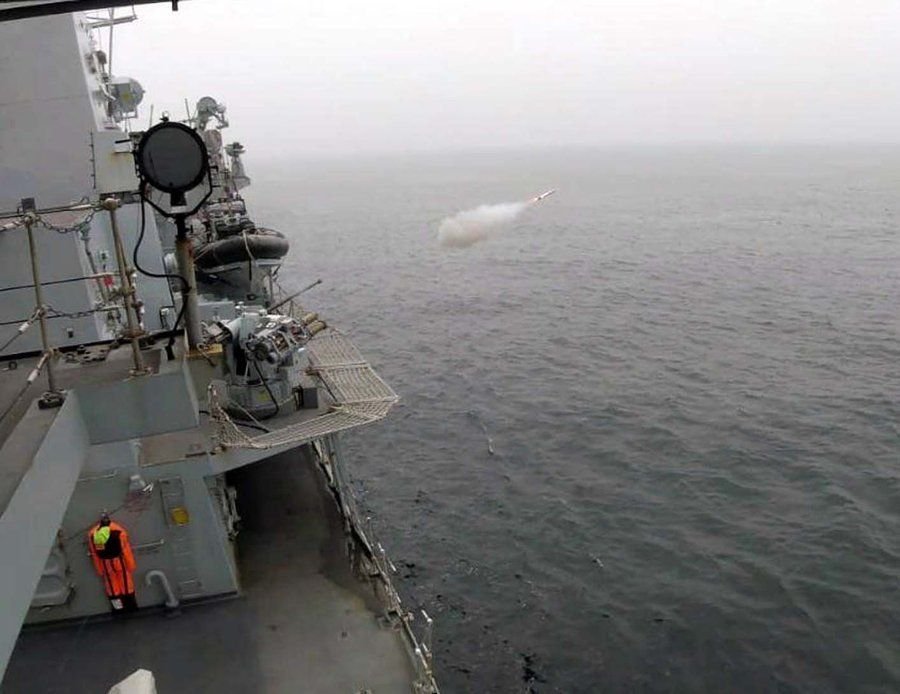
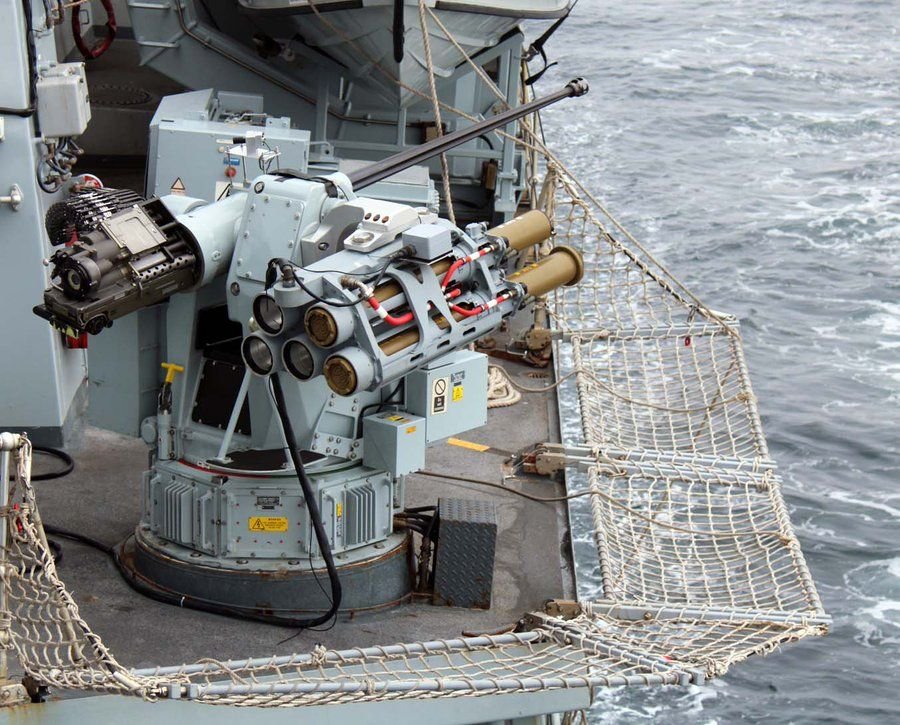
France has decided to add additional close range layer of defence to its frigates, by adding Mistral launchers; having dedicate C-UAS jamming and added and upgrading gun direction with more optronics.
Guess who else attempted to have a SHORAD boost but couldn't progress with it
Guess who else attempted to have a SHORAD boost but couldn't progress with it


Joined: Nov 2007
Posts: 501
Likes: 91
From: UK
[QUOTE=ORAC;12069450]
Would a dedicated sextuple or octuple shipboard Martlet launcher be beyond us these days? Tubes attached to something comparable to a Seacat launcher if, as I suspect was the case, fitting them to the 30mm mount proved problematic...
Would a dedicated sextuple or octuple shipboard Martlet launcher be beyond us these days? Tubes attached to something comparable to a Seacat launcher if, as I suspect was the case, fitting them to the 30mm mount proved problematic...
Joined: Jul 2007
Posts: 360
Likes: 152
From: Europe
Correctly calling out the dead hand of the Treasury over very many years. The headline is a bit of a distraction.
https://www.theguardian.com/uk-news/...-head-of-nato?
https://www.theguardian.com/uk-news/...-head-of-nato?
Joined: Apr 2020
Posts: 1,978
Likes: 376
From: Hampshire
Would a dedicated sextuple or octuple shipboard Martlet launcher be beyond us these days? Tubes attached to something comparable to a Seacat launcher if, as I suspect was the case, fitting them to the 30mm mount proved problematic...
And anyway it is clear the denizens of the House of Darkness are looking to cut equipment funding not add new programmes. (Nothing new about parsimony towards the Navy, the Elizabethan government kept the sailors who defeated the Spanish Armada afloat as it didn't have to pay them until they came ashore.)

Last edited by SLXOwft; 15th April 2026 at 20:41. Reason: Add Photos
Joined: Oct 2018
Aviation Qualifications: PPL
Posts: 12,213
Likes: 1,647
From: Ferrara
" the Elizabethan government kept the sailors who defeated the Spanish Armada afloat as it didn't have to pay them until they came ashore.)
I wondered why the SSN's and SSBn's were spending longer and longer at sea.....................
I wondered why the SSN's and SSBn's were spending longer and longer at sea.....................
Ecce Homo! Loquitur...
Joined: Jul 2000
Aviation Qualifications: Spotter
Posts: 24,510
Likes: 7,255
From: Peripatetic
https://ukdefencejournal.org.uk/brit...o-sea-shortly/
British aircraft carrier set to return to sea shortly
Temporary airspace restrictions have been introduced over the Firth of Forth ahead of the departure of HMS Queen Elizabeth from Rosyth.
A Restricted Area (Temporary) will be in force between 19 and 24 April 2026 in the vicinity of North Queensferry, covering operations linked to a Royal Navy aircraft carrier.
The measures, introduced under Article 239 of the Air Navigation Order 2016, are intended to support national defence and security during the vessel’s movement.
Under the restrictions, unmanned aircraft are prohibited from flying below 1,400 feet above mean sea level within a defined area over the Firth of Forth between 0100 on 19 April and 2300 on 24 April. The regulations explicitly do not apply to manned aircraft.
HMS Queen Elizabeth has been in Rosyth since entering a planned dry dock and maintenance period in August 2025. The work forms part of the carrier’s routine lifecycle and includes inspections, upgrades and certification activities that require the vessel to be out of the water……
Temporary airspace restrictions have been introduced over the Firth of Forth ahead of the departure of HMS Queen Elizabeth from Rosyth.
A Restricted Area (Temporary) will be in force between 19 and 24 April 2026 in the vicinity of North Queensferry, covering operations linked to a Royal Navy aircraft carrier.
The measures, introduced under Article 239 of the Air Navigation Order 2016, are intended to support national defence and security during the vessel’s movement.
Under the restrictions, unmanned aircraft are prohibited from flying below 1,400 feet above mean sea level within a defined area over the Firth of Forth between 0100 on 19 April and 2300 on 24 April. The regulations explicitly do not apply to manned aircraft.
HMS Queen Elizabeth has been in Rosyth since entering a planned dry dock and maintenance period in August 2025. The work forms part of the carrier’s routine lifecycle and includes inspections, upgrades and certification activities that require the vessel to be out of the water……
Ecce Homo! Loquitur...
Joined: Jul 2000
Aviation Qualifications: Spotter
Posts: 24,510
Likes: 7,255
From: Peripatetic
The US have approved a German FMS request for eight shipsets of AEGIS/SPY-6 CMS along with Mk41 VLS launch systems and other equipment for their future F127 AAW frigates.
Total contract value $11.9B.
https://www.state.gov/releases/burea...t-and-support/
Total contract value $11.9B.
https://www.state.gov/releases/burea...t-and-support/
Ecce Homo! Loquitur...
Joined: Jul 2000
Aviation Qualifications: Spotter
Posts: 24,510
Likes: 7,255
From: Peripatetic
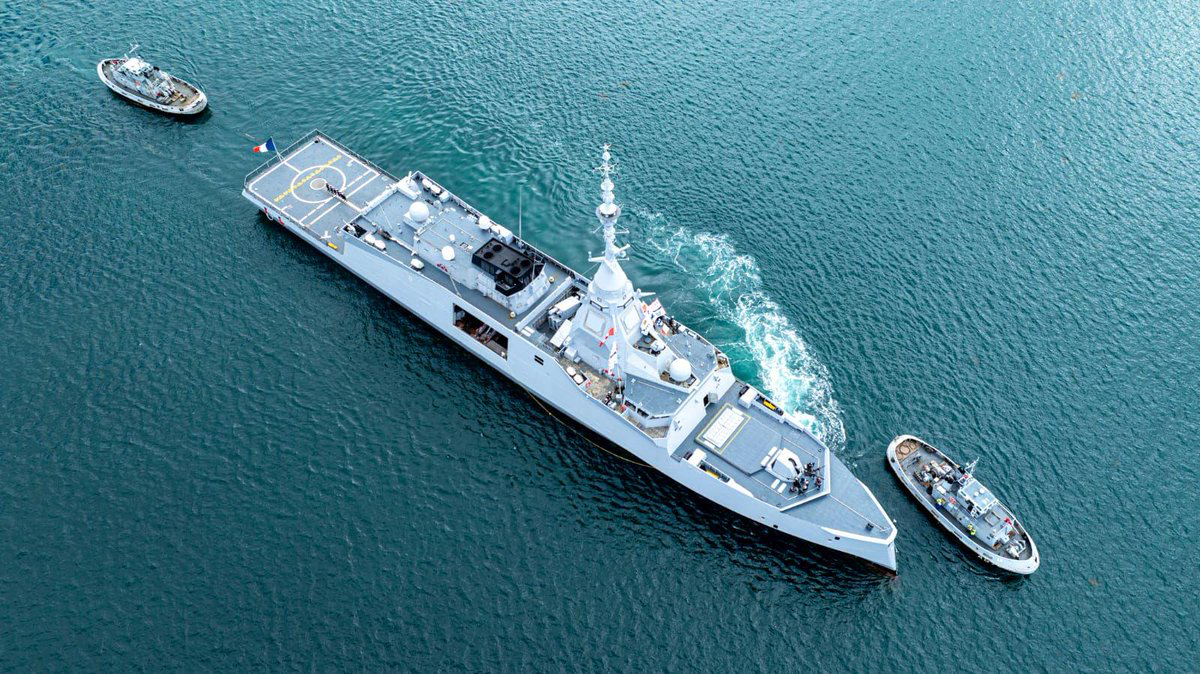
The French National Navy has decided to equip all five of its defense and intervention frigates (FDI, Amiral Ronarc’h class) with 32 SYLVER A50 cells instead of the 16 initially planned.
This increase doubles the missile firing capacity of Aster 15 and Aster 30 missiles, allowing the FDIs to shift from a close escort role to a true area air defense and antimissile capability.
Lessons learned from operations in the Red Sea, where 22 Aster missiles were fired in just four months, along with alignment with the standard of the Greek FDIs (Kimon class), have driven this strategic evolution.
The 4th and 5th frigates will be delivered directly with 32 cells, while the first three will be progressively modernized under the 2024-2030 Military Programming Law.
This increase doubles the missile firing capacity of Aster 15 and Aster 30 missiles, allowing the FDIs to shift from a close escort role to a true area air defense and antimissile capability.
Lessons learned from operations in the Red Sea, where 22 Aster missiles were fired in just four months, along with alignment with the standard of the Greek FDIs (Kimon class), have driven this strategic evolution.
The 4th and 5th frigates will be delivered directly with 32 cells, while the first three will be progressively modernized under the 2024-2030 Military Programming Law.
Joined: Apr 2020
Posts: 1,978
Likes: 376
From: Hampshire
FT opinion article Babcock’s cheaper warships offer the Royal Navy hope byJohn Gapper this morning, how Type 31 has been good for Babcock's performance and emphasising the importance of a regular drumbeat to preserve expertise and avoid future expense attempting to extend the service of obsolete/obsolescent ships. I am led to wonder who or what prompted it. (Behind paywall)
But the Gulf war has exposed how unformidable Britain’s navy has become. The US defence secretary Pete Hegseth was rude to mock the “big, bad Royal Navy” recently, but not wrong.
... the (T31) frigates may not start to enter service until late this decade. The Royal Navy had about 30 destroyers and frigates a quarter century ago but is reduced to 13 in service. Its fleet of seven frigates designed for anti-submarine warfare and general patrols is ageing fast. “The Navy is in a very difficult position, and its frigates are falling to bits,” says Steve Prest, associate fellow of the Royal United Services Institute, a defence think-tank.
...
These ships are “more available, more adaptable and more affordable”, says Sir Nick Hine, chief executive of Babcock’s marine division. They can also be built faster than others: Hine says his aim is to be able to assemble each one in less than four years. That is tempting not only for the UK but for allies wanting to expand their navies. It is good for Babcock, which was one of the best performers in the FTSE 100 last year. It is far smaller than BAE Systems, but this programme has allowed it to invest in Rosyth and build frigates, along with missile launch tubes for Royal and US Navy nuclear submarines. Babcock’s annual operating profit rose to £364mn last year from £242mn in 2024.
...
The challenge will be to keep it going when the frigates are finished. Shipyards depend on a “drumbeat” of production, and Babcock has learnt as it has gone along how to build ships more efficiently. HMS Formidable is the third and is being assembled in larger blocks with more parts fitted earlier. If the drumbeat falls silent when the fifth ship joins the Royal Navy, much of this knowledge could be wasted. Babcock is trying not to let it happen. The Navy wanted more Type 31s, but the number was capped by the Treasury. It now hopes for a fresh order for an updated frigate called the Type 32.
...
“Once you get good at making ships, keep going. It is very difficult to start again when you have stopped,” Prest remarks. There is an obvious industrial logic to continuity. Not only does it provide steady investment for one of the UK’s big defence groups but it helps to build Scotland’s economy and revive a valuable industry.
A shipbuilding drumbeat also makes military sense. The UK defence budget faces a £28bn shortfall over the next four years and the government has delayed its defence investment plan. But old warships require more repairs than modern ones and the Royal Navy needs to be renewed. Rosyth shows what the future could be.
... the (T31) frigates may not start to enter service until late this decade. The Royal Navy had about 30 destroyers and frigates a quarter century ago but is reduced to 13 in service. Its fleet of seven frigates designed for anti-submarine warfare and general patrols is ageing fast. “The Navy is in a very difficult position, and its frigates are falling to bits,” says Steve Prest, associate fellow of the Royal United Services Institute, a defence think-tank.
...
These ships are “more available, more adaptable and more affordable”, says Sir Nick Hine, chief executive of Babcock’s marine division. They can also be built faster than others: Hine says his aim is to be able to assemble each one in less than four years. That is tempting not only for the UK but for allies wanting to expand their navies. It is good for Babcock, which was one of the best performers in the FTSE 100 last year. It is far smaller than BAE Systems, but this programme has allowed it to invest in Rosyth and build frigates, along with missile launch tubes for Royal and US Navy nuclear submarines. Babcock’s annual operating profit rose to £364mn last year from £242mn in 2024.
...
The challenge will be to keep it going when the frigates are finished. Shipyards depend on a “drumbeat” of production, and Babcock has learnt as it has gone along how to build ships more efficiently. HMS Formidable is the third and is being assembled in larger blocks with more parts fitted earlier. If the drumbeat falls silent when the fifth ship joins the Royal Navy, much of this knowledge could be wasted. Babcock is trying not to let it happen. The Navy wanted more Type 31s, but the number was capped by the Treasury. It now hopes for a fresh order for an updated frigate called the Type 32.
...
“Once you get good at making ships, keep going. It is very difficult to start again when you have stopped,” Prest remarks. There is an obvious industrial logic to continuity. Not only does it provide steady investment for one of the UK’s big defence groups but it helps to build Scotland’s economy and revive a valuable industry.
A shipbuilding drumbeat also makes military sense. The UK defence budget faces a £28bn shortfall over the next four years and the government has delayed its defence investment plan. But old warships require more repairs than modern ones and the Royal Navy needs to be renewed. Rosyth shows what the future could be.
Joined: Aug 2009
Aviation Qualifications: Military
Posts: 9,328
Likes: 2,175
From: Texas
The US have approved a German FMS request for eight shipsets of AEGIS/SPY-6 CMS along with Mk41 VLS launch systems and other equipment for their future F127 AAW frigates.
Total contract value $11.9B.
https://www.state.gov/releases/burea...t-and-support/
Total contract value $11.9B.
https://www.state.gov/releases/burea...t-and-support/
Joined: Oct 2018
Aviation Qualifications: PPL
Posts: 12,213
Likes: 1,647
From: Ferrara
The Japanese seem to be able to keep a fairly steady rate of orders and upgrades to their surface fleet - but that requires a long term commitment and planning - neither of which the UK is famous for.

Joined: Apr 2006
Posts: 807
Likes: 425
From: Portsmouth
FT opinion article Babcock’s cheaper warships offer the Royal Navy hope byJohn Gapper this morning, how Type 31 has been good for Babcock's performance and emphasising the importance of a regular drumbeat to preserve expertise and avoid future expense attempting to extend the service of obsolete/obsolescent ships. I am led to wonder who or what prompted it. (Behind paywall)
To suggest that the T31 is inherently able to be built quicker than T26 is nonsense. The reason T26 is being built so slowly is down to BAES Clyde execrable productivity, which is seeing them deliver approximately one-third of the tonnage per annum that a late 80s / early 90s yard with the same manpower but vastly inferior facilities could do. If Babcock are aiming to cut the build time for a T31 to four years, that's just about in the acceptable duration, not anything to shout about....
Joined: Nov 2009
Posts: 668
Likes: 127
From: London
Well its a bit of a puff piece - probably instigated by Babcock to try and get some follow-on orders for T31.
To suggest that the T31 is inherently able to be built quicker than T26 is nonsense. The reason T26 is being built so slowly is down to BAES Clyde execrable productivity, which is seeing them deliver approximately one-third of the tonnage per annum that a late 80s / early 90s yard with the same manpower but vastly inferior facilities could do. If Babcock are aiming to cut the build time for a T31 to four years, that's just about in the acceptable duration, not anything to shout about....
To suggest that the T31 is inherently able to be built quicker than T26 is nonsense. The reason T26 is being built so slowly is down to BAES Clyde execrable productivity, which is seeing them deliver approximately one-third of the tonnage per annum that a late 80s / early 90s yard with the same manpower but vastly inferior facilities could do. If Babcock are aiming to cut the build time for a T31 to four years, that's just about in the acceptable duration, not anything to shout about....
Joined: Apr 2006
Posts: 807
Likes: 425
From: Portsmouth
I think this answer begs the question i.e. it's (sort of) saying "the reason the Clyde's productivity is bad is because their productivity is bad." Why is it bad? Whatever that is might be a difference versus the T-31...or not but how can one say if one doesn't know what it is?
Point being, its not actually the design of the ship that is particularly cheaper to build, its just that they're starting from the premise of building it as efficiently as possible, which is not the same as building a ship to maintain a level of work for each trade over a long period. Which is also why Babcock are now making noises about follow-on orders. They've probably got 25% of ship 4 steelwork done which means that in two years, their steel trades will be running out of work.
Joined: Nov 2009
Posts: 668
Likes: 127
From: London
Clyde productivity is poor because it is fundamentally based on keeping a certain number of each trade gainfully employed on a permanent basis - a result of the now-defunct ToBA, which was in turn a product of Lord Draysons Maritime Industrial Strategy from the mid-noughties. The original intent was good, but is long overtaken by events. However, the programme management in BAES which is responsible for delivering the ships, doesn't really understand shipbuilding any more and is marching to that tune. Babcocks started from the premise that they had to be cheaper and have sized their workforce to that end (less than half the staff on the Clyde).
Point being, its not actually the design of the ship that is particularly cheaper to build, its just that they're starting from the premise of building it as efficiently as possible, which is not the same as building a ship to maintain a level of work for each trade over a long period. Which is also why Babcock are now making noises about follow-on orders. They've probably got 25% of ship 4 steelwork done which means that in two years, their steel trades will be running out of work.
Point being, its not actually the design of the ship that is particularly cheaper to build, its just that they're starting from the premise of building it as efficiently as possible, which is not the same as building a ship to maintain a level of work for each trade over a long period. Which is also why Babcock are now making noises about follow-on orders. They've probably got 25% of ship 4 steelwork done which means that in two years, their steel trades will be running out of work.
Joined: Apr 2006
Posts: 807
Likes: 425
From: Portsmouth