


Future Carrier (Including Costs)


Joined: Apr 2006
Posts: 807
Likes: 425
From: Portsmouth
Today's Times has an article by Edward Lucas -
This shift to self-sufficiency involves not just huge costs but greater dangers and smaller ambitions. Europe would be downgrading from heavily subsidised, top-quality American defence to a patchier and riskier homegrown version. It would mean dumping dreams of global influence (in our case, goodbye to aircraft carriers, the Falklands, the Gulf, Australia) and focusing solely on the narrower task of countering Russian aggression.
Europe can defend itself but the price is high
Protection against Russia means giving up global ambitions and raising defence spending quickly
This shift to self-sufficiency involves not just huge costs but greater dangers and smaller ambitions. Europe would be downgrading from heavily subsidised, top-quality American defence to a patchier and riskier homegrown version. It would mean dumping dreams of global influence (in our case, goodbye to aircraft carriers, the Falklands, the Gulf, Australia) and focusing solely on the narrower task of countering Russian aggression.


Joined: Nov 2007
Posts: 501
Likes: 91
From: UK
Yep. His list of things we would need to "say goodbye" to looks like a clear example of the wish being the father of the thought. Anyway, under the terms of the SDR it's already clear that we'll be focussing much more on our own backyard including the high north etc. In part we seem to be toeing the US line - eg it's already being said that there will be no more forward basing out of area. But none of that requires dumping the Falklands - or indeed the carriers, much as some on here might wish it did.


Joined: Oct 2018
Aviation Qualifications: PPL
Posts: 12,213
Likes: 1,648
From: Ferrara
In 4 years time the Falklands will be producing a lot of oil - for 3000 people - they'll be able to do a Brunei and hire their own Gurkhas.
And Tto be faitr he does look at the relative steconomic strentghs o f NATo & Russia and reckons it would be no contest if everyone adopted the attitude of the Finns, Poles etc to re-armament. But who is going to step forward and lead - and make the cuts to the comfortable societies that we're all used to?
And Tto be faitr he does look at the relative steconomic strentghs o f NATo & Russia and reckons it would be no contest if everyone adopted the attitude of the Finns, Poles etc to re-armament. But who is going to step forward and lead - and make the cuts to the comfortable societies that we're all used to?
Joined: Jan 2008
Aviation Qualifications: SLF
Posts: 1,017
Likes: 1,065
From: Australia
In 4 years time the Falklands will be producing a lot of oil - for 3000 people - they'll be able to do a Brunei and hire their own Gurkhas.
And Tto be faitr he does look at the relative steconomic strentghs o f NATo & Russia and reckons it would be no contest if everyone adopted the attitude of the Finns, Poles etc to re-armament. But who is going to step forward and lead - and make the cuts to the comfortable societies that we're all used to?
And Tto be faitr he does look at the relative steconomic strentghs o f NATo & Russia and reckons it would be no contest if everyone adopted the attitude of the Finns, Poles etc to re-armament. But who is going to step forward and lead - and make the cuts to the comfortable societies that we're all used to?
With exception of the Finns, the Poles, and the Baltic states, no politicians come to mind. Merz perhaps.
Thread Starter
Joined: Feb 2002
Posts: 2,967
Likes: 100
From: Devon
By saying that RN carriers matter disproportionately (in a NATO context) I think that the author is making the point that British (and French, Italian, and Spanish) carriers are already deployed in the NATO theatre in their home port. Proximity has value.
Alternatively he might meant that they contribute more to alliance naval combat capability than other types of warship due to their ability to counter air, surface, and submarine threats at greater ranges.
Alternatively he might meant that they contribute more to alliance naval combat capability than other types of warship due to their ability to counter air, surface, and submarine threats at greater ranges.
Joined: Oct 2018
Aviation Qualifications: PPL
Posts: 12,213
Likes: 1,648
From: Ferrara
By saying that RN carriers matter disproportionately (in a NATO context) I think that the author is making the point that British (and French, Italian, and Spanish) carriers are already deployed in the NATO theatre in their home port. Proximity has value.
Alternatively he might meant that they contribute more to alliance naval combat capability than other types of warship due to their ability to counter air, surface, and submarine threats at greater ranges.
Alternatively he might meant that they contribute more to alliance naval combat capability than other types of warship due to their ability to counter air, surface, and submarine threats at greater ranges.
Last edited by Asturias56; 13th February 2026 at 10:06.
Ecce Homo! Loquitur...
Joined: Jul 2000
Aviation Qualifications: Spotter
Posts: 24,510
Likes: 7,255
From: Peripatetic
Type 31 programme update:
https://www.navylookout.com/building...gramme-update/
The Type 31 frigate programme has now moved into serial production, with multiple hulls now progressing in parallel. Following a visit to Rosyth to speak with the workforce, here we provide an overview of the current state of this major shipbuilding project.
https://www.navylookout.com/building...gramme-update/
The Type 31 frigate programme has now moved into serial production, with multiple hulls now progressing in parallel. Following a visit to Rosyth to speak with the workforce, here we provide an overview of the current state of this major shipbuilding project.
Ecce Homo! Loquitur...
Joined: Jul 2000
Aviation Qualifications: Spotter
Posts: 24,510
Likes: 7,255
From: Peripatetic
Video:
For those wondering how the TB3 managed to land autonomously on the TCG Anadolu's icy runway in sub-zero temperatures and strong winds in NATO exercise, here is the virtual corridor landing support system developed by Turkish engineers.
Ecce Homo! Loquitur...
Joined: Jul 2000
Aviation Qualifications: Spotter
Posts: 24,510
Likes: 7,255
From: Peripatetic
Note that they are not being bought and reactivated in support of RN fleet operations - unless the MOD wants to outbid others…
https://www.navalnews.com/naval-news...ctive-service/
Inocea Group to Acquire UK’s Wave-class Fast Naval Replenishment Fleet to Return Proven NATO Capability to Active Service
Inocea announced the signing of an agreement to acquire the United Kingdom’s Royal Fleet Auxiliary vessels Wave Knight and Wave Ruler, two of the most capable fast fleet tankers ever operated by a NATO navy.
https://www.navalnews.com/naval-news...ctive-service/
Inocea Group to Acquire UK’s Wave-class Fast Naval Replenishment Fleet to Return Proven NATO Capability to Active Service
Inocea announced the signing of an agreement to acquire the United Kingdom’s Royal Fleet Auxiliary vessels Wave Knight and Wave Ruler, two of the most capable fast fleet tankers ever operated by a NATO navy.
Inocea Group press release
For two decades, the Wave class platforms sustained British and allied naval forces in all major theatres of operation worldwide. Designed for high-tempo fleet operations, they combine speed, endurance, aviation facilities and full Replenishment-at-Sea (RAS) capability in a modern double-hulled platform. Built to full naval standards, the vessels are sovereign enablers of sustained and expeditionary maritime power.
The vessels have been maintained in extended readiness, preserved in class and are in excellent technical condition.
In an increasingly volatile threat environment with sustained pressure on allied naval forces, the rapid availability of these sovereign logistics platforms supports credible deterrence and extends operational reach. These fast fleet tankers are strategic enablers, extending the endurance, independence and expeditionary capability of naval task forces. Returning them to service meets the urgent need for rapidly deployable, world-class support for allied fleets.
Inocea will leverage its long experience in building, refitting, owning, operating and maintaining similar vessels – notably Combat Support Ship Asterix which has served 21 NATO and allied forces in 536 operations with distinction since 2018.
Wave Knight and Wave Ruler will be reactivated to full operational readiness under class and flag-state requirements and operated by Inocea companies to support allied navies.
For two decades, the Wave class platforms sustained British and allied naval forces in all major theatres of operation worldwide. Designed for high-tempo fleet operations, they combine speed, endurance, aviation facilities and full Replenishment-at-Sea (RAS) capability in a modern double-hulled platform. Built to full naval standards, the vessels are sovereign enablers of sustained and expeditionary maritime power.
The vessels have been maintained in extended readiness, preserved in class and are in excellent technical condition.
In an increasingly volatile threat environment with sustained pressure on allied naval forces, the rapid availability of these sovereign logistics platforms supports credible deterrence and extends operational reach. These fast fleet tankers are strategic enablers, extending the endurance, independence and expeditionary capability of naval task forces. Returning them to service meets the urgent need for rapidly deployable, world-class support for allied fleets.
Inocea will leverage its long experience in building, refitting, owning, operating and maintaining similar vessels – notably Combat Support Ship Asterix which has served 21 NATO and allied forces in 536 operations with distinction since 2018.
Wave Knight and Wave Ruler will be reactivated to full operational readiness under class and flag-state requirements and operated by Inocea companies to support allied navies.
Joined: Oct 2018
Aviation Qualifications: PPL
Posts: 12,213
Likes: 1,648
From: Ferrara
Note that they are not being bought and reactivated in support of RN fleet operations - unless the MOD wants to outbid others…
https://www.navalnews.com/naval-news...ctive-service/
Inocea Group to Acquire UK’s Wave-class Fast Naval Replenishment Fleet to Return Proven NATO Capability to Active Service
Inocea announced the signing of an agreement to acquire the United Kingdom’s Royal Fleet Auxiliary vessels Wave Knight and Wave Ruler, two of the most capable fast fleet tankers ever operated by a NATO navy.
https://www.navalnews.com/naval-news...ctive-service/
Inocea Group to Acquire UK’s Wave-class Fast Naval Replenishment Fleet to Return Proven NATO Capability to Active Service
Inocea announced the signing of an agreement to acquire the United Kingdom’s Royal Fleet Auxiliary vessels Wave Knight and Wave Ruler, two of the most capable fast fleet tankers ever operated by a NATO navy.
Ecce Homo! Loquitur...
Joined: Jul 2000
Aviation Qualifications: Spotter
Posts: 24,510
Likes: 7,255
From: Peripatetic
Perhaps, but if I had to equate to AAR it seems more comparable to Omega Air Refuelling rather than Air Tanker which has a war role and a cadre of RAF crews.
With Inocea what is the combat status and training of their crews and would they vanish over the horizon if a shooting was involved?
With Inocea what is the combat status and training of their crews and would they vanish over the horizon if a shooting was involved?
Joined: Apr 2006
Posts: 807
Likes: 425
From: Portsmouth
1. It's electric and generates and distributes at 6.6kV, which means you need a specific engineering ticket to maintain and operate it. Trouble is that the RFA pay and conditions have deteriorated to such a degree that recruiting and retaining suitable engineering staff (with ticket) to operate the ships is very difficult, when commercial seafaring jobs are much better paid (and said tickets in high demand). That is why they've been laid up for the best part of ten years.
2. The plant is single shaft. That means that certain elements of the MoD have decided that - for reasons - it is unsafe for the ships to be used to replenish QEC (at least in an abeam connected style). This is despite the ships having historically refuelled USN carriers in the past and more pertinently, despite the recent Op Highmast deployment including PWLS replenishing abeam from single shaft US MSC ships. It remains to be seen whether this alters policy, but in any case, point 1 still applies.
It's an interesting model that Inocea are pursuing. I wasn't aware they'd gone that far, but it is in essence an Air Tanker facsimile for the RCN. Be interesting to see if NATO takes it up. Will entirely depend on whether they can overcome the engineering crewing constraints though.
Ecce Homo! Loquitur...
Joined: Jul 2000
Aviation Qualifications: Spotter
Posts: 24,510
Likes: 7,255
From: Peripatetic
The MoD isn't going to bid for them for the simple reason that they're quite glad they're going.
I'm presuming they will provide them on a wet lease with their own employed crews.
Joined: Apr 2006
Posts: 807
Likes: 425
From: Portsmouth
That idea has been floating round MoD for a long time, usually by people who didn't understand what the RFA is/does. Will be interesting to see where Inoces try to operate them. Trade off between lease cost and availability of log stops in European waters will be different from Canadian waters.
Thread Starter
Joined: Feb 2002
Posts: 2,967
Likes: 100
From: Devon
The carrier puts fighters in close proximity to the assets or area to be defended without needing an excessive number of aircraft, and Geography, Mathematics, and Physics show that attacking aircraft carrying anti ship missiles are best dealt with using fighters to kill the archers, not the arrows. Airborne radar can see far beyond the radar horizon of shipborne ones and can detect low altitude targets at range, and fighters provide the means for interception and visual identification beyond the horizon, and engagement far beyond the range of shipborne missile systems.
Constant ASW helicopter operations are best supported by a large deck with multiple helicopters, as collocating them simplifies coordination, communications, and maintenance and support...
This is of course of from conclusion B on the carrier/sea control thread, and part of my list of specific posts.
1. The initial post - which contains a link to an official report, my main conclusions, and is of course the start of the thread.
2. The comment by a former US Navy flyer that the main role of the [USN] carrier in the Atlantic was Anti Air Warfare.
3. The employment of USN helicopters in lieu of the old S-3 Viking.
4. Early USN recognition of the value of ASW helicopters.
5. Exercise Teamwork 88.
6. Intercepting Russian aircraft and tracking Russian submarines during the CSG21 deployment.
7. The late Professor Eric Grove speaking at the IISS about the Cold War and today.
8. 1980s US Naval Strategy.
9. The potential vulnerability of Soviet cruise missile firing submarines.
10. Dr John Lehman talking about the NATO Maritime Strategy.
11. Routine NATO ASW.
12. The late Sharkey Ward talking about defence in depth and the limitations of the Invincible class.
13. Videos from the CSG21 deployment - including intercepting Russian aircraft and tracking their submarines.
14. Using airborne radar to keep submarines down and to cause them difficulty.
15. Early RN recognition of the importance of the ASW helicopter with dipping sonar.
16. The reasons for putting multiple ASW helicopters in one ship.
17. Video of Sonar 2087/Merlin combination.
18. CVF Residual Threats Study - yes, they were always intended to be able to protect task groups or forces ashore.
19. A 2008 exercise pairing a frigate with sonar 2087 and Merlins aboard a carrier.
20. The RN Maritime Operating Concept and similar US documents.
21. Air defence and Shooting Archers - naval fighters for long range defence.
22. Carrier operations in the Adriatic in the 1990s.
23. USN Super Hornets splashing Houthi anti ship missiles.
24. A simple scenario with simple speed/time/distance calculations.
25. The ability of USN fighters from the carrier in the Red Sea to respond to ships being attacked. Proximity is a virtue.
26. The control of intercepts by surface warships.
27. Control of Sea Harrier intercepts by destroyers in the Falklands - a key role for the anti air warfare ship.
28. Russian use of the TU-22 bomber and the Kh-22 anti ship missile.
29. Simple calculations to demonstrate defence in depth.
30. A Navy Lookout article of the carrier and sea control.
31. A post containing a quote from the JAPCC about airborne ASW - and the ability of ASW helicopters to protect the ships in a task group.
32. Exercise Steadfast Defender 24.
2. The comment by a former US Navy flyer that the main role of the [USN] carrier in the Atlantic was Anti Air Warfare.
3. The employment of USN helicopters in lieu of the old S-3 Viking.
4. Early USN recognition of the value of ASW helicopters.
5. Exercise Teamwork 88.
6. Intercepting Russian aircraft and tracking Russian submarines during the CSG21 deployment.
7. The late Professor Eric Grove speaking at the IISS about the Cold War and today.
8. 1980s US Naval Strategy.
9. The potential vulnerability of Soviet cruise missile firing submarines.
10. Dr John Lehman talking about the NATO Maritime Strategy.
11. Routine NATO ASW.
12. The late Sharkey Ward talking about defence in depth and the limitations of the Invincible class.
13. Videos from the CSG21 deployment - including intercepting Russian aircraft and tracking their submarines.
14. Using airborne radar to keep submarines down and to cause them difficulty.
15. Early RN recognition of the importance of the ASW helicopter with dipping sonar.
16. The reasons for putting multiple ASW helicopters in one ship.
17. Video of Sonar 2087/Merlin combination.
18. CVF Residual Threats Study - yes, they were always intended to be able to protect task groups or forces ashore.
19. A 2008 exercise pairing a frigate with sonar 2087 and Merlins aboard a carrier.
20. The RN Maritime Operating Concept and similar US documents.
21. Air defence and Shooting Archers - naval fighters for long range defence.
22. Carrier operations in the Adriatic in the 1990s.
23. USN Super Hornets splashing Houthi anti ship missiles.
24. A simple scenario with simple speed/time/distance calculations.
25. The ability of USN fighters from the carrier in the Red Sea to respond to ships being attacked. Proximity is a virtue.
26. The control of intercepts by surface warships.
27. Control of Sea Harrier intercepts by destroyers in the Falklands - a key role for the anti air warfare ship.
28. Russian use of the TU-22 bomber and the Kh-22 anti ship missile.
29. Simple calculations to demonstrate defence in depth.
30. A Navy Lookout article of the carrier and sea control.
31. A post containing a quote from the JAPCC about airborne ASW - and the ability of ASW helicopters to protect the ships in a task group.
32. Exercise Steadfast Defender 24.
Joined: Oct 2018
Aviation Qualifications: PPL
Posts: 12,213
Likes: 1,648
From: Ferrara
Perhaps, but if I had to equate to AAR it seems more comparable to Omega Air Refuelling rather than Air Tanker which has a war role and a cadre of RAF crews.
With Inocea what is the combat status and training of their crews and would they vanish over the horizon if a shooting was involved?
With Inocea what is the combat status and training of their crews and would they vanish over the horizon if a shooting was involved?
Yes but 99% of the time there is no war taking place. Right now things are soooo stretched that the failure of the smallest cog can throw things into disarray. This way you might get more reliable training and routine patrols for example
Joined: May 2003
Posts: 3,081
Likes: 252
From: London/Oxford/New York
Logic - what logic? The argument that carriers already based in the European area are important because they are able to rapidly deploy to places such as the Norwegian Sea is very similar to the argument for deploying a carrier as part of your naval forces.
The carrier puts fighters in close proximity to the assets or area to be defended without needing an excessive number of aircraft, and Geography, Mathematics, and Physics show that attacking aircraft carrying anti ship missiles are best dealt with using fighters to kill the archers, not the arrows. Airborne radar can see far beyond the radar horizon of shipborne ones and can detect low altitude targets at range, and fighters provide the means for interception and visual identification beyond the horizon, and engagement far beyond the range of shipborne missile systems.
Constant ASW helicopter operations are best supported by a large deck with multiple helicopters, as collocating them simplifies coordination, communications, and maintenance and support...
This is of course of from conclusion B on the carrier/sea control thread, and part of my list of specific posts.
1, 2, 21, 24, and 30 address your idea with respect to embarked jets, 1, 3, 14, 16, 17, and 30 address your point with respect to ASW helicopters (which cannot sensibly be operated from a distant airfield due to their shorter range and lower speed).
The carrier puts fighters in close proximity to the assets or area to be defended without needing an excessive number of aircraft, and Geography, Mathematics, and Physics show that attacking aircraft carrying anti ship missiles are best dealt with using fighters to kill the archers, not the arrows. Airborne radar can see far beyond the radar horizon of shipborne ones and can detect low altitude targets at range, and fighters provide the means for interception and visual identification beyond the horizon, and engagement far beyond the range of shipborne missile systems.
Constant ASW helicopter operations are best supported by a large deck with multiple helicopters, as collocating them simplifies coordination, communications, and maintenance and support...
This is of course of from conclusion B on the carrier/sea control thread, and part of my list of specific posts.
1, 2, 21, 24, and 30 address your idea with respect to embarked jets, 1, 3, 14, 16, 17, and 30 address your point with respect to ASW helicopters (which cannot sensibly be operated from a distant airfield due to their shorter range and lower speed).

Joined: Apr 2020
Posts: 1,978
Likes: 376
From: Hampshire
Farewell thou good and faithful servant.
The expected announcement that RFA Argus to be scrapped has been made. Yet another capability gap confirmed (strictly speaking several capabilty gaps given her multiple roles).
I felt a sense of inevitabiliy taking this photo of her alongside PRJ ahead of PWLS a few weeks ago,
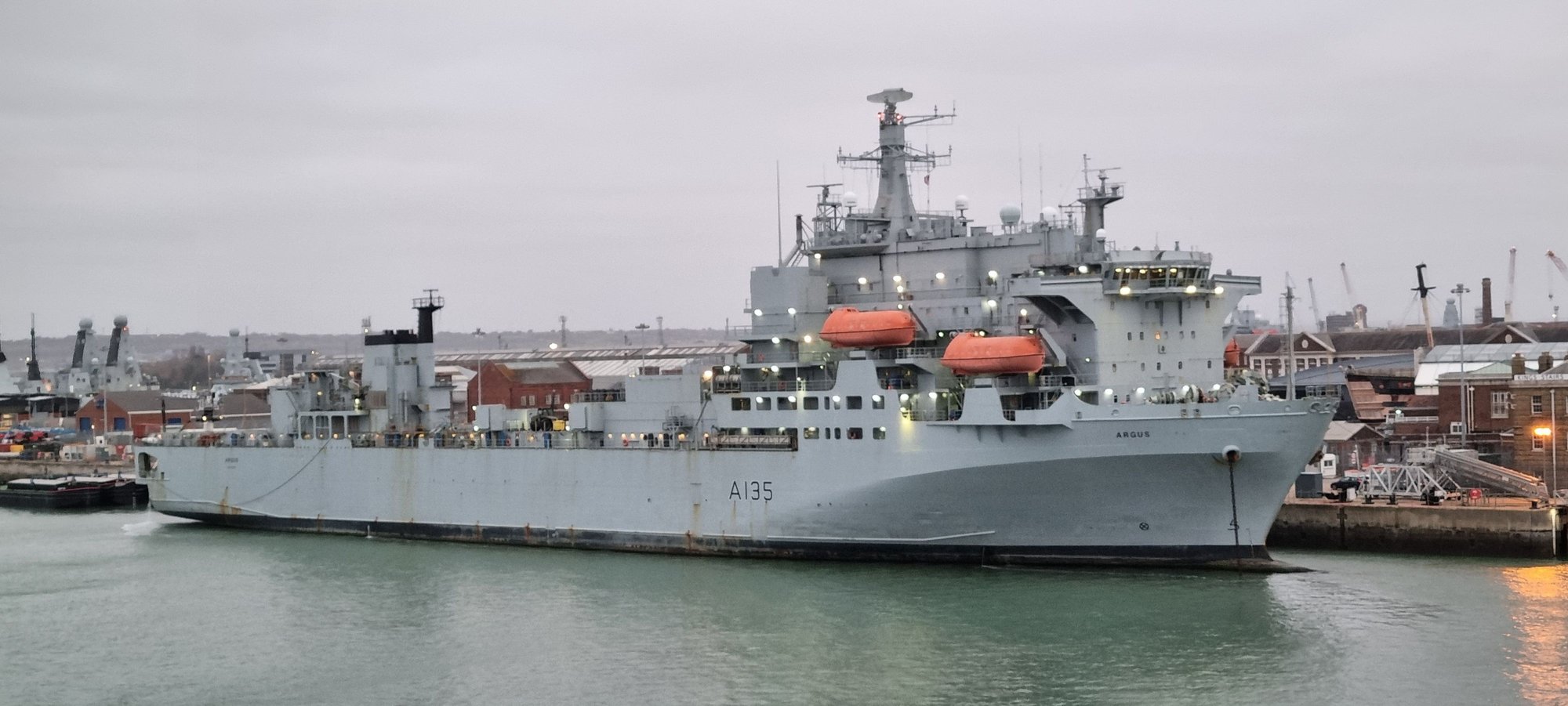
The expected announcement that RFA Argus to be scrapped has been made. Yet another capability gap confirmed (strictly speaking several capabilty gaps given her multiple roles).
I felt a sense of inevitabiliy taking this photo of her alongside PRJ ahead of PWLS a few weeks ago,
Joined: Dec 2001
Posts: 1,471
Likes: 844
From: Here 'n' there!
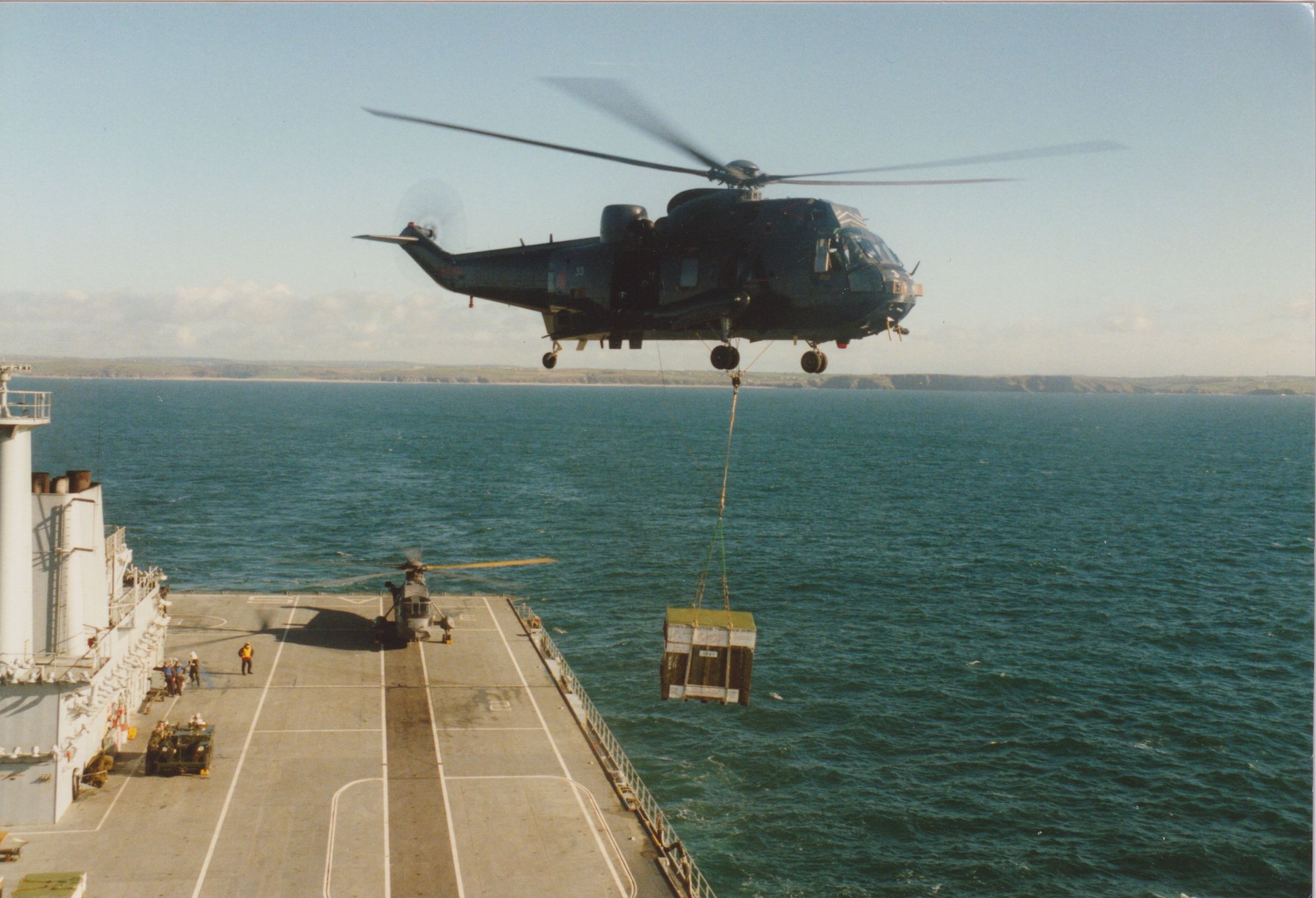
This photo is actually quite rare ....................... with the sun actually shining in Cornwall!
 IIR this was 810 NAS disembarking back to Cu in Mounts Bay in the late '80's with the photo taken from FLYCO of one of the non-810 Cabs that had flown out to assist with the task of lifting and shifting gear off the ship. Things were still a bit shabby after an epic "Down the Irish Sea" night in the Mess the previous night but that is another story!
Joined: Apr 2020
Posts: 1,978
Likes: 376
From: Hampshire
Good to read first steel has been cut for Bulldog the 4th T31, the keel was laid for Formidable the 3rd early in last December and Active has apeared in the open and will shortly be afloat. As N_a_b has implied elsewhere even if Active has appeared a year earlier than Venturer if the Frigate Gap is to be filled expeditiously the UK ship building industry still needs to improve its skill set and efficiency.

