


Future Carrier (Including Costs)


Joined: Apr 2006
Posts: 807
Likes: 425
From: Portsmouth
Hmmmm. The reason the frigates are being retired early, is because they have been run to something like twice their design life and to allow them to keep going would require very intrusive and expensive refits. Said refits would also take a very long time so the additional ship time available would be small. In other words, very poor bang for buck.
Unless I missed something, the idea that they can't be manned is a bit of throwaway speculation in the NL article, rather than the "fact" that some seem to be taking it as.
Interestingly, if you add up the complements of both carriers, the 19 nominal DD/FF, 11 submarines, 6 MCMV (plus spare crew) and eight OPV, you end up with about 8500 billets. Add in another 1000 for the 9 or so NAS and another 1000 or so for RFA and you get to 10500. From a trained strength of about 28000 including Royal. So easily a sea/shore ratio of 1:1. Which as we know means that it's not a raw numbers game as some are suggesting, less still caused (along with famine, pestilence, disease, poverty, global warming, crime epidemics and the cost of living crisis) "by the carriers".
It's actually shortage of specific roles particularly in engineering trades stemming from some piss-poor personnel policies and initiatives ever since Topmast. Compounded by an ever more prescriptive training system where the shortage of seagoing billets (see knackered frigates) is making it harder to grow those people.
Unless I missed something, the idea that they can't be manned is a bit of throwaway speculation in the NL article, rather than the "fact" that some seem to be taking it as.
Interestingly, if you add up the complements of both carriers, the 19 nominal DD/FF, 11 submarines, 6 MCMV (plus spare crew) and eight OPV, you end up with about 8500 billets. Add in another 1000 for the 9 or so NAS and another 1000 or so for RFA and you get to 10500. From a trained strength of about 28000 including Royal. So easily a sea/shore ratio of 1:1. Which as we know means that it's not a raw numbers game as some are suggesting, less still caused (along with famine, pestilence, disease, poverty, global warming, crime epidemics and the cost of living crisis) "by the carriers".
It's actually shortage of specific roles particularly in engineering trades stemming from some piss-poor personnel policies and initiatives ever since Topmast. Compounded by an ever more prescriptive training system where the shortage of seagoing billets (see knackered frigates) is making it harder to grow those people.


Joined: Nov 2007
Posts: 501
Likes: 91
From: UK
Perhaps worth mentioning in passing that T26 and T31 will have smaller crews than the outgoing T23s. Which isn't to say crewing them won't still be a challenge, but should help a bit...
Approx figures:
T23 - 185
T26 - 160
T31 - 100.
Approx figures:
T23 - 185
T26 - 160
T31 - 100.
Joined: Apr 2006
Posts: 807
Likes: 425
From: Portsmouth
Joined: May 2007
Posts: 241
Likes: 41
From: South Glos
If the US are serious about UK carriers replacing theirs in the Atlantic, perhaps they will agree to support such deployments with surface and subsurface escorts?


Joined: Oct 2018
Aviation Qualifications: PPL
Posts: 12,213
Likes: 1,648
From: Ferrara
I've never seen any thing that says a UK carrier group wouldn't have an SSN in attendance. Fine if you can manage with an SSK but that's a big change in capability. Can an SSK even keep up with a carrier for any length of time if it's submerged?
As to NATO - I don't think the French have much spare SSN capaciity and the US? Who knows these days - depends who we have to go and ask for a favour.
Joined: Apr 2006
Posts: 807
Likes: 425
From: Portsmouth
Not necessary if they're just going round the IoW or up to Scotland for a refit but anywhere else?
I've never seen any thing that says a UK carrier group wouldn't have an SSN in attendance. Fine if you can manage with an SSK but that's a big change in capability. Can an SSK even keep up with a carrier for any length of time if it's submerged?
As to NATO - I don't think the French have much spare SSN capaciity and the US? Who knows these days - depends who we have to go and ask for a favour.
I've never seen any thing that says a UK carrier group wouldn't have an SSN in attendance. Fine if you can manage with an SSK but that's a big change in capability. Can an SSK even keep up with a carrier for any length of time if it's submerged?
As to NATO - I don't think the French have much spare SSN capaciity and the US? Who knows these days - depends who we have to go and ask for a favour.
And no, SSK are not the answer - at least not in terms of a permanent attachment to the group. Which takes us back to point 2 - where you're assuming a lot about stuff you don't really understand.
Joined: May 2009
Posts: 1,909
Likes: 129
From: Here
That aside, PoW didn't have a UK SSN as part of the 2025 group after Astute had to come home early to sit alongside waiting a dry dock to become available.
Ecce Homo! Loquitur...
Joined: Jul 2000
Aviation Qualifications: Spotter
Posts: 24,510
Likes: 7,255
From: Peripatetic
https://www.yahoo.com/news/articles/...ycsrp_catchall
Portugal builds Europe's first dedicated drone carrier, D João II
Portugal is building Europe's first dedicated drone carrier, a warship designed to operate unmanned aerial, surface and underwater systems that could challenge the dominance of traditional aircraft carriers.
The 107.6-metre NRPD João II is scheduled for delivery in the second half of this year. Dutch company Damen is building the vessel in Romania's Galati at a total cost of €132 million, mostly funded by EU recovery funds.
The warship can switch between different mission profiles within a week by swapping out systems and equipment. "This approach allows the ship to maintain high functional flexibility, switching between different mission profiles without significant structural compromises," Ricardo Sá Granja, spokesman for the Portuguese Navy, said.
The project was conceived by Henrique Gouveia e Melo, former Chief of Staff of the Navy and candidate in this year's presidential elections. At the contract signing in November 2023, Gouveia e Melo called it "a point of no return for modernity".
The Portuguese Navy did not patent the concept. The company that won the tender has already received expressions of interest from navies in other European countries.
Cost advantage over traditional carriers
Unmanned systems allow military forces of smaller countries to extend their operational reach at reduced costs. A US Ford-class nuclear aircraft carrier costs around $13 billion, while Britain's Queen Elizabeth has a price tag of over $1 billion.
Drones allow forces to concentrate and project power more quickly with lower risks for operators. At least three navies have already acquired or are developing flat-deck ships designed to carry autonomous aerial systems: China, Iran and Turkey.
The D João II is designed to reach 15.5 knots and carry a crew of 48, with space for 42 specialists, including scientists and drone operators. In emergencies, it can temporarily accommodate a further 100 to 200 people. The 94-metre deck allows landing and launching of aerial drones. The ship has a hangar for assembling and maintaining vehicles, plus systems including a stern ramp for launching surface and underwater drones.
The vessel can accommodate 18 containers including hyperbaric chambers and hospital structures, 18 light vehicles and 10 boats. A remotely operated vehicle can reach depths of 6,000 metres. The vessel was designed for 45 days of autonomy, allowing long operations without close logistical support.
From science to security
Mission profiles include collecting real-time data on Portuguese waters, environmental monitoring, search and rescue operations, disaster assistance, maritime surveillance and evacuating citizens from conflict zones.
The vessel can operate multiple unmanned vehicles simultaneously. Aerial and surface drones will be used for environmental monitoring, maritime surveillance and oceanographic data collection. Underwater vehicles will conduct inspection, detection and seabed mapping.
Unmanned systems on board will be nationally manufactured whenever possible. The Navy has established cooperation protocols with Portuguese companies producing such vehicles. International partnerships are also planned. Last year, Portuguese Prime Minister Luís Montenegro signed an agreement with Ukraine for joint production of underwater drones during his first visit to Kyiv as head of government.
"Portugal and Ukraine have unmanned vehicle expertise that is at the forefront of the world today," Montenegro said.......
https://en.wikipedia.org/wiki/NRP_D._João_II
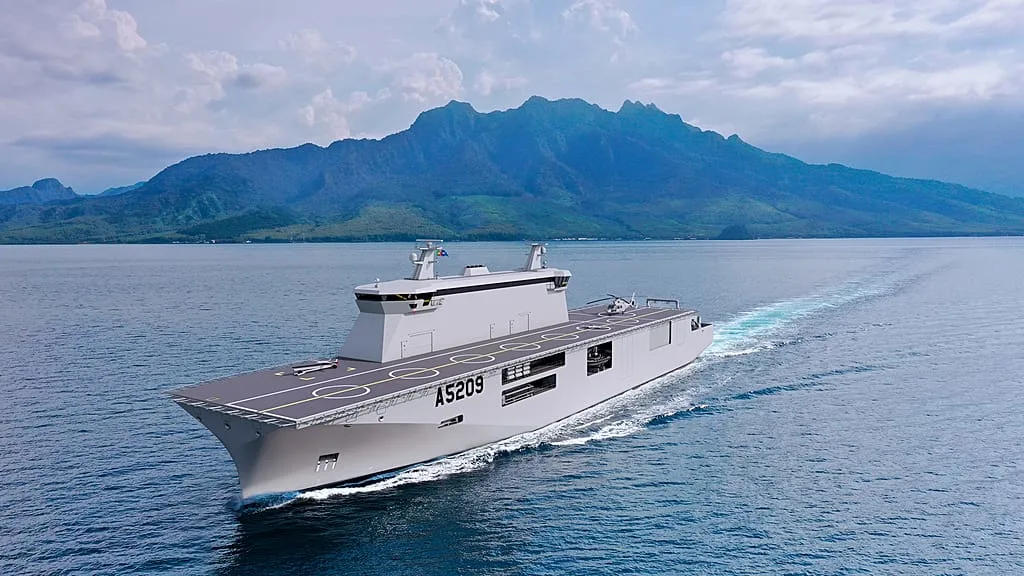
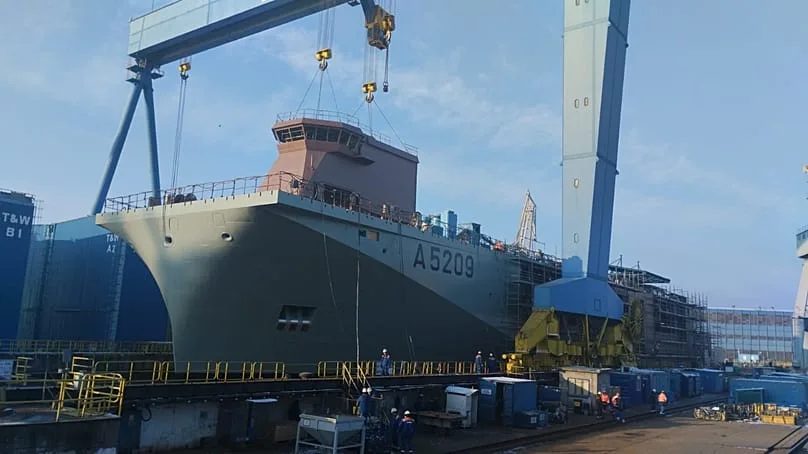
Portugal is building Europe's first dedicated drone carrier, a warship designed to operate unmanned aerial, surface and underwater systems that could challenge the dominance of traditional aircraft carriers.
The 107.6-metre NRPD João II is scheduled for delivery in the second half of this year. Dutch company Damen is building the vessel in Romania's Galati at a total cost of €132 million, mostly funded by EU recovery funds.
The warship can switch between different mission profiles within a week by swapping out systems and equipment. "This approach allows the ship to maintain high functional flexibility, switching between different mission profiles without significant structural compromises," Ricardo Sá Granja, spokesman for the Portuguese Navy, said.
The project was conceived by Henrique Gouveia e Melo, former Chief of Staff of the Navy and candidate in this year's presidential elections. At the contract signing in November 2023, Gouveia e Melo called it "a point of no return for modernity".
The Portuguese Navy did not patent the concept. The company that won the tender has already received expressions of interest from navies in other European countries.
Cost advantage over traditional carriers
Unmanned systems allow military forces of smaller countries to extend their operational reach at reduced costs. A US Ford-class nuclear aircraft carrier costs around $13 billion, while Britain's Queen Elizabeth has a price tag of over $1 billion.
Drones allow forces to concentrate and project power more quickly with lower risks for operators. At least three navies have already acquired or are developing flat-deck ships designed to carry autonomous aerial systems: China, Iran and Turkey.
The D João II is designed to reach 15.5 knots and carry a crew of 48, with space for 42 specialists, including scientists and drone operators. In emergencies, it can temporarily accommodate a further 100 to 200 people. The 94-metre deck allows landing and launching of aerial drones. The ship has a hangar for assembling and maintaining vehicles, plus systems including a stern ramp for launching surface and underwater drones.
The vessel can accommodate 18 containers including hyperbaric chambers and hospital structures, 18 light vehicles and 10 boats. A remotely operated vehicle can reach depths of 6,000 metres. The vessel was designed for 45 days of autonomy, allowing long operations without close logistical support.
From science to security
Mission profiles include collecting real-time data on Portuguese waters, environmental monitoring, search and rescue operations, disaster assistance, maritime surveillance and evacuating citizens from conflict zones.
The vessel can operate multiple unmanned vehicles simultaneously. Aerial and surface drones will be used for environmental monitoring, maritime surveillance and oceanographic data collection. Underwater vehicles will conduct inspection, detection and seabed mapping.
Unmanned systems on board will be nationally manufactured whenever possible. The Navy has established cooperation protocols with Portuguese companies producing such vehicles. International partnerships are also planned. Last year, Portuguese Prime Minister Luís Montenegro signed an agreement with Ukraine for joint production of underwater drones during his first visit to Kyiv as head of government.
"Portugal and Ukraine have unmanned vehicle expertise that is at the forefront of the world today," Montenegro said.......
https://en.wikipedia.org/wiki/NRP_D._João_II

Joined: Dec 2012
Aviation Qualifications: LAME
Posts: 1,155
Likes: 820
From: Co. Down
Well done Portugal! This comes as a surprise and an ingenious one at that. Might be more use than our two white elephants which we neither the money to run nor the money to equip ...
Joined: Dec 2012
Aviation Qualifications: LAME
Posts: 1,155
Likes: 820
From: Co. Down
Astonishing, no idea that Turkey was so far ahead. The Ukraine war has revolutionised warfare in the space of a couple of years, it's like going from flintlock musket to Kalashnikov.
Joined: Apr 2006
Posts: 807
Likes: 425
From: Portsmouth
Video on this link of drone launch and recovery from a Turkish carrier.
https://www.aa.com.tr/tr/savunma-san...-sorti/3545781
https://www.aa.com.tr/tr/savunma-san...-sorti/3545781
Lord alone knows what the Portuguese will manage to get off their ship, but a substitute capability for a carrier, it will not be.
Joined: Apr 2006
Posts: 807
Likes: 425
From: Portsmouth
Point being, those hi-lift STOL drones (yes MQ9 we mean you) are all well and good. But not exactly a capability for anything other than ISR at the minute...
Thread Starter
Joined: Feb 2002
Posts: 2,967
Likes: 100
From: Devon
Originally Posted by WE Branch Fanatic
Running on empty – how the Royal Navy nearly kept HMS Ark Royal into the 1980s
Royal Navy Carriers matter disproportionately. Admiral Kidd’s 1978 reminder of the unique value of RN carriers remains valid. Today, with the USN focused on China, NATO may again rely heavily on Britain’s Queen Elizabeth class to secure the Atlantic. Nearly fifty years after Ark Royal paid off, Royal Navy strike carriers continue to provide NATO with capabilities far out of proportion to their number.
Royal Navy Carriers matter disproportionately. Admiral Kidd’s 1978 reminder of the unique value of RN carriers remains valid. Today, with the USN focused on China, NATO may again rely heavily on Britain’s Queen Elizabeth class to secure the Atlantic. Nearly fifty years after Ark Royal paid off, Royal Navy strike carriers continue to provide NATO with capabilities far out of proportion to their number.
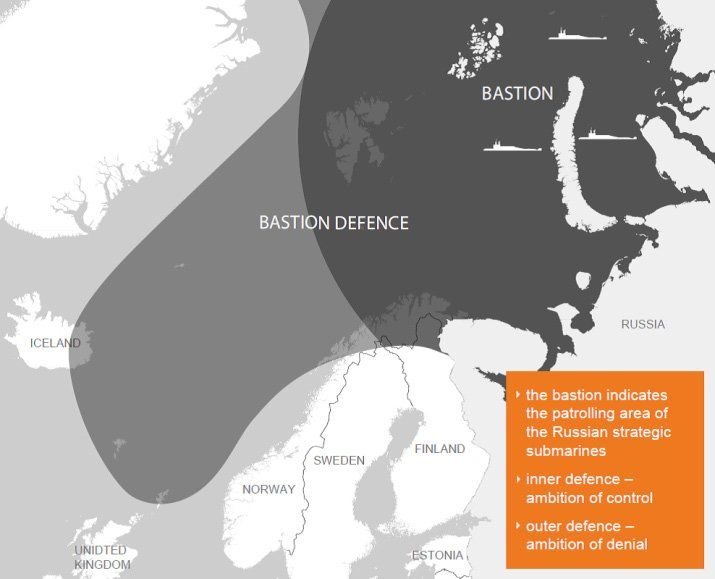
Britain’s world: The strategy of security in twelve geopolitical maps - Council on Geostrategy
 Page 50- Defending Europe.
The 'GIUK' Gap shown is the not the old GIUK Gap, it is the Greenland -Iceland -Norway Gap favoured by NATO since the early 1980s and does not involve surrendering the Norwegian Sea or the Nordics.
The Northerly deployment of the RN (with attached NATO units) Carrier Strike Group is shown. The main strength of the Russian Northern Fleet is submarines (many with long range missiles) and long range anti ship missile carrying bombers - so a deck full of F-35Bs (working in conjunction with and controlled by AAW warships), and multiple ASW helicopters (working in conjunction with and cued by frigates with towed arrays), and controlling things such as NATO submarines and MPA, is going to be essential.
This map illustrates that pretty much the whole Norwegian Sea is an area the Russians would wish to deny to NATO. NATO needs to be able to reinforce and resupply by sea, and to have amphibious options.
I accept that the carrier/sea control thread is quite long, so here are links to specific posts that discuss particular things:
1. The initial post - which contains a link to an official report, my main conclusions, and is of course the start of the thread.
2. The comment by a former US Navy flyer that the main role of the [USN] carrier in the Atlantic was Anti Air Warfare.
3. The employment of USN helicopters in lieu of the old S-3 Viking.
4. Early USN recognition of the value of ASW helicopters.
5. Exercise Teamwork 88.
6. Intercepting Russian aircraft and tracking Russian submarines during the CSG21 deployment.
7. The late Professor Eric Grove speaking at the IISS about the Cold War and today.
8. 1980s US Naval Strategy.
9. The potential vulnerability of Soviet cruise missile firing submarines.
10. Dr John Lehman talking about the NATO Maritime Strategy.
11. Routine NATO ASW.
12. The late Sharkey Ward talking about defence in depth and the limitations of the Invincible class.
13. Videos from the CSG21 deployment - including intercepting Russian aircraft and tracking their submarines.
14. Using airborne radar to keep submarines down and to cause them difficulty.
15. Early RN recognition of the importance of the ASW helicopter with dipping sonar.
16. The reasons for putting multiple ASW helicopters in one ship.
17. Video of Sonar 2087/Merlin combination.
18. CVF Residual Threats Study - yes, they were always intended to be able to protect task groups or forces ashore.
19. A 2008 exercise pairing a frigate with sonar 2087 and Merlins aboard a carrier.
20. The RN Maritime Operating Concept and similar US documents.
21. Air defence and Shooting Archers - naval fighters for long range defence.
22. Carrier operations in the Adriatic in the 1990s.
23. USN Super Hornets splashing Houthi anti ship missiles.
24. A simple scenario with simple speed/time/distance calculations.
25. The ability of USN fighters from the carrier in the Red Sea to respond to ships being attacked. Proximity is a virtue.
26. The control of intercepts by surface warships.
27. Control of Sea Harrier intercepts by destroyers in the Falklands - a key role for the anti air warfare ship.
28. Russian use of the TU-22 bomber and the Kh-22 anti ship missile.
29. Simple calculations to demonstrate defence in depth.
30. A Navy Lookout article of the carrier and sea control.
Edited to add:
31. A post containing a quote from the JAPCC about airborne ASW - and the ability of ASW helicopters to protect the ships in a task group.
32. Exercise Steadfast Defender 24.
I have seen a video in which Professor Justin Bronk comments that many critics of Western air power argue for a reduced number of aircraft and increased numbers of surface to air and surface to surface systems, missing the point about aircraft doing the job more effectively and efficiently. The same logic applies at sea.
Last edited by WE Branch Fanatic; 7th February 2026 at 09:47.
Joined: Oct 2018
Aviation Qualifications: PPL
Posts: 12,213
Likes: 1,648
From: Ferrara
Today's Times has an article by Edward Lucas -
This shift to self-sufficiency involves not just huge costs but greater dangers and smaller ambitions. Europe would be downgrading from heavily subsidised, top-quality American defence to a patchier and riskier homegrown version. It would mean dumping dreams of global influence (in our case, goodbye to aircraft carriers, the Falklands, the Gulf, Australia) and focusing solely on the narrower task of countering Russian aggression.
Europe can defend itself but the price is high
Protection against Russia means giving up global ambitions and raising defence spending quickly
This shift to self-sufficiency involves not just huge costs but greater dangers and smaller ambitions. Europe would be downgrading from heavily subsidised, top-quality American defence to a patchier and riskier homegrown version. It would mean dumping dreams of global influence (in our case, goodbye to aircraft carriers, the Falklands, the Gulf, Australia) and focusing solely on the narrower task of countering Russian aggression.

