


'stuck' rudder pedal during landing roll out; Boeing 737 MAX 8


Joined: Mar 2018
Posts: 2,243
Likes: 1,154
From: Central UK
When did a simple, grammatical and locical landing roll become a roll "out"?
How does it differ from a roll "in"?
Or a roll through, by or past?
Why is there not a take-off roll "out" (or indeed "in")? Gawdelpus - maybe there is...
It's as nonsensical as the ludicrous expressions swapping in or out.
How does it differ from a roll "in"?
Or a roll through, by or past?
Why is there not a take-off roll "out" (or indeed "in")? Gawdelpus - maybe there is...
It's as nonsensical as the ludicrous expressions swapping in or out.

Joined: Jan 2008
Posts: 17,687
Likes: 2,030
From: Reading, UK
"the potential for uninformed flight crews of affected Boeing 737NG and 737MAX airplanes to apply rudder pedal force in an attempt to clear a jammed or restricted rudder control system but that also results in a large, sudden, and undesired input to the rudder and loss of airplane control"
Joined: Oct 2019
Aviation Qualifications: Non-Aircrew
Posts: 1,688
Likes: 1,068
From: USA
Would they not have been informed at some point? That's how Airbus repaired the problem that tore the vertical stabilizer loose; by informing the pilots what could happen?

Joined: Jan 2008
Posts: 17,687
Likes: 2,030
From: Reading, UK
Joined: May 2024
Aviation Qualifications: CPL
Posts: 379
Likes: 36
From: Kaupuala
Bicycle
You will be pleased to hear that the NTSB agrees with your conclusion:
"the potential for uninformed flight crews of affected Boeing 737NG and 737MAX airplanes to apply rudder pedal force in an attempt to clear a jammed or restricted rudder control system but that also results in a large, sudden, and undesired input to the rudder and loss of airplane control"
"the potential for uninformed flight crews of affected Boeing 737NG and 737MAX airplanes to apply rudder pedal force in an attempt to clear a jammed or restricted rudder control system but that also results in a large, sudden, and undesired input to the rudder and loss of airplane control"
Made sense, a rudderless a/c can fly without rudder, not without Vertical Stabiliser...

Joined: Mar 2005
Aviation Qualifications: Military
Posts: 6,562
Likes: 952
From: Aus
Made sense, a rudderless a/c can fly without rudder, not without Vertical Stabiliser
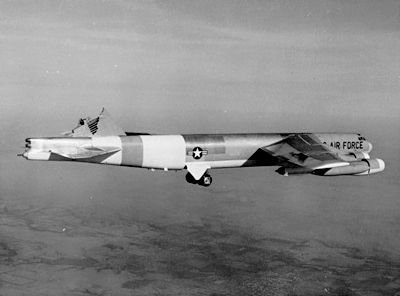
Airbus repaired the problem that tore the vertical stabilizer loose; by informing the pilots what could happen
The National Transportation Safety Board determines that the probable cause of this accident was the in-flight separation of the vertical stabilizer as a result of the loads beyond ultimate design that were created by the first officer's unnecessary and excessive rudder pedal inputs. Contributing to these rudder pedal inputs were characteristics of the Airbus A300-600 rudder system design and elements of the American Airlines Advanced Aircraft Maneuvering Program (AAMP)
Last edited by megan; 28th September 2024 at 01:24.

Joined: Jan 2015
Posts: 19
Likes: 3
From: Jakarta
It’s more than 353
The NTSB recognizes that the information Boeing provided was preliminary, and while Boeing identified 25 affected actuators delivered on Boeing 737 airplanes [to US operators], there remains uncertainty about how many affected actuators sent directly to operators and installed after delivery are currently on airplanes. As a result, there could be additional Boeing 737 airplanes beyond those 25 delivered by Boeing [to US operators] that have incorrectly assembled bearings in their SVO-730 rudder rollout guidance actuators, and it is essential that this possibility is clearly addressed.
Joined: Jan 2015
Posts: 19
Likes: 3
From: Jakarta
According to data derived from the flight data recorder, the flight crew applied
approximately 32 pounds of force to the rudder pedals before touchdown which
yielded no discernible effect on the rudder position or heading. The flight crew
attempted to clear the jammed rudder controls immediately after touchdown,
applying approximately 75 pounds of force to the rudder pedals when the airspeed
was about 120 knots, again with no effect on the rudder position or heading.
With the airplane’s airspeed continuing to decrease during rollout, the flight
crew applied approximately 42 pounds of force to the pedals, but the jam persisted.
The captain elected instead to use the nosewheel steering tiller as the airplane
slowed to a safe taxi speed. The captain stated that, after the airplane entered the
assigned taxiway, he asked the first officer to check the rudder pedals on his side of
the flight deck, and the first officer indicated that the same anomaly was occurring.
Data derived from the flight data recorder indicate that shortly after, with the
airplane traveling at a groundspeed of less than 20 knots, the flight crew applied
approximately 59 pounds of force on the rudder pedals, and the rudder pedals and
rudder surface began to operate normally.
Joined: Jan 2015
Posts: 19
Likes: 3
From: Jakarta
It’s a Boeing issue if Collins realized its mistake, announces it, tells Boeing, “hey, we made a mistake that poses a flight hazard!” and Boeing says “nope, not a hazard.”
It’s also a Boeing issue if Boeing wasn’t telling some operators that it delivered airplanes to that this actuator was installed on their airplanes. According to the report, United was unaware.
It’s also a Boeing issue if Boeing wasn’t telling some operators that it delivered airplanes to that this actuator was installed on their airplanes. According to the report, United was unaware.
Last edited by LaissezPasser; 28th September 2024 at 13:59.

Joined: Jul 2010
Aviation Qualifications: ATPL
Posts: 1,772
Likes: 277
From: Asia
The Boeing fix is for both pilots to apply maximum force to the rudder pedals until the rudder 'unsticks'. What happens when it comes free appears to this SLF to be potentially problematic.
In the accident involving American Airlines flight 857, overuse of the rudder stressed the vertical stabiliser to the extent that it separated from the aircraft.
Joined: Dec 2001
Posts: 1,470
Likes: 844
From: Here 'n' there!
A lot of readers missed this crucial point in the report. It’s more than 353 actuators. That’s just the number Collins sent to Boeing, and that Boeing delivered on airplanes. ........ As a result, there could be additional Boeing 737 airplanes beyond those 25 delivered by Boeing [to US operators] that have incorrectly assembled bearings in their SVO-730 rudder rollout guidance actuators, and it is essential that this possibility is clearly addressed.

Joined: Jan 2008
Posts: 17,687
Likes: 2,030
From: Reading, UK
Good point but I guess that's covered by the last 2 Recommendations as that should include any which have been changed post delivery and now have an affected actuator fitted. Maybe the NTSB could have specified "..... actuators currently fitted to ....." as that would include original fit and replacement items. Presumably Collins have a list of all affected Serial/Part No's. How many others depends on the number of replacements in the field. One would suspect probably not that many (assuming it has a low failure rate) but it should be fairly simple to work that out. For a while I ran a team (Military) where we often got asked to locate specific items (ie given Serial/Part no(s)) fitted or in stock. Usually the longest part of the process was boiling the kettle for a coffee ahead of the asset database search. True, it depends on the airlines at the end of the day knowing what work they have done since they took delivery.
Joined: Dec 2001
Posts: 1,470
Likes: 844
From: Here 'n' there!
Looking back on Page 6 of AIR 24-06, it says "................, the multi-operator message (Multi Operator Message MOM-MOM-24-0442-01B issued by Boeing on August 23, 2024) stated that, to reduce “any unnecessary risk” in the 737 fleet, Boeing would develop a plan to remove the affected actuator units from the fleet and replace them with conforming units, which Collins would provide. Boeing indicated that its plan and the associated timeline would be shared when available with 737 operators.".
So, I suspect that the FAA will simply await Boeing's plan to swap the affected units out and then issue a directive once they agree the plan along the lines of "All operators of a/c so affected are to implement Boeing Plan X-Y-Z within blah-blah-blah flight hours/days." or similar thereby formally sharing Boeing's plan which Collins, in practical terms, can actually support by supplying new actuators to meet the plan.
Well, that's how I see it right now......
Of course, there's the interim solution (Warnings to aircrew etc, etc, etc) which will cover the gap between now and Plan X-Y-Z.
Joined: May 2000
Posts: 421
Likes: 38
From: London, UK
Shouldn’t this be a time bound AD? The NTSB are clear this is a safety issue and the Boeing temporary fix doesn’t inspire confidence. Is there a shortage of replacement units and a reluctance to ground anffected aircraft pending delivery of them?
The experts on here sound more relaxed about this than I would expect them to be, and I’d like to understand why. Is it ‘only’ an issue on the ground after landing?
The experts on here sound more relaxed about this than I would expect them to be, and I’d like to understand why. Is it ‘only’ an issue on the ground after landing?
Joined: Dec 2001
Posts: 1,470
Likes: 844
From: Here 'n' there!
Shouldn’t this be a time bound AD? The NTSB are clear this is a safety issue and the Boeing temporary fix doesn’t inspire confidence. Is there a shortage of replacement units and a reluctance to ground anffected aircraft pending delivery of them? The experts on here sound more relaxed about this than I would expect them to be, and I’d like to understand why. Is it ‘only’ an issue on the ground after landing?
 Re spare actuators, I suspect that, with JIT, there are probably not that many of these things floating round; just those destined for production a/c currently on the line + a few spares. The latter number will have been determined in the R&M estimates for the actuator during initial design and, again, assuming a low predicted failure rate, that number will be quite low driven by economics. Re the overall approach I'm sure the Safety Engineers (my role when I ran my section looking at where bits were ...... as well as looking at failure modes, failure rates, trends, etc, etc of in-service equipment) will have been all over this and, yep, this is what they will have determined as the cost-effective way forward.
Joined: Apr 2010
Posts: 1,319
Likes: 100
From: IRS NAV ONLY
Joined: Jan 2015
Posts: 19
Likes: 3
From: Jakarta
Shouldn’t this be a time bound AD? The NTSB are clear this is a safety issue and the Boeing temporary fix doesn’t inspire confidence. Is there a shortage of replacement units and a reluctance to ground anffected aircraft pending delivery of them?
The experts on here sound more relaxed about this than I would expect them to be, and I’d like to understand why. Is it ‘only’ an issue on the ground after landing?
The experts on here sound more relaxed about this than I would expect them to be, and I’d like to understand why. Is it ‘only’ an issue on the ground after landing?
But Boeing hasn’t instructed any operator to do so, and the FAA has not required it. Yet.
A lack of replacement actuators isn’t what’s keeping the FAA from requiring their removal. The FAA seems to have the impression that all of these defective actuators are no longer in service. Based on what the NTSB report says, I wouldn’t be so sure about that.
Joined: May 2024
Aviation Qualifications: CPL
Posts: 379
Likes: 36
From: Kaupuala
Perhaps redundant...
Shouldn’t this be a time bound AD? The NTSB are clear this is a safety issue and the Boeing temporary fix doesn’t inspire confidence. Is there a shortage of replacement units and a reluctance to ground anffected aircraft pending delivery of them?
The experts on here sound more relaxed about this than I would expect them to be, and I’d like to understand why. Is it ‘only’ an issue on the ground after landing?
The experts on here sound more relaxed about this than I would expect them to be, and I’d like to understand why. Is it ‘only’ an issue on the ground after landing?
Is "Dutch Roll" incident related? If so, the potential for catastrophic failure/LOC Would seem to be clearly demonstrated...
As In: what is condition/activation for Taxi Mode ...
Cuz standing on the pedals with pedals close to 100lbs by both pilots could lead to loss of directional control if in a crab at 140 knots?
WOW? Even in Taxi Rudder, wear in sensor for rudder position could lead to problems in cruise, leading to more wear with constant YD corrections, or Dutch Roll on the way to Oakland.
Is standing on the pedals caused by trying to overpower the RudderLimiterControl Unit ?
Last edited by BugBear; 29th September 2024 at 19:22.