


Iran

Thread Starter
Ecce Homo! Loquitur...

Joined: Jul 2000
Aviation Qualifications: Spotter
Posts: 24,510
Likes: 7,255
From: Peripatetic
Multiple sources reporting rumours out of Iran that Ayaltollah Ali Khamenei, at the age of 85, has fallen into a coma.
No official reports - but ai wouldn’t expect any.
No official reports - but ai wouldn’t expect any.


Joined: May 2002
Aviation Qualifications: ATP+Mil
Posts: 18,633
Likes: 1,072
From: Downeast
Wow, if this is accurate, Iran must be freaking about how good the Israeli intelligence is.
If it is correct Mossad was able to buy the assistance of some Security Staff to facilitate the assassination of the fellow visiting Iran a month or so ago then there are some glaring failures to be dealt with.
Perhaps there shall be some sudden retirements by those suspected of collusion with the Israelis.

Thread Starter
Ecce Homo! Loquitur...
Joined: Jul 2000
Aviation Qualifications: Spotter
Posts: 24,510
Likes: 7,255
From: Peripatetic
https://kyivindependent.com/better-l...ranian-drones/
Better late than never: Israeli companies finally reach out to Ukraine to help fight Iranian drones
Israel initially overlooked Ukrainian warnings about the threat posed by Iranian drones before the Gaza war erupted but with increased threats in the region, Israeli firms are now turning to Ukraine’s defense industry for help.
Better late than never: Israeli companies finally reach out to Ukraine to help fight Iranian drones
Israel initially overlooked Ukrainian warnings about the threat posed by Iranian drones before the Gaza war erupted but with increased threats in the region, Israeli firms are now turning to Ukraine’s defense industry for help.
Thread Starter
Ecce Homo! Loquitur...
Joined: Jul 2000
Aviation Qualifications: Spotter
Posts: 24,510
Likes: 7,255
From: Peripatetic
https://www.reuters.com/world/middle...er-2024-11-24/
Iran is preparing to 'respond' to Israel, says adviser to Supreme Leader
DUBAI, Nov 24 (Reuters) - Iran is preparing to "respond" to Israel, Ali Larijani, a senior adviser to the country's supreme leader, said in an interview published by Iran's Tasnim news agency on Sunday.
On Oct. 26, Israeli fighter jets carried out three waves of attacks on Iranian military targets, a few weeks after Iran fired a barrage of about 200 ballistic missiles against Israel. Iran has previously vowed to respond to Isarel's attacks.
Iran is preparing to 'respond' to Israel, says adviser to Supreme Leader
DUBAI, Nov 24 (Reuters) - Iran is preparing to "respond" to Israel, Ali Larijani, a senior adviser to the country's supreme leader, said in an interview published by Iran's Tasnim news agency on Sunday.
On Oct. 26, Israeli fighter jets carried out three waves of attacks on Iranian military targets, a few weeks after Iran fired a barrage of about 200 ballistic missiles against Israel. Iran has previously vowed to respond to Isarel's attacks.

Joined: Aug 2009
Aviation Qualifications: Military
Posts: 9,328
Likes: 2,175
From: Texas
Originally Posted by Newsweek on 18 Nov 2024
Iran has hit back against social media claims that Supreme Leader Ayatollah Ali Khamenei is close to death or in a coma, by publishing a picture of him meeting a Lebanese official. The photo on X, formerly Twitter, purports to show a meeting between the Iranian leader and Mojtaba Amani, Iran's ambassador to Lebanon at noon Sunday, November 17, in Tehran.
Its publication followed tweets claiming Khamenei was in a coma or dead which had erupted on November 16. Just a day earlier, on November 15, Iran International had reported discussions by the nation's Assembly of Experts about candidates in the running to succeed him, including Khamenei's son Mojtaba Khamenei. But the need to identify a successor resulted from the risk of assassination faced by the supreme leader, not because of ill health, according to the report.
Its publication followed tweets claiming Khamenei was in a coma or dead which had erupted on November 16. Just a day earlier, on November 15, Iran International had reported discussions by the nation's Assembly of Experts about candidates in the running to succeed him, including Khamenei's son Mojtaba Khamenei. But the need to identify a successor resulted from the risk of assassination faced by the supreme leader, not because of ill health, according to the report.
Thread Starter
Ecce Homo! Loquitur...
Joined: Jul 2000
Aviation Qualifications: Spotter
Posts: 24,510
Likes: 7,255
From: Peripatetic
According to Flug Revue, on November 18, Russia may have handed over the first two Su-35 aircraft to Iran.
The fighters were disassembled and then delivered to Mehrabad Airport in Tehran on an An-124-100 aircraft. From there, the planes will be delivered to the third tactical air base of the Iranian Air Force near the city of Hamadan, where they will be reassembled.
https://www.rbc.ua/rus/news/rosiya-m...tm_medium=post
The fighters were disassembled and then delivered to Mehrabad Airport in Tehran on an An-124-100 aircraft. From there, the planes will be delivered to the third tactical air base of the Iranian Air Force near the city of Hamadan, where they will be reassembled.
https://www.rbc.ua/rus/news/rosiya-m...tm_medium=post
Thread Starter
Ecce Homo! Loquitur...
Joined: Jul 2000
Aviation Qualifications: Spotter
Posts: 24,510
Likes: 7,255
From: Peripatetic
Joined: Aug 2009
Aviation Qualifications: Military
Posts: 9,328
Likes: 2,175
From: Texas
ORAC: from your link, the question is "how" but I agree with the "what."
The United States should exploit Iran’s current vulnerability and weakness to push back on the Axis of Resistance in Iraq and Yemen.
Doing so would include increasing support for—rather than abandoning—Iraqi leaders who wish to see their country independent of Iranian influence and subversion.
It would also include destroying the willingness of the Houthis to continue attacks on international shipping rather than conducting intermittent airstrikes on their capabilities.
Ceding Iraq and Yemen, on the other hand, would allow Iran and its Axis of Resistance the space and time to recover.
Tehran and its allies may be down. But they are just as committed as before to attaining regional hegemony, destroying the Israeli state, and expelling American influence from the region. The United States and its allies and partners in the region should capitalize on the positive momentum created by the fall of Assad.
Doing so would include increasing support for—rather than abandoning—Iraqi leaders who wish to see their country independent of Iranian influence and subversion.
It would also include destroying the willingness of the Houthis to continue attacks on international shipping rather than conducting intermittent airstrikes on their capabilities.
Ceding Iraq and Yemen, on the other hand, would allow Iran and its Axis of Resistance the space and time to recover.
Tehran and its allies may be down. But they are just as committed as before to attaining regional hegemony, destroying the Israeli state, and expelling American influence from the region. The United States and its allies and partners in the region should capitalize on the positive momentum created by the fall of Assad.
Thread Starter
Ecce Homo! Loquitur...
Joined: Jul 2000
Aviation Qualifications: Spotter
Posts: 24,510
Likes: 7,255
From: Peripatetic
BREAKING: Israeli Channels 12 and 13 report that Mossad Chief Dedi Barnea has recommended striking Iran in response to the recent Houthi attack. In high-level security discussions, Barnea reportedly stated: "We need to go for the head – attacking only the Houthis won't help."
The recommendation follows a series of intense discussions among Israel's top security officials over the past 24 hours.
The recommendation follows a series of intense discussions among Israel's top security officials over the past 24 hours.

Joined: Apr 2001
Aviation Qualifications: ATP+Mil
Posts: 4,914
Likes: 608
From: surfing, watching for sharks
Thread Starter
Ecce Homo! Loquitur...
Joined: Jul 2000
Aviation Qualifications: Spotter
Posts: 24,510
Likes: 7,255
From: Peripatetic
The IRGC’s internal publication reveals it fears anti-regime unrest in Iran — a domino effect from Assad’s collapse.
Its concerns expose key takeaways about the regime’s vulnerabilities.
1/ 🧵
https://threadreaderapp.com/thread/1...385442843.html
Its concerns expose key takeaways about the regime’s vulnerabilities.
1/ 🧵
https://threadreaderapp.com/thread/1...385442843.html
Thread Starter
Ecce Homo! Loquitur...
Joined: Jul 2000
Aviation Qualifications: Spotter
Posts: 24,510
Likes: 7,255
From: Peripatetic
Interesting background and forecast…
Last March, Saudi Arabia signed, with Chinese mediation, a memorandum of understanding with Iran.
Many observers considered this memorandum a concession by Riyadh in the face of the Iranian rise, which was at its peak in the Middle East. This understanding coincided with the Iranian axis’ announcement of the so-called ‘Unity of Fronts’ strategy.
Today, in light of regional changes and the Iranian decline, it seems that the Middle East has entered into a competition between three projects, one of which aims to maintain the previous equation before the October 7 attack, and two of them want a new Middle East of their own. A geopolitical reading of the Middle East today.
On January 15, 2016, the nuclear agreement between the P5+1 and Iran entered into force. This agreement was not a set of technical provisions that temporarily limited Tehran's ability to produce a nuclear bomb only, but rather an international concession that gave Khamenei's regime a green light to expand its influence and control over the Middle East, starting with supporting the Assad regime to control the city of Aleppo, through blackmailing Saudi Arabia with missiles from the Houthi militia from Yemen, up to the attacks of October 7.
Today, it can be said that the understandings of the JCPOA agreement, in its regional aspect, have ended by a decision from Israel after Trump ended its economic aspect in his first term.
Little by little, two projects began to emerge in the Middle East to reap the benefits of the decline of the Iranian project.
The first is the New Middle East Project, which Israeli Prime Minister Netanyahu referred to, and the second is the political Islam project, which is managed by Türkiye and was launched with the start of the Arab Spring, then temporarily subsided, only to return today with the fall of the Assad regime in Syria, but in a new, more pragmatic form.
Has the Iranian project ended, and what is the nature of Turkish-Iranian relations and Turkish-Israeli relations in light of these changes?
First of all, it can be said that the Iranian regime today has begun to reshuffle its cards internally, regionally and internationally in the hope of preserving some of the influence they have been able to achieve in the region.
Here, it is necessary to return to my previous thread in which I explain the latest movements of the Iranian regime. While Israel was at the top of the list of enemies in the official Iranian media close to the regime, Türkiye has recently taken its place, especially with the fall of the Assad regime in Syria, which requires us to take a look at Turkish-Iranian relations.
Away from the smiles and protocols between the politicians of the two countries, Ankara and Tehran do not agree on many regional issues.
In Iraq, Turkish bases have witnessed over the past years repeated attacks carried out by Iraqi militias supported by Iran, as the two countries compete to impose their influence in northern Iraq, which is considered a strategic and oil-rich region, while Türkiye supports groups affiliated with the Turkmen minority, deploys several military bases in Iraqi Kurdistan and Nineveh Governorate and has important relations with some Kurdish and Arab parties.
Tehran considers this Turkish influence a threat to their project of complete control over Erbil. Historically, the IRGC and the Kurdish PKK organization have mutual relations and interests, and Ankara considers these relations a threat to its national security. Therefore, the Turks will be the first to work to fill the Iranian vacuum if Baghdad witnesses a coup against Iranian influence there.
In Syria, Tehran considers Ankara to be the direct cause of the fall of the Assad regime through their support for the armed Syrian opposition, while Türkiye believes that Iran was behind Bashar al-Assad’s refusal to meet with Erdogan and open the door to normalization with Damascus. Today, Türkiye is the first to visit Damascus and the most encouraged to build diplomatic, military and security relations with the new Syrian administration.
In Lebanon, Türkiye has been able in recent years to take advantage of the vacuum left by the Saudi withdrawal from the political scene in Beirut by building relations with Sunni political figures who are considered opponents of the Hezbollah militia and Iranian influence in Lebanon.
In my opinion, the file of Turkish-Azerbaijani relations is the most sensitive for the Iranian regime.
Iranian officials considered the achievements made by Baku in the recent Nagorno-Karabakh war a threat to Iran's national security. This fear is not only related to the importance of Iranian-Armenian relations and the important Israeli military support for Azerbaijan, but also to Iran's internal security, as they believe that any popular events inside the country will make the provinces of West and East Azerbaijan, which are adjacent to the state of Azerbaijan, the first to demand separation from Tehran and joining Baku.
Therefore, by reading the files of the region, it can be said that the Turkish project poses a greater threat to the Iranian project for many Iranian observers and politicians than Israel. But does the Turkish project fit into the new Israeli Middle East?
Despite the hostile statements exchanged between Turkish and Israeli officials, these may be an unimportant detail in the big picture of the Middle East.
The new Israeli Middle East, as we see it today, is based primarily on undermining the Iranian project in the region (which also serves Türkiye), then expanding the path of normalization with Arab countries that was frozen with Trump's loss in the 2020 elections. Today, with Trump's victory in the American presidential elections, it can be said that this path will be put back to track, and Riyadh will be at the top of the list through the Yemeni window.
Saudi Arabia and Israel are harmed by the Houthis' control of Sanaa, and thus the cooperation of the two countries to end this militia in Yemen will pave the way for normalizing relations, encouraging more Arab and Islamic countries to normalize relations with Israel.
Unlike the Iranian expansionist project, which was built on dreams of the return of the Persian Empire, the hostility against Israel’s existence, the restriction of Turkish influence, and the suppression of Sunni states in the region, the Turkish and Israeli projects meet at several points, the most important of which is relations with Azerbaijan, and differ at several points, the most important of which are the Palestinian and Kurdish files.
With the Iranian decline, Turkish and Israeli officials will soon find themselves facing a new reality. Either these two projects will compete for influence in the region or cooperate.
In my opinion, Trump’s policy in the Middle East is what will determine the shape of Turkish-Israeli relations on the one hand and the shape of the new Middle East on the other.
Many observers considered this memorandum a concession by Riyadh in the face of the Iranian rise, which was at its peak in the Middle East. This understanding coincided with the Iranian axis’ announcement of the so-called ‘Unity of Fronts’ strategy.
Today, in light of regional changes and the Iranian decline, it seems that the Middle East has entered into a competition between three projects, one of which aims to maintain the previous equation before the October 7 attack, and two of them want a new Middle East of their own. A geopolitical reading of the Middle East today.
On January 15, 2016, the nuclear agreement between the P5+1 and Iran entered into force. This agreement was not a set of technical provisions that temporarily limited Tehran's ability to produce a nuclear bomb only, but rather an international concession that gave Khamenei's regime a green light to expand its influence and control over the Middle East, starting with supporting the Assad regime to control the city of Aleppo, through blackmailing Saudi Arabia with missiles from the Houthi militia from Yemen, up to the attacks of October 7.
Today, it can be said that the understandings of the JCPOA agreement, in its regional aspect, have ended by a decision from Israel after Trump ended its economic aspect in his first term.
Little by little, two projects began to emerge in the Middle East to reap the benefits of the decline of the Iranian project.
The first is the New Middle East Project, which Israeli Prime Minister Netanyahu referred to, and the second is the political Islam project, which is managed by Türkiye and was launched with the start of the Arab Spring, then temporarily subsided, only to return today with the fall of the Assad regime in Syria, but in a new, more pragmatic form.
Has the Iranian project ended, and what is the nature of Turkish-Iranian relations and Turkish-Israeli relations in light of these changes?
First of all, it can be said that the Iranian regime today has begun to reshuffle its cards internally, regionally and internationally in the hope of preserving some of the influence they have been able to achieve in the region.
Here, it is necessary to return to my previous thread in which I explain the latest movements of the Iranian regime. While Israel was at the top of the list of enemies in the official Iranian media close to the regime, Türkiye has recently taken its place, especially with the fall of the Assad regime in Syria, which requires us to take a look at Turkish-Iranian relations.
Away from the smiles and protocols between the politicians of the two countries, Ankara and Tehran do not agree on many regional issues.
In Iraq, Turkish bases have witnessed over the past years repeated attacks carried out by Iraqi militias supported by Iran, as the two countries compete to impose their influence in northern Iraq, which is considered a strategic and oil-rich region, while Türkiye supports groups affiliated with the Turkmen minority, deploys several military bases in Iraqi Kurdistan and Nineveh Governorate and has important relations with some Kurdish and Arab parties.
Tehran considers this Turkish influence a threat to their project of complete control over Erbil. Historically, the IRGC and the Kurdish PKK organization have mutual relations and interests, and Ankara considers these relations a threat to its national security. Therefore, the Turks will be the first to work to fill the Iranian vacuum if Baghdad witnesses a coup against Iranian influence there.
In Syria, Tehran considers Ankara to be the direct cause of the fall of the Assad regime through their support for the armed Syrian opposition, while Türkiye believes that Iran was behind Bashar al-Assad’s refusal to meet with Erdogan and open the door to normalization with Damascus. Today, Türkiye is the first to visit Damascus and the most encouraged to build diplomatic, military and security relations with the new Syrian administration.
In Lebanon, Türkiye has been able in recent years to take advantage of the vacuum left by the Saudi withdrawal from the political scene in Beirut by building relations with Sunni political figures who are considered opponents of the Hezbollah militia and Iranian influence in Lebanon.
In my opinion, the file of Turkish-Azerbaijani relations is the most sensitive for the Iranian regime.
Iranian officials considered the achievements made by Baku in the recent Nagorno-Karabakh war a threat to Iran's national security. This fear is not only related to the importance of Iranian-Armenian relations and the important Israeli military support for Azerbaijan, but also to Iran's internal security, as they believe that any popular events inside the country will make the provinces of West and East Azerbaijan, which are adjacent to the state of Azerbaijan, the first to demand separation from Tehran and joining Baku.
Therefore, by reading the files of the region, it can be said that the Turkish project poses a greater threat to the Iranian project for many Iranian observers and politicians than Israel. But does the Turkish project fit into the new Israeli Middle East?
Despite the hostile statements exchanged between Turkish and Israeli officials, these may be an unimportant detail in the big picture of the Middle East.
The new Israeli Middle East, as we see it today, is based primarily on undermining the Iranian project in the region (which also serves Türkiye), then expanding the path of normalization with Arab countries that was frozen with Trump's loss in the 2020 elections. Today, with Trump's victory in the American presidential elections, it can be said that this path will be put back to track, and Riyadh will be at the top of the list through the Yemeni window.
Saudi Arabia and Israel are harmed by the Houthis' control of Sanaa, and thus the cooperation of the two countries to end this militia in Yemen will pave the way for normalizing relations, encouraging more Arab and Islamic countries to normalize relations with Israel.
Unlike the Iranian expansionist project, which was built on dreams of the return of the Persian Empire, the hostility against Israel’s existence, the restriction of Turkish influence, and the suppression of Sunni states in the region, the Turkish and Israeli projects meet at several points, the most important of which is relations with Azerbaijan, and differ at several points, the most important of which are the Palestinian and Kurdish files.
With the Iranian decline, Turkish and Israeli officials will soon find themselves facing a new reality. Either these two projects will compete for influence in the region or cooperate.
In my opinion, Trump’s policy in the Middle East is what will determine the shape of Turkish-Israeli relations on the one hand and the shape of the new Middle East on the other.
Thread Starter
Ecce Homo! Loquitur...
Joined: Jul 2000
Aviation Qualifications: Spotter
Posts: 24,510
Likes: 7,255
From: Peripatetic
Following reports earlier today that Iran was preparing to transport millions in cash to Hezbollah via “Mahan Air” Flights between Beirut and Tehran; Lebanese authorities have told Iran that all flights arriving from Tehran will be searched, and that if cash is found it will be confiscated.
Thread Starter
Ecce Homo! Loquitur...
Joined: Jul 2000
Aviation Qualifications: Spotter
Posts: 24,510
Likes: 7,255
From: Peripatetic
2 judges on the Supreme Court of Iran, have just been shot and killed.
Ali Razini & Mohammad Moghiseh were killed in front of the Supreme Court building in Tehran by a guard who had enough of the Islamist dictatorship
Both judges were hardliners, known as “hangmen”.
A 3rd judge was also shot but is being treated.
https://en.apa.az/asia/two-judges-ki...an-says-458330
Ali Razini & Mohammad Moghiseh were killed in front of the Supreme Court building in Tehran by a guard who had enough of the Islamist dictatorship
Both judges were hardliners, known as “hangmen”.
A 3rd judge was also shot but is being treated.
https://en.apa.az/asia/two-judges-ki...an-says-458330
Thread Starter
Ecce Homo! Loquitur...
Joined: Jul 2000
Aviation Qualifications: Spotter
Posts: 24,510
Likes: 7,255
From: Peripatetic
FT: https://archive.ph/ujHx0
Ships carrying missile propellant ingredients set to sail from China to Iran, say officials
Intelligence suggests vessels will be laden with sodium perchlorate used in critical weapons
Ships carrying missile propellant ingredients set to sail from China to Iran, say officials
Intelligence suggests vessels will be laden with sodium perchlorate used in critical weapons
Joined: Aug 2009
Aviation Qualifications: Military
Posts: 9,328
Likes: 2,175
From: Texas
The bellicosity and posturing continues apace.
Source is a story from Oneindia.
Iran has unveiled a new, formidable ballistic missile, the "Etamad," with a striking range of 1,700 kilometers, signaling a bold move in their military capabilities. This missile demonstration comes amid growing tensions as Iran warns of an all-out war should the US or Israel launch any attacks on its nuclear sites.
Thread Starter
Ecce Homo! Loquitur...
Joined: Jul 2000
Aviation Qualifications: Spotter
Posts: 24,510
Likes: 7,255
From: Peripatetic
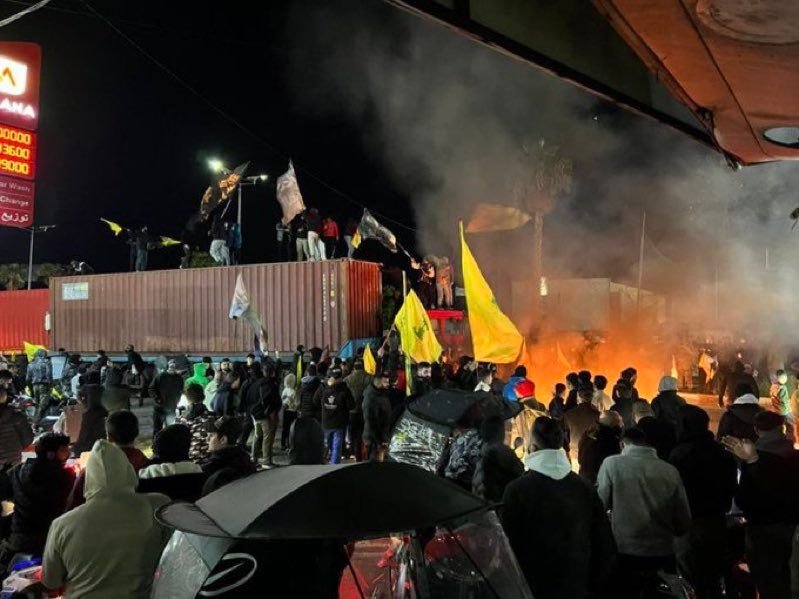
#Hezbollah supporters storm Beirut airport tonight amid reports of Lebanese state authorities barring an #Iran regime Mahan Air flight.
We’ve seen this movie before. Shades of 2008.
We’ve seen this movie before. Shades of 2008.