


Helicopter crash New York City

Fleet Manager


Joined: Aug 2006
Aviation Qualifications: CPL
Posts: 7,081
Likes: 2,938
From: Ontario, Canada
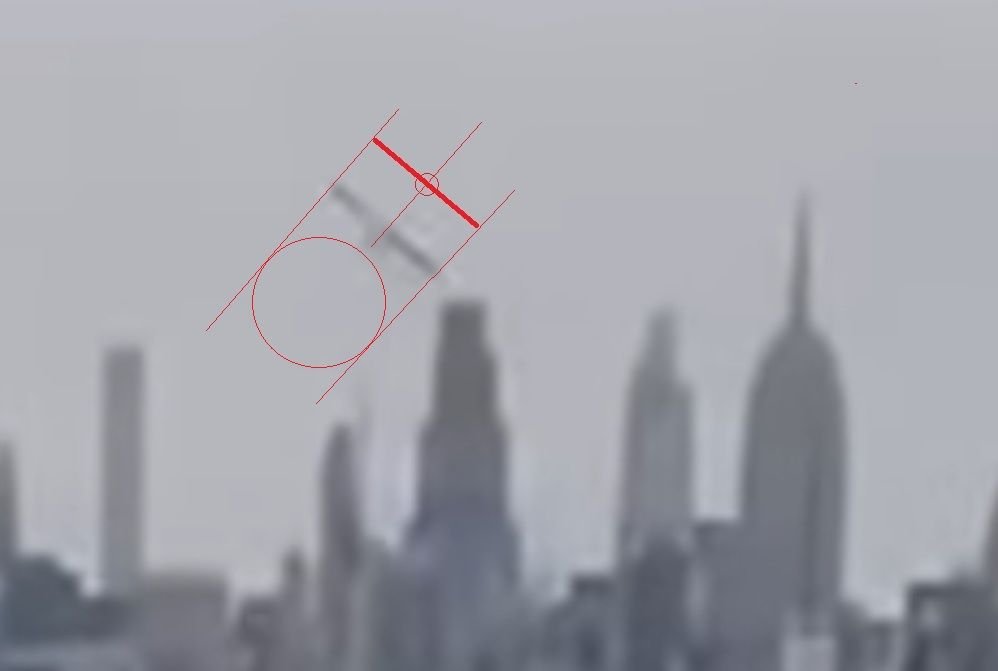
The stable nature of the spinning rotor seems to indicate that the unsymmetrical mass at the gearbox-end of the mast IS NOT SPINNING


Joined: Jul 2002
Posts: 221
Likes: 18
From: Somewhere, Over the Rainbow
I was just doing my unscientific dive into the falling rotor system. After zooming and watching the few seconds as the rotor was falling, It appears there was no "wobbling" as it was spinning, the blades appeared to be the same length, and they appeared to not be bent. The stable nature of the spinning rotor seems to indicate that the unsymmetrical mass at the gearbox-end of the mast IS NOT SPINNING. I would have a hard time believing the gearbox seized or locked-up. I'd appreciate others' thoughts.

Joined: Mar 2009
Posts: 114
Likes: 37
From: Connecticut
I once witnessed (from extremely close range) an AH-1W running on the ground at 100% rpm release an internal main rotor blade weight due to a decade old manufacturing error. When the weight departed it:
1. Blew the end of the blade off,
2. Snapped the main transmission horizontally in half,
3. As the rotor/top case exited the still attached controls put in full pitch,
4. The aircraft was lifted 6’ or so by the control tubes which then failed dropping the fuselage back to the ground,
5. The now unattached rotor climbed 80’ before loosing energy and crashing down in front of the airframe.
The magnitude of the unbalance was so large the xmsn was snapped within one revolution of the rotor so no large 1/rev forces were transmitted to the fuselage. The only fuselage damage was to the cross tubes on one side. The pilot commented that he heard a bang, the aircraft smoothly lifted before falling back to the ground. The airframe was refurbished and returned to service.
if the weight had been less and not immediately snapped the xmsn case, the excessive 1/rev would probably have broken the pilot’s neck and damaged at least the tailboom.
So back to this thread. It is plausible a failure in a blade caused excessive 1/rev which buckled the tailboom and put in full tail rotor pitch through the still connected controls tubes causing the observed yaw. Then a combination of 1/rev loads and aero forces caused the rotor/xmsn/nodal beam to depart with the rotor appearing to fly away intact.
Won’t know until we see both blades.
1. Blew the end of the blade off,
2. Snapped the main transmission horizontally in half,
3. As the rotor/top case exited the still attached controls put in full pitch,
4. The aircraft was lifted 6’ or so by the control tubes which then failed dropping the fuselage back to the ground,
5. The now unattached rotor climbed 80’ before loosing energy and crashing down in front of the airframe.
The magnitude of the unbalance was so large the xmsn was snapped within one revolution of the rotor so no large 1/rev forces were transmitted to the fuselage. The only fuselage damage was to the cross tubes on one side. The pilot commented that he heard a bang, the aircraft smoothly lifted before falling back to the ground. The airframe was refurbished and returned to service.
if the weight had been less and not immediately snapped the xmsn case, the excessive 1/rev would probably have broken the pilot’s neck and damaged at least the tailboom.
So back to this thread. It is plausible a failure in a blade caused excessive 1/rev which buckled the tailboom and put in full tail rotor pitch through the still connected controls tubes causing the observed yaw. Then a combination of 1/rev loads and aero forces caused the rotor/xmsn/nodal beam to depart with the rotor appearing to fly away intact.
Won’t know until we see both blades.

Joined: Aug 2008
Aviation Qualifications: PPL
Posts: 298
Likes: 29
From: KOLM and KBVS
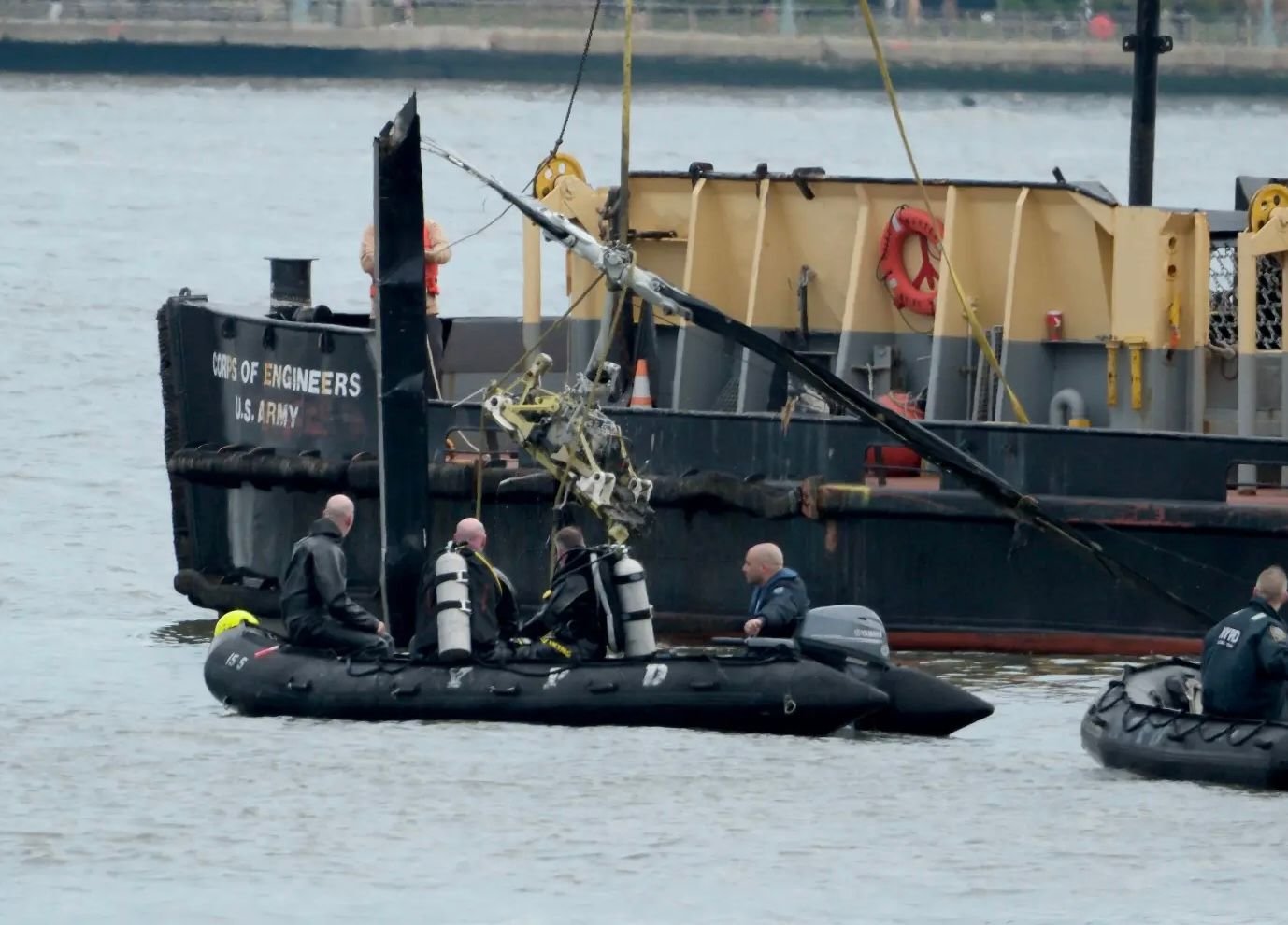
Last edited by Senior Pilot; 14th April 2025 at 19:21. Reason: Add photo
Joined: Jun 2008
Posts: 44
Likes: 8
From: Canada
Scary thing is, if it was the Van Horn bounce, putting the collective down only makes things worse. The info letter put out about it less than a month ago says the harmonic is the same natural frequency as the tailboom.
Van Horn 206L MRB IL
Pictures I've seen of a suspected VH bounce that got on the ground has severe damage in the same area of the tailboom that was the break point on the New York machine.
Van Horn 206L MRB IL
Pictures I've seen of a suspected VH bounce that got on the ground has severe damage in the same area of the tailboom that was the break point on the New York machine.
We had van Horn blades on a 206B and the premature wear on bearings and flight controls in less than 1000 hours was like nothing we'd ever seen on 30k + hours of 206B time in our fleet. We no longer operate VH blades on anything.
Joined: Aug 2008
Aviation Qualifications: PPL
Posts: 298
Likes: 29
From: KOLM and KBVS
Thanks, Senior Pilot ... I was struggling to extract an image from the article.

Joined: Oct 1999
Aviation Qualifications: ATPL
Posts: 7,371
Likes: 926
From: Den Haag
If I was a TSB investigator, I would be heading in this direction. I've had collective bounce in a 206L induced by turbulence and it felt like the helicopter was going to break apart in flight. I was happily flying straight and level and then pretty much instantly bouncing up and down with my seat belt and shoulder harness holding me in from the extreme ups and downs. When bouncing like that, your instinct is to hold on to the collective which actually makes things worse. To get out of it, I used the palm my hand and pushed the collective down. This stopped the bounce pretty much instantly. I always make sure I've got a bit of collective friction on now... Here's another report from someone who wasn't so fortunate --> https://www.tsb.gc.ca/eng/rapports-r.../a08p0265.html
We had van Horn blades on a 206B and the premature wear on bearings and flight controls in less than 1000 hours was like nothing we'd ever seen on 30k + hours of 206B time in our fleet. We no longer operate VH blades on anything.
We had van Horn blades on a 206B and the premature wear on bearings and flight controls in less than 1000 hours was like nothing we'd ever seen on 30k + hours of 206B time in our fleet. We no longer operate VH blades on anything.

Joined: Oct 2006
Aviation Qualifications: A&P
Posts: 1,346
Likes: 270
From: USA
Joined: Sep 2004
Aviation Qualifications: ATPL(H)
Posts: 2,371
Likes: 877
From: Canada
Joined: Aug 2006
Aviation Qualifications: LAME
Posts: 264
Likes: 55
From: Hedge
Never seen so much wear and tear on elastomerics and bearings, especially Lateral restraint.
I'm not an "engineer" in the true sense of the word but something doesn't sit right with me on Van Horn MR blades.
Nodal beam system on 206L series was designed and tuned for OEM Bell blades. Different harmonics, weight, aerodynamics etc.
The devil on my shoulder whispers "Boeing" with regards to certain FAA standards. If that makes sense?
I'm still curious why EASA won't certify VHA blades in EASA land?
By no means am I suggesting anything untoward with VHA blades.
Will be following this topic with interest.
Joined: Oct 2006
Aviation Qualifications: A&P
Posts: 1,346
Likes: 270
From: USA
Avoid imitations

Joined: Nov 2000
Aviation Qualifications: ATPL
Posts: 15,110
Likes: 1,083
From: Wandering the FIR and cyberspace often at highly unsociable times
That looks like a catastrophic failure of the roof of the fuselage. Horrific.
My first thoughts, on seeing the video of the accident, was that one of the forward gearbox attachments had broken, allowing the gearbox to rotate backwards and for the blades to chop the tail. It now seems far worse!
My first thoughts, on seeing the video of the accident, was that one of the forward gearbox attachments had broken, allowing the gearbox to rotate backwards and for the blades to chop the tail. It now seems far worse!

Joined: Nov 2010
Posts: 880
Likes: 225
From: Australia
At first, I could see why dragon6172 felt the earlier photo posted here was deceptive and that the mast may not be bent (the remaining pitch control link seen in that photo has that effect). But looking at screen shots from the recovery footage, it sure looks like the mast is bent as The Sultan said. The bending seems to be mainly around and below the height of the swashplate. I am including a few of those shots, marking the direction to front of the fuselage for the portion ripped out of the cabin:


One of many questions now is whether both blades were already so fractured / delaminated in the air (and held 'straight' due to centripetal forces from the spinning rotor) or whether that fracturing was caused when they hit the water or during recovery?
One of many questions now is whether both blades were already so fractured / delaminated in the air (and held 'straight' due to centripetal forces from the spinning rotor) or whether that fracturing was caused when they hit the water or during recovery?

