


Helicopter crash New York City


Joined: Jul 2001
Aviation Qualifications: ATPL(H)
Posts: 508
Likes: 31
From: UK
"What is puzzling is that it looks like the rotors take only the top part of the MRGB with them when they separate rather than ripping the whole gearbox out."
I agree - Which leads me to wonder why it was weakened - previous overtorquing? I know it's one of the places I look at when I'm preflighting. It would have to be one hell of a pull, though.
I agree - Which leads me to wonder why it was weakened - previous overtorquing? I know it's one of the places I look at when I'm preflighting. It would have to be one hell of a pull, though.
It’s my understanding that the planetary reduction gear is located towards the top of the 206 main rotor gearbox. A sudden stoppage of this planetary gear assembly ( as in the Super Puma a few years back ) might potentially bust out of the gearbox casing and split it in two.


Joined: Nov 2006
Posts: 803
Likes: 52
From: Pensacola, Florida
Originally Posted by [email protected]
If the MRGB is allowed to move (as a result of one of the nodal beams or other fixings giving way), it would twist the TR drive out put which could, feasibly, create enough imbalance and drag along the TRD shaft to overstress the boom and cause it to fail.
What is puzzling is that it looks like the rotors take only the top part of the MRGB with them when they separate rather than ripping the whole gearbox out.
Whatever the initial trigger, it rapidly becomes a catastrophic in flight breakup which even the best pilot in the world wouldn't survive.
What is puzzling is that it looks like the rotors take only the top part of the MRGB with them when they separate rather than ripping the whole gearbox out.
Whatever the initial trigger, it rapidly becomes a catastrophic in flight breakup which even the best pilot in the world wouldn't survive.

Joined: Apr 2000
Aviation Qualifications: ATP+Mil
Posts: 10,959
Likes: 1,814
From: EGDC
This is interesting about the freewheel on 206's https://www.casa.gov.au/sites/defaul...separation.pdf
So a freewheel failure/snatch could have caused the TRDshaft to distort stressing the tail boom as well as trashing the MRGB.
1. Effectivity All Bell 206 Jet Ranger and Long Ranger series helicopters. 2. Purpose Alert operators, pilots and maintainers to critical freewheel unit lubrication issues in order to reduce the possibility of torsional main rotor mast yielding and in-flight separation of the main rotor head from the mast. 3. Background Defect report investigations into continuing failures of main transmission freewheel units in Australia and a near fatal incident in Canada demonstrate that a malfunctioning freewheel causes varying degrees of main rotor mast failure, ranging from torsional yield to complete separation of the rotor head from the main rotor mast.
In a 206, the transmission is not directly connected to the t/r driveshaft - it runs through the freewheeling unit and then the engine.
Joined: Sep 2010
Posts: 2,107
Likes: 287
From: Nevada, USA
The transmission on a Bell 206 is held in by 2 x upside down V links
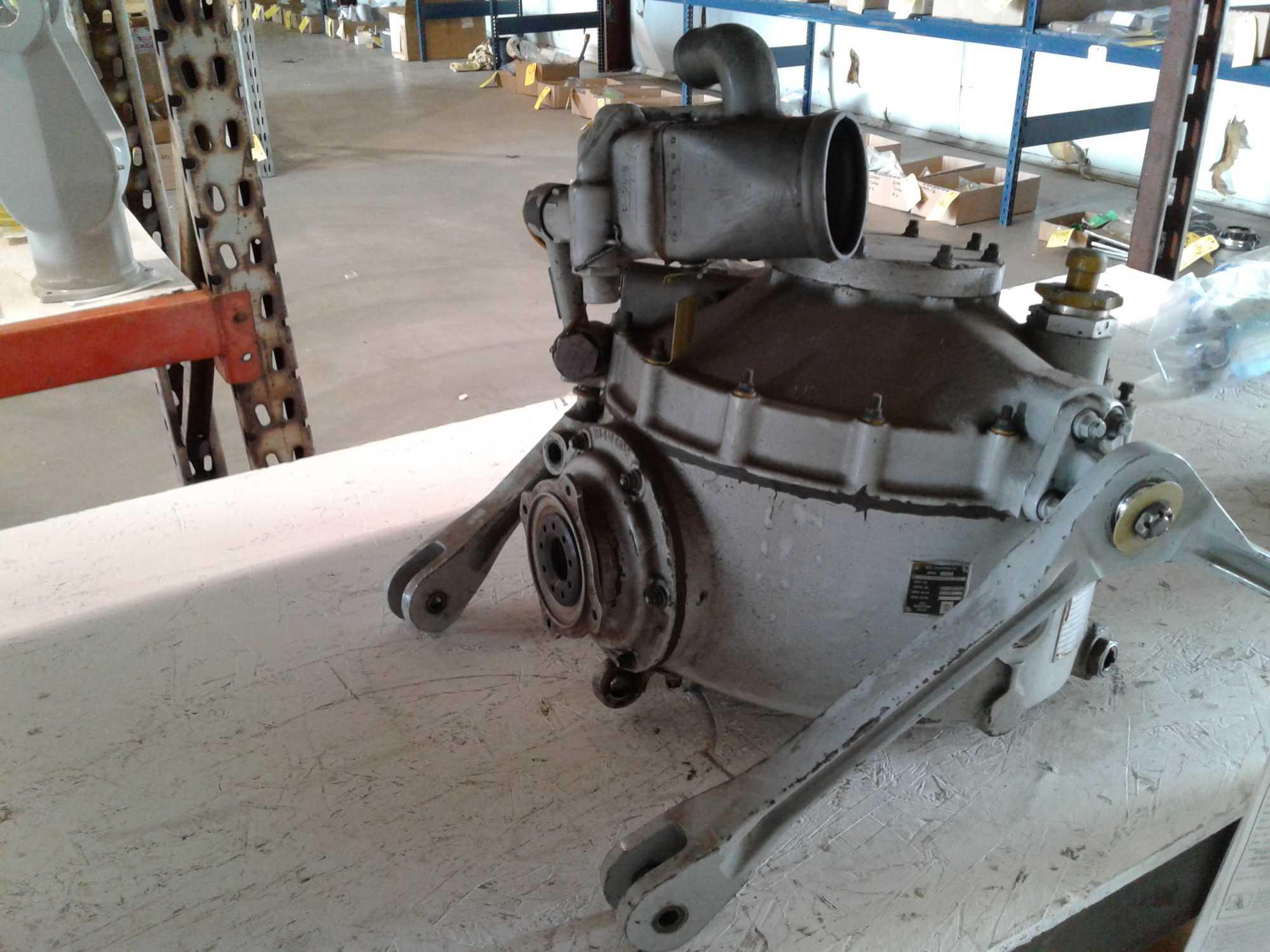
These have broken before - as in this incident in Australia https://www.atsb.gov.au/media/news-i...e-requirements
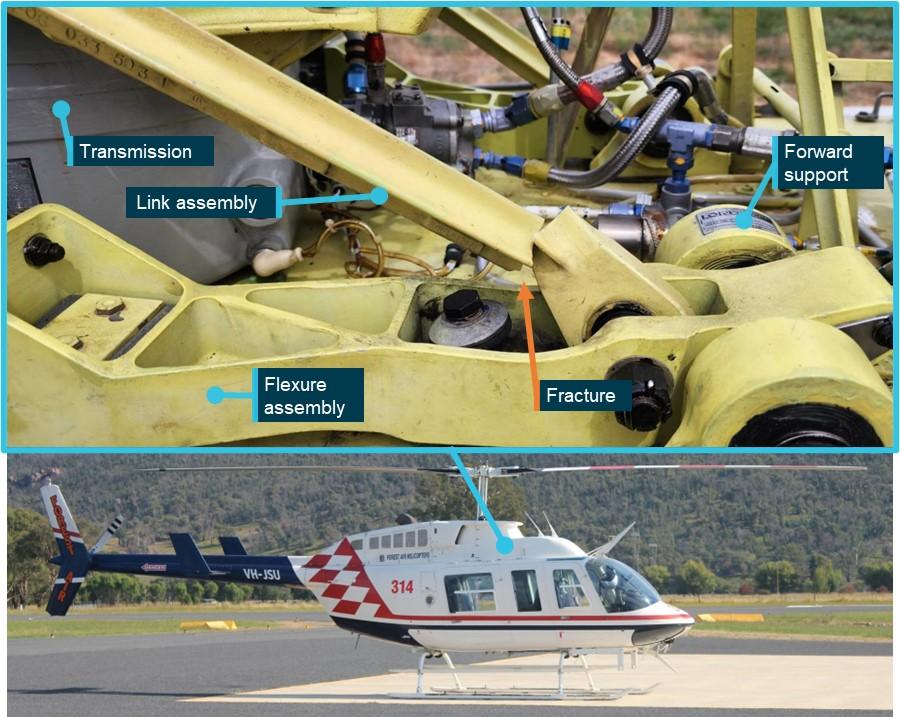
These have broken before - as in this incident in Australia https://www.atsb.gov.au/media/news-i...e-requirements


Joined: Jun 2016
Aviation Qualifications: CPL
Posts: 1,318
Likes: 386
From: Brantisvogan
This has been referenced previously. In this case the bearings had worn which accelerated fatigue, there had been inadequate inspections.
Joined: Sep 2004
Aviation Qualifications: ATPL(H)
Posts: 2,371
Likes: 877
From: Canada
Doing that kind of work, from that FATO, a Longranger would spend a lot of time at the top end of its performance on multiple cycles day-in, day-out. Using transient take-off power would be routine. Misjudgments about fuel load and pax weight with a very high turnover would also be easy to make. Without HUMS, there is no certainty that the aircraft had not been previously over-torqued, either occasionally, or routinely.
I doubt you would be anywhere near 100% torque on departure much less pulling any transients.
Certainly not cruising around at max continuous Q.
Joined: May 2002
Posts: 4,687
Likes: 252
From: Australia
We have decided to ground our Longranger pending further information coming from the NTSB ,FAA ,CASA and Bell
Worth being conservative in this case I reckon!
I do not believe it will be a very long time before the relevant information is available that will allow safe flight
Worth being conservative in this case I reckon!
I do not believe it will be a very long time before the relevant information is available that will allow safe flight
Last edited by Dick Smith; 13th April 2025 at 01:11.

Joined: Sep 2007
Posts: 134
Likes: 2
From: nz
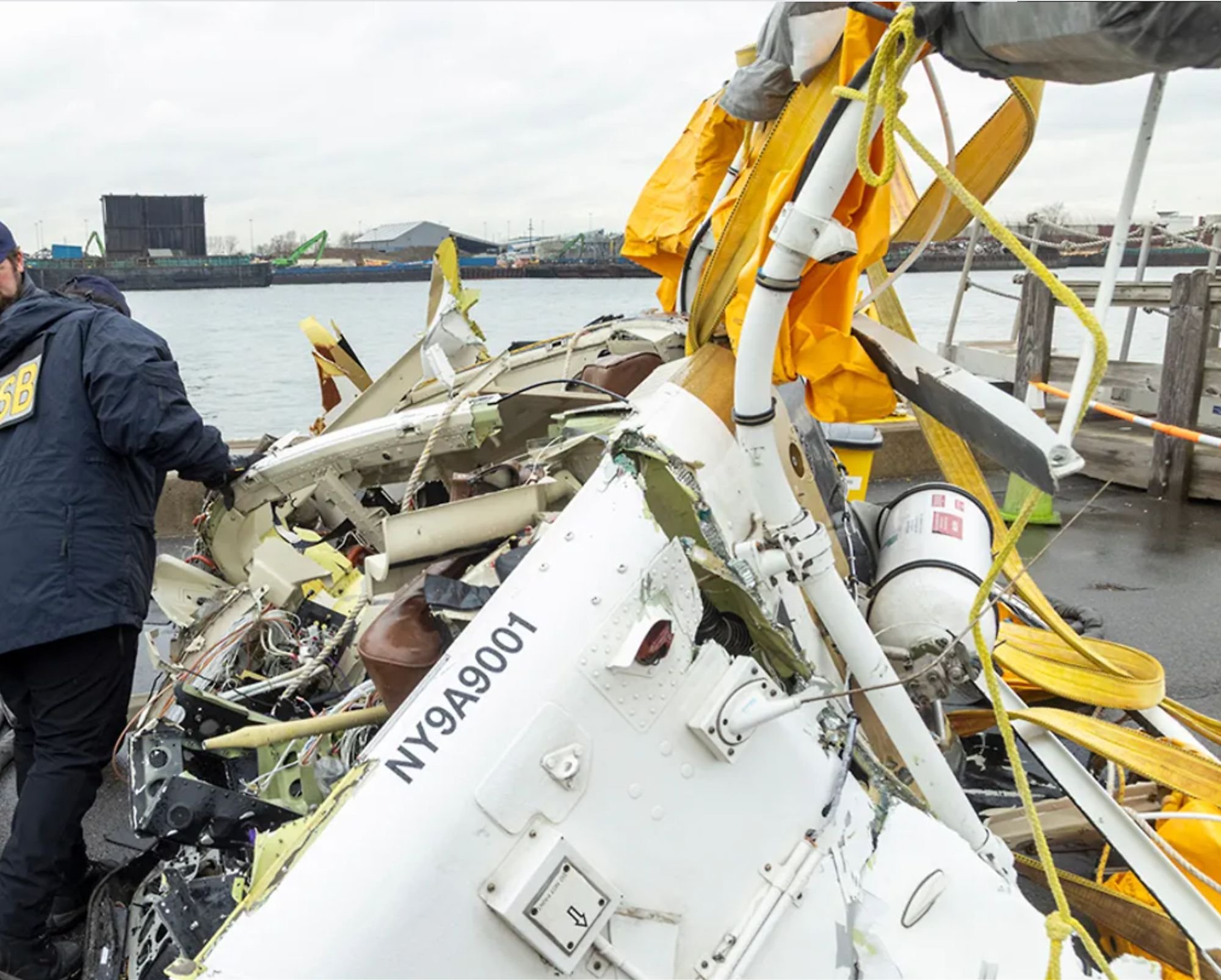
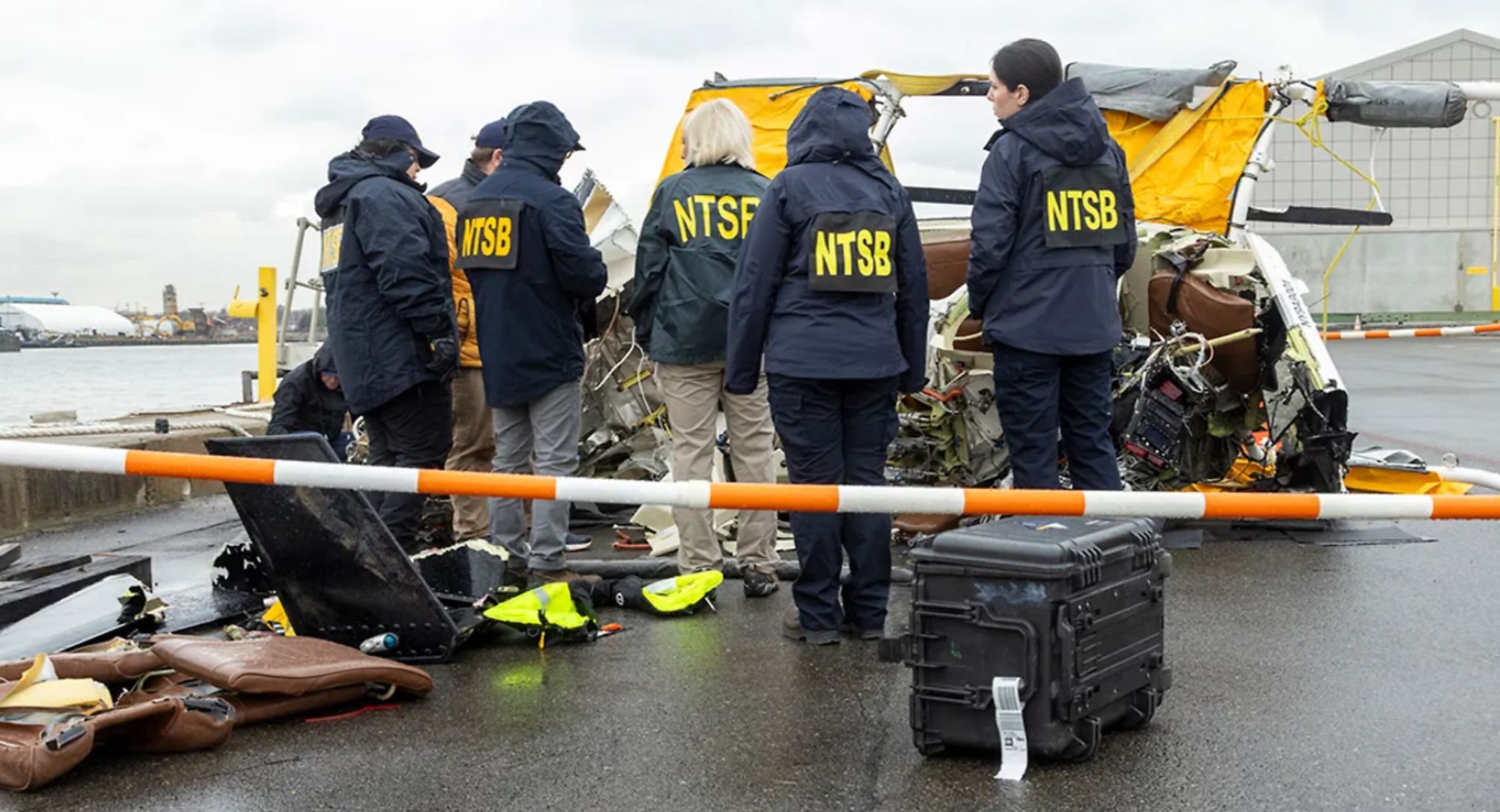
Joined: Nov 2010
Posts: 880
Likes: 225
From: Australia
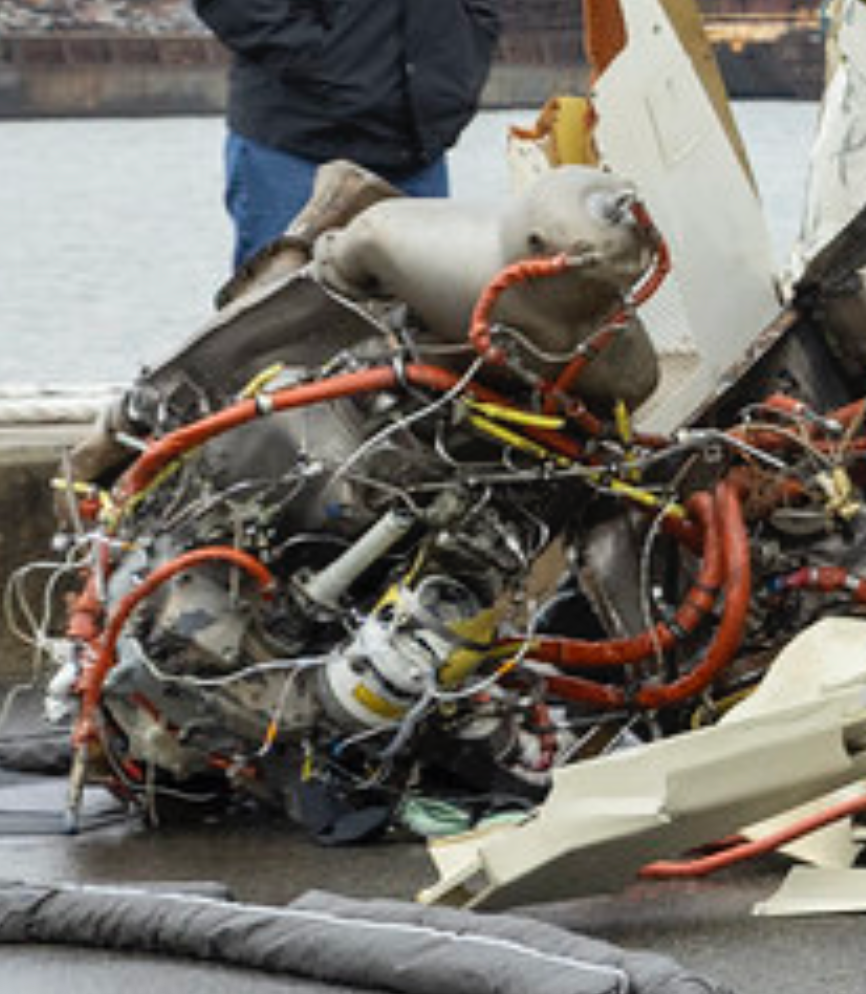
Joined: May 2002
Posts: 1,124
Likes: 16
From: GC Paradise

1. Vertical with tail-rotor(?)
2. Tail boom
3. Main rotor
4. Cabin
https://abcnews.go.com/US/tourist-he...y?id=120755978
Watch ABC News video at 1:18 and note that main rotor separation occurs a lot later than tail boom and tail rotor.
That would seem to indicate that the tail boom failed first after extreme and rapid yaw.
Joined: Jun 2016
Aviation Qualifications: CPL
Posts: 1,318
Likes: 386
From: Brantisvogan
What is impossible to tell from the few pixels contained in these videos and related images, are what caused the extreme yaw.
Was it something in the tail rotor drive system that went, or, was it something in the main gearbox, transmission or mountings that let go first.
That is nothing the currently available videos can answer, beyond confirming a sequence of visible events.