


Helicopter crash New York City


Joined: Jan 2009
Aviation Qualifications: ATP+Mil
Posts: 344
Likes: 105
From: Sweden
What difference would getting the collective down have made to an aircraft without a tailboom, and soon thereafter, no rotor system?
I can only hope that as interest wanes in this accident, the quality of discussion improves.
Did this ship even have van Horn components?
I can only hope that as interest wanes in this accident, the quality of discussion improves.
Did this ship even have van Horn components?
in that case, no collective movement would have helped I guess.
Not at all sure what direction the yaw was…


Joined: Jul 2002
Posts: 221
Likes: 18
From: Somewhere, Over the Rainbow
Originally Posted by Bell_ringer;[url=tel:11866168
11866168[/url]]What difference would getting the collective down have made to an aircraft without a tailboom, and soon thereafter, no rotor system?
I can only hope that as interest wanes in this accident, the quality of discussion improves.
Did this ship even have van Horn components?
I can only hope that as interest wanes in this accident, the quality of discussion improves.
Did this ship even have van Horn components?
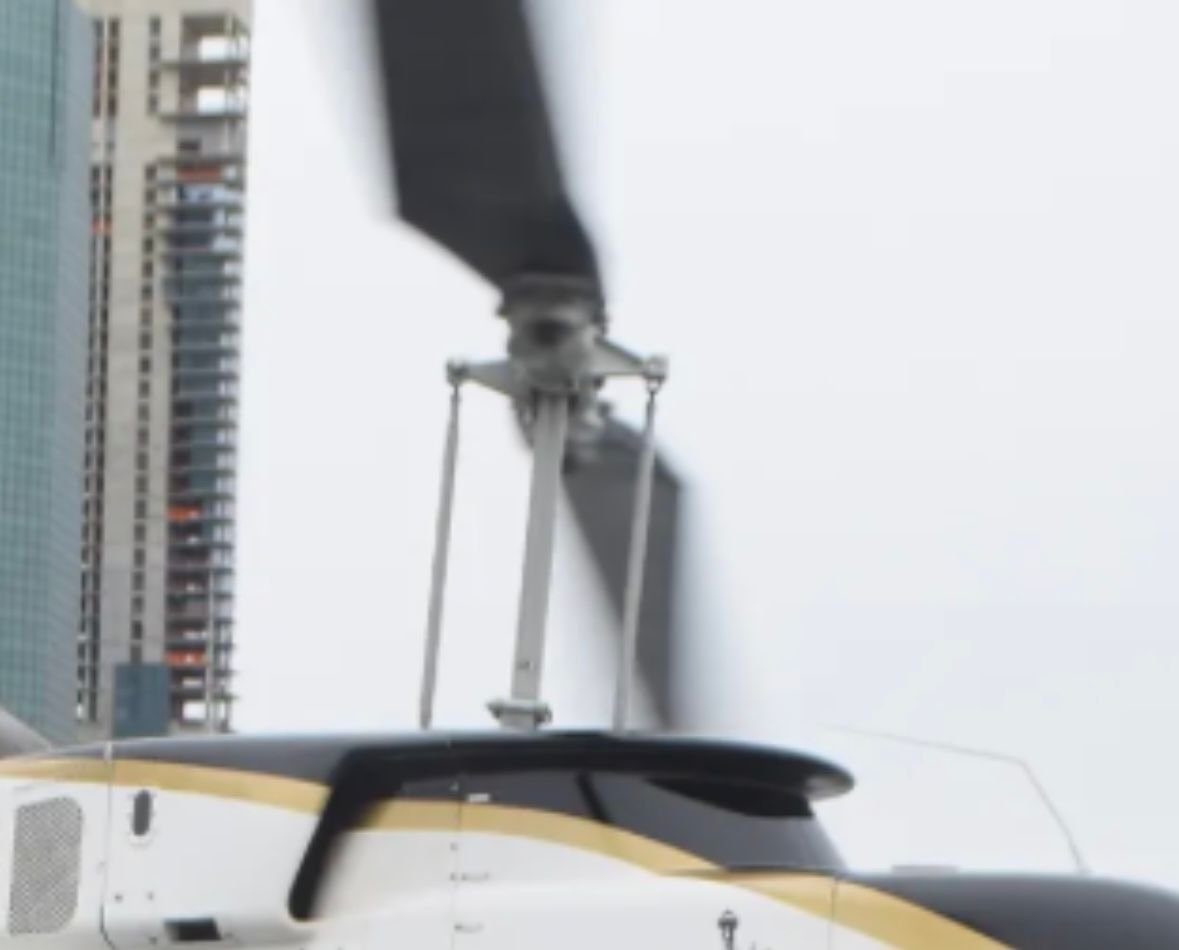
Also looks like grip plates (only on VH blades) are visible in the pre-takeoff picture of the group.
Moderator
Joined: Apr 2005
Posts: 4,377
Likes: 490
From: Melbourne
Each event is mutually exclusive. Any example could be one flight away from failure, you simply don’t know and can’t predict.

Joined: Feb 2015
Posts: 258
Likes: 58
From: USA
This video purports to be from the same helicopter recently to the crash and the blade tip profile matches VH blades.
CBS Video
Also looks like grip plates (only on VH blades) are visible in the pre-takeoff picture of the group.
CBS Video
Also looks like grip plates (only on VH blades) are visible in the pre-takeoff picture of the group.
Joined: Nov 2010
Posts: 880
Likes: 225
From: Australia
Dick Smith is able to be cautious, and I would do same in his position. Gets harder to make such a decision if operating a 206L on ongoing income earning commercial work.
Joined: Nov 2010
Posts: 880
Likes: 225
From: Australia
What difference would getting the collective down have made to an aircraft without a tailboom, and soon thereafter, no rotor system?
I can only hope that as interest wanes in this accident, the quality of discussion improves.
Did this ship even have van Horn components?
I can only hope that as interest wanes in this accident, the quality of discussion improves.
Did this ship even have van Horn components?
The guidance in the VH information letter is to raise collective if the vibrations are experienced but BEFORE those vibrations become excessive. However, as indicated by RVDT in the separate thread on forced landing of 206L-3 VH-JSU, the Nodamatic suspension for the rotor is doing its best to prevent those vibrations being felt by those on board. To quote RVDT:
"Part of the downside of the 206L "Nodamatic". It can be beating itself to bits with vibration and you won't feel it in the cabin.
Really evident if you fly an L for a while then get back in a B model."
Last edited by helispotter; 13th April 2025 at 22:51.

Joined: Apr 2025
Posts: 3
Likes: 0
From: NY
I am new but this happened not far from my job in midtown.
I pulled this post from this forum regarding Van Horn blades.
I pulled this post from this forum regarding Van Horn blades.
Originally Posted by Salusa
As a side note VHA blades seem to be very "rigid".
They don't have the same flex in them as Bell OEM blades.
Easy to Track and Balance with usually just some PCL change and no tab required. Maybe a bit of span weight only presuming chord alignment is good during initial assembly.
Strange for composite blades which I would naturally assume would have more "flex" than OEM metal blades?
Our pilots have been experimenting with the "vertical hop" when low on fuel and no pax during mainly mountain flying. Can anticipate it and cyclic will offload the vibration.
Not a good situation to get into for a new operator with new newly installed blades.
OAT approx 7
DA 11k'+
Low gross weight (single pilot and fuel).
Rough air due to local environment.
I've been hearing for a while now that the van horns are actually beating the crap out of helicopters. Especially utility ships. Premature failure of transmission mounts, bearings, etc. 110% rumor but thats why the OH58 blades aren't out yet too stiff.
As a side note VHA blades seem to be very "rigid".
They don't have the same flex in them as Bell OEM blades.
Easy to Track and Balance with usually just some PCL change and no tab required. Maybe a bit of span weight only presuming chord alignment is good during initial assembly.
Strange for composite blades which I would naturally assume would have more "flex" than OEM metal blades?
Our pilots have been experimenting with the "vertical hop" when low on fuel and no pax during mainly mountain flying. Can anticipate it and cyclic will offload the vibration.
Not a good situation to get into for a new operator with new newly installed blades.
OAT approx 7
DA 11k'+
Low gross weight (single pilot and fuel).
Rough air due to local environment.
I've been hearing for a while now that the van horns are actually beating the crap out of helicopters. Especially utility ships. Premature failure of transmission mounts, bearings, etc. 110% rumor but thats why the OH58 blades aren't out yet too stiff.
Last edited by Senior Pilot; 14th April 2025 at 00:27. Reason: quote
Joined: May 2002
Posts: 4,687
Likes: 252
From: Australia
As there is a good chance that all of the structural parts of the aircraft have been recovered by now, I hope there is an immediate announcement by the investigator if there is a fault that could have been caused by fatigue or another unknown factor, so it can be propagated around the world to existing Longranger owners. This will reduce the chance of a similar accident occurring.

Joined: Aug 2023
Aviation Qualifications: Spotter
Posts: 73
Likes: 46
From: Texas
"Part of the downside of the 206L "Nodamatic". It can be beating itself to bits with vibration and you won't feel it in the cabin.
Really evident if you fly an L for a while then get back in a B model."
Really evident if you fly an L for a while then get back in a B model."
Joined: May 2024
Aviation Qualifications: CPL
Posts: 379
Likes: 36
From: Kaupuala
As there is a good chance that all of the structural parts of the aircraft have been recovered by now, I hope there is an immediate announcement by the investigator if there is a fault that could have been caused by fatigue or another unknown factor, so it can be propagated around the world to existing Longranger owners. This will reduce the chance of a similar accident occurring.

Joined: Mar 2019
Posts: 22
Likes: 1
From: Cartersville, GA
The formsprag would instantly explode with that much load applied in milliseconds if it froze. The only thing with enough muscle to snap the tail around that fast is the tail rotor. I just can't imagine anything that would stomp full right pedal in straight & level cruise. I do see ways the MRGB could progressively tear away first, and in the process, fold the tailboom into. I just am baffled. I am anxious to see the main rotor assembly when it comes up.
Joined: Nov 2010
Posts: 880
Likes: 225
From: Australia
The nodal beam is designed to only reduce fundamental main rotor 2/rev vibration and actually reduces loads in the airframe and on the xmsn/rotor side by allowing it to move in response to 2/rev rotor loads. It has no ability to mask any other vibration frequencies. Therefore, any abnormal vibration will be felt by the pilot just like in the 206.
Joined: Oct 2006
Aviation Qualifications: A&P
Posts: 1,346
Likes: 270
From: USA


Joined: Dec 2000
Aviation Qualifications: Non-Aircrew
Posts: 724
Likes: 40
From: Arlington, Tx. US
I once witnessed (from extremely close range) an AH-1W running on the ground at 100% rpm release an internal main rotor blade weight due to a decade old manufacturing error. When the weight departed it:
1. Blew the end of the blade off,
2. Snapped the main transmission horizontally in half,
3. As the rotor/top case exited the still attached controls put in full pitch,
4. The aircraft was lifted 6’ or so by the control tubes which then failed dropping the fuselage back to the ground,
5. The now unattached rotor climbed 80’ before loosing energy and crashing down in front of the airframe.
The magnitude of the unbalance was so large the xmsn was snapped within one revolution of the rotor so no large 1/rev forces were transmitted to the fuselage. The only fuselage damage was to the cross tubes on one side. The pilot commented that he heard a bang, the aircraft smoothly lifted before falling back to the ground. The airframe was refurbished and returned to service.
if the weight had been less and not immediately snapped the xmsn case, the excessive 1/rev would probably have broken the pilot’s neck and damaged at least the tailboom.
So back to this thread. It is plausible a failure in a blade caused excessive 1/rev which buckled the tailboom and put in full tail rotor pitch through the still connected controls tubes causing the observed yaw. Then a combination of 1/rev loads and aero forces caused the rotor/xmsn/nodal beam to depart with the rotor appearing to fly away intact.
Won’t know until we see both blades.
1. Blew the end of the blade off,
2. Snapped the main transmission horizontally in half,
3. As the rotor/top case exited the still attached controls put in full pitch,
4. The aircraft was lifted 6’ or so by the control tubes which then failed dropping the fuselage back to the ground,
5. The now unattached rotor climbed 80’ before loosing energy and crashing down in front of the airframe.
The magnitude of the unbalance was so large the xmsn was snapped within one revolution of the rotor so no large 1/rev forces were transmitted to the fuselage. The only fuselage damage was to the cross tubes on one side. The pilot commented that he heard a bang, the aircraft smoothly lifted before falling back to the ground. The airframe was refurbished and returned to service.
if the weight had been less and not immediately snapped the xmsn case, the excessive 1/rev would probably have broken the pilot’s neck and damaged at least the tailboom.
So back to this thread. It is plausible a failure in a blade caused excessive 1/rev which buckled the tailboom and put in full tail rotor pitch through the still connected controls tubes causing the observed yaw. Then a combination of 1/rev loads and aero forces caused the rotor/xmsn/nodal beam to depart with the rotor appearing to fly away intact.
Won’t know until we see both blades.
Joined: Sep 2024
Posts: 21
Likes: 3
From: Florida
I think there's very little chance the freewheeling unit could be expected to accelerate a 1000# fuselage and 800# of pax from ZERO to 180 deg/sec as fast as the video shows the tail swinging 90 degrees.
The formsprag would instantly explode with that much load applied in milliseconds if it froze. The only thing with enough muscle to snap the tail around that fast is the tail rotor. I just can't imagine anything that would stomp full right pedal in straight & level cruise. I do see ways the MRGB could progressively tear away first, and in the process, fold the tailboom into. I just am baffled. I am anxious to see the main rotor assembly when it comes up.
The formsprag would instantly explode with that much load applied in milliseconds if it froze. The only thing with enough muscle to snap the tail around that fast is the tail rotor. I just can't imagine anything that would stomp full right pedal in straight & level cruise. I do see ways the MRGB could progressively tear away first, and in the process, fold the tailboom into. I just am baffled. I am anxious to see the main rotor assembly when it comes up.
Joined: May 2002
Posts: 4,687
Likes: 252
From: Australia
At the time of the Qantas Airbus A380 flight number QF32 non-contained engine failure incident at Singapore, Qantas grounded the whole fleet. Later inspections by Rolls Royce found that over 20 engines had the same fault. The cost to Qantas was obviously high, but I believe it was the conservative decision to make until the full information was available as to the fault. Fortunately, it only took a number of days for Rolls Royce to ascertain where the fault was that caused the engine failure.
Hopefully we will get information in a short time as to the cause of the Longranger accident, and the regulators can make a well-balanced decision.
Hopefully we will get information in a short time as to the cause of the Longranger accident, and the regulators can make a well-balanced decision.
Joined: Apr 2018
Aviation Qualifications: Non-Aircrew
Posts: 79
Likes: 35
From: Canada
https://www.nytimes.com/2025/04/12/n...smid=url-share
Joined: Dec 2005
Posts: 1,581
Likes: 73
From: England
I once witnessed (from extremely close range) an AH-1W running on the ground at 100% rpm release an internal main rotor blade weight due to a decade old manufacturing error. When the weight departed it:
1. Blew the end of the blade off,
2. Snapped the main transmission horizontally in half,
3. As the rotor/top case exited the still attached controls put in full pitch,
4. The aircraft was lifted 6’ or so by the control tubes which then failed dropping the fuselage back to the ground,
5. The now unattached rotor climbed 80’ before loosing energy and crashing down in front of the airframe.
The magnitude of the unbalance was so large the xmsn was snapped within one revolution of the rotor so no large 1/rev forces were transmitted to the fuselage. The only fuselage damage was to the cross tubes on one side. The pilot commented that he heard a bang, the aircraft smoothly lifted before falling back to the ground. The airframe was refurbished and returned to service.
if the weight had been less and not immediately snapped the xmsn case, the excessive 1/rev would probably have broken the pilot’s neck and damaged at least the tailboom.
So back to this thread. It is plausible a failure in a blade caused excessive 1/rev which buckled the tailboom and put in full tail rotor pitch through the still connected controls tubes causing the observed yaw. Then a combination of 1/rev loads and aero forces caused the rotor/xmsn/nodal beam to depart with the rotor appearing to fly away intact.
Won’t know until we see both blades.
1. Blew the end of the blade off,
2. Snapped the main transmission horizontally in half,
3. As the rotor/top case exited the still attached controls put in full pitch,
4. The aircraft was lifted 6’ or so by the control tubes which then failed dropping the fuselage back to the ground,
5. The now unattached rotor climbed 80’ before loosing energy and crashing down in front of the airframe.
The magnitude of the unbalance was so large the xmsn was snapped within one revolution of the rotor so no large 1/rev forces were transmitted to the fuselage. The only fuselage damage was to the cross tubes on one side. The pilot commented that he heard a bang, the aircraft smoothly lifted before falling back to the ground. The airframe was refurbished and returned to service.
if the weight had been less and not immediately snapped the xmsn case, the excessive 1/rev would probably have broken the pilot’s neck and damaged at least the tailboom.
So back to this thread. It is plausible a failure in a blade caused excessive 1/rev which buckled the tailboom and put in full tail rotor pitch through the still connected controls tubes causing the observed yaw. Then a combination of 1/rev loads and aero forces caused the rotor/xmsn/nodal beam to depart with the rotor appearing to fly away intact.
Won’t know until we see both blades.
This was explained to me following a mid air collision between a Bell 47 and a Hughes 500.
The 47 suffered a buckled blade, the 500 lost about 7 inches off one blade including all the blade weights.
The grim reaper must have been busy elsewhere that day as everybody walked away.
However I couldn't understand the damage pattern on the 500 so I spoke to the AAIB (AIB).
It was possible to lift the tail gearbox and boom up and down about 3 feet.
I assumed this had happened in the forced landing..
What I didn't understand was why the instrument console had sheared off completely from the structure with no impact damage..
I was told that the area had become a nodal point strong enough to shear the structure, same applied to the tail boom support structure.
It certainly paid testament to the inherent strength of the 500 and Bell 47 main rotor blades..
