


Future Carrier (Including Costs)

Joined: Jun 2009
Posts: 3,788
Likes: 1,205
From: Baston
we await an explanation - but presumably is it was someone else's fault we'd have been told instantly. Is that not a reasonable assumption?
After all they had actually closed the channel to other traffic and on todays timings that suggests she was within a couple of hours of moving.
After all they had actually closed the channel to other traffic and on todays timings that suggests she was within a couple of hours of moving.
Secondly, late is late, delayed is delayed. I know sh1t happens, but it happens too often, not just the RN but all over Defence.
It's NAGL, as my daughters used to say of dress sense .......... Not A Good Look.
So Bon Voyage, and fingers crossed.


Joined: Apr 2006
Posts: 809
Likes: 428
From: Portsmouth
we await an explanation - but presumably is it was someone else's fault we'd have been told instantly. Is that not a reasonable assumption?
After all they had actually closed the channel to other traffic and on todays timings that suggests she was within a couple of hours of moving.
After all they had actually closed the channel to other traffic and on todays timings that suggests she was within a couple of hours of moving.
You're still using supposition, not evidence, but if it makes you feel happier, she looked perfectly happy sailing past the window a few minutes ago.
Thread Starter
Joined: Feb 2002
Posts: 2,968
Likes: 102
From: Devon
HMS Prince of Wales sails for key NATO exercise in Norway - Royal Navy
HMS Prince of Wales will lead a carrier strike group of eight ships – four of them British, including frigate HMS Somerset and two Tide-class tankers from the Royal Fleet Auxiliary – supported by US, Spanish and Danish vessels.
They form one of the most potent naval forces of the exercise – an allied fleet of 40 vessels, drawn from more than two dozen nations, committed to the seagoing element of Steadfast Defender, which will take place off Norway’s Arctic coast from late February into March.
The carrier brings the capability of her F-35B Lightning stealth fighters from 617 ‘Dambusters’ Squadron at RAF Marham, submarine hunting and airborne early warning Merlin Mk2 helicopters from RNAS Culdrose, and battlefield Wildcat helicopters of 847 Naval Air Squadron from RNAS Yeovilton.
Before heading for Norwegian waters, HMS Prince of Wales is conducting a week’s training in the North Sea with her air group to hone the skills of the 780-strong ship’s company – plus nearly 600 men and women embarked with the F-35s and helicopters...
On a not entirely unrelated note, I saw something interesting on the BBC News site:
The fighter pilots hunting Houthi drones over the Red Sea
"We took a Harrier jet and modified it for air defence," Ehrhart tells me. "We loaded it up with missiles and that way were able to respond to their drone attacks."
An experienced fighter pilot, Ehrhart says he has shot down seven Houthi drones. But when flying so close to these explosive devices, he says, every interception carries great risk.
"They are shooting at us all the time, so we need to be even more focused. Our systems need to be primed so we can stay safe."
Like the Super Hornets from the USS Eisenhower, the AV-8B+ can fired Sidewinder or AMRAAM. Both weapons are considerably cheaper than the SM-2 or SM-6 missiles. Some analytical but mischievous person could probably show mathematically that it is more cost effective to use shipborne aircraft to engage UAVs and anti ship missiles than it is to use expensive missiles and then have to transit to a port to reload the VLS cells.
Then they can use some simpler calculations to show that having your air defence aircraft based aboard a carrier tasked with protecting ships carrying reinforcements is better than relying on ones based hundreds of miles away (think of the Norwegian Sea for a NATO example) and the value of defence in depth - after all nothing has one hundred percent reliability.
HMS Prince of Wales will lead a carrier strike group of eight ships – four of them British, including frigate HMS Somerset and two Tide-class tankers from the Royal Fleet Auxiliary – supported by US, Spanish and Danish vessels.
They form one of the most potent naval forces of the exercise – an allied fleet of 40 vessels, drawn from more than two dozen nations, committed to the seagoing element of Steadfast Defender, which will take place off Norway’s Arctic coast from late February into March.
The carrier brings the capability of her F-35B Lightning stealth fighters from 617 ‘Dambusters’ Squadron at RAF Marham, submarine hunting and airborne early warning Merlin Mk2 helicopters from RNAS Culdrose, and battlefield Wildcat helicopters of 847 Naval Air Squadron from RNAS Yeovilton.
Before heading for Norwegian waters, HMS Prince of Wales is conducting a week’s training in the North Sea with her air group to hone the skills of the 780-strong ship’s company – plus nearly 600 men and women embarked with the F-35s and helicopters...
On a not entirely unrelated note, I saw something interesting on the BBC News site:
The fighter pilots hunting Houthi drones over the Red Sea
"We took a Harrier jet and modified it for air defence," Ehrhart tells me. "We loaded it up with missiles and that way were able to respond to their drone attacks."
An experienced fighter pilot, Ehrhart says he has shot down seven Houthi drones. But when flying so close to these explosive devices, he says, every interception carries great risk.
"They are shooting at us all the time, so we need to be even more focused. Our systems need to be primed so we can stay safe."
Like the Super Hornets from the USS Eisenhower, the AV-8B+ can fired Sidewinder or AMRAAM. Both weapons are considerably cheaper than the SM-2 or SM-6 missiles. Some analytical but mischievous person could probably show mathematically that it is more cost effective to use shipborne aircraft to engage UAVs and anti ship missiles than it is to use expensive missiles and then have to transit to a port to reload the VLS cells.
Then they can use some simpler calculations to show that having your air defence aircraft based aboard a carrier tasked with protecting ships carrying reinforcements is better than relying on ones based hundreds of miles away (think of the Norwegian Sea for a NATO example) and the value of defence in depth - after all nothing has one hundred percent reliability.
Joined: May 2009
Aviation Qualifications: ATP+Mil
Posts: 314
Likes: 254
From: uk
Branch Fanatic
unfortunately we haven’t got any Harriers and it seems risky to put expensive F 35 s up against drones?
the advantage of having aircraft on hand from carriers to defend shipping is stating the b obvious but unfortunately the carrier itself being nearby is a big juicy target.
Q can our F35Bs be fitted with guns and if so so could they safely shoot down drones?
unfortunately we haven’t got any Harriers and it seems risky to put expensive F 35 s up against drones?
the advantage of having aircraft on hand from carriers to defend shipping is stating the b obvious but unfortunately the carrier itself being nearby is a big juicy target.
Q can our F35Bs be fitted with guns and if so so could they safely shoot down drones?
Last edited by mahogany bob; 12th February 2024 at 15:52.

Joined: Apr 2020
Posts: 1,980
Likes: 376
From: Hampshire
MB
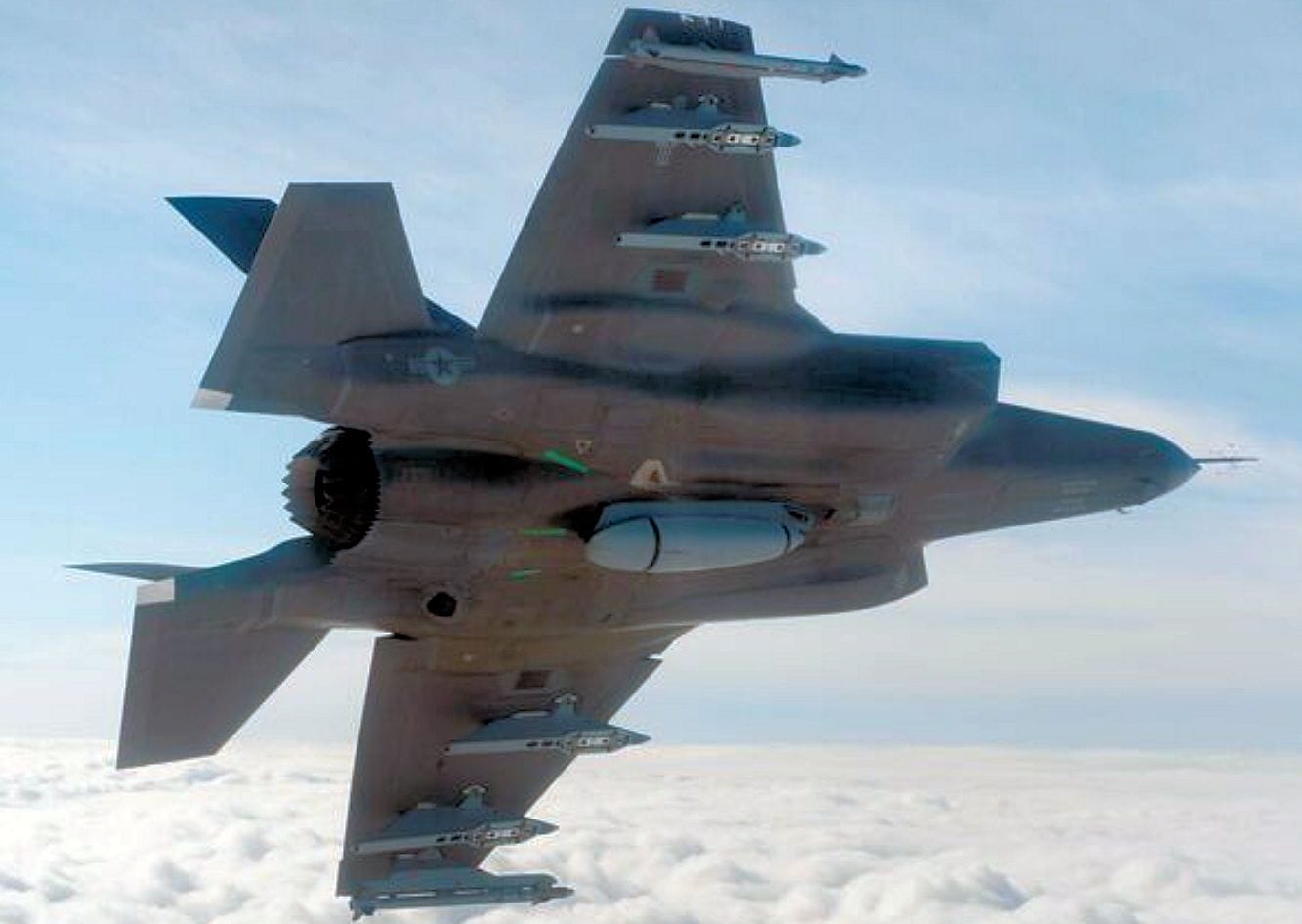
1) Yes they can be fitted with the GAU-22/A cannon pod
2) No, the UK didn't buy any because
Any Vietnam era F-4 pilots/WSOs/RIOs wish to disabuse them?
1) Yes they can be fitted with the GAU-22/A cannon pod
2) No, the UK didn't buy any because
- We are not going to get into dogfights 'we don't need to go there because we will make sure we play to our advantages and not theirs.' (said Air Cdre X)
- It's an air to ground weapon
Any Vietnam era F-4 pilots/WSOs/RIOs wish to disabuse them?


Joined: Jul 2008
Aviation Qualifications: Military
Posts: 2,979
Likes: 175
From: Australia OZ
&
Farnborough 2022: ‘Guns no longer required', says senior UK F-35 pilot 21 Jul 2022: https://www.janes.com/defence-news/n...-uk-f-35-pilot "...the UK has no plans to acquire [gunpod]."
&
GUN POD: https://qph.cf2.quoracdn.net/main-qi...60c3353f11e978
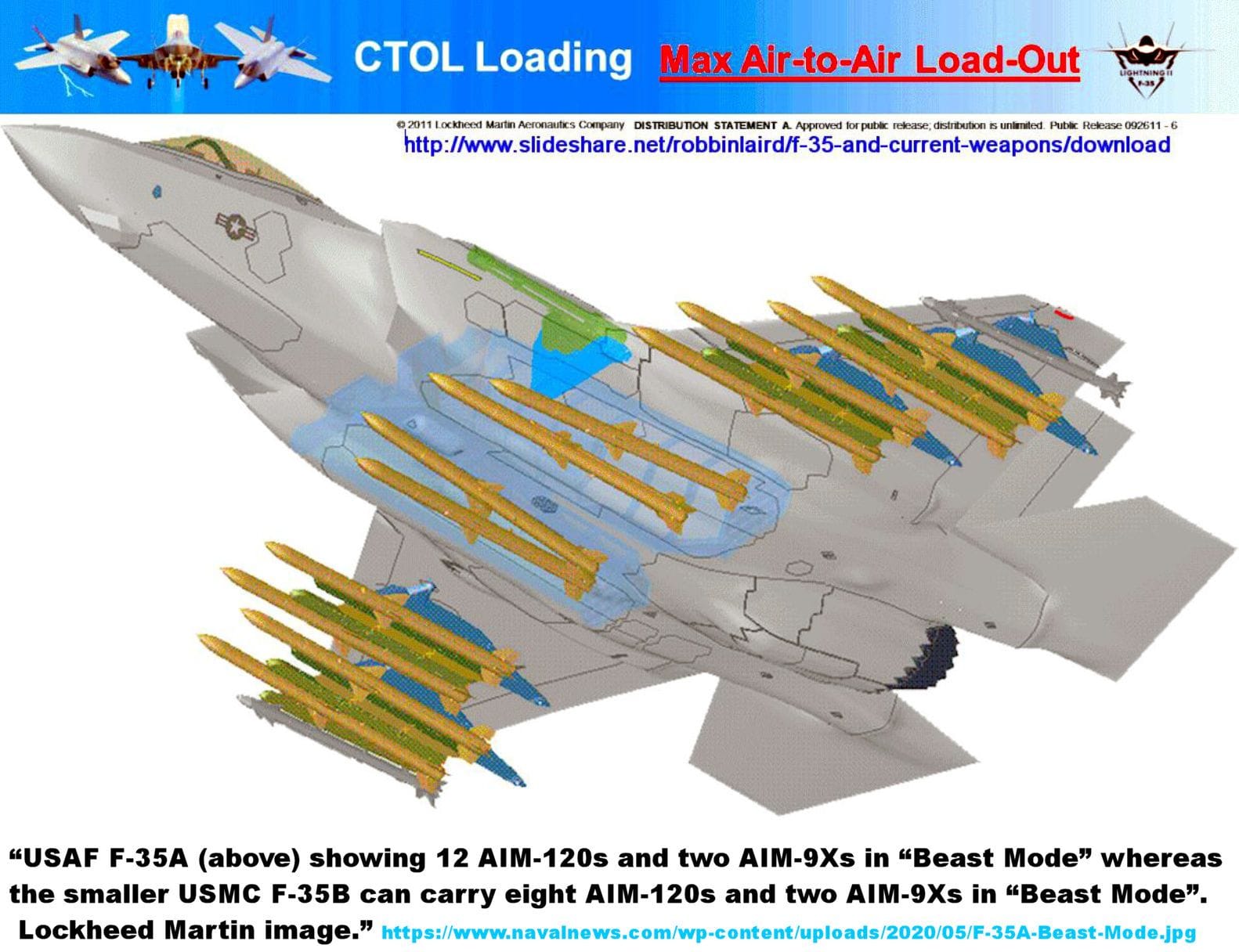
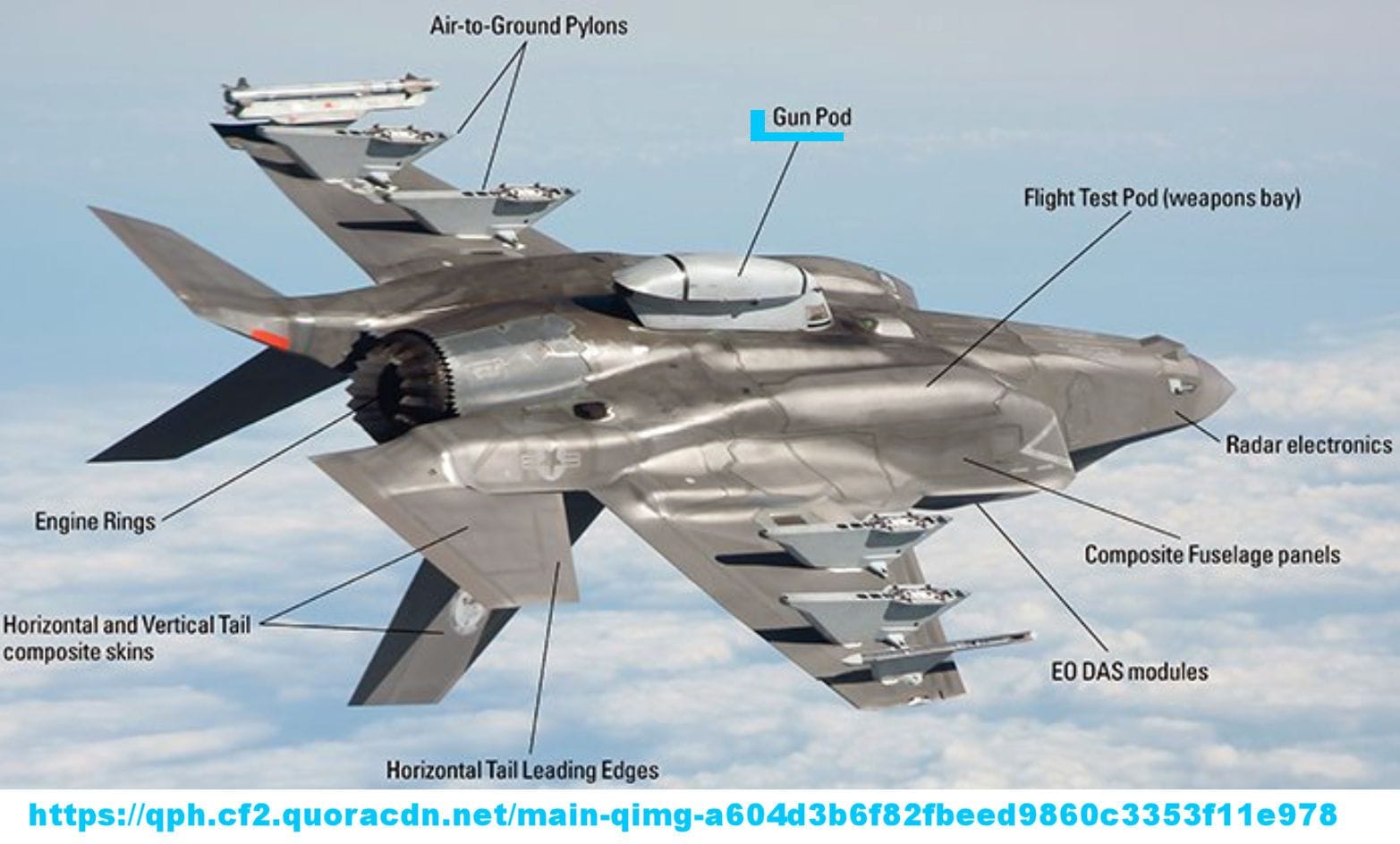
"Seen on the centreline of an F-35B test aircraft, the pod-mounted 25 mm GAU-22/A Gatling gun has not been ordered by the UK. (Lockheed Martin)" https://www.janes.com/images/default...-jdw-18335.jpg
Last edited by SpazSinbad; 12th February 2024 at 19:39. Reason: _jpgs & txt
Joined: Jan 2008
Aviation Qualifications: SLF
Posts: 1,022
Likes: 1,066
From: Australia

Ecce Homo! Loquitur...

Joined: Jul 2000
Aviation Qualifications: Spotter
Posts: 24,550
Likes: 7,281
From: Peripatetic
But from recollection the F-35 guns couldn't shoot straight. Maybe that's been fixed.
Joined: Sep 2010
Posts: 1,781
Likes: 11
From: South East of Penge
Ecce Homo! Loquitur...
Joined: Jul 2000
Aviation Qualifications: Spotter
Posts: 24,550
Likes: 7,281
From: Peripatetic
https://ukdefencejournal.org.uk/babc...s-small-as-50/
Babcock plans next-gen frigates with crews as small as 50
Babcock has announced its plans for the Type 32 frigates, which could see the vessels operated with crews as small as 50 sailors.
In a detailed discussion with The Telegraph, John Howie, Babcock’s Chief of Corporate Affairs, shed light on the potential that recent technological advancements hold for reducing the necessary crew size on naval ships.
“People talk about a Type 32 frigate – we like to refer to it as Type 31 batch two. We’re doing a crew of about 105 on Type 31, so realistically we should be aiming to half that number for batch two,” Howie explained….
By significantly reducing the crew size from the current requirement of approximately 105 sailors on the Type 31 frigates, Babcock seems to be recognising that the Royal Navy can no longer jam ships full of people and that recruitment is an issue.
Howie also noted the possibility of further reducing the crew numbers below 50, although he acknowledged the importance of maintaining safety and operational integrity.
Babcock plans next-gen frigates with crews as small as 50
Babcock has announced its plans for the Type 32 frigates, which could see the vessels operated with crews as small as 50 sailors.
In a detailed discussion with The Telegraph, John Howie, Babcock’s Chief of Corporate Affairs, shed light on the potential that recent technological advancements hold for reducing the necessary crew size on naval ships.
“People talk about a Type 32 frigate – we like to refer to it as Type 31 batch two. We’re doing a crew of about 105 on Type 31, so realistically we should be aiming to half that number for batch two,” Howie explained….
By significantly reducing the crew size from the current requirement of approximately 105 sailors on the Type 31 frigates, Babcock seems to be recognising that the Royal Navy can no longer jam ships full of people and that recruitment is an issue.
Howie also noted the possibility of further reducing the crew numbers below 50, although he acknowledged the importance of maintaining safety and operational integrity.

Joined: Oct 2018
Aviation Qualifications: PPL
Posts: 12,223
Likes: 1,649
From: Ferrara
According to Wiki, the '97 Defence Review - which was the initial driver for procurement concluded:-
""the emphasis is now on increased offensive airpower, and an ability to operate the largest possible range of aircraft in the widest possible range of roles. When the current carrier force reaches the end of its planned life, we plan to replace it with two larger vessels. Work will now begin to refine our requirements but present thinking suggests that they might be of the order of 30,000–40,000 tonnes and capable of deploying up to 50 aircraft, including helicopters"
I have a very vague recollection that two was partly driven by the issues the French were clearly about to have with the Charles de Gaulle - which was laid down in '89 - which was planned to have a 12-15 month refueling/refit every 6-7 years. Not only did you lose the carrier capability for a long time you also lost time in working up the crew again after the refit.
Joined: Apr 2020
Posts: 1,980
Likes: 376
From: Hampshire
1)Asturias, that'll be the same review that suggested 32 Escorts, 10 SSNs and 22 MCMVs? Oh, and the carriers were to be supplemented by an LPH (the former HMS Ocean) and 2 LPDs. I suspect two not three was driven by (possibly the expectation of) what the bean counters in the House of Darkness would agree to. They were also expected to be 30-40,000 tonnes and have a complement of 50 aircraft. I would have thought in their heart of hearts their then Lordships would have liked to see if not a return to the planned four carrier navy of which CVA01 and her sisters were to form part then three as a minimum. The review foresaw the possibility of simultaneous and prolonged operations - it didn't answer how these could be supported for a sustained period with only two carriers if they were required to support both.
If only subsequent reviews had been as (mostly) sensible and comprehensive. It's worth re-reading some of it.
2) A crew of 50 (presumably 'core crew' i.e. supplemented by specialists for the 'autonomous systems' or a crewed aerial vehicle) is all fine and dandy but when spread across Cruising or Defence watchbills how will it be sustained? There is research that suggests a three watch system is the most sustainable for crew effectiveness and, physical and mental health.
If only subsequent reviews had been as (mostly) sensible and comprehensive. It's worth re-reading some of it.
6. In the post Cold War world, we must be prepared to go to the crisis, rather than have the crisis come to us. So we plan to buy two new larger aircraft carriers to project power more
flexibly around the world. New transport aircraft and ships will move our people and equipment rapidly to troublespots.
7. If we ask our forces to fight, we must be sure they will win. That means we must correct the deep-seated problems we inherited from the previous government, most obviously in the medical and logistics areas, to ensure that our forces are properly supported. Past cuts in support have been presented as "trimming the tail without blunting the teeth". The reality is that logistic support is the life-blood of the forces, and we must ensure that our forces get the back up they need.
8. At the same time we must focus our effort on the capabilities we need to be successful today. That will mean reductions in some areas which were needed primarily to meet Cold War threats. So we will place somewhat less emphasis on open ocean anti-submarine warfare and have fewer tanks and fast jets in the front line
(...)
11. It would be as wrong to take military success for granted in this new environment as it would have been during the Cold War. We have therefore taken a hard look at the capabilities of today's Armed Forces. The so-called 'peace dividend' from the ending of the Cold War has already been taken. Since 1990, defence expenditure has fallen by some 23% in real terms and our forces have been cut by nearly a third. Yet over this period we have faced a series of new and largely unexpected operational challenges. Our Armed Forces have responded outstandingly but they face serious problems that carry increasing risks in relation to the changed pattern of operations. There are personnel shortages in important areas, which with the high level of operational commitments are creating excessive and unsustainable pressures on many of our people. Other areas of weakness include the extent of our rapid deploymentcapabilities and our ability to sustain and support overseas operations, including medical support.
(...)
58. Apart from scale, however, the new international environment is in many ways more demanding. Undertaking smaller but frequent, often simultaneous and sometimes prolonged operations can be more difficult than preparing for a single worst-case conflict. During the 1990s, we have deployed or been prepared to deploy forces on a wide range of operations at various levels, in addition to maintaining our day-to-day responsibilities. Against the security priorities described earlier we can expect this trend to continue. There is a new emphasis on defence diplomacy and on the use of armed forces to support diplomacy in efforts to deter or manage crises, from humanitarian missions to UN embargoes and peacekeeping. Crises often occur with little warning and we need to be able to respond rapidly. In order to deter, and where deterrence fails, we must maintain forces which can be successful in conventional warfighting. Indeed most of the military capabilities required are equally valuable in support of the wider range of tasks we now face. All this places a premium on the flexibility and usability of the Armed Forces in the modern world.
59. We could of course, as a country, choose to take a narrow view of our role and responsibilities which did not require a significant military capability. This would mean that we would not wish and would not be able to contribute effectively to resolving crises such as Bosnia, Kosovo, or the invasion of Kuwait. This is indeed a real choice, but not one the Government could recommend for Britain.
flexibly around the world. New transport aircraft and ships will move our people and equipment rapidly to troublespots.
7. If we ask our forces to fight, we must be sure they will win. That means we must correct the deep-seated problems we inherited from the previous government, most obviously in the medical and logistics areas, to ensure that our forces are properly supported. Past cuts in support have been presented as "trimming the tail without blunting the teeth". The reality is that logistic support is the life-blood of the forces, and we must ensure that our forces get the back up they need.
8. At the same time we must focus our effort on the capabilities we need to be successful today. That will mean reductions in some areas which were needed primarily to meet Cold War threats. So we will place somewhat less emphasis on open ocean anti-submarine warfare and have fewer tanks and fast jets in the front line
(...)
11. It would be as wrong to take military success for granted in this new environment as it would have been during the Cold War. We have therefore taken a hard look at the capabilities of today's Armed Forces. The so-called 'peace dividend' from the ending of the Cold War has already been taken. Since 1990, defence expenditure has fallen by some 23% in real terms and our forces have been cut by nearly a third. Yet over this period we have faced a series of new and largely unexpected operational challenges. Our Armed Forces have responded outstandingly but they face serious problems that carry increasing risks in relation to the changed pattern of operations. There are personnel shortages in important areas, which with the high level of operational commitments are creating excessive and unsustainable pressures on many of our people. Other areas of weakness include the extent of our rapid deploymentcapabilities and our ability to sustain and support overseas operations, including medical support.
(...)
58. Apart from scale, however, the new international environment is in many ways more demanding. Undertaking smaller but frequent, often simultaneous and sometimes prolonged operations can be more difficult than preparing for a single worst-case conflict. During the 1990s, we have deployed or been prepared to deploy forces on a wide range of operations at various levels, in addition to maintaining our day-to-day responsibilities. Against the security priorities described earlier we can expect this trend to continue. There is a new emphasis on defence diplomacy and on the use of armed forces to support diplomacy in efforts to deter or manage crises, from humanitarian missions to UN embargoes and peacekeeping. Crises often occur with little warning and we need to be able to respond rapidly. In order to deter, and where deterrence fails, we must maintain forces which can be successful in conventional warfighting. Indeed most of the military capabilities required are equally valuable in support of the wider range of tasks we now face. All this places a premium on the flexibility and usability of the Armed Forces in the modern world.
59. We could of course, as a country, choose to take a narrow view of our role and responsibilities which did not require a significant military capability. This would mean that we would not wish and would not be able to contribute effectively to resolving crises such as Bosnia, Kosovo, or the invasion of Kuwait. This is indeed a real choice, but not one the Government could recommend for Britain.
Joined: Nov 2007
Posts: 501
Likes: 91
From: UK
I have a very vague recollection that two was partly driven by the issues the French were clearly about to have with the Charles de Gaulle - which was laid down in '89 - which was planned to have a 12-15 month refueling/refit every 6-7 years. Not only did you lose the carrier capability for a long time you also lost time in working up the crew again after the refit.
Joined: Oct 2018
Aviation Qualifications: PPL
Posts: 12,223
Likes: 1,649
From: Ferrara
"then Lordships would have liked to see if not a return to the planned four carrier navy of which CVA01 and her sisters were to form part "
That died in 1963 when they announced they were building only one (which they didn't) - and that is 60 years ago
60 years before that we were planning the "Dreadnought"
That died in 1963 when they announced they were building only one (which they didn't) - and that is 60 years ago
60 years before that we were planning the "Dreadnought"
Joined: Apr 2020
Posts: 1,980
Likes: 376
From: Hampshire
True but Thorneycroft announced CVA-01 would be part of a three carrier navy. Jock Slater was Lt J C K Slater RN in 1963, Michael Boyce started at BRNC in 1961 so was a Mid/Actg Sub Lt., they at least were serving officers when the decision was taken.
In the same debate the ex-beachmaster said
It may have been have been 60 years ago but history has a habit of repeating itself, giving the opportunity for better decisions to be taken. The replacements for Hermes and Victorious Eagle were clearly to have been 'when circumstances allow'.
This was all predicated on a P1154 based supersonic V/STOL aircraft being available - taken 60 years to fill a similar requirement.
The life of H.M.S. "Eagle" and H.M.S. "Hermes" can with refits be extended until about 1980. H.M.S. "Victorious" and H.M.S. "Ark Royal" will come to the end of their useful lives in the early 1970s. A decision has, therefore, been taken to build one carrier replacement. This ship will be of around 50,000 tons and will give us, with H.M.S. "Eagle" and "Hermes", a force of three carriers. This decision will ensure that the Fleet Air Arm can maintain its rôle at least until 1980.
(...)
The all-up cost of the aircraft carrier is about £60 million, which will be spent over eight to ten years. The hon. Member asked about other aircraft carriers. The conclusion which we have reached is that we should go for an aircraft carrier fleet of three carriers, which will be composed, at least until 1980—when the "Ark Royal" and the "Victorious" go out—of the "Hermes" and the "Eagle". Whether a replacement of the "Eagle" and the "Hermes" will be made during the 1970s is a matter which will fall to be considered at that date.
(...)
The all-up cost of the aircraft carrier is about £60 million, which will be spent over eight to ten years. The hon. Member asked about other aircraft carriers. The conclusion which we have reached is that we should go for an aircraft carrier fleet of three carriers, which will be composed, at least until 1980—when the "Ark Royal" and the "Victorious" go out—of the "Hermes" and the "Eagle". Whether a replacement of the "Eagle" and the "Hermes" will be made during the 1970s is a matter which will fall to be considered at that date.
On the question of the new aircraft, we are delighted that, for the first time almost in post-war history, the R.A.F. and the Royal Navy have been able to agree on the characteristics of an aircraft. Would he give some idea of the number of aircraft of this type which he proposes to order and what the total cost is likely to be?
This was all predicated on a P1154 based supersonic V/STOL aircraft being available - taken 60 years to fill a similar requirement.
Last edited by SLXOwft; 16th February 2024 at 13:10. Reason: correction from V to E
Joined: Oct 2018
Aviation Qualifications: PPL
Posts: 12,223
Likes: 1,649
From: Ferrara
" but history has a habit of repeating itself,"
I'm afraid the bit of history which is repeating is the chronic lack of cash for defence
Looking back it's hard to see a decision on UK military matters that wasn't mainly budget driven after 1952
I'm afraid the bit of history which is repeating is the chronic lack of cash for defence
Looking back it's hard to see a decision on UK military matters that wasn't mainly budget driven after 1952