Name that Flying Machine

Joined: Aug 2006
Posts: 13
Likes: 0
From: Timbukthree
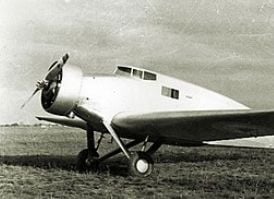
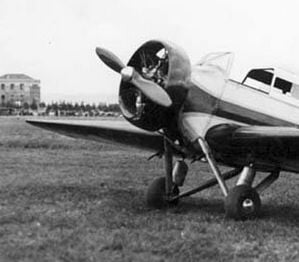
The Argentinian FMA Ae. C.1 ?
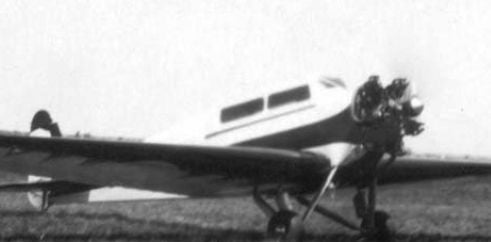
The engine doesn't look like a Wright radial, more like an Armstrong-Siddeley radial.
The engine doesn't look like a Wright radial, more like an Armstrong-Siddeley radial.
Last edited by evansb; 7th January 2021 at 17:56. Reason: Engine does not look like a Wright radial.


Joined: Oct 2018
Aviation Qualifications: PPL
Posts: 12,223
Likes: 1,649
From: Ferrara
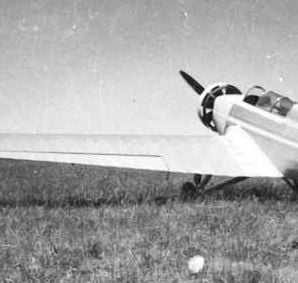
Its actually supposed to be an FMA Ae 2 - in various guises but the various versions of the 2 differ so much its hard to tell if they are the same or different to the FMA 1
We could argue forever so I' feel Evans has it - amazing they built over 70 of them pre WW2
We could argue forever so I' feel Evans has it - amazing they built over 70 of them pre WW2
Joined: Aug 2006
Posts: 13
Likes: 0
From: Timbukthree
Thank you. The aircraft in the initial photo is indeed an FMA Ae.C.1. I would paste a URL to airwar ru to confirm, but because of my lowly status I am prohibited from pasting URLs, as well as being prohibited from posting a new challenge. It is OPEN HOUSE.


Joined: Jun 2014
Aviation Qualifications: Spotter
Posts: 3,907
Likes: 86
From: Netherlands
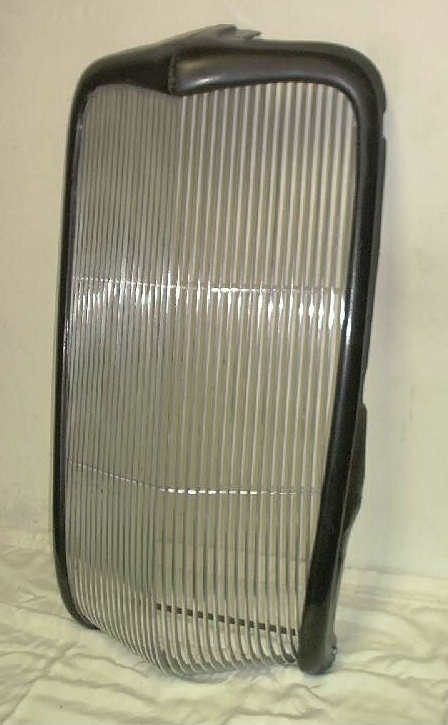
with a Ford V-8 and several other Ford parts
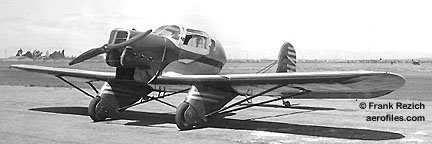
Jelle has called open house:
An interesting article by Walter Boyne from Airline Pilot in 1987 sheds more light on the subject:
The McGaffey Aviate—was an effort to meet the American public's hope that flying an airplane could be as easy and inexpensive as driving a car.
Not only did the aviation public wish to have an airplane as easy to buy as an automobile (the rock bottom price on a Model T was only $295), the manufacturers of private aircraft were equally eager to have their products perceived as airborne automobiles, with equal utility and even greater social cachet. Piper, Taylorcraft, Aeronca, and others dolled their airplanes up with phony grills, wheels instead of sticks, and interiors as much like cars as possible. Even upscale aircraft like Loening Amphibians were decorated and spoken of in limousine terms.
The lust for the best of both possible worlds also resulted in several attempts to combine the two in one vehicle, as best exemplified by the Fulton Airphibian and Molt Taylor's jewel, the Aerocar.
This infectious passion overcame even the director of the U.S. Bureau of Air Commerce, Eugene L. Vidal, a very experienced pilot trained in the Army Air Service, with a strong background in commercial air transportation. In a fit of enthusiasm, Vidal called for a national competition for an aircraft that would be right down in the Oldsmobile price range: $700, FAPD (Fly-Away Pipe Dream). It was also to be "foolproof —an achievement that still eludes all manufacturers. Vidal probably knew that, while what he was asking for was unachievable, he was certain to reap a harvest of interest in aviation. The winner of the competition was the twin-boom pusher Stearman Hammond using a Menasco engine, but it was considerably over the target price.
A more realistic competitor was the McGaffey Airplane Development Company's neat little Aviate, which used a converted Ford V-8. Neil McGaffey built the airplane in Pasadena, and Vance Breese flight-tested it at Mines Field in Los Angeles.
The announced price on the Aviate was a mere $1625. McGaffey planned to sell the engine, nominally rated at 100 horsepower but more likely generating about 95, for $350. The pod-like cabin, which featured a 1935-Ford-style grill forward and twin booms aft, carried two people. I've been told that Claire Vance had a hand in the design, and the aircraft is similar in outline to his famous Bendix entry.
The announced performance for the Aviate was creditable, with a top speed of 115 miles per hour, a cruise of 100, and a landing speed of only 38. The 34-foot-span, fabric-covered wing was built of solid spruce spars and metal ribs, with the rest of the aircraft almost all metal. The automobile motif was carried further with the use of a standard automobile radio, Ford brake drums, and other smaller components.
The Aviate appeared in mid-1935, and was in existence at least through August 1938. It would be interesting to learn of its ultimate disposition. The little monoplane would make a good radio-controlled model. For the buffs, the darker sections in the picture are battleship grey and the lighter are ivory grey, all trimmed in "green—for McGaffey—green."
Capt. Charles Spencer (Pan Am) wrote to say that his father, Capt. C. C. Spencer (Pan Am, Ret.), was a partner in the design. The senior Spencer is still flying actively with the California Forest Service. Other automobile-engined aircraft during the period included the Fahlin Plymocoupe, with a six-banger Plymouth engine; the Ford Arrow; the Campbell F (a really sleek airplane); the Horace Keene Ace; and others; but none caught on. In recent years we've seen Volkswagen, Porsche, Buick, and other automobile engines successfully converted to aircraft use. Maybe the Aviate's time has come at last!
The McGaffey Aviate—was an effort to meet the American public's hope that flying an airplane could be as easy and inexpensive as driving a car.
Not only did the aviation public wish to have an airplane as easy to buy as an automobile (the rock bottom price on a Model T was only $295), the manufacturers of private aircraft were equally eager to have their products perceived as airborne automobiles, with equal utility and even greater social cachet. Piper, Taylorcraft, Aeronca, and others dolled their airplanes up with phony grills, wheels instead of sticks, and interiors as much like cars as possible. Even upscale aircraft like Loening Amphibians were decorated and spoken of in limousine terms.
The lust for the best of both possible worlds also resulted in several attempts to combine the two in one vehicle, as best exemplified by the Fulton Airphibian and Molt Taylor's jewel, the Aerocar.
This infectious passion overcame even the director of the U.S. Bureau of Air Commerce, Eugene L. Vidal, a very experienced pilot trained in the Army Air Service, with a strong background in commercial air transportation. In a fit of enthusiasm, Vidal called for a national competition for an aircraft that would be right down in the Oldsmobile price range: $700, FAPD (Fly-Away Pipe Dream). It was also to be "foolproof —an achievement that still eludes all manufacturers. Vidal probably knew that, while what he was asking for was unachievable, he was certain to reap a harvest of interest in aviation. The winner of the competition was the twin-boom pusher Stearman Hammond using a Menasco engine, but it was considerably over the target price.
A more realistic competitor was the McGaffey Airplane Development Company's neat little Aviate, which used a converted Ford V-8. Neil McGaffey built the airplane in Pasadena, and Vance Breese flight-tested it at Mines Field in Los Angeles.
The announced price on the Aviate was a mere $1625. McGaffey planned to sell the engine, nominally rated at 100 horsepower but more likely generating about 95, for $350. The pod-like cabin, which featured a 1935-Ford-style grill forward and twin booms aft, carried two people. I've been told that Claire Vance had a hand in the design, and the aircraft is similar in outline to his famous Bendix entry.
The announced performance for the Aviate was creditable, with a top speed of 115 miles per hour, a cruise of 100, and a landing speed of only 38. The 34-foot-span, fabric-covered wing was built of solid spruce spars and metal ribs, with the rest of the aircraft almost all metal. The automobile motif was carried further with the use of a standard automobile radio, Ford brake drums, and other smaller components.
The Aviate appeared in mid-1935, and was in existence at least through August 1938. It would be interesting to learn of its ultimate disposition. The little monoplane would make a good radio-controlled model. For the buffs, the darker sections in the picture are battleship grey and the lighter are ivory grey, all trimmed in "green—for McGaffey—green."
Capt. Charles Spencer (Pan Am) wrote to say that his father, Capt. C. C. Spencer (Pan Am, Ret.), was a partner in the design. The senior Spencer is still flying actively with the California Forest Service. Other automobile-engined aircraft during the period included the Fahlin Plymocoupe, with a six-banger Plymouth engine; the Ford Arrow; the Campbell F (a really sleek airplane); the Horace Keene Ace; and others; but none caught on. In recent years we've seen Volkswagen, Porsche, Buick, and other automobile engines successfully converted to aircraft use. Maybe the Aviate's time has come at last!
Last edited by Self loading bear; 19th January 2021 at 18:14.

Joined: Jun 2002
Aviation Qualifications: PPL
Posts: 7,176
Likes: 295
From: Nanaimo (CAC8)
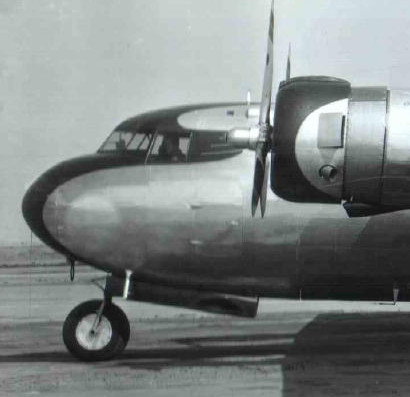
I'm surprised there have been no takers. It's Donald Douglas' variation on his normal theme. The mid-wing DC-5 / R3-D. I've been trying to find a picture of the cabin. The spar carry-through must have really impacted the cabin space.
I was surprised to learn that one was captured and used on internal duties in Japan.
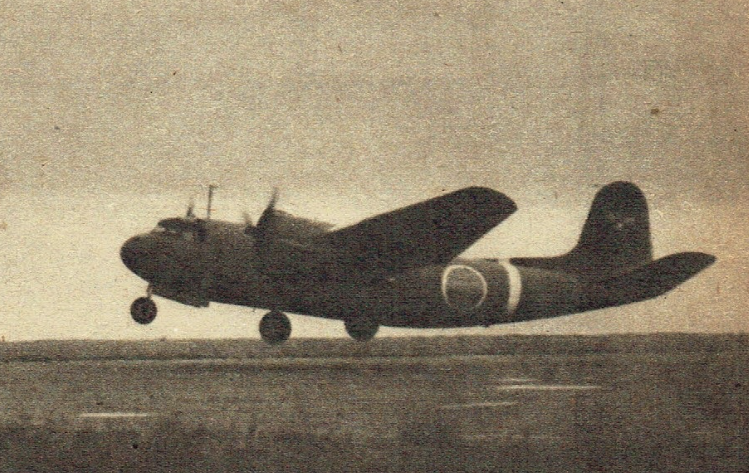
DC-5 in Japan
I was surprised to learn that one was captured and used on internal duties in Japan.
DC-5 in Japan
Gnome de PPRuNe

Joined: Jan 2002
Aviation Qualifications: Spotter
Posts: 15,189
Likes: 1,201
From: Too close to Croydon for comfort
It almost has more in common with the Havoc/Invader looks-wise than the DC series... Wonder if Ed Heinemann/Ted Smith had a hand in the design?