


AA5342 Down DCA


Joined: Apr 2001
Aviation Qualifications: ATP+Mil
Posts: 4,918
Likes: 609
From: surfing, watching for sharks
I would assume the US wouldn't be hugely dissimilar to to the USA in this regards, but a tower controller can
"Correlate an observed radar position symbol with manoeuvres currently
executed by a departing aircraft which acknowledged instructions to that
effect, provided that identification is established within 3 NM of the radar
sensor."
So identified on departure, and the usual transfer of Identification occurs for inbound. So no problems using a radar provided we meet the other requirements (MVA and the like). However the whole point of a tower controller is that we can use less than the radar standard and visually separate aircraft in visual conditions.
"Correlate an observed radar position symbol with manoeuvres currently
executed by a departing aircraft which acknowledged instructions to that
effect, provided that identification is established within 3 NM of the radar
sensor."
So identified on departure, and the usual transfer of Identification occurs for inbound. So no problems using a radar provided we meet the other requirements (MVA and the like). However the whole point of a tower controller is that we can use less than the radar standard and visually separate aircraft in visual conditions.

Joined: Apr 2001
Aviation Qualifications: ATP+Mil
Posts: 4,918
Likes: 609
From: surfing, watching for sharks
there is no word IDENTIFIED before any other instruction.
It is esential basic for radar/ surveilance. How the hell you could give vectors for non identified aircraft?
And the above post of island_photo gives exact link with explanation that is officially valid in USA.
No full radar service if it is not " radar contact"( or identified)
It is so logic and simple to remember and to apply.
It is esential basic for radar/ surveilance. How the hell you could give vectors for non identified aircraft?
And the above post of island_photo gives exact link with explanation that is officially valid in USA.
No full radar service if it is not " radar contact"( or identified)
It is so logic and simple to remember and to apply.
BTW, in the US, it’s not “identified” but rather radar contact.
Last edited by West Coast; 9th February 2025 at 01:49. Reason: Spelling

Pegase Driver
Joined: May 1997
Aviation Qualifications: ATCO
Posts: 4,448
Likes: 1,158
From: Europe
Just to put the things back into perspective : whether the controller had a radar display in front of him or not ,, whether there should have been a separate controller in the Heli frequency ,both would not have changed anything in this case since he delegated separation to the helicopter , The visual identification by the helicopter was confirmed ( twice) , instruction to pass behind was confirmed = controller no longer responsible , standard procedure in DC since the guys worked there , and he had a lot of other traffic to attend to.
To discuss what he could or should have done is just playing " Captain hindsight "
The procedure was wrong , the safety case botched , and as I understand, the " book " allowing all this was followed by both the controller and the helicopter pilot .
Let's discuss the procedures and visual separation delegation at night in busy airports instead on focusing on what the controller should have done , implying indirectly some form of responsibility in this accident..
To discuss what he could or should have done is just playing " Captain hindsight "
The procedure was wrong , the safety case botched , and as I understand, the " book " allowing all this was followed by both the controller and the helicopter pilot .
Let's discuss the procedures and visual separation delegation at night in busy airports instead on focusing on what the controller should have done , implying indirectly some form of responsibility in this accident..

Joined: Jul 2003
Posts: 1,323
Likes: 54
From: An Island Province
The procedure was wrong , the safety case botched , and as I understand, the " book " allowing all this was followed by both the controller and the helicopter pilot .
Let's discuss the procedures and visual separation delegation at night in busy airports instead on focusing on what the controller should have done , implying indirectly some form of responsibility in this accident..
Let's discuss the procedures and visual separation delegation at night in busy airports instead on focusing on what the controller should have done , implying indirectly some form of responsibility in this accident..

Joined: May 2016
Posts: 75
Likes: 3
From: Nantes
Just to put the things back into perspective : whether the controller had a radar display in front of him or not ,, whether there should have been a separate controller in the Heli frequency ,both would not have changed anything in this case since he delegated separation to the helicopter , The visual identification by the helicopter was confirmed ( twice) , instruction to pass behind was confirmed = controller no longer responsible , standard procedure in DC since the guys worked there , and he had a lot of other traffic to attend to.
To discuss what he could or should have done is just playing " Captain hindsight "
The procedure was wrong , the safety case botched , and as I understand, the " book " allowing all this was followed by both the controller and the helicopter pilot .
Let's discuss the procedures and visual separation delegation at night in busy airports instead on focusing on what the controller should have done , implying indirectly some form of responsibility in this accident..
To discuss what he could or should have done is just playing " Captain hindsight "
The procedure was wrong , the safety case botched , and as I understand, the " book " allowing all this was followed by both the controller and the helicopter pilot .
Let's discuss the procedures and visual separation delegation at night in busy airports instead on focusing on what the controller should have done , implying indirectly some form of responsibility in this accident..
cf FAA Order JO 7110.65AA 7.2.1.a.2 Pilot-applied visual separation
(d) If the aircraft are on converging courses, inform the other aircraft of the traffic and that visual separation is being applied.
(e)Advise the pilots if the radar targets appear likely to merge.
(e)Advise the pilots if the radar targets appear likely to merge.
Last edited by deltafox44; 9th February 2025 at 18:04. Reason: adding source

Joined: Jul 2013
Aviation Qualifications: CPL
Posts: 611
Likes: 473
From: Maryland USA
Just to put the things back into perspective : whether the controller had a radar display in front of him or not ,, whether there should have been a separate controller in the Heli frequency ,both would not have changed anything in this case since he delegated separation to the helicopter , The visual identification by the helicopter was confirmed ( twice) , instruction to pass behind was confirmed = controller no longer responsible , standard procedure in DC since the guys worked there , and he had a lot of other traffic to attend to.
To discuss what he could or should have done is just playing " Captain hindsight "
The procedure was wrong , the safety case botched , and as I understand, the " book " allowing all this was followed by both the controller and the helicopter pilot .
Let's discuss the procedures and visual separation delegation at night in busy airports instead on focusing on what the controller should have done , implying indirectly some form of responsibility in this accident..
To discuss what he could or should have done is just playing " Captain hindsight "
The procedure was wrong , the safety case botched , and as I understand, the " book " allowing all this was followed by both the controller and the helicopter pilot .
Let's discuss the procedures and visual separation delegation at night in busy airports instead on focusing on what the controller should have done , implying indirectly some form of responsibility in this accident..
The specific one only applies to DCA, so unless you fly there for your job or want to fill out 1001 forms to get your own airplane in there, no worries, no one else does crazy stuff like that with helos.
The general one for me so far is how easy it is to see the wrong traffic at night and the next "do you see X" I get at night I am going to be triple-redundant sure and then some before saying I do.
Joined: Sep 2005
Posts: 768
Likes: 45
From: Montreal
The general one for me so far is how easy it is to see the wrong traffic at night
Done this myself for 50 years, night, single-pilot, high-density airports, single and multiengine, never had an issue identifying the aircraft tower pointed out to me.
Keep looking.
Joined: May 2005
Posts: 271
Likes: 144
From: Ontario, Canada
Just to put the things back into perspective : whether the controller had a radar display in front of him or not ,, whether there should have been a separate controller in the Heli frequency ,both would not have changed anything in this case since he delegated separation to the helicopter , The visual identification by the helicopter was confirmed ( twice) , instruction to pass behind was confirmed = controller no longer responsible , standard procedure in DC since the guys worked there , and he had a lot of other traffic to attend to.
To discuss what he could or should have done is just playing " Captain hindsight "
The procedure was wrong , the safety case botched , and as I understand, the " book " allowing all this was followed by both the controller and the helicopter pilot .
Let's discuss the procedures and visual separation delegation at night in busy airports instead on focusing on what the controller should have done , implying indirectly some form of responsibility in this accident..
To discuss what he could or should have done is just playing " Captain hindsight "
The procedure was wrong , the safety case botched , and as I understand, the " book " allowing all this was followed by both the controller and the helicopter pilot .
Let's discuss the procedures and visual separation delegation at night in busy airports instead on focusing on what the controller should have done , implying indirectly some form of responsibility in this accident..
A second controller -might- have had more time to observe the conflict. They -might- have twigged and second guessed the helo's separation. But they very well might not have. The spacing might have been close enough to the every day occurances that the controller might not have been able to tell.
Having the helicopters on a separate frequency from the fixed wing would certainly not have helped anyone's situational awareness.
Pegase Driver
Joined: May 1997
Aviation Qualifications: ATCO
Posts: 4,448
Likes: 1,158
From: Europe
Not implying any form of responsibility to anyone, the "book" says that in the case of a visual separation, if the 2 traffics converge, the controller should advise the other pilot. Perhaps the same controller on both frequencies was too busy to do so, and a second controller would have helped.
cf FAA Order JO 7110.65AA 7.2.1.a.2 Pilot-applied visual separation
cf FAA Order JO 7110.65AA 7.2.1.a.2 Pilot-applied visual separation
@ YRP : Having the helicopters on a separate frequency from the fixed wing would certainly not have helped anyone's situational awareness.
Joined: Nov 1998
Posts: 63
Likes: 62
From: Midlands, UK
I think the point may be that in those 50yrs you may actually have made a mistake identifying an aircraft, but we don’t have the data. Just because you didn’t have a collision or Airmiss you can’t say for certain that everything worked perfectly.
If you mistakenly identify the wrong aircraft, but don’t realise and don’t actually hit anything and the other party also don’t notice/report, then the error is never recognised, nor recorded. Are we suggesting that this scenario has never happened in the history of aviation?
A flight that doesn’t end in a crash does not mean it was perfect.

Joined: Jan 2025
Aviation Qualifications: ATPL
Posts: 26
Likes: 16
From: Finland
The Black Hawk crew had lost totally their situational awareness. If you are instructed to pass behind a traffic which is landing on rwy 33 how can you be on final rwy 33 before the traffic has passed you? Perhaps they noticed that they were approaching the final of rwy 33 and started a right hand climbing turn, but too late.
CRJ was possible behind the windsield frames in the first sight but anyway it was not conflicting traffic while it was on the base for rwy 33. Final turn at below 500ft doesn’t make it any easier for the helicopter to realize/react to the changing situation.
One thing came to my mind: was the PAT 25 avoiding the traffic by flying ahead of the CRJ instead behind it in first place? ”Pass behind” was told only 18 seconds before the impact.
CRJ was possible behind the windsield frames in the first sight but anyway it was not conflicting traffic while it was on the base for rwy 33. Final turn at below 500ft doesn’t make it any easier for the helicopter to realize/react to the changing situation.
One thing came to my mind: was the PAT 25 avoiding the traffic by flying ahead of the CRJ instead behind it in first place? ”Pass behind” was told only 18 seconds before the impact.
Last edited by 21600HRS; 10th February 2025 at 11:44.
Moderator
Joined: Oct 2022
Aviation Qualifications: ATPL
Posts: 914
Likes: 420
From: NYC
From the NTSB.
Update yourself on what the NTSB is reporting.
https://www.ntsb.gov/investigations/...CA25MA108.aspx
Update yourself on what the NTSB is reporting.
https://www.ntsb.gov/investigations/...CA25MA108.aspx
Joined: Jul 2011
Posts: 2,449
Likes: 92
From: BFE
Here you go: Read All About It.
https://www.avweb.com/flight-safety/tower-brites/
This explains the different phraseology between a tower using a BRITE to help out vs. the phraseology of tower certified and equipped for full radar separation. It also explains LOAs for airspace. Where I learned to fly at KMLB the tower only owned up to about 1800 feet IIRC and approach had above that. In those pre-BRITE days it helped a lot for handling IFR traffic.
( I sometimes flew a Bell 47 helicopter there and the tower managed to organize it such that I never came close to any airplanes)
https://www.avweb.com/flight-safety/tower-brites/
This explains the different phraseology between a tower using a BRITE to help out vs. the phraseology of tower certified and equipped for full radar separation. It also explains LOAs for airspace. Where I learned to fly at KMLB the tower only owned up to about 1800 feet IIRC and approach had above that. In those pre-BRITE days it helped a lot for handling IFR traffic.
( I sometimes flew a Bell 47 helicopter there and the tower managed to organize it such that I never came close to any airplanes)
Joined: Jul 2003
Posts: 1,323
Likes: 54
From: An Island Province
More Reason
Following on from #1020, James Reason reminds us of the importance of latent failures in accidents.
" Latent failures are created as the result of decisions taken at the higher echelons of the organisation. Their damaging consequences may lie dormant for a long time, only becoming evident when they combine with active failures and local triggering factors to breach the system’s many defences. " Ref A
Even with prior reporting, the safety concerns may not be acted on because the 'higher echelons' - the regulators in aviation created the rules and procedures, thus are reluctant to change.
Furthermore, regulators are locked in the 'person approach' opposed to the 'system approach' - The Swiss Cheese Model of System Accidents, Ref B.
Regulators are tasked to regulate, to control; however in an increasingly complex industry the need to manage system uncertainty reduces the regulators ability to control, thus they prefer not to use a systems approach.
Also, the regulators may rely too much on their flat-lining safety statistics, seeking zero; but heed Reason's warning " once the plateau has been reached, periodic variations in accident rates contain more noise than valid safety signals. At this stage of an organisation’s safety development, negative outcome data (no fatalities) are a poor indication of its ability to withstand adverse events in the future. " Ref C
The industry is operating close to the edge of safety, not knowing where the edge is, blinded by past operational success with few accidents, and the easy fix of blame-the-sharp-end; yet these issues remain the responsibly of the regulators and those above them, not the front line workers.
A http://www.ncbi.nlm.nih.gov/pmc/arti...v014p00056.pdf
B https://europepmc.org/backend/ptpmcr...9&blobtype=pdf
C https://www.dropbox.com/scl/fi/d0rbc...=lsxjdjzb&dl=0
" Latent failures are created as the result of decisions taken at the higher echelons of the organisation. Their damaging consequences may lie dormant for a long time, only becoming evident when they combine with active failures and local triggering factors to breach the system’s many defences. " Ref A
Even with prior reporting, the safety concerns may not be acted on because the 'higher echelons' - the regulators in aviation created the rules and procedures, thus are reluctant to change.
Furthermore, regulators are locked in the 'person approach' opposed to the 'system approach' - The Swiss Cheese Model of System Accidents, Ref B.
Regulators are tasked to regulate, to control; however in an increasingly complex industry the need to manage system uncertainty reduces the regulators ability to control, thus they prefer not to use a systems approach.
Also, the regulators may rely too much on their flat-lining safety statistics, seeking zero; but heed Reason's warning " once the plateau has been reached, periodic variations in accident rates contain more noise than valid safety signals. At this stage of an organisation’s safety development, negative outcome data (no fatalities) are a poor indication of its ability to withstand adverse events in the future. " Ref C
The industry is operating close to the edge of safety, not knowing where the edge is, blinded by past operational success with few accidents, and the easy fix of blame-the-sharp-end; yet these issues remain the responsibly of the regulators and those above them, not the front line workers.
A http://www.ncbi.nlm.nih.gov/pmc/arti...v014p00056.pdf
B https://europepmc.org/backend/ptpmcr...9&blobtype=pdf
C https://www.dropbox.com/scl/fi/d0rbc...=lsxjdjzb&dl=0

Joined: Jul 2007
Posts: 919
Likes: 13
From: MCT
Don't think this has been posted
NOTAM 5/1069 for DCA, valid from 07 Feb 0200 UTC until 31 March 2359 UTC
!FDC 5/1069 DCA AIRSPACE NOTICE...RONALD REAGAN WASHINGTON NTL, WASHINGTON, DC. HELICOPTER TRAFFIC RESTRICTIONS NEAR DCA. THE AFFECTED AREAS INCLUDE: SOUTH OF THE MEMORIAL BRIDGE TO THE WOODROW WILSON BRIDGE, EXCLUDING THE HELICOPTER PENTAGON TRANSITION, HELICOPTER ROUTE 1, TIDAL BASIN AND THE WASHINGTON CHANNEL. HELICOPTER ROUTE 4 IS CLOSED BETWEEN HAINS POINT AND WOODROW WILSON BRIDGE. HELICOPTER ROUTE 6 IS CLOSED BETWEEN GLEBE ROAD AND JB ANACOSTIA-BOLLING. IF A LIFESAVING MEDICAL, ACTIVE LAW ENFORCEMENT, ACTIVE AIR DEFENSE, OR PRESIDENTIAL TRANSPORT HELICOPTER MISSION MUST OPERATE IN THIS RESTRICTED AREA, CIVILIAN AIRCRAFT WILL NOT BE ALLOWED IN THE AREA TO PREVENT POTENTIAL CONFLICTS IN THIS AIRSPACE. THE MIX OF HELICOPTER AND FIXED WING AIRCRAFT OPERATING IN THE AFFECTED AREA AT THE SAME TIME WILL NOT BE PERMITTED. 2502070200-2503312359
NOTAM 5/1069 for DCA, valid from 07 Feb 0200 UTC until 31 March 2359 UTC
!FDC 5/1069 DCA AIRSPACE NOTICE...RONALD REAGAN WASHINGTON NTL, WASHINGTON, DC. HELICOPTER TRAFFIC RESTRICTIONS NEAR DCA. THE AFFECTED AREAS INCLUDE: SOUTH OF THE MEMORIAL BRIDGE TO THE WOODROW WILSON BRIDGE, EXCLUDING THE HELICOPTER PENTAGON TRANSITION, HELICOPTER ROUTE 1, TIDAL BASIN AND THE WASHINGTON CHANNEL. HELICOPTER ROUTE 4 IS CLOSED BETWEEN HAINS POINT AND WOODROW WILSON BRIDGE. HELICOPTER ROUTE 6 IS CLOSED BETWEEN GLEBE ROAD AND JB ANACOSTIA-BOLLING. IF A LIFESAVING MEDICAL, ACTIVE LAW ENFORCEMENT, ACTIVE AIR DEFENSE, OR PRESIDENTIAL TRANSPORT HELICOPTER MISSION MUST OPERATE IN THIS RESTRICTED AREA, CIVILIAN AIRCRAFT WILL NOT BE ALLOWED IN THE AREA TO PREVENT POTENTIAL CONFLICTS IN THIS AIRSPACE. THE MIX OF HELICOPTER AND FIXED WING AIRCRAFT OPERATING IN THE AFFECTED AREA AT THE SAME TIME WILL NOT BE PERMITTED. 2502070200-2503312359
Joined: Jul 2013
Aviation Qualifications: CPL
Posts: 611
Likes: 473
From: Maryland USA
Yes 
The tower managed a TON of traffic with no BRITE back then, I think we were the 10th busiest airport in the country. One airliner on final got very annoyed at doing a go-around due to some student mishap and complained it cost his company $3,000 to go around. The tower replied "Roger that, please do a $3,000 go around".
Patrick Air Force Base right next door trained controllers, so sometimes over there you got a new guy that would keep telling you to speed up on downwind and the fighter jet #2 behind you to slow down and you might drop a hint like "it would be easier if he just went around me".
We never hit any helicopters ever though, so there is that.
The tower managed a TON of traffic with no BRITE back then, I think we were the 10th busiest airport in the country. One airliner on final got very annoyed at doing a go-around due to some student mishap and complained it cost his company $3,000 to go around. The tower replied "Roger that, please do a $3,000 go around".
Patrick Air Force Base right next door trained controllers, so sometimes over there you got a new guy that would keep telling you to speed up on downwind and the fighter jet #2 behind you to slow down and you might drop a hint like "it would be easier if he just went around me".
We never hit any helicopters ever though, so there is that.
Joined: May 2016
Posts: 75
Likes: 3
From: Nantes
Not meaning to pick on you individually, it’s just that you have a great line to quote!
I think the point may be that in those 50yrs you may actually have made a mistake identifying an aircraft, but we don’t have the data. Just because you didn’t have a collision or Airmiss you can’t say for certain that everything worked perfectly.
If you mistakenly identify the wrong aircraft, but don’t realise and don’t actually hit anything and the other party also don’t notice/report, then the error is never recognised, nor recorded. Are we suggesting that this scenario has never happened in the history of aviation?
A flight that doesn’t end in a crash does not mean it was perfect.
I think the point may be that in those 50yrs you may actually have made a mistake identifying an aircraft, but we don’t have the data. Just because you didn’t have a collision or Airmiss you can’t say for certain that everything worked perfectly.
If you mistakenly identify the wrong aircraft, but don’t realise and don’t actually hit anything and the other party also don’t notice/report, then the error is never recognised, nor recorded. Are we suggesting that this scenario has never happened in the history of aviation?
A flight that doesn’t end in a crash does not mean it was perfect.
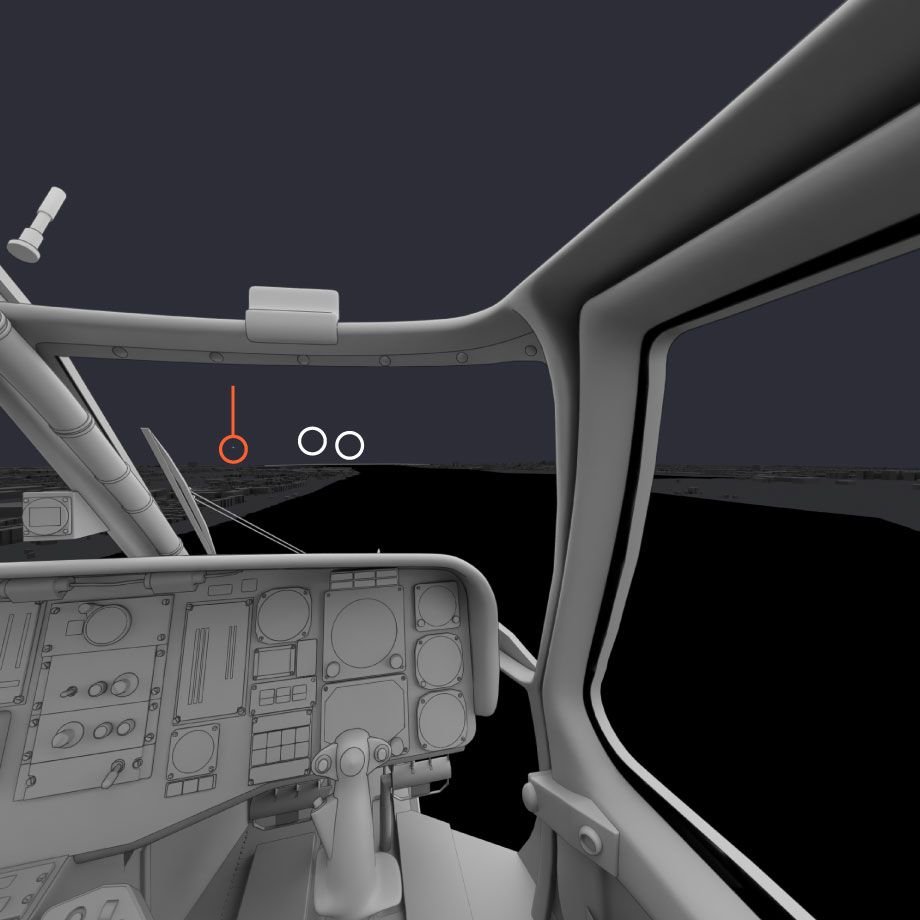
I think many pilots would have made a mistake indentifying : seen from the helo, there are 3 aircraft in final, plus 1 on take-off, at the same bearing, how can you tell for sure which is the one "just south of Wilson Bridge" ?
NYT has attempted a reconstruction of the visual picture from the Blackhawk at the time of the first traffic alert, with the CRJ just south of Wilson Bridge.
They could only later identify the correct light spot by following its trajectory according to their mental image of the approach to 33.

They could only later identify the correct light spot by following its trajectory according to their mental image of the approach to 33.
Last edited by Senior Pilot; 10th February 2025 at 20:20. Reason: Image source
Joined: Dec 2007
Posts: 952
Likes: 447
From: same planet as yours
Joined: Dec 2020
Posts: 102
Likes: 87
From: USA
+1
I think many pilots would have made a mistake indentifying : seen from the helo, there are 3 aircraft in final, plus 1 on take-off, at the same bearing, how can you tell for sure which is the one "just south of Wilson Bridge" ?
I think many pilots would have made a mistake indentifying : seen from the helo, there are 3 aircraft in final, plus 1 on take-off, at the same bearing, how can you tell for sure which is the one "just south of Wilson Bridge" ?
NYT has attempted a reconstruction of the visual picture from the Blackhawk at the time of the first traffic alert, with the CRJ just south of Wilson Bridge.
They could only later identify the correct light spot by following its trajectory according to their mental image of the approach to 33.
They could only later identify the correct light spot by following its trajectory according to their mental image of the approach to 33.
At the same time the accident aircraft peels off to the right to swing around and line up to 33, thus taking his (smaller) lights out of the helicopter's direct line of vision and leaving 3130's (brighter) lights still heading to 01 to decoy the pilot. The reflexive nature of the helicopter's responses suggest to me that the full implication of 'circling to 33' in the tower's first call was missed, and also sort of implies that the helicopter could not conceive that following (nearly) the published heliroute could lead him into conflict with an aircraft on final. Me neither.
NOTAM 5/1069 for DCA, valid from 07 Feb 0200 UTC until 31 March 2359 UTC
Last edited by Senior Pilot; 10th February 2025 at 20:22. Reason: Quote