


VIDP sid path terminator

Thread Starter

Joined: Mar 2012
Posts: 118
Likes: 36
From: Somewhere
VIDP sid path terminator
The path terminators of VIDP rw 09 and 10 rnav sid ,ALI 5D,ALI 5E,ITBAN 5D,ITBAN 5E after PABGU and OBDAG are DIRECT TO FIX
according to INDIA AIP but our company LIDO charts are TRACK TO FIX.Please help me to verify which one is correct? (AIP or LIDO)
Thank you.
according to INDIA AIP but our company LIDO charts are TRACK TO FIX.Please help me to verify which one is correct? (AIP or LIDO)
Thank you.
Last edited by Noknoipobin; 11th May 2022 at 00:55. Reason: To delete duplicate word.


Joined: Aug 2009
Aviation Qualifications: ATPL
Posts: 616
Likes: 57
From: GPS L INVALID
I don't see any disagreement, both are fly-over, but there is no way for a nav database to be coded so that the plane turns direct to a fix after a fly-over. The result is that it will turn after passing the previous point and then reintercept the direct line between the two fixes. The lido chart represents just that.
Only half a speed-brake

Joined: Apr 2003
Posts: 4,459
Likes: 136
From: Commuting not home
Noknoipobin Are you using Lido NAV db?
For the moment I am not convinced it's track-to fix based on what you posted. Certainly a conclusion which cannot be drawn from the chart itself. It looks a bit as a DF, actually.
BTW are you not highlighting the wrong line? It's path-terminator, the inbound leg is stored within its ending waypoint.
For the moment I am not convinced it's track-to fix based on what you posted. Certainly a conclusion which cannot be drawn from the chart itself. It looks a bit as a DF, actually.
BTW are you not highlighting the wrong line? It's path-terminator, the inbound leg is stored within its ending waypoint.
Only half a speed-brake
Joined: Apr 2003
Posts: 4,459
Likes: 136
From: Commuting not home
Thread Starter
Joined: Mar 2012
Posts: 118
Likes: 36
From: Somewhere
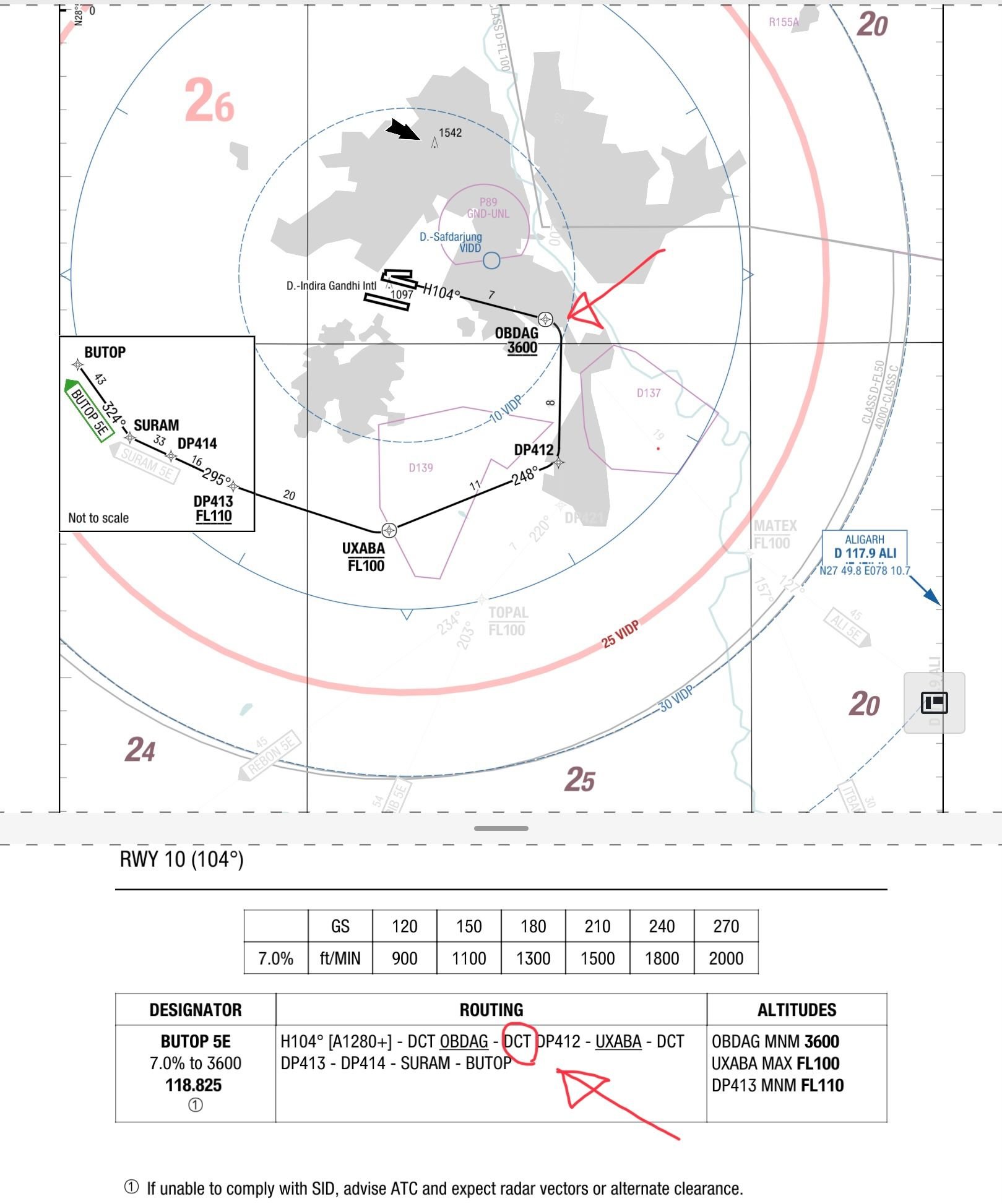
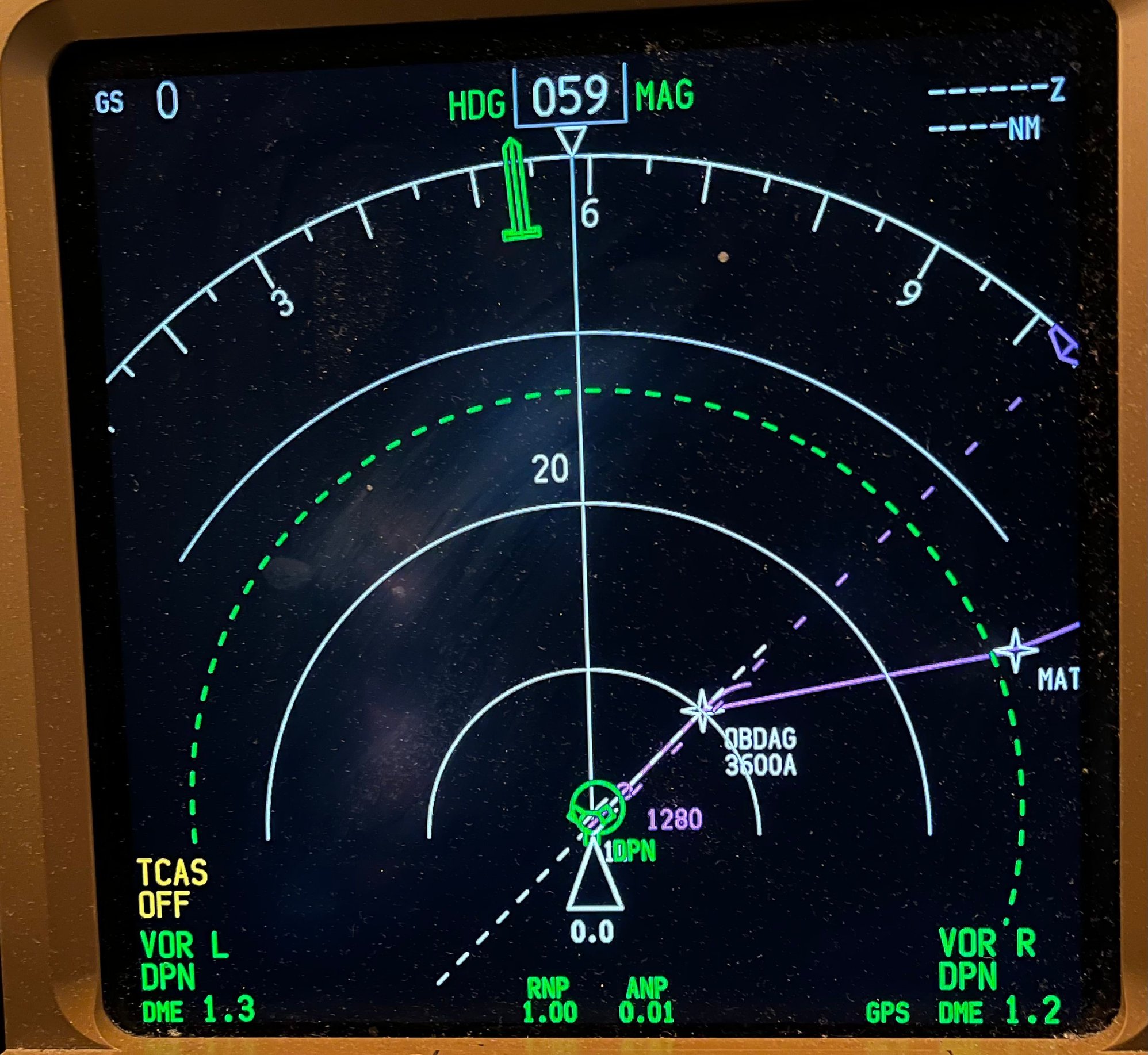
In LIDO chart ,if it is DF it must be coded DCT before that point in chart text. Aircraft must turn directly to next waypoint (MATEX) instead of turning to intercept track from OBDAG to MATEX. Even in the graphic chart there is no track number but it is a TRACK TO FIX. On that day my aircraft turned to intercept track.
Thread Starter
Joined: Mar 2012
Posts: 118
Likes: 36
From: Somewhere
I don't see any disagreement, both are fly-over, but there is no way for a nav database to be coded so that the plane turns direct to a fix after a fly-over. The result is that it will turn after passing the previous point and then reintercept the direct line between the two fixes. The lido chart represents just that.
Thread Starter
Joined: Mar 2012
Posts: 118
Likes: 36
From: Somewhere
Noknoipobin Are you using Lido NAV db?
For the moment I am not convinced it's track-to fix based on what you posted. Certainly a conclusion which cannot be drawn from the chart itself. It looks a bit as a DF, actually.
BTW are you not highlighting the wrong line? It's path-terminator, the inbound leg is stored within its ending waypoint.
For the moment I am not convinced it's track-to fix based on what you posted. Certainly a conclusion which cannot be drawn from the chart itself. It looks a bit as a DF, actually.
BTW are you not highlighting the wrong line? It's path-terminator, the inbound leg is stored within its ending waypoint.
Only half a speed-brake
Joined: Apr 2003
Posts: 4,459
Likes: 136
From: Commuting not home
Thanks for the feedback. Based on the more details I thought you are actually correct. The Lido Charts are generated by software internal process from the Lido NAB db stored in their computer, which is their 'raw data'. Seeing the DCT missing in their description is a particularly nice find!
For future reference, the Lido NAV db has a tabulated format (Excel like) which you should be able to check with the Flt Ops team at your airline directly, without the need to second guess the cockpit display and your memory of aircraft behaviour. Then compare it directly with AIP coding table.
It was a pleasure reading about a pilot who actually cares what the computer is doing and understands why it shouldn't. To my experience, men of this character are overall fine aviators too, nice to share the same online space.
For future reference, the Lido NAV db has a tabulated format (Excel like) which you should be able to check with the Flt Ops team at your airline directly, without the need to second guess the cockpit display and your memory of aircraft behaviour. Then compare it directly with AIP coding table.
It was a pleasure reading about a pilot who actually cares what the computer is doing and understands why it shouldn't. To my experience, men of this character are overall fine aviators too, nice to share the same online space.


