


FAA Grounds 787s


Joined: Feb 2007
Posts: 628
Likes: 0
From: Melbourne
Originally Posted by 413
Airbus should thank Boeing for being the guinea pig so they can now release the A350 with none of these big issues. (Even though apparently the A350 is seeing its own delays)
Joined: Jul 2002
Posts: 596
Likes: 0
From: Ireland
Something not right here. How the hell can the APU bat connect to the Main Bat?
One says that the APU was incorrectly connected to the main battery and the other says that the APU battery was incorrectly connected to the main battery.
Pegase Driver

Joined: May 1997
Aviation Qualifications: ATCO
Posts: 4,456
Likes: 1,168
From: Europe
In an interview given in the French newspaper " le monde "
Yesterday one LOT executive is quoted to have said that " based on his info the 787 will not be back in service before October " and LOT is "considering delaying the delivery of the remaining 6 they have on order "
October ? That is a 10 month grounding .
Yesterday one LOT executive is quoted to have said that " based on his info the 787 will not be back in service before October " and LOT is "considering delaying the delivery of the remaining 6 they have on order "
October ? That is a 10 month grounding .

Joined: Jan 2008
Posts: 141
Likes: 14
From: australia
Concorde was grounded for 16 months, so 10 for the 787 looks about right. Given the proven dangers of li-ion, the need to prove compliance with special certification conditions plus the need to cross ts and dot is. We shall see.

Joined: Sep 2003
Posts: 482
Likes: 0
From: Wessex
"Concorde was grounded for 16 months, so 10 for the 787 looks about right" True but Concorde was long out of production then, meanwhile Boeing are producing 10(+?) 787's per month - parking space must be getting a bit tight now. Assuming the return to flight is delayed that long I'd have thought they'll have to slow / stop production soon with all the added cost implications.
Joined: Aug 2012
Posts: 532
Likes: 0
From: Wales
Hi, the actual statement was...
It further stated that a protective value would have presented power from the APU from causing any damage.
I think this was incorrectly translated, and should read...
It further stated that a protective DIODE would have PREVENTED power from the APU from causing any damage.
It further stated that a protective value would have presented power from the APU from causing any damage.
I think this was incorrectly translated, and should read...
It further stated that a protective DIODE would have PREVENTED power from the APU from causing any damage.
Joined: Sep 2001
Posts: 2,338
Likes: 0
From: Home
Yesterday one LOT executive is quoted to have said that " based on his info the 787 will not be back in service before October " and LOT is "considering delaying the delivery of the remaining 6 they have on order "
Joined: Jul 2002
Posts: 596
Likes: 0
From: Ireland
Assuming the return to flight is delayed that long I'd have thought they'll have to slow / stop production soon with all the added cost implications.
These are firm orders and it is strictly cash on delivery. Running out of space is not an issue. The US is very big and space can be found. I'm sure FAA exemption can be gained to fly the new aircraft out to a temporary location without an APU battery. It may even pay Boeing/Thales to set up a remote facility at this location to install/rewire the approved new battery/charging system when it is finally certified.
SoS
Joined: Sep 2001
Posts: 2,338
Likes: 0
From: Home
It may even pay Boeing/Thales to set up a remote facility at this location to install/rewire the approved new battery/charging system when it is finally certified.
Joined: Jul 2002
Posts: 596
Likes: 0
From: Ireland
If it is simply wiring up a new battery, this could feasibly be done by Thales/Securaplane employees supervised by Boeing staff. A revised algorithm or software tweek would be done and tested by the manufacturers.
Where it gets tricky is if we end up with a major redesign, where other parts of the system can't be tested before leaving Everett or Charleston because of a large chunk of the EE system missing awaiting FAA approval. :-(
Where it gets tricky is if we end up with a major redesign, where other parts of the system can't be tested before leaving Everett or Charleston because of a large chunk of the EE system missing awaiting FAA approval. :-(
Joined: Jul 2007
Posts: 73
Likes: 0
From: next to a beautiful lake
What worries me most...
...is the fact that the Japanese Investigation Team found "this" fault of a wrongly connected part.
What exactly were the Boeing engineers doing the last few weeks ?
And quite frankly - a fire and heat proof box won't solve "this" problem then, will it ?
So either there are multiple errors in the system or the fault-finding process may be flawed. Either or it's not helping the confidence in the plane or its engineers...
What exactly were the Boeing engineers doing the last few weeks ?
And quite frankly - a fire and heat proof box won't solve "this" problem then, will it ?
So either there are multiple errors in the system or the fault-finding process may be flawed. Either or it's not helping the confidence in the plane or its engineers...


Joined: Feb 2002
Aviation Qualifications: AME
Posts: 4,182
Likes: 1,116
From: UK
Barking mad.
Why were you "horrified" to learn of the Airbus' BSCU? It has two independent channels. I'm pretty sure one can be inoperable on MEL. The backup brakes are sufficiently independent to allow it, steering likewise. BSCU. Works well, lasts a long time.
Back to the 787...
I think there is too much lost in translation with that Japanese report.
1. The main bat DOES have a "valve" or diode. So what do they mean.
2. The APU bat supplies the nav lights when the tow switch is selected. Under normal circumstances they are powered from a DC Bus. (I think, no schematics handy so I could be wrong.)
Miswiring or dodgy switch/breakers/contactors?
Why were you "horrified" to learn of the Airbus' BSCU? It has two independent channels. I'm pretty sure one can be inoperable on MEL. The backup brakes are sufficiently independent to allow it, steering likewise. BSCU. Works well, lasts a long time.
Back to the 787...
I think there is too much lost in translation with that Japanese report.
1. The main bat DOES have a "valve" or diode. So what do they mean.
2. The APU bat supplies the nav lights when the tow switch is selected. Under normal circumstances they are powered from a DC Bus. (I think, no schematics handy so I could be wrong.)
Miswiring or dodgy switch/breakers/contactors?
Joined: Mar 2008
Posts: 307
Likes: 1
From: England
Romulus,
It's a long standing feature of the aviation industry, Comet being a classic example.
Since when did the aviation industry have sole rights on learning from other folks errors?
The Titanic sank, shortly thereafter, passenger ships sailed with sufficient lifeboats for ALL on board.
At the end of the day, it's progress - thankfully no-one died this time.
It's a long standing feature of the aviation industry, Comet being a classic example.
Since when did the aviation industry have sole rights on learning from other folks errors?
The Titanic sank, shortly thereafter, passenger ships sailed with sufficient lifeboats for ALL on board.
At the end of the day, it's progress - thankfully no-one died this time.
Joined: Jan 2011
Posts: 780
Likes: 89
From: Seattle
HeadingSouth
It's improbable that this particular miswiring lead to the battery failures experienced. What it does do is to extend the scope of the investigation beyond the components and subsystems. Where there's one manufacturing or configuration control error, there may be more. And with this evidence, investigators can take a closer look at QA processes that may have contributed to the subject failure.
Good question. Perhaps armed with this finding, the FAA and JTSB can now go in and find out.
What worries me most is the fact that the Japanese Investigation Team found "this" fault of a wrongly connected part.
What exactly were the Boeing engineers doing the last few weeks ?
Joined: May 2006
Posts: 399
Likes: 0
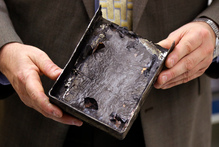
Boeing temporary battery fix tipped for Dreamliner
5:30 AM Friday Feb 22, 2013
 Expand
Boeing has developed a plan that it intends to propose to federal regulators to temporarily fix problems with the 787 Dreamliner's batteries that have kept the planes on the ground for more than a month, a congressional official said yesterday. Boeing Commercial Airplanes chief executive Ray Conner is expected to present the plan to Michael Huerta, head of the Federal Aviation Administration, tomorrow, the official said.
Marc Birtel of Boeing said it wouldn't talk in advance about meetings with federal officials. "Everyone is working to get to the answer as quickly as possible, and good progress is being made."
The FAA and overseas aviation authorities grounded all 50 of the planes flying worldwide after a lithium ion battery caught fire on a plane in Boston and a smoking battery led to an emergency landing by one in Japan.
The 787 is Boeing's newest and most advanced plane. It was meant to exemplify the future of commercial aviation, but the groundings have been a public black eye and financial drain for Boeing, which vies with Airbus for the spot as the world's largest commercial aircraft maker.
The plane is also the first airliner to make extensive use of lithium ion batteries to help power its electrical systems.
Lithium ion batteries weigh less, charge faster and hold more energy than other batteries of comparable size. But they are also more susceptible to short-circuiting that can cause fires if they are damaged, have manufacturing flaws, are exposed to too much heat or are overcharged.
The National Transportation Safety Board is investigating the battery fire in a Japan Airlines 787 discovered shortly after the plane landed at Boston's Logan International Airport last month.
Japanese authorities are investigating a battery failure in an All Nippon Airways 787 that made an emergency landing nine days after the fire.
Investigators have said the batteries experienced short-circuiting and thermal runaway, a chemical reaction that causes progressively hotter temperatures, but they haven't found the root cause of the incidents.
Japan's Transport Ministry says its investigation has exposed a new problem - the aircraft's auxiliary power unit, which contains a lithium ion battery, was improperly connected to the main battery that overheated.
NTSB investigators found the Boston fire started with multiple short-circuits in one of the battery's eight cells. That created a thermal runaway, which spread the short-circuiting to the rest of the cells and caused the fire.
The board's findings are at odds with Boeing's initial battery testing before FAA's safety certification of the plane, which found any short-circuiting could be contained within a single cell, preventing thermal runaway and fire from spreading.
Among the measures being discussed to make the batteries safe enough to return the 787 to the skies are adding more ceramic spacers between battery cells to contain any short-circuiting and fire within that cell. That would be in line with Boeing's initial test results.
More ceramic spacers would make the battery larger, which would require a bigger box to contain the battery cells. A more robust box lined with material to prevent any fire from spreading is also under discussion.
"What Boeing is trying to do is fix the battery so [its initial testing] assumption is now valid," said Jon Hansman, a Massachusetts Institute of Technology aeronautics professor and one of the FAA's Research and Development Advisory Committee.
"So if you can fix this part, the rest should be okay," he said.
Imperial Capital analyst Ken Herbert said last week the grounding could cost Boeing US$25 million ($29.95 million) a month in direct costs, with the total cost exceeding US$1 billion, including spending to fix it and expenses for delayed deliveries.
Boeing is still building five 787s each month, and has said it still wants to double that by the end of the year. It had orders for 800 before they were grounded.
It would take more than two months for Boeing to back away from its speed-up plan, UBS analyst David Strauss said.
Eight airlines in seven countries have 787s in their fleets.
Air New Zealand has 10 787-9s due for delivery next year.The grounding has been the most disruptive for Japan's All Nippon Airways, which has 17 of the planes.
5:30 AM Friday Feb 22, 2013
ExpandBoeing has developed a plan that it intends to propose to federal regulators to temporarily fix problems with the 787 Dreamliner's batteries that have kept the planes on the ground for more than a month, a congressional official said yesterday. Boeing Commercial Airplanes chief executive Ray Conner is expected to present the plan to Michael Huerta, head of the Federal Aviation Administration, tomorrow, the official said.
Marc Birtel of Boeing said it wouldn't talk in advance about meetings with federal officials. "Everyone is working to get to the answer as quickly as possible, and good progress is being made."
The FAA and overseas aviation authorities grounded all 50 of the planes flying worldwide after a lithium ion battery caught fire on a plane in Boston and a smoking battery led to an emergency landing by one in Japan.
The 787 is Boeing's newest and most advanced plane. It was meant to exemplify the future of commercial aviation, but the groundings have been a public black eye and financial drain for Boeing, which vies with Airbus for the spot as the world's largest commercial aircraft maker.
The plane is also the first airliner to make extensive use of lithium ion batteries to help power its electrical systems.
Lithium ion batteries weigh less, charge faster and hold more energy than other batteries of comparable size. But they are also more susceptible to short-circuiting that can cause fires if they are damaged, have manufacturing flaws, are exposed to too much heat or are overcharged.
The National Transportation Safety Board is investigating the battery fire in a Japan Airlines 787 discovered shortly after the plane landed at Boston's Logan International Airport last month.
Japanese authorities are investigating a battery failure in an All Nippon Airways 787 that made an emergency landing nine days after the fire.
Investigators have said the batteries experienced short-circuiting and thermal runaway, a chemical reaction that causes progressively hotter temperatures, but they haven't found the root cause of the incidents.
Japan's Transport Ministry says its investigation has exposed a new problem - the aircraft's auxiliary power unit, which contains a lithium ion battery, was improperly connected to the main battery that overheated.
NTSB investigators found the Boston fire started with multiple short-circuits in one of the battery's eight cells. That created a thermal runaway, which spread the short-circuiting to the rest of the cells and caused the fire.
The board's findings are at odds with Boeing's initial battery testing before FAA's safety certification of the plane, which found any short-circuiting could be contained within a single cell, preventing thermal runaway and fire from spreading.
Among the measures being discussed to make the batteries safe enough to return the 787 to the skies are adding more ceramic spacers between battery cells to contain any short-circuiting and fire within that cell. That would be in line with Boeing's initial test results.
More ceramic spacers would make the battery larger, which would require a bigger box to contain the battery cells. A more robust box lined with material to prevent any fire from spreading is also under discussion.
"What Boeing is trying to do is fix the battery so [its initial testing] assumption is now valid," said Jon Hansman, a Massachusetts Institute of Technology aeronautics professor and one of the FAA's Research and Development Advisory Committee.
"So if you can fix this part, the rest should be okay," he said.
Imperial Capital analyst Ken Herbert said last week the grounding could cost Boeing US$25 million ($29.95 million) a month in direct costs, with the total cost exceeding US$1 billion, including spending to fix it and expenses for delayed deliveries.
Boeing is still building five 787s each month, and has said it still wants to double that by the end of the year. It had orders for 800 before they were grounded.
It would take more than two months for Boeing to back away from its speed-up plan, UBS analyst David Strauss said.
Eight airlines in seven countries have 787s in their fleets.
Air New Zealand has 10 787-9s due for delivery next year.The grounding has been the most disruptive for Japan's All Nippon Airways, which has 17 of the planes.
Joined: Jul 2002
Posts: 233
Likes: 0
From: 40N, 80W
@ ColinBJ re Post 913 on alternatives to batteries for powering electric brakes
Thank you for your response to Post 913 on alternatives to batteries for powering electric brakes. I found it quite refreshing to have at least one person read and understand the concept suggested, and then go on to defend the idea.
As far as I have been able to find out the electric motors mentioned by cockney steve to be used in the nose wheels of Boeing 737s (for tugless pushback) are induction motors and are not engaged with the wheels on landing, so considerable modifcation would be needed to use such motors for power generation during landing.
The system weight of 300 lbs has already been accepted by Boeing because less fuel has to carried for taxi, and for other cost savings.
As far as I have been able to find out the electric motors mentioned by cockney steve to be used in the nose wheels of Boeing 737s (for tugless pushback) are induction motors and are not engaged with the wheels on landing, so considerable modifcation would be needed to use such motors for power generation during landing.
The system weight of 300 lbs has already been accepted by Boeing because less fuel has to carried for taxi, and for other cost savings.
Last edited by PickyPerkins; 21st February 2013 at 19:16. Reason: spelling
Joined: Feb 2007
Posts: 628
Likes: 0
From: Melbourne
Originally Posted by momoe
Romulus,
It's a long standing feature of the aviation industry, Comet being a classic example.
Since when did the aviation industry have sole rights on learning from other folks errors?
The Titanic sank, shortly thereafter, passenger ships sailed with sufficient lifeboats for ALL on board.
At the end of the day, it's progress - thankfully no-one died this time.
It's a long standing feature of the aviation industry, Comet being a classic example.
Since when did the aviation industry have sole rights on learning from other folks errors?
The Titanic sank, shortly thereafter, passenger ships sailed with sufficient lifeboats for ALL on board.
At the end of the day, it's progress - thankfully no-one died this time.
And yes, thankfully nobody has died. Hopefully we get a resolution relatively soon, the world needs a strong Boeing and a strong Airbus.
Joined: Feb 2008
Posts: 4
Likes: 0
From: Manchester
So, if I have understood this correctly, Boeing are going to basically say "The batteries are going to spontaneously catch fire, but its OK because we can put them in a box".
Here is a test for you Boeing engineers and execs - build your boxes, install them into a couple of 787's, then load yourselves, your wives / husbands, your children and grandchildren. Take the planes up to normal cruising altitude, deliberately set fire to one (or both) of the batteries and then carry on flying for the rated ETOPS time.
If you survive, do it again. And then again and again. Keep doing it until you have come up with a proper solution.
Oh, and if the FAA approve it, load all the FAA execs & their families in there too.
Here is a test for you Boeing engineers and execs - build your boxes, install them into a couple of 787's, then load yourselves, your wives / husbands, your children and grandchildren. Take the planes up to normal cruising altitude, deliberately set fire to one (or both) of the batteries and then carry on flying for the rated ETOPS time.
If you survive, do it again. And then again and again. Keep doing it until you have come up with a proper solution.
Oh, and if the FAA approve it, load all the FAA execs & their families in there too.
Joined: Mar 2008
Posts: 307
Likes: 1
From: England
Seems a little clearer to me now.
Boeing's initial tests concluded that a single cell overheat wouldn't propagate to the rest of the battery, that's obviously not the case as it's been determined that cell # 6 had a fault which took out the whole battery.
Adding ceramic spacers to give more separation to cells sounds like a plan, however prevention is better than cure and better QC/specification on the cells before they get installed would be good.
Even then, the MTBF on any cell should be at least an order of magnitude higher.
One thing, I don't get is how a standby/back-up battery is on what appears to be a common bus, if there's an electrical problem I'd want a clean, uncompromised power supply on a previously isolated bus.
Boeing's initial tests concluded that a single cell overheat wouldn't propagate to the rest of the battery, that's obviously not the case as it's been determined that cell # 6 had a fault which took out the whole battery.
Adding ceramic spacers to give more separation to cells sounds like a plan, however prevention is better than cure and better QC/specification on the cells before they get installed would be good.
Even then, the MTBF on any cell should be at least an order of magnitude higher.
One thing, I don't get is how a standby/back-up battery is on what appears to be a common bus, if there's an electrical problem I'd want a clean, uncompromised power supply on a previously isolated bus.