


AUKUS


Joined: Dec 2017
Posts: 638
Likes: 101
From: australia
It's a 93 page open source, non classified public document, Giving a history and forward projection of the US service, Part of which is AUKUS pillar 1, laying out all possibilities of what could be
One thing was that Canada asked for SSN 20 years ago, but obviously didn't go ahead
Guardian could have easily used the following from the report, but it wouldn't get clicks,
From the report, this doesn't have the same impact
"In June 2025, it was reported that DOD had initiated a review of AUKUS Pillar 1, and that President Trump supported AUKUS, notwithstanding the initiation of the review. In early December 2025, following the completion of the study, Trump Administration officials publicly affirmed the Administration’s support for AUKUS, including Pillar 1. Further details of the review were not publicly disclosed."
Last edited by golder; 6th February 2026 at 10:23.

Joined: Dec 2017
Posts: 638
Likes: 101
From: australia
U.S. Navy demonstrates AN/BYG-1 submarine combat system to UK partners under AUKUS framework
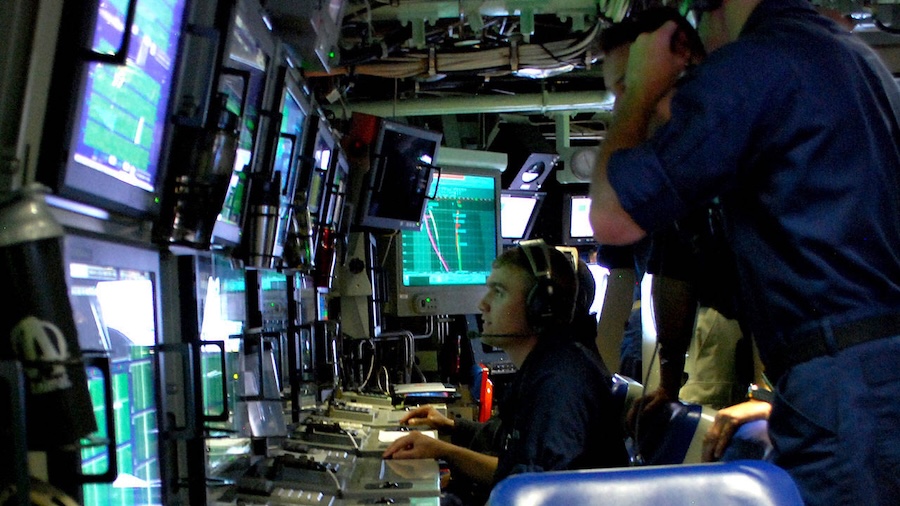 Photo: General Dynamics Mission Systems.
The U.S. Navy demonstrated its advanced AN/BYG-1 submarine combat control system to United Kingdom sailors and industry representatives as part of the AUKUS trilateral security partnership. The system, developed through a joint U.S.–Australian program, is currently operated by both nations’ submarine forces.
The demonstration supports plans to integrate AN/BYG-1 into the future SSN-AUKUS submarines, which will be designed by the United Kingdom and built and operated by the Royal Navy and the Royal Australian Navy. The U.S. Navy said incorporating the system into the baseline design underscores the interoperability of the three nations’ attack submarine fleets.
The U.S. Navy said Australia’s acquisition and operation of nuclear-powered attack submarines under AUKUS Pillar I directly supports U.S. and allied efforts to maintain a favorable balance of power in the Western Pacific. The AUKUS Integration and Acquisition program office within the Department of the Navy is responsible for executing the partnership, with a focus on interoperability, sustainment infrastructure, and the highest standards of nuclear stewardship and nonproliferation.
U.S. Navy demonstrates AN/BYG-1 submarine combat system to UK partners under AUKUS framework
By Martin Chomsky (Defence Industry Europe)Photo: General Dynamics Mission Systems.The U.S. Navy demonstrated its advanced AN/BYG-1 submarine combat control system to United Kingdom sailors and industry representatives as part of the AUKUS trilateral security partnership. The system, developed through a joint U.S.–Australian program, is currently operated by both nations’ submarine forces.
The demonstration supports plans to integrate AN/BYG-1 into the future SSN-AUKUS submarines, which will be designed by the United Kingdom and built and operated by the Royal Navy and the Royal Australian Navy. The U.S. Navy said incorporating the system into the baseline design underscores the interoperability of the three nations’ attack submarine fleets.
The U.S. Navy said Australia’s acquisition and operation of nuclear-powered attack submarines under AUKUS Pillar I directly supports U.S. and allied efforts to maintain a favorable balance of power in the Western Pacific. The AUKUS Integration and Acquisition program office within the Department of the Navy is responsible for executing the partnership, with a focus on interoperability, sustainment infrastructure, and the highest standards of nuclear stewardship and nonproliferation.


Joined: Oct 2018
Aviation Qualifications: PPL
Posts: 12,245
Likes: 1,657
From: Ferrara
While it would save Australia a lot of money to have the US deploy 5 Virgina's here and we get on with the SSN-AUKUS, This has been looked at before by the US and not seen as best practice
So the clickbait headline focuses on a 2% what if, While the report is 98%, Including the review by Trump approving the sale, I won't quote it, there is a lot of detail
Navy Virginia-Class Submarine Program and AUKUS Submarine (Pillar 1) Project: Background and Issues for Congress | Congress.gov | Library of Congress
I didn't see Ronald O'Rourke, say that through AUKUS, Australia will be entering the supply chain, manufacturing for the Virginia, to ease the pressure
"Initial contracts focus on precision machining, castings, forgings, air/gas flasks, and fabricated parts to support U.S. shipbuilding, with 22+ Australian businesses involved in the pilot."
So the clickbait headline focuses on a 2% what if, While the report is 98%, Including the review by Trump approving the sale, I won't quote it, there is a lot of detail
Navy Virginia-Class Submarine Program and AUKUS Submarine (Pillar 1) Project: Background and Issues for Congress | Congress.gov | Library of Congress
I didn't see Ronald O'Rourke, say that through AUKUS, Australia will be entering the supply chain, manufacturing for the Virginia, to ease the pressure
"Initial contracts focus on precision machining, castings, forgings, air/gas flasks, and fabricated parts to support U.S. shipbuilding, with 22+ Australian businesses involved in the pilot."

Joined: Apr 2011
Posts: 1,618
Likes: 205
From: aus
Or the greatest failure of military procurement in certainly australian histrory and probably would rank in world history of failures
I dont think there much middle ground its going to be one or the other
Joined: Oct 2018
Aviation Qualifications: PPL
Posts: 12,245
Likes: 1,657
From: Ferrara
Agreed.
Could be transformational - places like N Adelaide never really recovered from the loss of all the jobs in car factories & white goods makers. Defence related engineering could be just what is wanted
However I also have great faith in the ability of politicians, some bosses and some unions to screw it all up.
Could be transformational - places like N Adelaide never really recovered from the loss of all the jobs in car factories & white goods makers. Defence related engineering could be just what is wanted
However I also have great faith in the ability of politicians, some bosses and some unions to screw it all up.
Thread Starter
Ecce Homo! Loquitur...
Joined: Jul 2000
Aviation Qualifications: Spotter
Posts: 24,633
Likes: 7,338
From: Peripatetic
WSJ: https://archive.is/20260208042158/ht...-base-764af616
The U.S. Navy’s New Insurance Policy for War With China Is an Australian Base
HMAS STIRLING, Australia—If the U.S. and China come to blows over Taiwan, this naval base in Western Australia offers a berth to bring American nuclear-powered submarines close to the fight—and a haven if things go wrong.
Washington plans to deploy up to four submarines to HMAS Stirling in the coming years, with the first due to arrive in 2027, advancing a process of military integration with a Pacific ally with the aim of deterring China. Australia is investing billions of dollars in the base and a maintenance precinct nearby.
For the U.S., the arrangement offers a crucial advantage for a potential conflict with China. The U.S. bases submarines in Guam, but China could hit the U.S. territory with a missile barrage early, possibly knocking out the island’s military facilities.
Doing submarine maintenance in Western Australia also gives the U.S. another option for repairs—in a spot that is relatively close to regional flashpoints, chiefly the South China Sea and Taiwan, the self-governing island that Beijing claims as its own territory, to be seized by force if necessary. A lot of maintenance is currently performed in Guam, Pearl Harbor or the U.S. mainland, defense analysts said, and U.S. shipyards are struggling to keep up.
“If you were in some kind of conflict, and your ships are getting damaged, you’re going to want to return to the fight quickly,” said Rear Adm. Lincoln Reifsteck, who commands an American submarine group, during a recent visit to the base. “So having this geography to enhance what you have in Guam, to enhance what you have in Pearl Harbor…it’s going to make the U.S. Navy able to get back to it faster.”
Stirling, about an hour’s drive south of Perth, is yet another example of how the U.S. and its allies are integrating their militaries, hoping the show of force ultimately convinces Beijing that it would be too costly to move on Taiwan. U.S. and allied militaries are training together more extensively and buying the same equipment, aiming to make their forces not just interoperable, but interchangeable.
Australia’s government is investing about $5.6 billion in Stirling for things like a training center, housing, improvements to the submarine pier, a facility to handle radioactive waste, and power. Late last year, the USS Vermont, a U.S. Virginia-class submarine—the Navy’s most advanced attack submarine—visited the base for about four weeks. U.S. and Australian personnel worked together on dozens of maintenance tasks on the boat.
The base is on an island and connected to the mainland by a bridge. During a recent visit to the base, cranes could be seen towering over an unfinished building. There were also new apartments with sea views for military personnel.
Nearby on the mainland, Australia has earmarked $8.4 billion so far for a maintenance and shipbuilding precinct in a suburb called Henderson that is expected to include dry docks, which are needed for big repairs and the most extensive level of maintenance.
The Australian facilities “should be more than Guam, since it will have a permanent maintenance facility ashore with a dry dock,” said Bryan Clark, a senior fellow at the Hudson Institute and a former submariner. “In theory, the Navy could implement an overhaul work package in Australia and reduce the work needed when the sub returns home.”
Because Australia doesn’t allow foreign bases on its soil, officials publicly characterize the coming U.S. deployments as rotational—but the preparations suggest U.S. submarines could be at Stirling for a while. Australian officials expect some 1,200 personnel to move to the area from the U.S. and the U.K., which also plans to operate a submarine from Stirling.
The plans are a challenge for a country with no experience operating its own nuclear-powered submarines. Getting the dry docks online by the time they are needed will also be an issue, some analysts say. Australian officials have signaled that a “contingency” dry-docking capability—such as a floating dock that can handle big unexpected repairs, though not the most extensive level of maintenance—will need to be ready by the early 2030s.
“If U.S. boats are to be in Australia in an enduring way, then the ability to conduct major emergency repairs is critical—things that can only be done in a dry dock,” said Brent Sadler, a senior research fellow at the Heritage Foundation who previously served on U.S. submarines.
The plans face other hurdles, including the expected need for $9 billion more to finish the maintenance and shipbuilding facility at Henderson. Attracting workers will likely be expensive in a region with a strong mining economy.
Some locals are worried about radioactive waste, and more military personnel could put pressure on the housing market. There are also concerns that having U.S. submarines nearby could make the area more of a target.
“This beautiful part of our coast here in southwestern Australia is going to become this massive U.S. Navy base,” said Sophie McNeill, a state lawmaker in Western Australia from the left-wing Greens party, which opposes the plans. “The public is slowly waking up to what it will mean for our sleepy little part of the world.”
The coming deployments to Stirling are part of the so-called Aukus dealbetween the U.S., the U.K. and Australia. Under the pact, Australia is supposed to start acquiring its own Virginia-class submarines, which are nuclear powered, from the U.S. from the early 2030s. Australia’s current fleet is diesel-electric.
U.S. shipbuilding, however, has been sluggish, and there remain doubts about whether the U.S. will be able to sell Australia the submarines.
“Is it in Australia’s interest to have a U.S. submarine base in Stirling and have no submarines of our own? I don’t think that is in our interest,” said Malcolm Turnbull, a former Australian prime minister from the center-right Liberal Party. “I believe in Australian sovereignty, and I think the Aukus deal has been a colossal sacrifice of Australian sovereignty.”
Proponents said having the U.S. subs at Stirling would create jobs and offer the benefits of nuclear-powered submarines—which have greater speed and endurance than other submarines—while Australia waits to get its own.
The U.S. submarines could help Australia, which is dependent on maritime trade, patrol important chokepoints to the north. Stirling would also be a good hub from which U.S. subs could blockade important shipping lanes, choking off Chinese trade if there is a conflict.
“Strategically and operationally, it’s a no-brainer,” said Mike Green, a former official in the George W. Bush administration who is now chief executive at the U.S. Studies Center at the University of Sydney.
Although China could still reach the base with missiles, hitting it would be harder because Stirling is farther away than U.S. bases elsewhere, he said. “That bastion could really matter,” he said.
HMAS STIRLING, Australia—If the U.S. and China come to blows over Taiwan, this naval base in Western Australia offers a berth to bring American nuclear-powered submarines close to the fight—and a haven if things go wrong.
Washington plans to deploy up to four submarines to HMAS Stirling in the coming years, with the first due to arrive in 2027, advancing a process of military integration with a Pacific ally with the aim of deterring China. Australia is investing billions of dollars in the base and a maintenance precinct nearby.
For the U.S., the arrangement offers a crucial advantage for a potential conflict with China. The U.S. bases submarines in Guam, but China could hit the U.S. territory with a missile barrage early, possibly knocking out the island’s military facilities.
Doing submarine maintenance in Western Australia also gives the U.S. another option for repairs—in a spot that is relatively close to regional flashpoints, chiefly the South China Sea and Taiwan, the self-governing island that Beijing claims as its own territory, to be seized by force if necessary. A lot of maintenance is currently performed in Guam, Pearl Harbor or the U.S. mainland, defense analysts said, and U.S. shipyards are struggling to keep up.
“If you were in some kind of conflict, and your ships are getting damaged, you’re going to want to return to the fight quickly,” said Rear Adm. Lincoln Reifsteck, who commands an American submarine group, during a recent visit to the base. “So having this geography to enhance what you have in Guam, to enhance what you have in Pearl Harbor…it’s going to make the U.S. Navy able to get back to it faster.”
Stirling, about an hour’s drive south of Perth, is yet another example of how the U.S. and its allies are integrating their militaries, hoping the show of force ultimately convinces Beijing that it would be too costly to move on Taiwan. U.S. and allied militaries are training together more extensively and buying the same equipment, aiming to make their forces not just interoperable, but interchangeable.
Australia’s government is investing about $5.6 billion in Stirling for things like a training center, housing, improvements to the submarine pier, a facility to handle radioactive waste, and power. Late last year, the USS Vermont, a U.S. Virginia-class submarine—the Navy’s most advanced attack submarine—visited the base for about four weeks. U.S. and Australian personnel worked together on dozens of maintenance tasks on the boat.
The base is on an island and connected to the mainland by a bridge. During a recent visit to the base, cranes could be seen towering over an unfinished building. There were also new apartments with sea views for military personnel.
Nearby on the mainland, Australia has earmarked $8.4 billion so far for a maintenance and shipbuilding precinct in a suburb called Henderson that is expected to include dry docks, which are needed for big repairs and the most extensive level of maintenance.
The Australian facilities “should be more than Guam, since it will have a permanent maintenance facility ashore with a dry dock,” said Bryan Clark, a senior fellow at the Hudson Institute and a former submariner. “In theory, the Navy could implement an overhaul work package in Australia and reduce the work needed when the sub returns home.”
Because Australia doesn’t allow foreign bases on its soil, officials publicly characterize the coming U.S. deployments as rotational—but the preparations suggest U.S. submarines could be at Stirling for a while. Australian officials expect some 1,200 personnel to move to the area from the U.S. and the U.K., which also plans to operate a submarine from Stirling.
The plans are a challenge for a country with no experience operating its own nuclear-powered submarines. Getting the dry docks online by the time they are needed will also be an issue, some analysts say. Australian officials have signaled that a “contingency” dry-docking capability—such as a floating dock that can handle big unexpected repairs, though not the most extensive level of maintenance—will need to be ready by the early 2030s.
“If U.S. boats are to be in Australia in an enduring way, then the ability to conduct major emergency repairs is critical—things that can only be done in a dry dock,” said Brent Sadler, a senior research fellow at the Heritage Foundation who previously served on U.S. submarines.
The plans face other hurdles, including the expected need for $9 billion more to finish the maintenance and shipbuilding facility at Henderson. Attracting workers will likely be expensive in a region with a strong mining economy.
Some locals are worried about radioactive waste, and more military personnel could put pressure on the housing market. There are also concerns that having U.S. submarines nearby could make the area more of a target.
“This beautiful part of our coast here in southwestern Australia is going to become this massive U.S. Navy base,” said Sophie McNeill, a state lawmaker in Western Australia from the left-wing Greens party, which opposes the plans. “The public is slowly waking up to what it will mean for our sleepy little part of the world.”
The coming deployments to Stirling are part of the so-called Aukus dealbetween the U.S., the U.K. and Australia. Under the pact, Australia is supposed to start acquiring its own Virginia-class submarines, which are nuclear powered, from the U.S. from the early 2030s. Australia’s current fleet is diesel-electric.
U.S. shipbuilding, however, has been sluggish, and there remain doubts about whether the U.S. will be able to sell Australia the submarines.
“Is it in Australia’s interest to have a U.S. submarine base in Stirling and have no submarines of our own? I don’t think that is in our interest,” said Malcolm Turnbull, a former Australian prime minister from the center-right Liberal Party. “I believe in Australian sovereignty, and I think the Aukus deal has been a colossal sacrifice of Australian sovereignty.”
Proponents said having the U.S. subs at Stirling would create jobs and offer the benefits of nuclear-powered submarines—which have greater speed and endurance than other submarines—while Australia waits to get its own.
The U.S. submarines could help Australia, which is dependent on maritime trade, patrol important chokepoints to the north. Stirling would also be a good hub from which U.S. subs could blockade important shipping lanes, choking off Chinese trade if there is a conflict.
“Strategically and operationally, it’s a no-brainer,” said Mike Green, a former official in the George W. Bush administration who is now chief executive at the U.S. Studies Center at the University of Sydney.
Although China could still reach the base with missiles, hitting it would be harder because Stirling is farther away than U.S. bases elsewhere, he said. “That bastion could really matter,” he said.

Joined: Dec 2017
Posts: 638
Likes: 101
From: australia
Which is why they want us to run the Virginia, They will have suitable facilities and a trained civil and military workforce,
There are going to be so many doom and gloom clickbait stories till 2032
There are going to be so many doom and gloom clickbait stories till 2032

Joined: Jun 2001
Aviation Qualifications: ATPL
Posts: 1,898
Likes: 17
From: South Pole
The Australian PM has announced the AU$3.9B for the construction of the first stage of the dockyard facilities for the Aukus nuclear submarines. Total dockyard construction is estimated to be approximately AU$30B.

https://www.pm.gov.au/media/albanese...ne-building-sa

https://www.pm.gov.au/media/albanese...ne-building-sa
Joined: Jun 2001
Aviation Qualifications: ATPL
Posts: 1,898
Likes: 17
From: South Pole
Additional information about the design of the Osborne North shipyard from Navy Lookout.
https://www.navylookout.com/building...ADQ0PQmKRF0-vw
Replicating Barrow’s approach means far more than similar buildings. It implies common production methodology, shared nuclear and quality standards, interoperable supply chains and a digitally integrated build environment. In effect, Australia is inserting a fourth production line into the AUKUS ecosystem, alongside Newport and Groton in the United States and at Barrow.
The facilities in Cumbria are constrained by their Victorian legacy and complicated access, but by contrast, Osborne will be purpose-built to support modern submarine construction methods. Designed around digital shipbuilding principles, the layout is intended to optimise material flow, module movement and assembly sequencing from the outset. If delivered as planned, Adelaide could become one of the most advanced submarine production facilities in the world, rather than simply a southern hemisphere clone.
https://www.navylookout.com/building...ADQ0PQmKRF0-vw
Replicating Barrow’s approach means far more than similar buildings. It implies common production methodology, shared nuclear and quality standards, interoperable supply chains and a digitally integrated build environment. In effect, Australia is inserting a fourth production line into the AUKUS ecosystem, alongside Newport and Groton in the United States and at Barrow.
The facilities in Cumbria are constrained by their Victorian legacy and complicated access, but by contrast, Osborne will be purpose-built to support modern submarine construction methods. Designed around digital shipbuilding principles, the layout is intended to optimise material flow, module movement and assembly sequencing from the outset. If delivered as planned, Adelaide could become one of the most advanced submarine production facilities in the world, rather than simply a southern hemisphere clone.


Thread Starter
Ecce Homo! Loquitur...
Joined: Jul 2000
Aviation Qualifications: Spotter
Posts: 24,633
Likes: 7,338
From: Peripatetic
HMS Anson has arrived off Australia for the planned deployment.
https://thenightly.com.au/australia/...wim-c-21698432
https://thenightly.com.au/australia/...wim-c-21698432
Joined: Jun 2001
Aviation Qualifications: ATPL
Posts: 1,898
Likes: 17
From: South Pole
AU$310M paid for long lead items for the initial AUKUS SSN’s to be built at Osborne.
https://www.minister.defence.gov.au/...ulsion-systems
https://www.minister.defence.gov.au/...ulsion-systems
Joined: Oct 2018
Aviation Qualifications: PPL
Posts: 12,245
Likes: 1,657
From: Ferrara
HMS Anson has arrived off Australia for the planned deployment.
https://thenightly.com.au/australia/...wim-c-21698432
https://thenightly.com.au/australia/...wim-c-21698432
Joined: Dec 2017
Posts: 638
Likes: 101
From: australia
Is the left hand talking to the right hand? This access and collaboration will play out over the months, We will see where it lands
Pillar ll
Washington Built the AI Infrastructure AUKUS Needs — Then Locked Allies Out
President Donald Trump’s Genesis Mission invokes that wartime urgency to win the AI race — but the November executive order gives American companies detailed frameworks to access federal supercomputers while offering international security partners one vague sentence about exploring collaboration “to the extent appropriate.”
The Department of Energy announced collaboration agreements with 24 organizations in December 2025. Every partner is American, including OpenAI, Anthropic, Google, Microsoft, Amazon Web Services, and NVIDIA. The United States controls 74 percent of global AI compute capacity. Genesis gives American industry structured access through Cooperative Research and Development Agreements, while AUKUS allies — already investing billions in quantum and autonomous systems requiring exactly this infrastructure — received no equivalent mechanism.
The administration’s approach may prove insurmountable under current policy priorities — treating allied capacity as something to leverage rather than integrate. But that calculus ignores what the United States loses through fragmentation: Every AI model that Washington forces allies to develop separately is duplicated effort across the partnership. Every Australian quantum processor or British autonomous system trained on domestic infrastructure instead of Genesis represents capability development that the United States either funds unilaterally or foregoes entirely. China now leads in 57 of 64 critical technologies — including quantum, AI, and advanced materials — central to Pillar II of AUKUS, but Beijing lacks allied research ecosystems. The strategic advantage isn’t American dominance of infrastructure. It’s allied innovation capacity integrated with American computing power that no competitor can match. That requires infrastructure access, not just technology transfer agreements.
Pillar ll
Washington Built the AI Infrastructure AUKUS Needs — Then Locked Allies Out
President Donald Trump’s Genesis Mission invokes that wartime urgency to win the AI race — but the November executive order gives American companies detailed frameworks to access federal supercomputers while offering international security partners one vague sentence about exploring collaboration “to the extent appropriate.”
The Department of Energy announced collaboration agreements with 24 organizations in December 2025. Every partner is American, including OpenAI, Anthropic, Google, Microsoft, Amazon Web Services, and NVIDIA. The United States controls 74 percent of global AI compute capacity. Genesis gives American industry structured access through Cooperative Research and Development Agreements, while AUKUS allies — already investing billions in quantum and autonomous systems requiring exactly this infrastructure — received no equivalent mechanism.
The administration’s approach may prove insurmountable under current policy priorities — treating allied capacity as something to leverage rather than integrate. But that calculus ignores what the United States loses through fragmentation: Every AI model that Washington forces allies to develop separately is duplicated effort across the partnership. Every Australian quantum processor or British autonomous system trained on domestic infrastructure instead of Genesis represents capability development that the United States either funds unilaterally or foregoes entirely. China now leads in 57 of 64 critical technologies — including quantum, AI, and advanced materials — central to Pillar II of AUKUS, but Beijing lacks allied research ecosystems. The strategic advantage isn’t American dominance of infrastructure. It’s allied innovation capacity integrated with American computing power that no competitor can match. That requires infrastructure access, not just technology transfer agreements.
Joined: Jun 2001
Aviation Qualifications: ATPL
Posts: 4,087
Likes: 4,429
From: 3rd Rock, #29B
What a tangle of unkempt hair AUKUS is turning out to be. The French make good boats, so do the Germans (curiously they have a bit of history in that field) as do the Swedes.
The modern AIP boat is a capable machine and lacks only the ability to sortie to the other side of the planet without replenishment.
Exactly why does AUS, the GBR etc need to be running sorties across the globe? There be dragons aplenty within the range of all of the other options, and they all give a cost effective outcome that allows for the one thing that is lost with AUKUS's concentration on NPPP, you can get about 6-8 AIP boats for the same cost as one new atomic powered tub.
The aggression by Russia against its neighbours has made the point that being able to innovate and meet a threat is an important skill, and the AUKUS boats seem to be rather last century in their strategic application, would think that we are able to come up with better solutions, in shorter time frames, with greater capability, and with lower risk.
The modern AIP boat is a capable machine and lacks only the ability to sortie to the other side of the planet without replenishment.
Exactly why does AUS, the GBR etc need to be running sorties across the globe? There be dragons aplenty within the range of all of the other options, and they all give a cost effective outcome that allows for the one thing that is lost with AUKUS's concentration on NPPP, you can get about 6-8 AIP boats for the same cost as one new atomic powered tub.
The aggression by Russia against its neighbours has made the point that being able to innovate and meet a threat is an important skill, and the AUKUS boats seem to be rather last century in their strategic application, would think that we are able to come up with better solutions, in shorter time frames, with greater capability, and with lower risk.
Joined: Oct 2018
Aviation Qualifications: PPL
Posts: 12,245
Likes: 1,657
From: Ferrara
Possession of SSN's makes everyone else's surface fleets a target - the threat is well known, proven (see "Belgrano") - and almost impossible to defend against. It really crimps people's options.
No -one knows if AIP and other modern, non-nuclear, boats are as effective, or effective at all. If Australia thinks it may need to deter China they'll want keep them as far away as possible and the conventional boats can't get very far north - pretty much limited to E Indonesia and SSW Pacific. The UK has shallow water areas in the N Sea but a large area of the N Atlantic to cover as well. A single SSN can cover a far larger area than a conventional boat and you have much greater flexibility - albeit at an eye watering cost
No -one knows if AIP and other modern, non-nuclear, boats are as effective, or effective at all. If Australia thinks it may need to deter China they'll want keep them as far away as possible and the conventional boats can't get very far north - pretty much limited to E Indonesia and SSW Pacific. The UK has shallow water areas in the N Sea but a large area of the N Atlantic to cover as well. A single SSN can cover a far larger area than a conventional boat and you have much greater flexibility - albeit at an eye watering cost
Joined: Jun 2001
Aviation Qualifications: ATPL
Posts: 4,087
Likes: 4,429
From: 3rd Rock, #29B
Possession of SSN's makes everyone else's surface fleets a target - the threat is well known, proven (see "Belgrano") - and almost impossible to defend against. It really crimps people's options.
No -one knows if AIP and other modern, non-nuclear, boats are as effective, or effective at all. If Australia thinks it may need to deter China they'll want keep them as far away as possible and the conventional boats can't get very far north - pretty much limited to E Indonesia and SSW Pacific. The UK has shallow water areas in the N Sea but a large area of the N Atlantic to cover as well. A single SSN can cover a far larger area than a conventional boat and you have much greater flexibility - albeit at an eye watering cost
No -one knows if AIP and other modern, non-nuclear, boats are as effective, or effective at all. If Australia thinks it may need to deter China they'll want keep them as far away as possible and the conventional boats can't get very far north - pretty much limited to E Indonesia and SSW Pacific. The UK has shallow water areas in the N Sea but a large area of the N Atlantic to cover as well. A single SSN can cover a far larger area than a conventional boat and you have much greater flexibility - albeit at an eye watering cost
2. A submarine is a complication to an adversary whether there or not, if the location is unknown, it is a threat that surface skimmers, AKA "targets" need to take counter measures against. That is almost always the problem for the other side, unless it is a whiskey or foxtrot that is half submerged at a mooring in Surabaya...
3. We live in a time where there is a disruption to the classical practice of fighting the last war, we need to be looking at how to increase the effectiveness of our capabilities in achieving national security rather than racing about in shiny new high value targets, that become capital ships that are too valuable to put in harms way.
4. Subs conduct intel gathering, spec-ops support etc, and being a portable weapons platform, more than running around chasing convoys. If the boat is that close to the target, it has already missed the plot. I've taken photos of the screws of a combat ship through a search periscope, and as much fun as that was in the 70's and 80's doing so with 1/4 of your navy combat capability in one basket is not a wise use of assets.
The Ukrainians have spilt a lot of their own blood, it is up to us to learn from their teachings, like removing a traditional major naval fleet from contention without having your own boats.
Joined: Dec 2017
Posts: 638
Likes: 101
From: australia

Joined: Apr 2001
Aviation Qualifications: ATP+Mil
Posts: 4,921
Likes: 611
From: surfing, watching for sharks
A poster asked a few months back about the USN acquiring some conventional submarines. Rather than listening to the random voices on pprune who haven't a clue, here’s some reading that might answer the question.
https://www.usni.org/magazines/proce...able-lethality
https://navalinstitute.com.au/the-ca...bmarine-fleet/
https://www.usni.org/magazines/proce...able-lethality
https://navalinstitute.com.au/the-ca...bmarine-fleet/