Iran


Joined: Mar 2005
Posts: 2,166
Likes: 48
From: Kammbronn

Joined: Dec 2001
Aviation Qualifications: Military
Posts: 2,964
Likes: 483
From: The Roman Empire
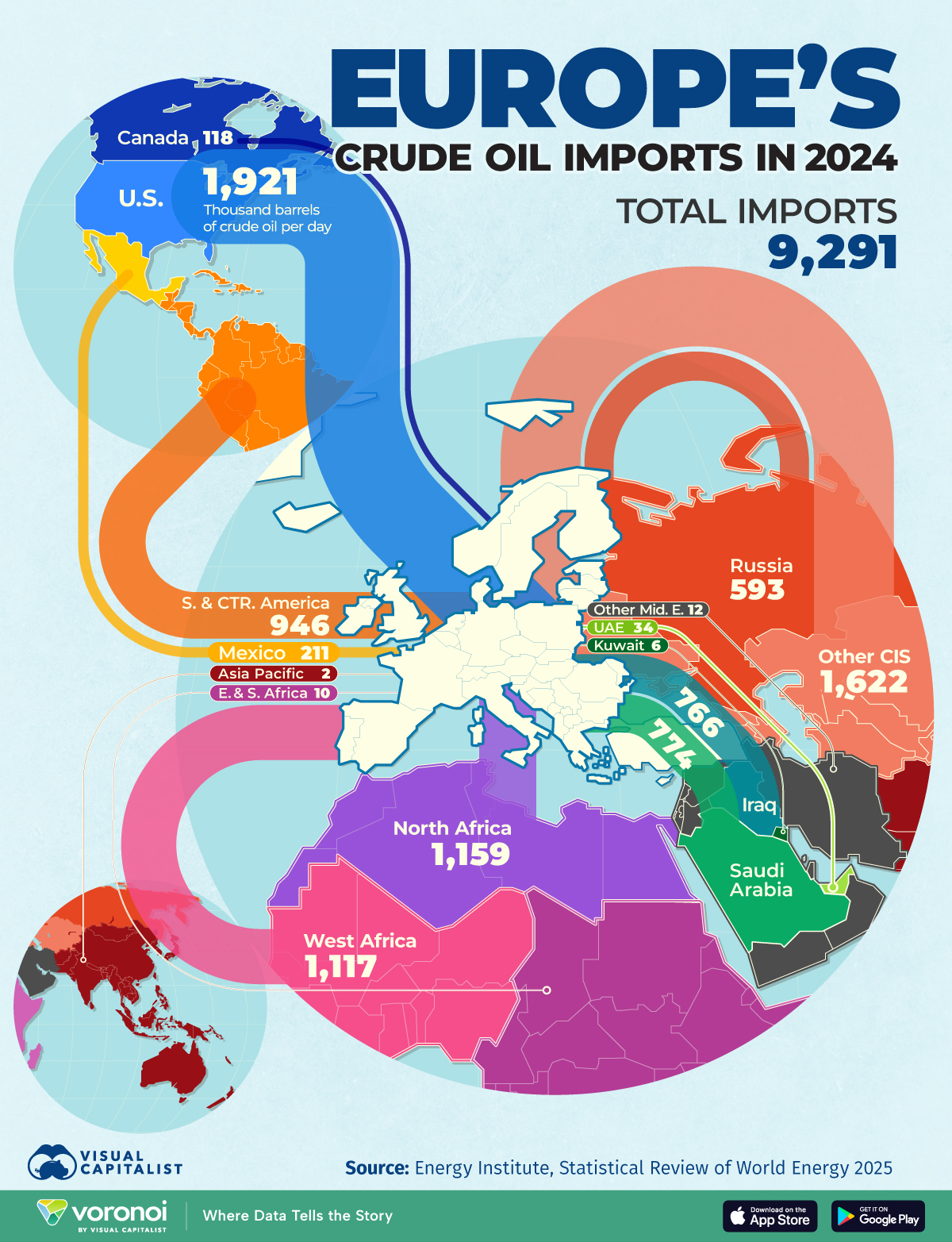
Further encouragement for countries to wean themselves off Middle Eastern oil and gas.
Obviously nobody learned much from the spike in oil prices (around 300%) in 1973/74 as a result of the Arab/Israeli War....only 50 years to prepare, obviously not enough time for Western governments.
If only we had a secure source of oil and gas more local to ourselves, eh Mr Miliband....
Obviously nobody learned much from the spike in oil prices (around 300%) in 1973/74 as a result of the Arab/Israeli War....only 50 years to prepare, obviously not enough time for Western governments.
If only we had a secure source of oil and gas more local to ourselves, eh Mr Miliband....
Last edited by Biggus; 18th March 2026 at 11:35.
Thread Starter
Ecce Homo! Loquitur...

Joined: Jul 2000
Aviation Qualifications: Spotter
Posts: 24,509
Likes: 7,252
From: Peripatetic
If we can't open the Strait what happens when the oil runs out? What's plan B?

Joined: Nov 2009
Posts: 668
Likes: 127
From: London
Further encouragement for countries to wean themselves off Middle Eastern oil and gas.
Obviously nobody learned much from the spike in oil prices (around 300%) in 1973/74 as a result of the Arab/Israeli War....only 50 years to prepare, obviously not enough time for Western governments.
If only we had a secure source of oil and gas more local to ourselves, eh Mr Miliband....
Obviously nobody learned much from the spike in oil prices (around 300%) in 1973/74 as a result of the Arab/Israeli War....only 50 years to prepare, obviously not enough time for Western governments.
If only we had a secure source of oil and gas more local to ourselves, eh Mr Miliband....
On the other hand, we can install a lot of wind and solar quite quickly, get the new transmission lines built, accelerate the move to heat pumps, push the EV transition harder, get homes properly insulated. .... In fact there are 100s of things that can be done - we have many different directions that we can attack the problem from simultaneously and all with an end result that we will not need oil in significant amounts ever again. While we're doing all of this we're spending money in the UK, investing in the UK, developing exportable technology here. In fact you could almost paint it as a kind of industrial revolution Mk2 except that this time we didn't start it.
Joined: Oct 2005
Aviation Qualifications: Military
Posts: 665
Likes: 145
From: UK/Philippines/Italy
Most recently Iran has offered to sell oil to China in Yuan. Perhaps also to other nations. This is a way of encouraging a move away from the petrodollar which, in turn, is a threat to the US economy which relies on the dollar being the World's reserve currency. There are tutorials on how the petrodollar works on YouTube should you wish.
So, Iran seems to allow oil and gas exports through the SoH if payment is not made in petrodollars.
https://www.chosun.com/english/world...NUI3C5SX3XFR4/
Notwithstanding this, human ingenuity and the wish to make a buck or two are going to make other sources of petrochemical products available. The USA and Russia are likely to be net winners here
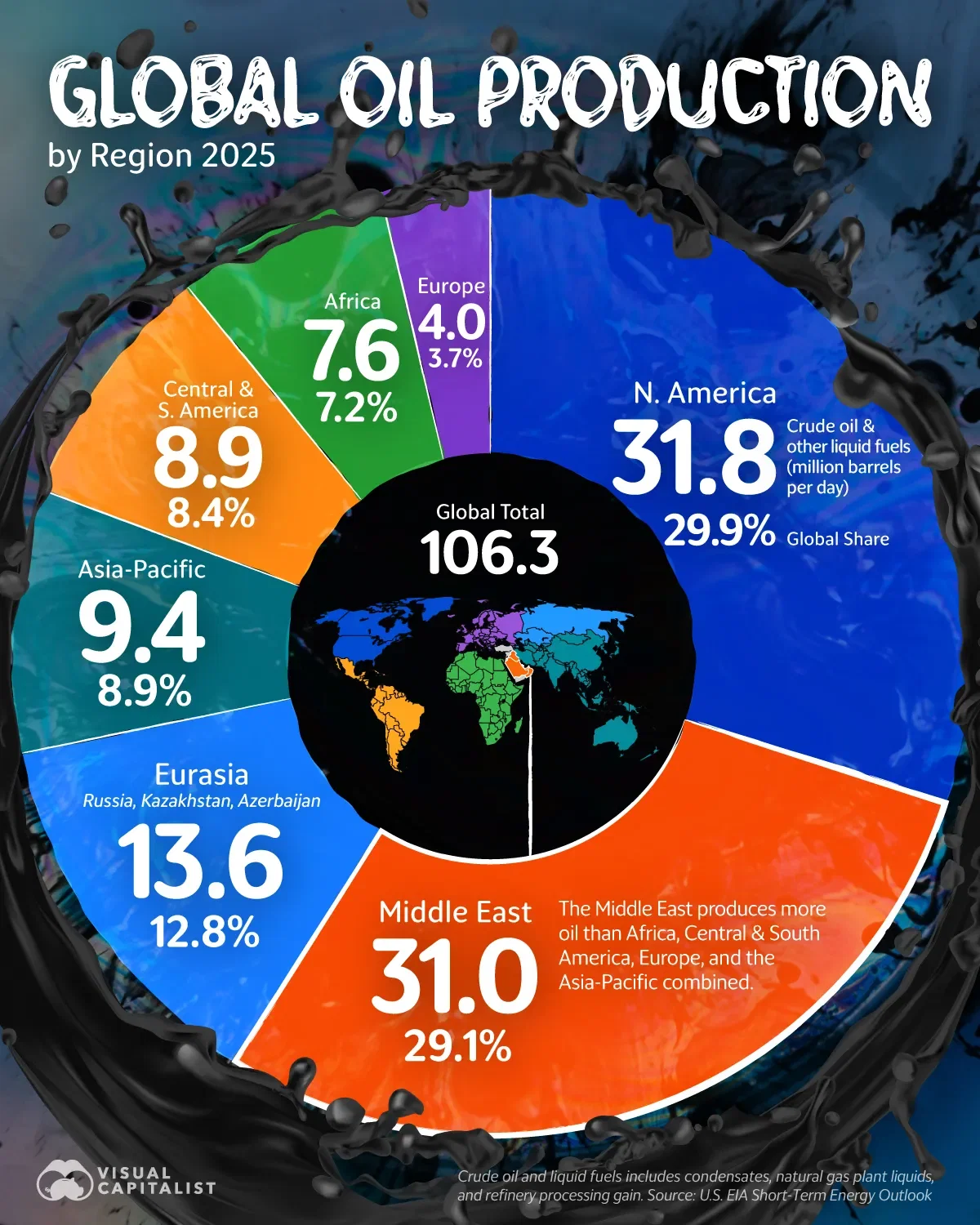
The current oil market looks something like this:
https://www.forbes.com/sites/christo...ng-out-of-oil/
A drop in the proverbial barrel will also be the reopening of the iraq Kurdistan pipeline. The KSA East West pipeline with a capacity of around 7 bbl/day will relieve some pressure however, the Houthis have been very quiet of late and may well be primed to interdict supplies heading East.
Thread Starter
Ecce Homo! Loquitur...
Joined: Jul 2000
Aviation Qualifications: Spotter
Posts: 24,509
Likes: 7,252
From: Peripatetic
Reference the Fairford missions now routing through the Strait of Gibraltar - looks like it because the French have closed their airspace to bombing missions.
It's starting to look like this French Air Force visit to RAF Fairford, coinciding with a US C-40 visit, may have been senior French and CENTCOM officials meeting regarding US bombers flying over France... The bombers since have been flying via Gibraltar... perhaps France said no more?!
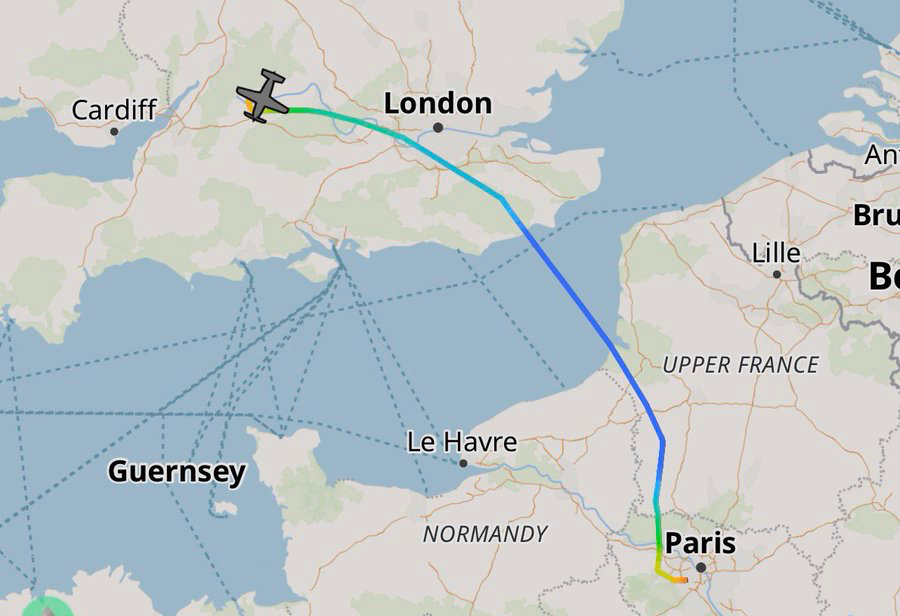
It’s very likely, 02-0042 went to MacDill just days prior, likely to pick up Adm. Cooper.
Also worth noting, SecAF & CSAF normally don’t use the C-40s operated by the 89th Airlift Wing.
Also worth noting, SecAF & CSAF normally don’t use the C-40s operated by the 89th Airlift Wing.


Joined: Jan 2008
Aviation Qualifications: Military
Posts: 3,346
Likes: 2,119
From: Glorious Devon
Like buying a cheap ticket for the Titanic after it has already hit the iceberg
A French General spells it out
https://www.thedailybeast.com/french...ic-comparison/
A French general has said joining President Donald Trump’s war is like buying a discounted ticket for the Titanic after it had already hit the iceberg.
Retired three-star general and former commander of the French Foreign Legion, Michel Yakovleff, appeared on LCI, where he reeled off all the reasons not to follow Trump into battle.
The president has endured a chastening start to the week after ally after ally—including the U.K., France, Japan, Germany, South Korea, and even China—rejected the idea of offering military support for his war with Iran.
“You can’t have an American operation where they’re bombing whatever they can, and then below that, the Europeans doing something else,” Yakovleff said. “No, no, no, it has to be one sole operation, under a NATO flag. I don’t think he’s understood that.”
He then went further, rejecting the idea that European ships would enforce his blockade while U.S. forces nearby waged a broader war all around them. Instead, he said the U.S. needed to make it crystal clear what it wanted from the conflict.
“The Americans have to put this in writing. Not tweets, not things that change every two minutes,” he said.
Yakovleff then claimed that sending ships to help Trump went beyond simply putting those vessels at risk. Instead, he said it opened the door to becoming involved in the conflict’s politics.
“It’s not a question of military means, the Strait of Hormuz,” he said. “It’s that he wants to share the political risk... not the military risk.”
His words echoed those of German Defense Minister Boris Pistorius, who said, “What does Trump expect from a handful of European frigates that the powerful U.S. Navy cannot do?” the BBC reports. “This is not our war. We have not started it.”
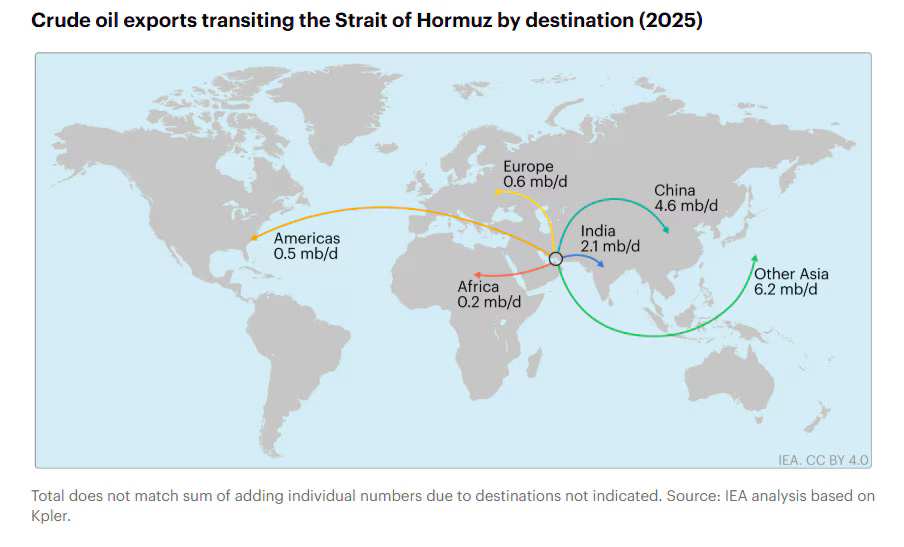
Iran has closed the Strait of Hormuz, a vital conduit for oil to the rest of the world. Around one-fifth of the world’s supply flows through it in peacetime, but since Trump’s attack on February 28, Iran has warned that ships’ safety cannot be guaranteed.
Tankers have come under fire, leading to a supply chain backlog and at least 17 vessels being hit. Meanwhile, gas prices are soaring.
Yakovleff, who served in NATO roles for seven years, has previously warned that Trump’s attacks on the alliance could destroy it.
He would let us down whenever it suited him,” he continued on LCI, before stating, “On the Titanic, it appears the captain wanted to sell tickets off cheaply for the dinner-dance after hitting the iceberg. It’s not the moment to be buying a cut-price ticket for the Titanic.”
“And the last argument is American: you don’t reinforce failure. I learnt that at the U.S. Army War College. You don’t reinforce failure, you move on, you find something else.”
France’s President Emmanuel Macron had already poured cold water on the idea of getting involved in the fighting directly. Instead, he said he would look into organizing a fleet of escorts to help ships navigate the strait, but only after the “hottest phase” of the fighting was over, according to the BBC.
U.K. Prime Minister Sir Keir Starmer struck a similar tone, saying in a news conference on Monday that he was looking at a “viable plan” but was “not at the point of decisions yet.”
Meanwhile, the European Union’s foreign policy boss, Kaja Kallas, told Reuters that “Nobody is ready to put their people in harm’s way in the Strait of Hormuz.”
Retired three-star general and former commander of the French Foreign Legion, Michel Yakovleff, appeared on LCI, where he reeled off all the reasons not to follow Trump into battle.
The president has endured a chastening start to the week after ally after ally—including the U.K., France, Japan, Germany, South Korea, and even China—rejected the idea of offering military support for his war with Iran.
“You can’t have an American operation where they’re bombing whatever they can, and then below that, the Europeans doing something else,” Yakovleff said. “No, no, no, it has to be one sole operation, under a NATO flag. I don’t think he’s understood that.”
He then went further, rejecting the idea that European ships would enforce his blockade while U.S. forces nearby waged a broader war all around them. Instead, he said the U.S. needed to make it crystal clear what it wanted from the conflict.
“The Americans have to put this in writing. Not tweets, not things that change every two minutes,” he said.
Yakovleff then claimed that sending ships to help Trump went beyond simply putting those vessels at risk. Instead, he said it opened the door to becoming involved in the conflict’s politics.
“It’s not a question of military means, the Strait of Hormuz,” he said. “It’s that he wants to share the political risk... not the military risk.”
His words echoed those of German Defense Minister Boris Pistorius, who said, “What does Trump expect from a handful of European frigates that the powerful U.S. Navy cannot do?” the BBC reports. “This is not our war. We have not started it.”
Iran has closed the Strait of Hormuz, a vital conduit for oil to the rest of the world. Around one-fifth of the world’s supply flows through it in peacetime, but since Trump’s attack on February 28, Iran has warned that ships’ safety cannot be guaranteed.
Tankers have come under fire, leading to a supply chain backlog and at least 17 vessels being hit. Meanwhile, gas prices are soaring.
Yakovleff, who served in NATO roles for seven years, has previously warned that Trump’s attacks on the alliance could destroy it.
He would let us down whenever it suited him,” he continued on LCI, before stating, “On the Titanic, it appears the captain wanted to sell tickets off cheaply for the dinner-dance after hitting the iceberg. It’s not the moment to be buying a cut-price ticket for the Titanic.”
“And the last argument is American: you don’t reinforce failure. I learnt that at the U.S. Army War College. You don’t reinforce failure, you move on, you find something else.”
France’s President Emmanuel Macron had already poured cold water on the idea of getting involved in the fighting directly. Instead, he said he would look into organizing a fleet of escorts to help ships navigate the strait, but only after the “hottest phase” of the fighting was over, according to the BBC.
U.K. Prime Minister Sir Keir Starmer struck a similar tone, saying in a news conference on Monday that he was looking at a “viable plan” but was “not at the point of decisions yet.”
Meanwhile, the European Union’s foreign policy boss, Kaja Kallas, told Reuters that “Nobody is ready to put their people in harm’s way in the Strait of Hormuz.”
Thread Starter
Ecce Homo! Loquitur...
Joined: Jul 2000
Aviation Qualifications: Spotter
Posts: 24,509
Likes: 7,252
From: Peripatetic
Australian MOD:
https://www.defence.gov.au/news-even...inhad-air-base
Statement on strikes on Al Minhad Air Base
https://www.defence.gov.au/news-even...inhad-air-base
Statement on strikes on Al Minhad Air Base
18 MARCH 2026
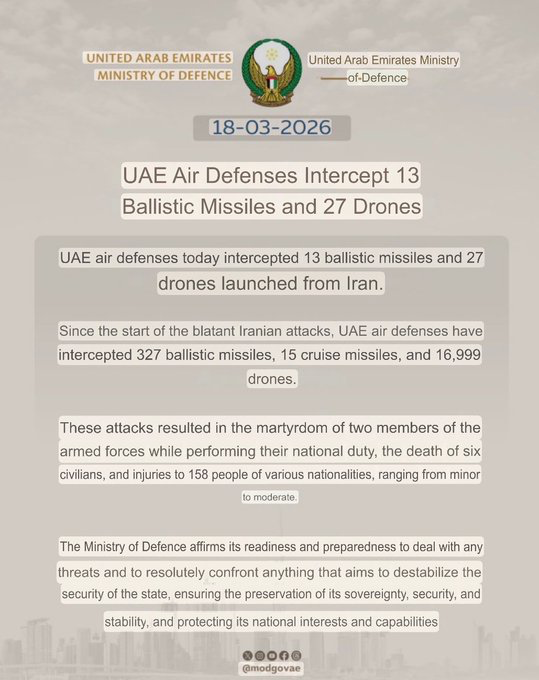
On the morning of 18 March 2026 (AEDT), an Iranian strike impacted an area at the Al Minhad Air Base in the United Arab Emirates, where the Australian Defence Force (ADF) has a long‑standing presence.
No ADF personnel were injured in the incident, and all ADF personnel deployed to the Middle East are safe and accounted for.
The strike resulted in minor damage to an accommodation block and medical facility in the Australian section of the base.
Defence’s focus is on ensuring the safety and security of our people, and we will continue to revise force protection measures as the situation in the Middle East evolves.
On the morning of 18 March 2026 (AEDT), an Iranian strike impacted an area at the Al Minhad Air Base in the United Arab Emirates, where the Australian Defence Force (ADF) has a long‑standing presence.
No ADF personnel were injured in the incident, and all ADF personnel deployed to the Middle East are safe and accounted for.
The strike resulted in minor damage to an accommodation block and medical facility in the Australian section of the base.
Defence’s focus is on ensuring the safety and security of our people, and we will continue to revise force protection measures as the situation in the Middle East evolves.
Joined: Apr 2006
Posts: 807
Likes: 425
From: Portsmouth
The one that has everyone bricking it is when the available storage for the wells in the area is full. At that point, wells start to have to be shut, which has serious longer term implications as to being able to open them back up and the timescale for doing so.
That is the number one driver for opening the Straits. It beggars belief that CENTCOM have not had a list of targets (eg mine storage depots, harbours, IRGC coastal bases) marked "Mallet these asap to reduce risk to tanker traffic". If they don't the J2 cell needs an interview without coffee.
Thread Starter
Ecce Homo! Loquitur...
Joined: Jul 2000
Aviation Qualifications: Spotter
Posts: 24,509
Likes: 7,252
From: Peripatetic
A US official has confirmed the attack was made using GBU-72 Advanced 5K Penetrators.
Video
CENTCOM:
Video
An Iranian underground missile storage facility was successfully targeted & destroyed using bunker buster bombs near the Strait of Hormuz.
Over 200 Khorramshahr ballistic missiles were stored there and now became dust.
Over 200 Khorramshahr ballistic missiles were stored there and now became dust.
Hours ago, U.S. forces successfully employed multiple 5,000-pound deep penetrator munitions on hardened Iranian missile sites along Iran’s coastline near the Strait of Hormuz. The Iranian anti-ship cruise missiles in these sites posed a risk to international shipping in the strait.
Joined: Apr 2002
Aviation Qualifications: PPL
Posts: 1,263
Likes: 55
From: Surrey, UK ;
What's wrong with just going the other way round Africa ? More expensive obviously and much longer in distance and time but AFAIK that was always the way with tankers that couldn't get through Suez
Joined: Apr 2006
Posts: 807
Likes: 425
From: Portsmouth
Joined: Mar 2005
Posts: 2,166
Likes: 48
From: Kammbronn
Thread Starter
Ecce Homo! Loquitur...
Joined: Jul 2000
Aviation Qualifications: Spotter
Posts: 24,509
Likes: 7,252
From: Peripatetic
Iran is now hitting the oil and gas production - not export - sites in the Gulf states. Now Israelis doing the same in Iran.
I have commented previously on the plants in Asia producing basic production elements such as ethylene, fertiliser etc shutting down declaring "force Majeure"*, expect that to multiple rapidly.
* e.g.
I have commented previously on the plants in Asia producing basic production elements such as ethylene, fertiliser etc shutting down declaring "force Majeure"*, expect that to multiple rapidly.
Israel struck Iranian natural gas infrastructure at the South Pars natural gas field, the largest in the world. The largest natural gas processing facility in Iran was reportedly hit, along with additional gas infrastructure in Asaluyeh.
Iranian state media said on Wednesday that parts of the South Pars gas field and facilities in Asaluyeh were hit in a US-Israeli attack. “A part of the South Pars and Asaluyeh oil and gas facilities was targeted by the Zionist-American enemy,” Mizan news agency reported.
BREAKING: They just hit the factory.
Israeli strikes set fire to Phase 14 processing facilities at South Pars today. Iran’s oil ministry and Tasnim confirmed the blaze. Partial production suspension. An estimated 12 million cubic metres per day of gas output affected.
South Pars is the largest gas field on Earth. It produces 70 to 80 percent of Iran’s total gas output. That gas is not just fuel. It is the hydrogen feedstock for the Haber-Bosch process that synthesises ammonia, which becomes urea, which becomes the nitrogen that half the planet’s agriculture depends on. South Pars gas feeds Iranian fertiliser production at its molecular root.
The Hormuz permissioned chokepoint was already blocking the shipping route. Now the strikes are hitting the production source. The war is attacking the nitrogen supply chain at both ends simultaneously.
This is the escalation that collapses every remaining optimistic scenario.
The hopeful case for the global food system was always: the strait reopens, fertiliser flows resume, planting windows are partially salvaged. South Pars burning removes even that. If the strait reopened tomorrow morning and every provincial command stood down and every insurer reinstated cover by afternoon, the gas field that feeds the feedstock that feeds the ammonia that feeds the urea is on fire.
The molecule cannot ship because the strait is blocked. The molecule cannot be produced because the factory is burning. Two chokepoints on the same supply chain. Both compromised on the same day of the same war.
South Pars shares its geological reservoir with Qatar’s North Dome field. Qatar’s output is steady. Qatar’s fertiliser production is unaffected. But Qatar’s exports also transit through Hormuz. Qatar’s urea also requires passage through the permissioned chokepoint that the Mosaic Doctrine’s 31 provincial commands control via sealed packets and VHF radio.
The world’s two largest producers of the gas that becomes the nitrogen that grows the food are now compromised at different points on the same chain: Iran at the source, Qatar at the route......
Israeli strikes set fire to Phase 14 processing facilities at South Pars today. Iran’s oil ministry and Tasnim confirmed the blaze. Partial production suspension. An estimated 12 million cubic metres per day of gas output affected.
South Pars is the largest gas field on Earth. It produces 70 to 80 percent of Iran’s total gas output. That gas is not just fuel. It is the hydrogen feedstock for the Haber-Bosch process that synthesises ammonia, which becomes urea, which becomes the nitrogen that half the planet’s agriculture depends on. South Pars gas feeds Iranian fertiliser production at its molecular root.
The Hormuz permissioned chokepoint was already blocking the shipping route. Now the strikes are hitting the production source. The war is attacking the nitrogen supply chain at both ends simultaneously.
This is the escalation that collapses every remaining optimistic scenario.
The hopeful case for the global food system was always: the strait reopens, fertiliser flows resume, planting windows are partially salvaged. South Pars burning removes even that. If the strait reopened tomorrow morning and every provincial command stood down and every insurer reinstated cover by afternoon, the gas field that feeds the feedstock that feeds the ammonia that feeds the urea is on fire.
The molecule cannot ship because the strait is blocked. The molecule cannot be produced because the factory is burning. Two chokepoints on the same supply chain. Both compromised on the same day of the same war.
South Pars shares its geological reservoir with Qatar’s North Dome field. Qatar’s output is steady. Qatar’s fertiliser production is unaffected. But Qatar’s exports also transit through Hormuz. Qatar’s urea also requires passage through the permissioned chokepoint that the Mosaic Doctrine’s 31 provincial commands control via sealed packets and VHF radio.
The world’s two largest producers of the gas that becomes the nitrogen that grows the food are now compromised at different points on the same chain: Iran at the source, Qatar at the route......
https://x.com/nothanksfrankie/status...999764101?s=20
Thread Starter
Ecce Homo! Loquitur...
Joined: Jul 2000
Aviation Qualifications: Spotter
Posts: 24,509
Likes: 7,252
From: Peripatetic
And another one bites the dust.
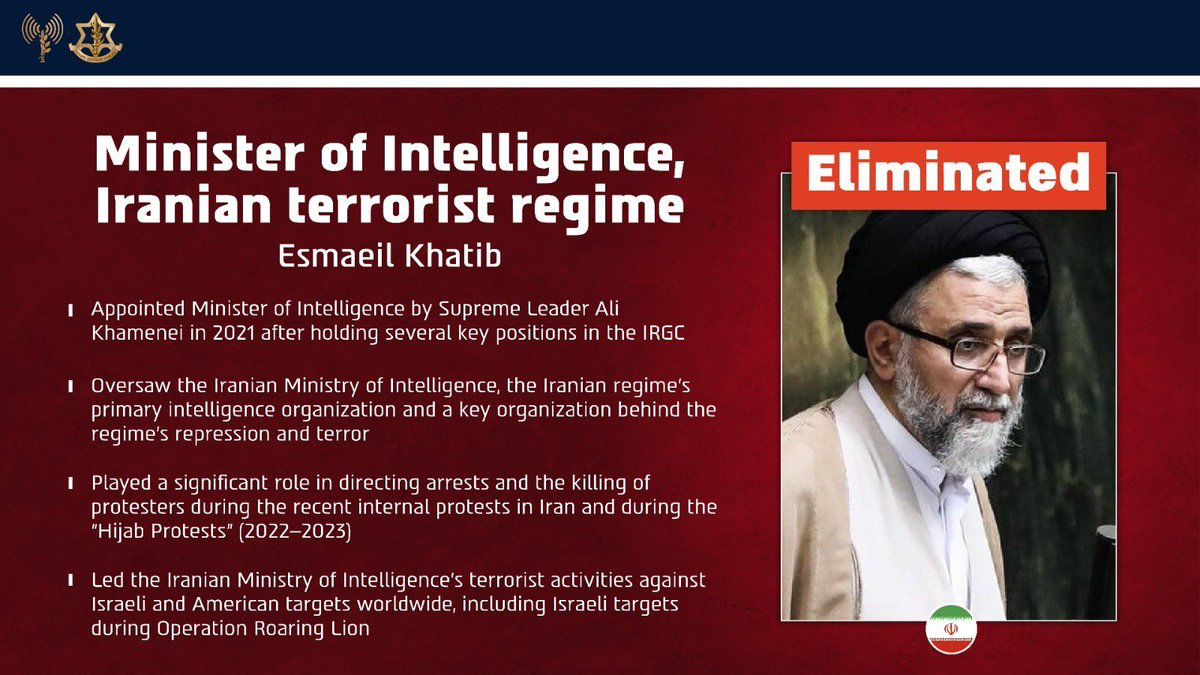
Israel says it killed Esmaeil Khatib, Iran’s Minister of Intelligence, in an overnight airstrike.

Joined: Nov 2007
Aviation Qualifications: ATPL
Posts: 512
Likes: 829
From: UK

It is a potential environmental disaster.
Perhaps the 636,000,000 Swallows could be encouraged to deliver coconuts filled with explosives or an incendiary onto the Iranian military positions.
No contaminated coconuts and a natural loitering drone, that can be rearmed and re-dispatched.
Thread Starter
Ecce Homo! Loquitur...
Joined: Jul 2000
Aviation Qualifications: Spotter
Posts: 24,509
Likes: 7,252
From: Peripatetic
Things are taking a darker turn. Israeli airstrikes have hit Iran’s massive South Pars gas field, along with key infrastructure, including the Asaluyeh petrochemical complex.
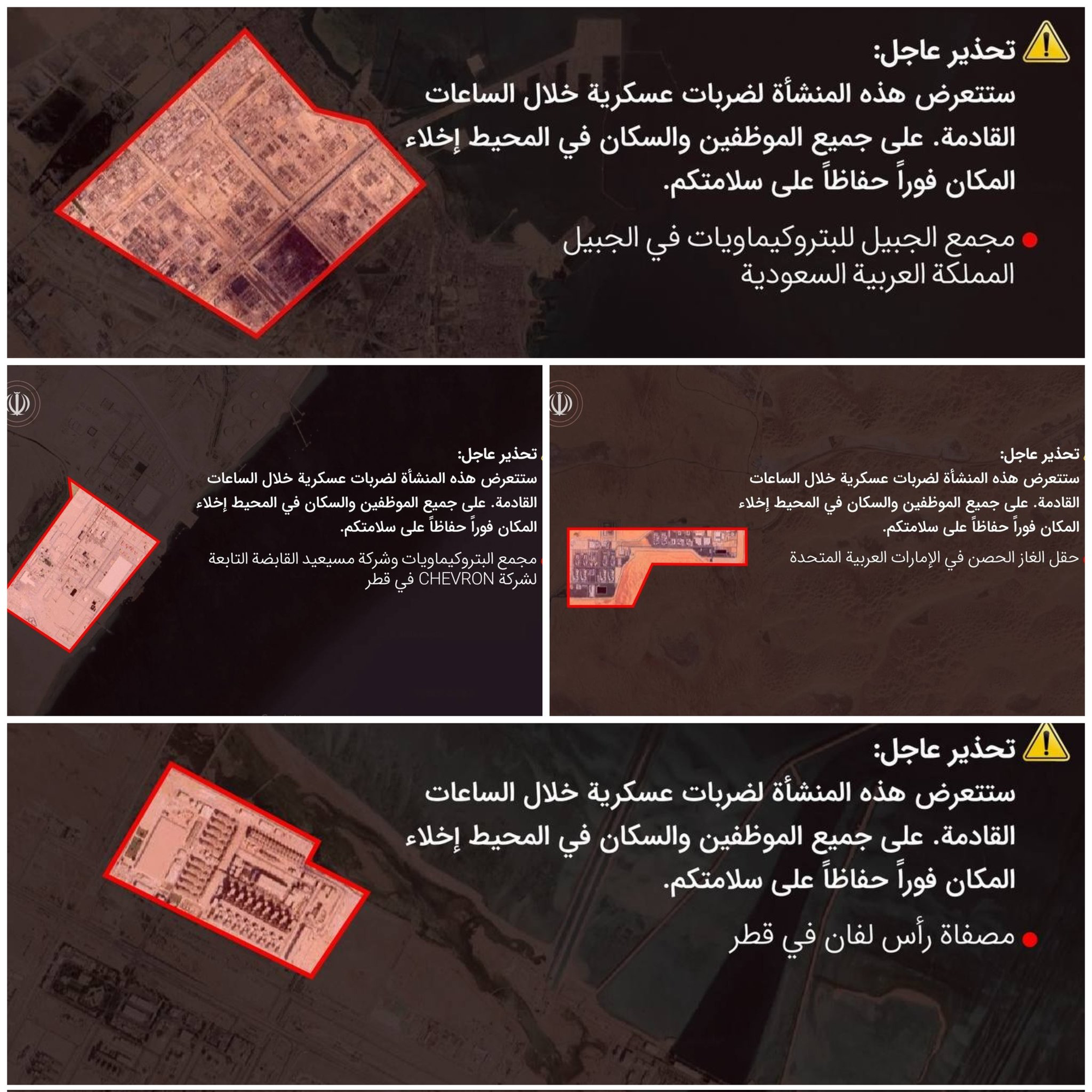
In response, Tehran has issued an urgent warning, calling for the evacuation of petrochemical sites across KSA, Qatar, and the UAE.
In response, Tehran has issued an urgent warning, calling for the evacuation of petrochemical sites across KSA, Qatar, and the UAE.