


2 blades helicopter


Joined: Feb 2006
Posts: 557
Likes: 27
From: At home
I wonder where you have that info from?! The largest 2 blade helicopter certified for IFR is the Bell 214ST. Below that you’ve got the 212. I think you can get some variants of the 206 IFR certified as well.


Joined: Jun 2016
Aviation Qualifications: CPL
Posts: 1,318
Likes: 387
From: Brantisvogan
The hardest part (on pistons) is finding one with the minimum equipment. There weren't many Robbos with a full panel, but with newer aircraft having some form of glass panel that is less of a problem.

Joined: Apr 2010
Posts: 850
Likes: 0
From: USA
There are plenty around here (Northeast US). No shortage of them.
It is really remarkable how strongly Robinson bought into glass. It's only a little exaggeration to wonder if there is a single 66 being delivered without glass and an autopilot these days, and probably a fair number of 44's, too. And they really hit it out of the park by offering the HeliSAS autopilot well before the 505 and given that such a thing is a rarity in a 120, 206 or 500 since they were all produced before something with a HeliSAS price point came along (now waiting for someone to tell me it's not a real autopilot, only a SAS, but I don't care if it can hold altitude and course while I eat a sandwich with both hands  )
)
but with newer aircraft having some form of glass panel that is less of a problem.
)
Joined: Sep 2018
Aviation Qualifications: CPL
Posts: 888
Likes: 65
From: California
Most places do IF training in VMC on VFR aircraft, nothing new about training under the hood.
The hardest part (on pistons) is finding one with the minimum equipment. There weren't many Robbos with a full panel, but with newer aircraft having some form of glass panel that is less of a problem.
The hardest part (on pistons) is finding one with the minimum equipment. There weren't many Robbos with a full panel, but with newer aircraft having some form of glass panel that is less of a problem.
Flown a couple similarly equiped 22's, but I wouldn't want to try one while under the hood,...too shaky for my stomach.
Joined: Sep 2002
Aviation Qualifications: CPL
Posts: 4,721
Likes: 636
From: Great South East, tired and retired
From what I can gather, the IFR training in Robinson machines is done in VMC, as the aircraft are not fully certified IFR.
The B206 is easily certified, and with glass screens and autopilot they are a pleasure to fly inside the clouds.
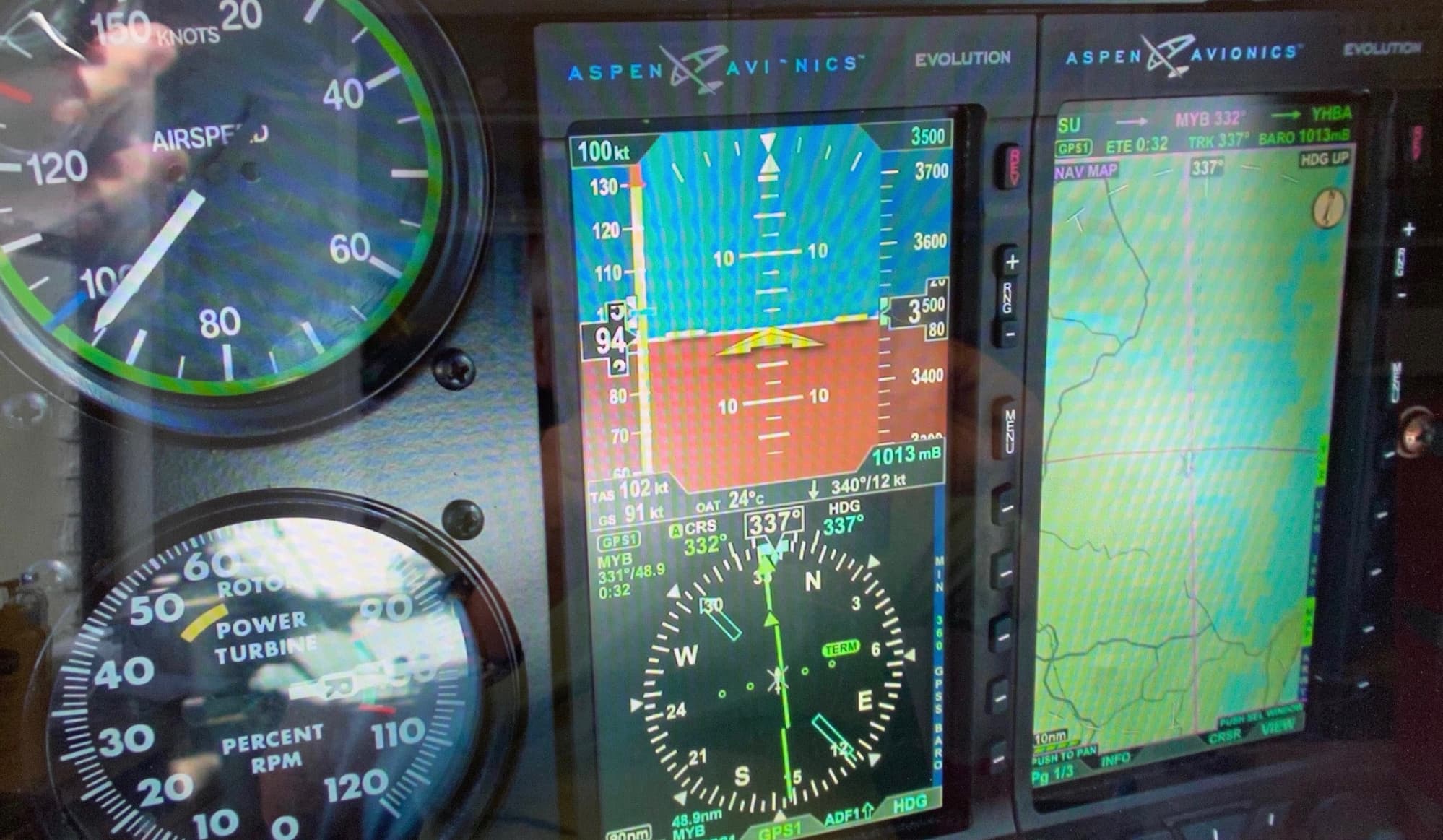
The B206 is easily certified, and with glass screens and autopilot they are a pleasure to fly inside the clouds.
Joined: Apr 2007
Posts: 382
Likes: 15
From: Out there
That's a familiar view Charlie. I've a few of hundred hours looking at that view myself, my logbook says a few with you sitting next to me!
Joined: Sep 2004
Aviation Qualifications: ATPL(H)
Posts: 2,372
Likes: 877
From: Canada
Old story: “Speedbird 458, Approach, radar shows you slightly left of the localizer.”
“Approach, Speedbird 458 , yes and my co-pilot is slightly right of the localizer.”
“Approach, Speedbird 458 , yes and my co-pilot is slightly right of the localizer.”
Joined: Nov 2007
Posts: 171
Likes: 0
From: Massachusetts
Spent thirty hours under the hood in a 44. It had all the basics, HSI, AI, TC, VOR, and a Garmin 430. We had two if them, but that was about fifteen years ago. Nowadays, the newer Cadets have a pretty nice glass setup...if your into playing the most boring video game eever made?
Flown a couple similarly equiped 22's, but I wouldn't want to try one while under the hood,...too shaky for my stomach.
Flown a couple similarly equiped 22's, but I wouldn't want to try one while under the hood,...too shaky for my stomach.
The other New England school with one typically used their Japanese instructors as their CFII because those guys were lightweight. For me, I couldn't fly with much less than 8 gallons of fuel, or I'd be out the front CG, and not much more that 15 or I'd be over gross. So, we'd fill it to 15, fly an hour, and need to refuel. Just enough fuel for one approach!
The other problem with the R22 instrument trainer was it was so lightweight, it could be difficult to fly a precise altitude under the hood in the summer, as flying over a parking lot would inevitably put you in a rising column of air with subsequent gains in altitude.
Finally, the things were so heavy that they were slow, meaning flying an approach was a prolonged affair ( it would only do about 85 knots in level flight ).
The R44, on the other hand, makes a great instrument trainer, having lots of weight capability and the blistering speed of a Cessna 172, meaning you can actually go someplace to fly approaches, without having to arrange for overnight accommodations.
As someone mentioned already, in the US you can file and fly IFR in a VFR only aircraft ( if you are appropriately rated ), you just can't go IMC. Most days that's not a problem, but can occasionally confuse ATC when you have to tell them "unable", if they give you a clearance that would take you into the clouds. 90% of the time after you patiently explain this to them, they tell you to cancel IFR and please go annoy some other facility.

Joined: Nov 2007
Posts: 171
Likes: 0
From: Massachusetts
But also, slogging through the sky at 110 knots into the inevitable headwind is great for adding hours to the "actual IFR" column of your logbook, but not so great for actually getting anywhere! ( ok, I've always flown on high skid gear, and have been reliably informed that with low skid gear the 206 can blaze through the overcast at an astounding 115 knots ).
I love many things about the 206, but it's not exactly a stellar IFR performer. But I reluctantly agree, it's fun to go in the clouds on a day when you don't have to be anywhere specific.

