


U.S. Marine Corps AH-1Z Zulu

Thread Starter


Joined: Jan 2009
Posts: 84
Likes: 10
From: Corpus Christi, Texas
 AH-1Z may get longer range missiles.

Thread Starter
Joined: Jan 2009
Posts: 84
Likes: 10
From: Corpus Christi, Texas
07 Dec. 2024, 24th anniversary of 1st flight of AH-1Z Zulu Cobra
Congratulations are in order to the men and women of the United States Marine Corps who fly and maintain the H-1 Upgrade Aircraft
AH-1Z's 07 December 2024, 24th anniversary of first flight, with 6687 days (18+ years) with zero fatal incidents.
1st fatal Zulu incident: 30 March 2019, Low Level - High Speed - NVG night training flight, Yuma Arizona.
2 instructor fatalities, CFIT, no mechanical failures found during investigation, aircraft type not grounded.
8766 days (24 years) with one fatal incident.
The eight events that I am aware of (public accessed data) are as follows:
1) 20 Jan. 2017, engine warning light, precautionary night landing, Ikei Okinawa, Japan, instrumentation.
2) 08 Jan. 2018, 4:45 P.M. local, T/R warning light, precautionary landing, Okinawa, Japan, wiring issue.
3) 23 Jan. 2018, 8:00 P.M. local, warning light, precautionary landing, Tonaki Is. Okinawa, Japan, instrumentation.
4) 01 Jun. 2018, low oil pressure warning light, precautionary landing, Fallbrook Airpark, N.E. San Diego, instrumentation.
5) 30 Mar. 2019, Low Altitude - High Speed NVG night training flight detailed above.
6) 06 Jan. 2022, Autorotation practice near Joint Base McGuire Dix Lakehurst, N.J. USA. Pilot not prepared to accommodate
rapid descent rate during practice auto. Significant landing gear damage. 2 occupants received unspecified injuries, no fatalities.
7) 13 Jan. 2022, precautionary landing at Tonaki Heliport Okinawa, Japan, due to an indication of a hydraulic fluid leak.
Flew out next day and returned to base. 2 occupants, no personnel injured.
8) 30 Aug. 2024, Japan. An AH-1Z of MCAS Futenma was on a training flight when a warning light lit up. The Viper made
a precautionary landing at Gyeongma airport, (located on an outer island about 40 kilometers west of Naha City), due to engine trouble.
There were no reported injuries and no reported damage. After maintenance with support Venom helicopter attending, the
the AH-1Z left Gyeongma airport @ 13:00 local next day.
Merry Christmas and Happy New Year OOH - RAH!
07 December 2024, Ernie Powell
Congrats to V-280 Valor Team!
Reference Post #29 for attached white paper information.
AH-1Z's 07 December 2024, 24th anniversary of first flight, with 6687 days (18+ years) with zero fatal incidents.
1st fatal Zulu incident: 30 March 2019, Low Level - High Speed - NVG night training flight, Yuma Arizona.
2 instructor fatalities, CFIT, no mechanical failures found during investigation, aircraft type not grounded.
8766 days (24 years) with one fatal incident.
The eight events that I am aware of (public accessed data) are as follows:
1) 20 Jan. 2017, engine warning light, precautionary night landing, Ikei Okinawa, Japan, instrumentation.
2) 08 Jan. 2018, 4:45 P.M. local, T/R warning light, precautionary landing, Okinawa, Japan, wiring issue.
3) 23 Jan. 2018, 8:00 P.M. local, warning light, precautionary landing, Tonaki Is. Okinawa, Japan, instrumentation.
4) 01 Jun. 2018, low oil pressure warning light, precautionary landing, Fallbrook Airpark, N.E. San Diego, instrumentation.
5) 30 Mar. 2019, Low Altitude - High Speed NVG night training flight detailed above.
6) 06 Jan. 2022, Autorotation practice near Joint Base McGuire Dix Lakehurst, N.J. USA. Pilot not prepared to accommodate
rapid descent rate during practice auto. Significant landing gear damage. 2 occupants received unspecified injuries, no fatalities.
7) 13 Jan. 2022, precautionary landing at Tonaki Heliport Okinawa, Japan, due to an indication of a hydraulic fluid leak.
Flew out next day and returned to base. 2 occupants, no personnel injured.
8) 30 Aug. 2024, Japan. An AH-1Z of MCAS Futenma was on a training flight when a warning light lit up. The Viper made
a precautionary landing at Gyeongma airport, (located on an outer island about 40 kilometers west of Naha City), due to engine trouble.
There were no reported injuries and no reported damage. After maintenance with support Venom helicopter attending, the
the AH-1Z left Gyeongma airport @ 13:00 local next day.
Merry Christmas and Happy New Year OOH - RAH!
07 December 2024, Ernie Powell
Congrats to V-280 Valor Team!
Reference Post #29 for attached white paper information.
Last edited by Otterotor; 8th December 2024 at 06:57. Reason: correct typo

Joined: Feb 2006
Posts: 3,534
Likes: 293
From: The Alps


Joined: Aug 2009
Aviation Qualifications: Military
Posts: 9,328
Likes: 2,175
From: Texas
Looks like they turned it down. I wonder if the 12 Blackhawks are UH-60V.
Defense News
Defense News
Originally Posted by Defense News
Slovakia buys Black Hawk helicopters, leaving Vipers up for grabs
Story by Jaroslaw Adamowski • 8h • 2 min read
WARSAW, Poland - After months of pondering, Slovakia has decided to purchase 12 UH-60 Black Hawk helicopters for its military, according to Slovak Deputy Prime Minister and Defence Minister Robert Kaliňák. The move could encourage Ukraine to intensify its lobbying in Washington as Kyiv seeks the 12 AH-1Z Viper helos that Bratislava rejected. The Black Hawk offer, comprising second-hand modernized copters, was submitted by Ace Aeronautics which is part of the Helicopter Alliance group, local daily Denník N reported. The group is controlled by Czech entrepreneur Jaroslav Strnad, the founder and former owner of local defense group Czechoslovak Group. The holding is currently owned by the founder's son Michal Strnad, and operates a number of production facilities in the Czech Republic and Slovakia.
The Black Hawks were recently offered to Bratislava for around €150 million ($158 million) without weapons, compared with the Vipers' revised price which exceeded €550 million, according to the minister. The Black Hawk is manufactured by Lockheed Martin's subsidiary Sikorsky, and the Viper is produced by Bell.
In July 2024, the U.S. State Department authorized a tentative foreign military sale of 12 Vipers to Slovakia for an estimated $600 million. This represented a sizable increase compared with the initial $340 million price tag pitched to the previous Slovak cabinet. That discount resulted from the fact that a deal with Pakistan, the initially envisioned recipient of the copters, had fallen through. Slovakia's previous government was offered discounted Vipers under the country's attack helicopter program, but the government that took over power in October 2023 has long hesitated over the purchase.
A senior industry official close to the talks told Defense News that Ukrainian decision-makers requested the Vipers from Washington some 20 months ago, and the latest decision is likely to further intensify Kyiv's lobbying activities to secure the aircraft.
"They'd have been flying them by now," the official said in a reference to the Ukrainian Armed Forces.
Story by Jaroslaw Adamowski • 8h • 2 min read
WARSAW, Poland - After months of pondering, Slovakia has decided to purchase 12 UH-60 Black Hawk helicopters for its military, according to Slovak Deputy Prime Minister and Defence Minister Robert Kaliňák. The move could encourage Ukraine to intensify its lobbying in Washington as Kyiv seeks the 12 AH-1Z Viper helos that Bratislava rejected. The Black Hawk offer, comprising second-hand modernized copters, was submitted by Ace Aeronautics which is part of the Helicopter Alliance group, local daily Denník N reported. The group is controlled by Czech entrepreneur Jaroslav Strnad, the founder and former owner of local defense group Czechoslovak Group. The holding is currently owned by the founder's son Michal Strnad, and operates a number of production facilities in the Czech Republic and Slovakia.
The Black Hawks were recently offered to Bratislava for around €150 million ($158 million) without weapons, compared with the Vipers' revised price which exceeded €550 million, according to the minister. The Black Hawk is manufactured by Lockheed Martin's subsidiary Sikorsky, and the Viper is produced by Bell.
In July 2024, the U.S. State Department authorized a tentative foreign military sale of 12 Vipers to Slovakia for an estimated $600 million. This represented a sizable increase compared with the initial $340 million price tag pitched to the previous Slovak cabinet. That discount resulted from the fact that a deal with Pakistan, the initially envisioned recipient of the copters, had fallen through. Slovakia's previous government was offered discounted Vipers under the country's attack helicopter program, but the government that took over power in October 2023 has long hesitated over the purchase.
A senior industry official close to the talks told Defense News that Ukrainian decision-makers requested the Vipers from Washington some 20 months ago, and the latest decision is likely to further intensify Kyiv's lobbying activities to secure the aircraft.
"They'd have been flying them by now," the official said in a reference to the Ukrainian Armed Forces.


Joined: Oct 2018
Posts: 34
Likes: 5
From: nj
South Korea was in talks to select either the AH-1 or the AH-64 a few years back, and took the Apache.
Australia was also considering the AH-1Z, but with the Big Green bird.
Same with Poland in 2022... but went w the 'pache. Too bad since the Czech air force has Vipers, you'd think Poland would want compatible copters that their geographic neighbor has. It would have been a large order, about 60 + airframes.
And Romania was supposed to get the Zulu, but that's still in talks.
Slovakia, or Slovenia, was in talks but nothing as of yet for used airframes.
Good thing is that Bell won the FLRAA which will be a windfall for the company. They would have won FARA as well but.... the successor to the AH-1Z, the Model 360 Invictus won't ever see production now.
At least Nigeria is about to buy some.
Australia was also considering the AH-1Z, but with the Big Green bird.
Same with Poland in 2022... but went w the 'pache. Too bad since the Czech air force has Vipers, you'd think Poland would want compatible copters that their geographic neighbor has. It would have been a large order, about 60 + airframes.
And Romania was supposed to get the Zulu, but that's still in talks.
Slovakia, or Slovenia, was in talks but nothing as of yet for used airframes.
Good thing is that Bell won the FLRAA which will be a windfall for the company. They would have won FARA as well but.... the successor to the AH-1Z, the Model 360 Invictus won't ever see production now.
At least Nigeria is about to buy some.
Thread Starter
Joined: Jan 2009
Posts: 84
Likes: 10
From: Corpus Christi, Texas
U.S. Marine Corps Aviation Plan January 2025
Page 17 of 40:
Organization The H-1 Program is a fully delivered program of record of 349 aircraft which includes ample pipeline and attrition aircraft to maintain high readiness while managing an aggressive modernization schedule. The H-1 has sustained an exemplary reputation within the Naval Aviation Enterprise (NAE), demonstrating an ability to maintain industry-leading Mission Capable Aircraft Required (MCAR) and Full Mission Capable Aircraft Required (FMCAR) performance an exceptional safety record, and sustained low cost per flight hour year over year. In short, an investment in H-1s is risk-worthy and will achieve a high return.
Ott
Feb 5 2025
Organization The H-1 Program is a fully delivered program of record of 349 aircraft which includes ample pipeline and attrition aircraft to maintain high readiness while managing an aggressive modernization schedule. The H-1 has sustained an exemplary reputation within the Naval Aviation Enterprise (NAE), demonstrating an ability to maintain industry-leading Mission Capable Aircraft Required (MCAR) and Full Mission Capable Aircraft Required (FMCAR) performance an exceptional safety record, and sustained low cost per flight hour year over year. In short, an investment in H-1s is risk-worthy and will achieve a high return.
Ott
Feb 5 2025

Joined: Feb 2025
Posts: 3
Likes: 1
From: Canada
Congrats
Amazing safety and reliability accomplishment!
And great overview of the design changes & improvements. Do you have a summary of the airframe changes that were made during the H-1 upgrade, particular the Troop transport?
Thanks!
And great overview of the design changes & improvements. Do you have a summary of the airframe changes that were made during the H-1 upgrade, particular the Troop transport?
Thanks!
Joined: Feb 2006
Posts: 3,534
Likes: 293
From: The Alps
South Korea was in talks to select either the AH-1 or the AH-64 a few years back, and took the Apache.
Australia was also considering the AH-1Z, but with the Big Green bird.
Same with Poland in 2022... but went w the 'pache. Too bad since the Czech air force has Vipers, you'd think Poland would want compatible copters that their geographic neighbor has. It would have been a large order, about 60 + airframes.
And Romania was supposed to get the Zulu, but that's still in talks.
Slovakia, or Slovenia, was in talks but nothing as of yet for used airframes.
Good thing is that Bell won the FLRAA which will be a windfall for the company. They would have won FARA as well but.... the successor to the AH-1Z, the Model 360 Invictus won't ever see production now.
At least Nigeria is about to buy some.
Australia was also considering the AH-1Z, but with the Big Green bird.
Same with Poland in 2022... but went w the 'pache. Too bad since the Czech air force has Vipers, you'd think Poland would want compatible copters that their geographic neighbor has. It would have been a large order, about 60 + airframes.
And Romania was supposed to get the Zulu, but that's still in talks.
Slovakia, or Slovenia, was in talks but nothing as of yet for used airframes.
Good thing is that Bell won the FLRAA which will be a windfall for the company. They would have won FARA as well but.... the successor to the AH-1Z, the Model 360 Invictus won't ever see production now.
At least Nigeria is about to buy some.
https://www.flightglobal.com/bell-dr.../29421.article
where Bell was going to have a stake in then IAR Brasov?
cheers
Thread Starter
Joined: Jan 2009
Posts: 84
Likes: 10
From: Corpus Christi, Texas
Precision Attack Strike Missile (PASM), to extend the range AH-1Z Viper
Air Helicopters AH-1
Updated Yesterday
196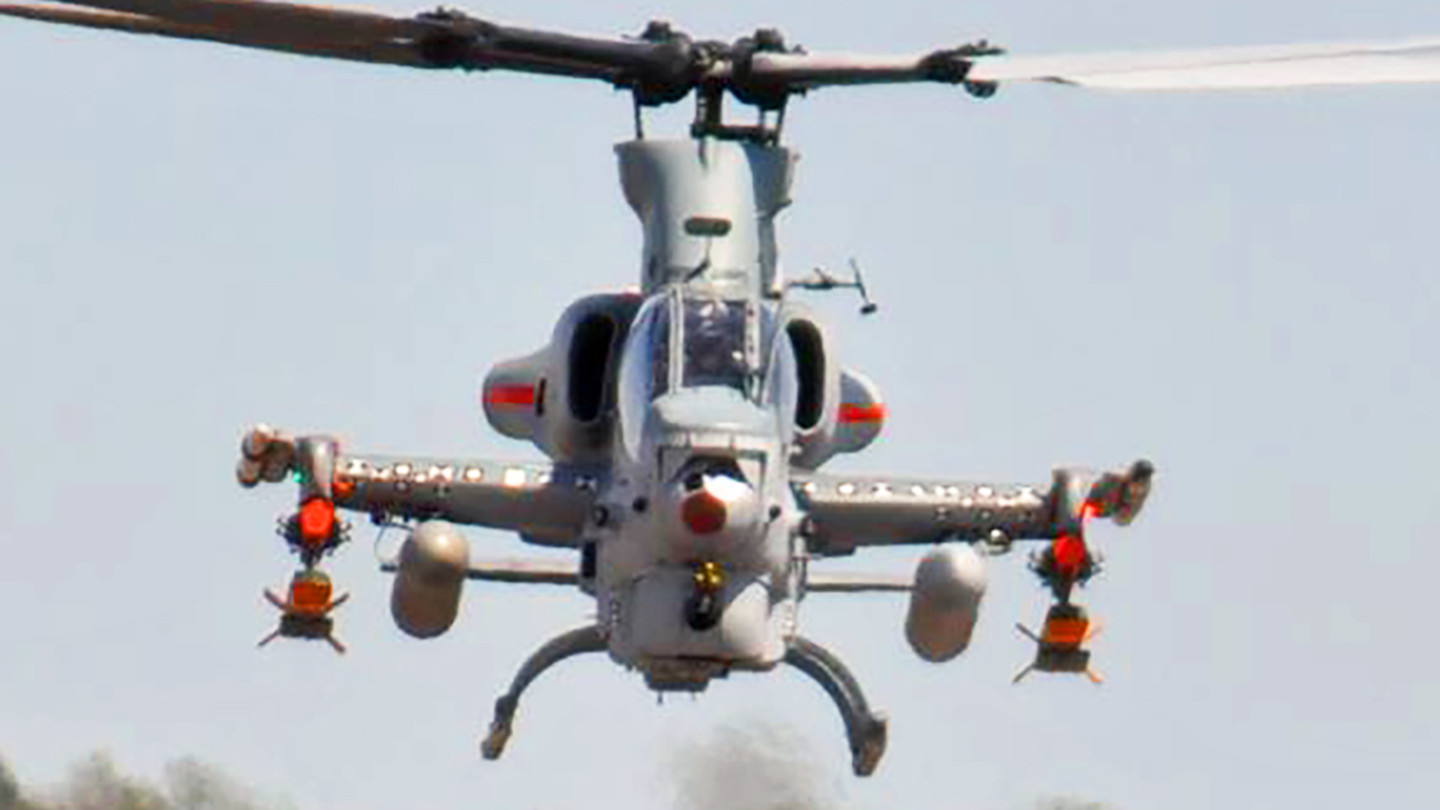 USNThe U.S. Navy has released a picture of a U.S. Marine Corps AH-1Z Viper attack helicopter with a previously unseen long-range munition armament. The Marines are known to be in the process of developing at least one new missile, the Precision Attack Strike Missile (PASM), to dramatically extend the range at which AH-1Zs can engage targets on land and at sea. The Corps sees this as key to ensuring the relevance of the helicopters in a future major conflict, especially one in the Pacific against China.
Naval Air Systems Command (NAVAIR) recently shared the image of the AH-1Z as part of an announcement about “the Marine Corps [having] successfully executed its first live employment test of a new Long Range Precision Fire (LRPF) capability” last November.
“The event was successfully executed at Yuma Proving Grounds (YPG) in Yuma, AZ where an AH-1Z conducted [a] single launch by way of a wireless application via Marine Air-Ground Tablet (MAGTAB),” according to NAVAIR’s release. “The November test at YPG exceeded the threshold requirements with regards to position, navigation, and timing.”
AH-1Z Attack Helicopter’s New Long Range Missile Seen For The First Time
The Marines are working to dramatically extend the kinetic reach of their AH-1Zs to help ensure their relevance in future high-end fights.Joseph TrevithickUpdated Yesterday
196
USNThe U.S. Navy has released a picture of a U.S. Marine Corps AH-1Z Viper attack helicopter with a previously unseen long-range munition armament. The Marines are known to be in the process of developing at least one new missile, the Precision Attack Strike Missile (PASM), to dramatically extend the range at which AH-1Zs can engage targets on land and at sea. The Corps sees this as key to ensuring the relevance of the helicopters in a future major conflict, especially one in the Pacific against China.Naval Air Systems Command (NAVAIR) recently shared the image of the AH-1Z as part of an announcement about “the Marine Corps [having] successfully executed its first live employment test of a new Long Range Precision Fire (LRPF) capability” last November.
“The event was successfully executed at Yuma Proving Grounds (YPG) in Yuma, AZ where an AH-1Z conducted [a] single launch by way of a wireless application via Marine Air-Ground Tablet (MAGTAB),” according to NAVAIR’s release. “The November test at YPG exceeded the threshold requirements with regards to position, navigation, and timing.”
Thread Starter
Joined: Jan 2009
Posts: 84
Likes: 10
From: Corpus Christi, Texas
Recent AH-1Z Incident
https://fox5sandiego.com/news/local-news/san-diego/mcas-miramar-pilot-dies-in-aviation-mishap-near-ca-az-border/
https://calcoasttimes.com/2025/10/19/marine-dies-in-helicopter-crash-during-training-in-imperial-county/ (A little more info ... no cause yet and Max Speed of AH-1Z is 255 mph vs. the kts listed)
Otter
https://calcoasttimes.com/2025/10/19/marine-dies-in-helicopter-crash-during-training-in-imperial-county/ (A little more info ... no cause yet and Max Speed of AH-1Z is 255 mph vs. the kts listed)
Otter
Last edited by Otterotor; 19th October 2025 at 19:53.
Thread Starter
Joined: Jan 2009
Posts: 84
Likes: 10
From: Corpus Christi, Texas
07 Dec. 2025, 25th anniversary of 1st flight of AH-1Z Zulu Cobra
Congratulations are in order to the men and women of the United States Marine Corps who fly and maintain the H-1 Upgrade Aircraft
AH-1Z's 07 December 2025, 25th anniversary of first flight, with 6687 days (18+ years) with zero fatal incidents.
1st fatal Zulu incident: 30 March 2019, Low Level - High Speed - NVG night training flight, Yuma Arizona.
2 instructor fatalities, CFIT, no mechanical failures found during investigation, aircraft type not grounded.
9040 days (24.8 years) with one fatal incident.
2nd fatal Zulu incident: 16 October 2025, 7:05 P.M. local, during a training mission. One fatality. The Zulu crashed in an unpopulated
desert area of Imperial Gables, CA, just west of the Ca - Az border, having originated out of Yuma Az proving grounds.
The first pilot was taken to Pioneers Memorial Hospital in Brawly, Ca where he was pronounced deceased. The second
pilot was transported to Desert Regional Medical Center in Palm Springs, Ca in stable condition officials said. The cause
of the incident is under investigation. Aircraft type not grounded.
9092 days (25 years) with two fatal incidents.
The nine events that I am aware of (public accessed data) are as follows:
1) 20 Jan. 2017, engine warning light, precautionary night landing, Ikei Okinawa, Japan, instrumentation.
2) 08 Jan. 2018, 4:45 P.M. local, T/R warning light, precautionary landing, Okinawa, Japan, wiring issue.
3) 23 Jan. 2018, 8:00 P.M. local, warning light, precautionary landing, Tonaki Is. Okinawa, Japan, instrumentation.
4) 01 Jun. 2018, low oil pressure warning light, precautionary landing, Fallbrook Airpark, N.E. San Diego, instrumentation.
5) 30 Mar. 2019, Low Altitude - High Speed NVG night training flight detailed above.
6) 06 Jan. 2022, Autorotation practice near Joint Base McGuire Dix Lakehurst, N.J. USA. Pilot not prepared to accommodate
rapid descent rate during practice auto. Significant landing gear damage. 2 occupants received unspecified injuries, no fatalities.
7) 13 Jan. 2022, precautionary landing at Tonaki Heliport Okinawa, Japan, due to an indication of a hydraulic fluid leak.
Flew out next day and returned to base. 2 occupants, no personnel injured.
8) 30 Aug. 2024, Japan. An AH-1Z of MCAS Futenma was on a training flight when a warning light lit up. The Viper made
a precautionary landing at Gyeongma airport, (located on an outer island about 40 kilometers west of Naha City), due to engine trouble.
There were no reported injuries and no reported damage. After maintenance with support Venom helicopter attending, the
the AH-1Z left Gyeongma airport @ 13:00 local next day.
9) 16 Oct. 2025, training flight detailed above.
Merry Christmas and Happy New Year OOH - RAH!
07 December 2025, Ernie Powell
Congrats to V-280 Valor Team!
Reference Post #29 for attached white paper information.
AH-1Z's 07 December 2025, 25th anniversary of first flight, with 6687 days (18+ years) with zero fatal incidents.
1st fatal Zulu incident: 30 March 2019, Low Level - High Speed - NVG night training flight, Yuma Arizona.
2 instructor fatalities, CFIT, no mechanical failures found during investigation, aircraft type not grounded.
9040 days (24.8 years) with one fatal incident.
2nd fatal Zulu incident: 16 October 2025, 7:05 P.M. local, during a training mission. One fatality. The Zulu crashed in an unpopulated
desert area of Imperial Gables, CA, just west of the Ca - Az border, having originated out of Yuma Az proving grounds.
The first pilot was taken to Pioneers Memorial Hospital in Brawly, Ca where he was pronounced deceased. The second
pilot was transported to Desert Regional Medical Center in Palm Springs, Ca in stable condition officials said. The cause
of the incident is under investigation. Aircraft type not grounded.
9092 days (25 years) with two fatal incidents.
The nine events that I am aware of (public accessed data) are as follows:
1) 20 Jan. 2017, engine warning light, precautionary night landing, Ikei Okinawa, Japan, instrumentation.
2) 08 Jan. 2018, 4:45 P.M. local, T/R warning light, precautionary landing, Okinawa, Japan, wiring issue.
3) 23 Jan. 2018, 8:00 P.M. local, warning light, precautionary landing, Tonaki Is. Okinawa, Japan, instrumentation.
4) 01 Jun. 2018, low oil pressure warning light, precautionary landing, Fallbrook Airpark, N.E. San Diego, instrumentation.
5) 30 Mar. 2019, Low Altitude - High Speed NVG night training flight detailed above.
6) 06 Jan. 2022, Autorotation practice near Joint Base McGuire Dix Lakehurst, N.J. USA. Pilot not prepared to accommodate
rapid descent rate during practice auto. Significant landing gear damage. 2 occupants received unspecified injuries, no fatalities.
7) 13 Jan. 2022, precautionary landing at Tonaki Heliport Okinawa, Japan, due to an indication of a hydraulic fluid leak.
Flew out next day and returned to base. 2 occupants, no personnel injured.
8) 30 Aug. 2024, Japan. An AH-1Z of MCAS Futenma was on a training flight when a warning light lit up. The Viper made
a precautionary landing at Gyeongma airport, (located on an outer island about 40 kilometers west of Naha City), due to engine trouble.
There were no reported injuries and no reported damage. After maintenance with support Venom helicopter attending, the
the AH-1Z left Gyeongma airport @ 13:00 local next day.
9) 16 Oct. 2025, training flight detailed above.
Merry Christmas and Happy New Year OOH - RAH!
07 December 2025, Ernie Powell
Congrats to V-280 Valor Team!
Reference Post #29 for attached white paper information.
Last edited by Otterotor; 8th December 2025 at 01:42. Reason: maintain consistant format
Thread Starter
Joined: Jan 2009
Posts: 84
Likes: 10
From: Corpus Christi, Texas
AH-1Z test fires sidewinder in Carribean
World Defence
Last updated: December 3, 2025
3 Min Read
Share As part of its ongoing operations in the Caribbean, the United States Marine Corps (USMC) has successfully conducted live-fire exercises using AH-1Z Viper attack helicopters integrated into Marine Medium Tiltrotor Squadron 263 (Reinforced), part of the 22nd Marine Expeditionary Unit. Held on November 25, 2025, the drills took place in Caribbean waters and aimed to enhance U.S. Southern Command (SOUTHCOM) capabilities in responding to regional threats while bolstering maritime security and counternarcotics efforts.
During the exercise, the AH-1Z Vipers launched AIM-9 Sidewinder air-to-air missiles at simulated targets, showcasing their precision and effectiveness in aerial combat situations. Images shared by the USMC revealed participation from the amphibious ship USS Fort Lauderdale (LPD-28), which conducted flare launches and flight-deck operations. These actions underscored the operational versatility of the Viper, which is designed to function in high-threat environments, equipped with a contemporary weaponry system that enables both offensive and defensive operations.
The deployment of the 22nd Marine Expeditionary Unit in the Caribbean aligns with directives from the U.S. Department of Defense, focusing on protecting national interests and combating illicit drug trafficking largely sourced from Venezuela and northern South America. Under this framework, U.S. forces maintain a consistent presence in the region through naval patrols, joint exercises, and operations with allied nations, emphasizing a strategic deterrence approach and the reinforcement of air and maritime control.
This round of exercises follows a major amphibious operation conducted in the Caribbean in September, which coincided with heightened tensions with Venezuela. The previous deployment featured tactical flights, landings, and combat simulations, supported by F-35B stealth fighters and CH-53K helicopters, marking a significant show of force towards Caracas, which has criticized the increasing militarization of the region by the U.S.
A U.S. Southern Command update posted on December 3, 2025, said an AH-1Z Viper attack helicopter from the 22nd Marine Expeditionary Unit fired an AIM-9 Sidewinder air-to-air missile as part of a controlled exercise while deployed to the Caribbean Sea in late November 2025. Officials described the event as a planned component of Operation Southern Spear. This ongoing maritime effort brings together U.S. naval and Marine aviation units to identify and interdict suspected drug trafficking routes across the region.
Follow Army Recognition on Google News at this link
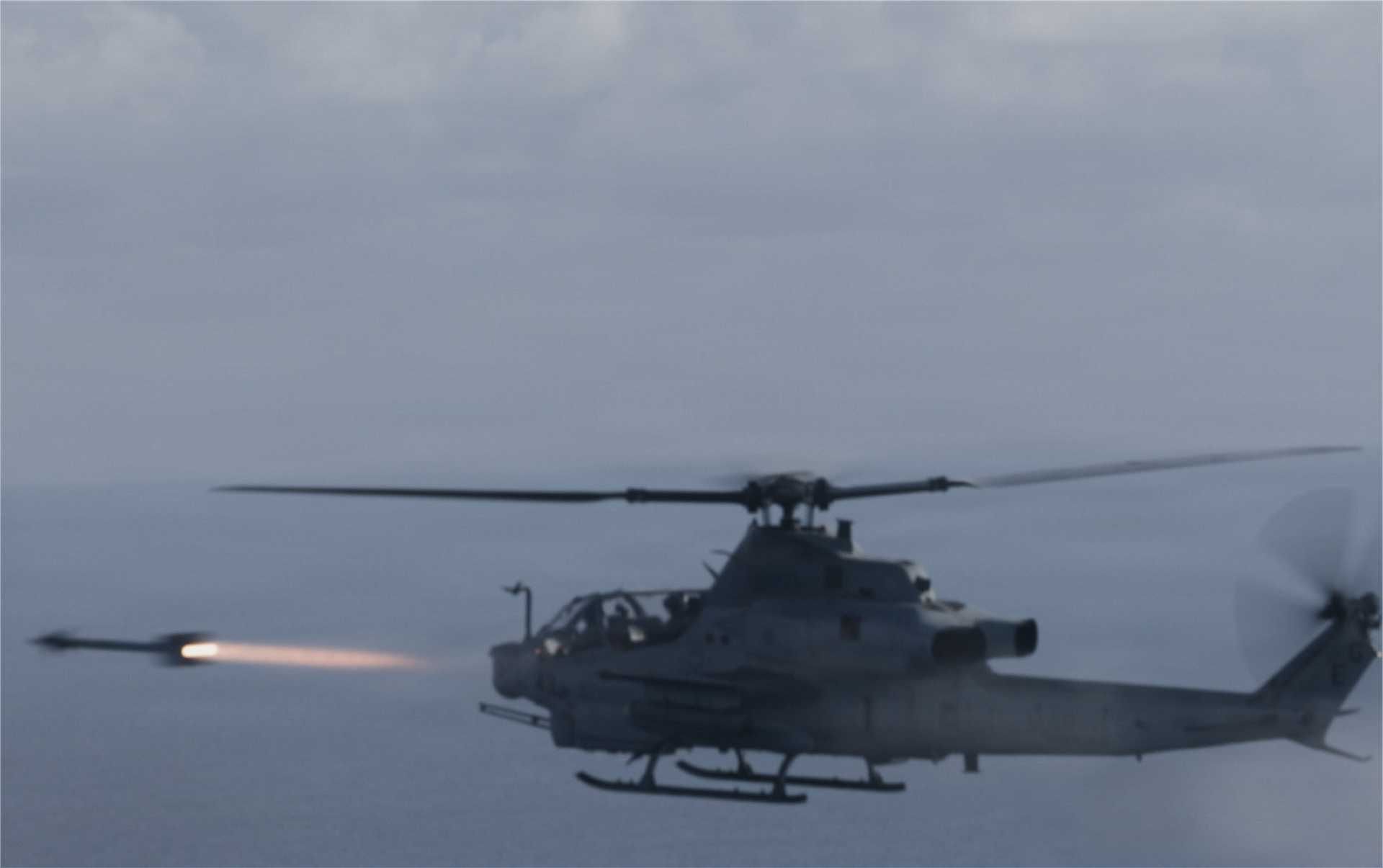 A U.S. Marine Corps AH-1Z Viper attack helicopter assigned to the 22nd Marine Expeditionary Unit conducts a live-fire launch of an AIM-9 Sidewinder missile during a training exercise over the Caribbean Sea on November 25, 2025, as part of Operation Southern Spear. (Picture source: U.S. Southern Command X account)
The live-fire exercise with AH-1Z Viper attack helicopter highlights a marked shift in how the U.S. Marine Corps is leveraging its rotary-wing assets under the United States' new counter-narcotics posture. The AH-1Z is typically associated with close air support, anti-armor, and maritime strike roles; however, its ability to carry air-to-air missiles such as the AIM-9 Sidewinder reflects a hybrid threat response doctrine that treats trafficker vessels not merely as soft or static targets, but as dynamic, often armed, and highly maneuverable threats operating in contested littoral environments.
The Bell AH-1Z Viper, also known as the "Zulu Cobra," is the most advanced attack helicopter in the U.S. Marine Corps arsenal. Designed for expeditionary warfare and fully marinized for shipboard operations, the AH-1Z features a four-blade composite rotor system for improved performance and reduced maintenance, as well as digital glass cockpits integrated with the latest sensors and avionics. Its modular weapons suite includes a 20mm three-barrel cannon, unguided Hydra 70 rockets, precision-guided AGM-114 Hellfire missiles, and, in specific mission sets, the AIM-9 Sidewinder missile. This is a weapon rarely associated with helicopter operations but highly effective in multi-domain threat environments.
The AIM-9 Sidewinder, in this context, serves as an advanced short-range infrared-guided missile primarily designed for air-to-air engagements. Originally developed for fixed-wing fighter jets, its integration onto the AH-1Z represents a tactical evolution, enabling rotary-wing aircraft to engage aerial threats such as hostile drones, low-flying aircraft, or fast-moving unconventional platforms. The missile’s agility, lock-on after launch capability, and proven combat reliability make it a versatile tool in missions where non-traditional threats could include armed smuggling aircraft or surveillance UAVs operating in contested airspace.
For the 22nd MEU, embarked aboard a U.S. Navy amphibious ready group, the AH-1Z provides critical overwatch and fire support during maritime interdiction and littoral combat operations. In the context of Operation Southern Spear, its integration into counter-narcotics missions reflects the MEU’s expanded role in gray-zone security challenges that blend law enforcement, military deterrence, and rapid-response capabilities. While the use of a Sidewinder in a simulated engagement may appear symbolic, it sends a potent message about escalation readiness and aerial dominance in the region.
U.S. Southern Command officials have not disclosed specific interception numbers or seizures linked to the operation, but the deployment of high-end aviation assets like the AH-1Z Viper indicates growing concern about the increasing sophistication of transnational criminal organizations operating through the Caribbean corridor. The Caribbean Sea, traditionally a zone of low-intensity maritime operations, is now under tighter surveillance and military enforcement, with aerial reconnaissance and interdiction capabilities being brought to the forefront of the campaign.
Sources within the Pentagon familiar with recent Joint Interagency Task Force South assessments say the move to deploy MEU aviation components into Southern Command's operational framework is part of a broader push to expand Department of Defense support to Homeland Security and DEA-led interdiction efforts. The use of the AH-1Z in such scenarios allows rapid kinetic response to hostile or non-compliant vessels, including those suspected of transporting narcotics or weapons. It also adds a credible layer of air superiority, enabling Marines to dominate the aerial battlespace over areas traditionally dominated by cartel-controlled routes and clandestine flights.
The 22nd MEU, based out of Camp Lejeune, North Carolina, is currently embarked with a full composite aviation combat element, including UH-1Y Venom utility helicopters and MV-22B Ospreys. The MEU’s deployment in support of Operation Southern Spear reinforces the growing integration between conventional U.S. Marine Corps expeditionary units and joint task force operations in regions historically dominated by Coast Guard and law enforcement presence.
Written by Alain Servaes – Chief Editor, Army Recognition Group
Alain Servaes is a former infantry non-commissioned officer and the founder of Army Recognition. With over 20 years in defense journalism, he provides expert analysis on military equipment, NATO operations, and the global defense industry.
AH-1Z Vipers Conduct Live-Fire Exercises in Caribbean Amid Rising Tensions with Venezuela
ByNews DeskLast updated: December 3, 2025
3 Min Read
Share
As part of its ongoing operations in the Caribbean, the United States Marine Corps (USMC) has successfully conducted live-fire exercises using AH-1Z Viper attack helicopters integrated into Marine Medium Tiltrotor Squadron 263 (Reinforced), part of the 22nd Marine Expeditionary Unit. Held on November 25, 2025, the drills took place in Caribbean waters and aimed to enhance U.S. Southern Command (SOUTHCOM) capabilities in responding to regional threats while bolstering maritime security and counternarcotics efforts.During the exercise, the AH-1Z Vipers launched AIM-9 Sidewinder air-to-air missiles at simulated targets, showcasing their precision and effectiveness in aerial combat situations. Images shared by the USMC revealed participation from the amphibious ship USS Fort Lauderdale (LPD-28), which conducted flare launches and flight-deck operations. These actions underscored the operational versatility of the Viper, which is designed to function in high-threat environments, equipped with a contemporary weaponry system that enables both offensive and defensive operations.
The deployment of the 22nd Marine Expeditionary Unit in the Caribbean aligns with directives from the U.S. Department of Defense, focusing on protecting national interests and combating illicit drug trafficking largely sourced from Venezuela and northern South America. Under this framework, U.S. forces maintain a consistent presence in the region through naval patrols, joint exercises, and operations with allied nations, emphasizing a strategic deterrence approach and the reinforcement of air and maritime control.
This round of exercises follows a major amphibious operation conducted in the Caribbean in September, which coincided with heightened tensions with Venezuela. The previous deployment featured tactical flights, landings, and combat simulations, supported by F-35B stealth fighters and CH-53K helicopters, marking a significant show of force towards Caracas, which has criticized the increasing militarization of the region by the U.S.
U.S. Marines AH-1Z Viper attack helicopter conducts live-fire of Sidewinder missile in Caribbean.
- 7 Dec, 2025 - 6:34
- Defense News Army 2025
A U.S. Southern Command update posted on December 3, 2025, said an AH-1Z Viper attack helicopter from the 22nd Marine Expeditionary Unit fired an AIM-9 Sidewinder air-to-air missile as part of a controlled exercise while deployed to the Caribbean Sea in late November 2025. Officials described the event as a planned component of Operation Southern Spear. This ongoing maritime effort brings together U.S. naval and Marine aviation units to identify and interdict suspected drug trafficking routes across the region.
Follow Army Recognition on Google News at this link
A U.S. Marine Corps AH-1Z Viper attack helicopter assigned to the 22nd Marine Expeditionary Unit conducts a live-fire launch of an AIM-9 Sidewinder missile during a training exercise over the Caribbean Sea on November 25, 2025, as part of Operation Southern Spear. (Picture source: U.S. Southern Command X account)The live-fire exercise with AH-1Z Viper attack helicopter highlights a marked shift in how the U.S. Marine Corps is leveraging its rotary-wing assets under the United States' new counter-narcotics posture. The AH-1Z is typically associated with close air support, anti-armor, and maritime strike roles; however, its ability to carry air-to-air missiles such as the AIM-9 Sidewinder reflects a hybrid threat response doctrine that treats trafficker vessels not merely as soft or static targets, but as dynamic, often armed, and highly maneuverable threats operating in contested littoral environments.
The Bell AH-1Z Viper, also known as the "Zulu Cobra," is the most advanced attack helicopter in the U.S. Marine Corps arsenal. Designed for expeditionary warfare and fully marinized for shipboard operations, the AH-1Z features a four-blade composite rotor system for improved performance and reduced maintenance, as well as digital glass cockpits integrated with the latest sensors and avionics. Its modular weapons suite includes a 20mm three-barrel cannon, unguided Hydra 70 rockets, precision-guided AGM-114 Hellfire missiles, and, in specific mission sets, the AIM-9 Sidewinder missile. This is a weapon rarely associated with helicopter operations but highly effective in multi-domain threat environments.
The AIM-9 Sidewinder, in this context, serves as an advanced short-range infrared-guided missile primarily designed for air-to-air engagements. Originally developed for fixed-wing fighter jets, its integration onto the AH-1Z represents a tactical evolution, enabling rotary-wing aircraft to engage aerial threats such as hostile drones, low-flying aircraft, or fast-moving unconventional platforms. The missile’s agility, lock-on after launch capability, and proven combat reliability make it a versatile tool in missions where non-traditional threats could include armed smuggling aircraft or surveillance UAVs operating in contested airspace.
For the 22nd MEU, embarked aboard a U.S. Navy amphibious ready group, the AH-1Z provides critical overwatch and fire support during maritime interdiction and littoral combat operations. In the context of Operation Southern Spear, its integration into counter-narcotics missions reflects the MEU’s expanded role in gray-zone security challenges that blend law enforcement, military deterrence, and rapid-response capabilities. While the use of a Sidewinder in a simulated engagement may appear symbolic, it sends a potent message about escalation readiness and aerial dominance in the region.
U.S. Southern Command officials have not disclosed specific interception numbers or seizures linked to the operation, but the deployment of high-end aviation assets like the AH-1Z Viper indicates growing concern about the increasing sophistication of transnational criminal organizations operating through the Caribbean corridor. The Caribbean Sea, traditionally a zone of low-intensity maritime operations, is now under tighter surveillance and military enforcement, with aerial reconnaissance and interdiction capabilities being brought to the forefront of the campaign.
Sources within the Pentagon familiar with recent Joint Interagency Task Force South assessments say the move to deploy MEU aviation components into Southern Command's operational framework is part of a broader push to expand Department of Defense support to Homeland Security and DEA-led interdiction efforts. The use of the AH-1Z in such scenarios allows rapid kinetic response to hostile or non-compliant vessels, including those suspected of transporting narcotics or weapons. It also adds a credible layer of air superiority, enabling Marines to dominate the aerial battlespace over areas traditionally dominated by cartel-controlled routes and clandestine flights.
The 22nd MEU, based out of Camp Lejeune, North Carolina, is currently embarked with a full composite aviation combat element, including UH-1Y Venom utility helicopters and MV-22B Ospreys. The MEU’s deployment in support of Operation Southern Spear reinforces the growing integration between conventional U.S. Marine Corps expeditionary units and joint task force operations in regions historically dominated by Coast Guard and law enforcement presence.
Written by Alain Servaes – Chief Editor, Army Recognition Group
Alain Servaes is a former infantry non-commissioned officer and the founder of Army Recognition. With over 20 years in defense journalism, he provides expert analysis on military equipment, NATO operations, and the global defense industry.
Joined: Aug 2009
Aviation Qualifications: Military
Posts: 9,328
Likes: 2,175
From: Texas
I remember (from a few decades ago) an old colleague of mine (was a MAWTS instructor among other things) telling me about some EVM work they'd done with Cobras to include test firing Sidewinders them on one of the ranges. IIRC the Whiskeys were IOC in the mid 1980's.
Nice to see the Viper carrying on that tradition. 
The Super Cobra was the first attack helicopter to qualify both the Sidewinder air-to-air missile and the Sidearm anti-radiation missile.
Both missiles can use the same LAU-7 rail launcher.
Sidearm has a range of more than 15km.
AIM-9L Sidewinder is an all-aspect, short-range, air-to-air missile produced by Lockheed Martin and Raytheon.
The missile has a range of 15km.
Both missiles can use the same LAU-7 rail launcher.
Sidearm has a range of more than 15km.
AIM-9L Sidewinder is an all-aspect, short-range, air-to-air missile produced by Lockheed Martin and Raytheon.
The missile has a range of 15km.
Thread Starter
Joined: Jan 2009
Posts: 84
Likes: 10
From: Corpus Christi, Texas
AH-1Z Viper Test Fires JAGM Missile Over Pacific 11 Dec 2025
U.S. Marines AH-1Z Viper Helicopter Tests JAGM Missile To Expand Maritime Strike Role In Pacific.
- 13 Dec, 2025 - 12:33
- Defense News Aerospace 2025
A U.S. Marine Corps AH-1Z Viper fired an AGM-179 Joint Air-to-Ground Missile during Exercise Steel Knight 25 over the Pacific on December 11, 2025. The event highlights how Marine attack aviation is adapting precision strike capabilities for maritime-focused, distributed operations.
On December 11, 2025, a U.S. Marine Corps AH-1Z Viper assigned to Marine Light Attack Helicopter Squadron (HMLA) 267 conducted a live-fire of the AGM-179 Joint Air-to-Ground Missile during Exercise Steel Knight 25 over the Pacific Ocean, as reported by DVIDS. The shot is more than a routine training event: it illustrates how Marine attack aviation is aligning its precision fires with distributed, maritime-focused operations. With sea denial and littoral maneuver back at the center of operational planning, integrating a multi-mode standoff missile onto a platform that routinely operates from austere locations directly supports the Navy–Marine Corps team’s push to respond forward, integrate across domains, and sustain Marine Air-Ground Task Force readiness.
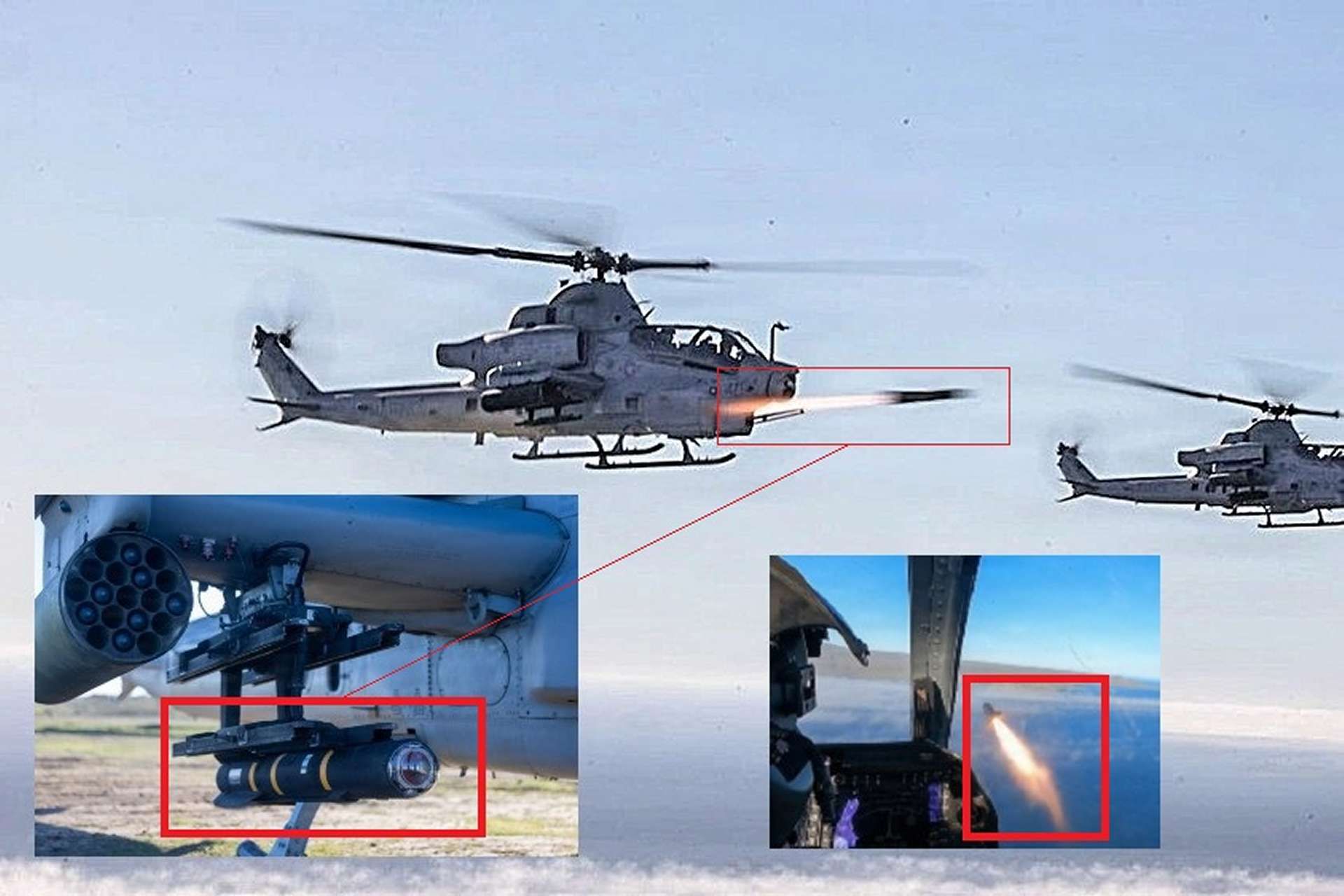
The AGM-179 Joint Air-to-Ground Missile (JAGM) is a precision strike weapon designed to provide aircrews with a single, versatile system capable of engaging a wide range of targets under varying conditions. By integrating semi-active laser guidance with millimeter-wave radar in one missile, JAGM can use laser designation when conditions permit or switch to radar guidance when visibility is reduced or continuous designation isn’t feasible.
For AH-1Z squadrons, this capability maintains the rapid response expected from light attack helicopters while enhancing engagement flexibility and reducing reliance on any single guidance mode.
Compared with earlier Hellfire-family options, JAGM’s practical advantage is its built-in flexibility. Laser-guided missiles remain highly effective but can be constrained by weather, smoke, dust, and the need to maintain designation through the terminal phase. Radar-guided variants mitigate some of those constraints but historically came as distinct configurations and employment assumptions. JAGM’s combined approach reduces that trade-off: the crew can adapt to conditions and target behavior without treating guidance as a pre-mission “either-or” decision. In operational terms, this can raise first-shot probability of effect, shorten decision cycles, and improve survivability by enabling employment from tactically favorable positions.
The most immediate operational implication for the AH-1Z is standoff precision that better supports maritime and littoral missions. A helicopter’s strength is responsiveness and the ability to reposition quickly; a missile that extends effective engagement options helps convert that mobility into credible, repeatable strike capacity. In sea denial scenarios, especially in complex coastal terrain where sensors, targets, and friendly units may be dispersed, this kind of precision fire supports small-unit maneuver, protects naval movements, and creates additional dilemmas for an adversary operating near the littorals.
Strategically, the live-fire underscores a broader shift toward distributed operations where aviation, surface forces, and naval elements are expected to operate as a network rather than as a single concentrated formation. A multi-mode precision missile on a widely deployed platform like the AH-1Z adds depth to that network by providing a scalable strike option that can be generated from forward arming and refueling points and integrated with joint targeting. It does not replace long-range maritime strike weapons, but it strengthens the “inside game” in contested seas by increasing the number of shooters, the variety of engagement angles, and the resilience of the force under disrupted conditions.
Steel Knight 25’s JAGM exercise underscores the Marine Corps’ commitment to turning modernization concepts into consistent, real-world training results. The live-fire demonstration from a forward-deployed attack helicopter in a maritime environment sent a clear signal: the measure of future readiness lies in how effectively Marine units can deliver precision fires from dispersed locations, maintain that operational pace, and synchronize their efforts within a broader naval campaign focused on sea denial, deterrence, and rapid crisis response.
On December 11, 2025, a U.S. Marine Corps AH-1Z Viper assigned to Marine Light Attack Helicopter Squadron (HMLA) 267 conducted a live-fire of the AGM-179 Joint Air-to-Ground Missile during Exercise Steel Knight 25 over the Pacific Ocean, as reported by DVIDS. The shot is more than a routine training event: it illustrates how Marine attack aviation is aligning its precision fires with distributed, maritime-focused operations. With sea denial and littoral maneuver back at the center of operational planning, integrating a multi-mode standoff missile onto a platform that routinely operates from austere locations directly supports the Navy–Marine Corps team’s push to respond forward, integrate across domains, and sustain Marine Air-Ground Task Force readiness.
The AGM-179 Joint Air-to-Ground Missile (JAGM) is a precision strike weapon designed to provide aircrews with a single, versatile system capable of engaging a wide range of targets under varying conditions. By integrating semi-active laser guidance with millimeter-wave radar in one missile, JAGM can use laser designation when conditions permit or switch to radar guidance when visibility is reduced or continuous designation isn’t feasible.
For AH-1Z squadrons, this capability maintains the rapid response expected from light attack helicopters while enhancing engagement flexibility and reducing reliance on any single guidance mode.
Compared with earlier Hellfire-family options, JAGM’s practical advantage is its built-in flexibility. Laser-guided missiles remain highly effective but can be constrained by weather, smoke, dust, and the need to maintain designation through the terminal phase. Radar-guided variants mitigate some of those constraints but historically came as distinct configurations and employment assumptions. JAGM’s combined approach reduces that trade-off: the crew can adapt to conditions and target behavior without treating guidance as a pre-mission “either-or” decision. In operational terms, this can raise first-shot probability of effect, shorten decision cycles, and improve survivability by enabling employment from tactically favorable positions.
The most immediate operational implication for the AH-1Z is standoff precision that better supports maritime and littoral missions. A helicopter’s strength is responsiveness and the ability to reposition quickly; a missile that extends effective engagement options helps convert that mobility into credible, repeatable strike capacity. In sea denial scenarios, especially in complex coastal terrain where sensors, targets, and friendly units may be dispersed, this kind of precision fire supports small-unit maneuver, protects naval movements, and creates additional dilemmas for an adversary operating near the littorals.
Strategically, the live-fire underscores a broader shift toward distributed operations where aviation, surface forces, and naval elements are expected to operate as a network rather than as a single concentrated formation. A multi-mode precision missile on a widely deployed platform like the AH-1Z adds depth to that network by providing a scalable strike option that can be generated from forward arming and refueling points and integrated with joint targeting. It does not replace long-range maritime strike weapons, but it strengthens the “inside game” in contested seas by increasing the number of shooters, the variety of engagement angles, and the resilience of the force under disrupted conditions.
Steel Knight 25’s JAGM exercise underscores the Marine Corps’ commitment to turning modernization concepts into consistent, real-world training results. The live-fire demonstration from a forward-deployed attack helicopter in a maritime environment sent a clear signal: the measure of future readiness lies in how effectively Marine units can deliver precision fires from dispersed locations, maintain that operational pace, and synchronize their efforts within a broader naval campaign focused on sea denial, deterrence, and rapid crisis response.
Teoman S. Nicanci holds degrees in Political Science, Comparative and International Politics, and International Relations and Diplomacy from leading Belgian universities, with research focused on Russian strategic behavior, defense technology, and modern warfare. He is a defense analyst at Army Recognition, specializing in the global defense industry, military armament, and emerging defense technologies.
Last edited by T28B; 14th December 2025 at 20:34. Reason: cleaned out some filler, added quote brackets
Thread Starter
Joined: Jan 2009
Posts: 84
Likes: 10
From: Corpus Christi, Texas
Airborne Drone Control From UH-1Y Venom And AH-1Z Viper
Marine Corps Demonstrates Airborne Drone Control From UH-1Y Venom And AH-1Z Viper Aircraft
A new battlefield concept shows helicopters extending their reach by launching and directing precision drones from the air.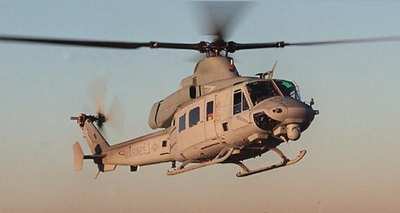
The U S Marine Corps has demonstrated a significant step in the evolution of rotary wing aviation by integrating first person view drone operations into its H-1 helicopter fleet during a recent exercise at Marine Corps Air Station Miramar, California.
Marine Light Attack Helicopter Squadron 169, Marine Air Group 39, 3rd Marine Aircraft Wing, and 3rd Light Armored Reconnaissance Battalion conducted the exercise using UH-1Y Venom and AH-1Z Viper helicopters as airborne control platforms for small unmanned systems. The demonstration highlighted a developing capability in which manned aircraft can launch, receive, and direct drone operations from altitude while remaining outside high threat engagement zones.
The exercise focused on the deployment of a Neros Archer first person view drone launched from ground forces before control was transferred to operators aboard a UH-1Y Venom in flight. From that airborne position, Marines were able to guide the drone toward its target while maintaining distance from simulated threats on the ground.
“The primary objective was to test the feasibility of a non kinetic drop and deployment of a first person view drone from a moving helicopter,” said Capt. Quinton Thornbury, a UH-1Y Venom pilot with (HMLA) 169. “From there, validate that we can control the maneuver of that drone from the back of the aircraft.”

The concept reflects a broader shift in modern aviation tactics as advanced air defense systems force aircraft to operate at greater distances from targets. By combining helicopter endurance and situational awareness with the precision and expendability of small drones, the Marine Corps is exploring new ways to maintain effectiveness while reducing risk to aircrews.
Sgt. Matthew Pocklington, a UH-1Y crew chief with (HMLA) 169, emphasized the operational value of the approach. “This tactic allows us to keep our air crews safe and sound while pushing the lethal edge of the battlefield out to where the enemy is,” he said.
The Neros Archer system was selected in part due to its existing use within Marine infantry units, allowing for faster integration and logistical efficiency. Its precision capabilities also support efforts to reduce collateral effects in complex operational environments.
The successful demonstration signals a continued evolution of the H-1 platform as it adapts to emerging battlefield requirements. By pairing manned aviation assets with unmanned systems, the Marine Corps is advancing toward a more distributed and flexible approach to aerial combat operations.
FMI: www.aviation.marines.mil
US Marines' UH-1Y Venom helicopter takes control of Neros Archer FPV drones in breakthrough test.
- 21 May, 2026 - 14:37
- Defense News Aerospace 2026
During the exercise, Marines launched the Archer from the ground before transferring control to operators aboard the UH-1Y, proving a distributed operational chain linking ground teams, airborne relay platforms, and forward FPV strike assets. The demonstration highlights how the Marine Corps is adapting to future conflicts by turning helicopters into airborne battle-management nodes that coordinate attritable drones for reconnaissance, precision strike, and maritime targeting while reducing exposure to MANPADS, SHORAD systems, and electronic warfare threats.
Related topic: US Marines evaluate American-made Neros Archer FPV drone to adopt successful tactics observed in Ukraine
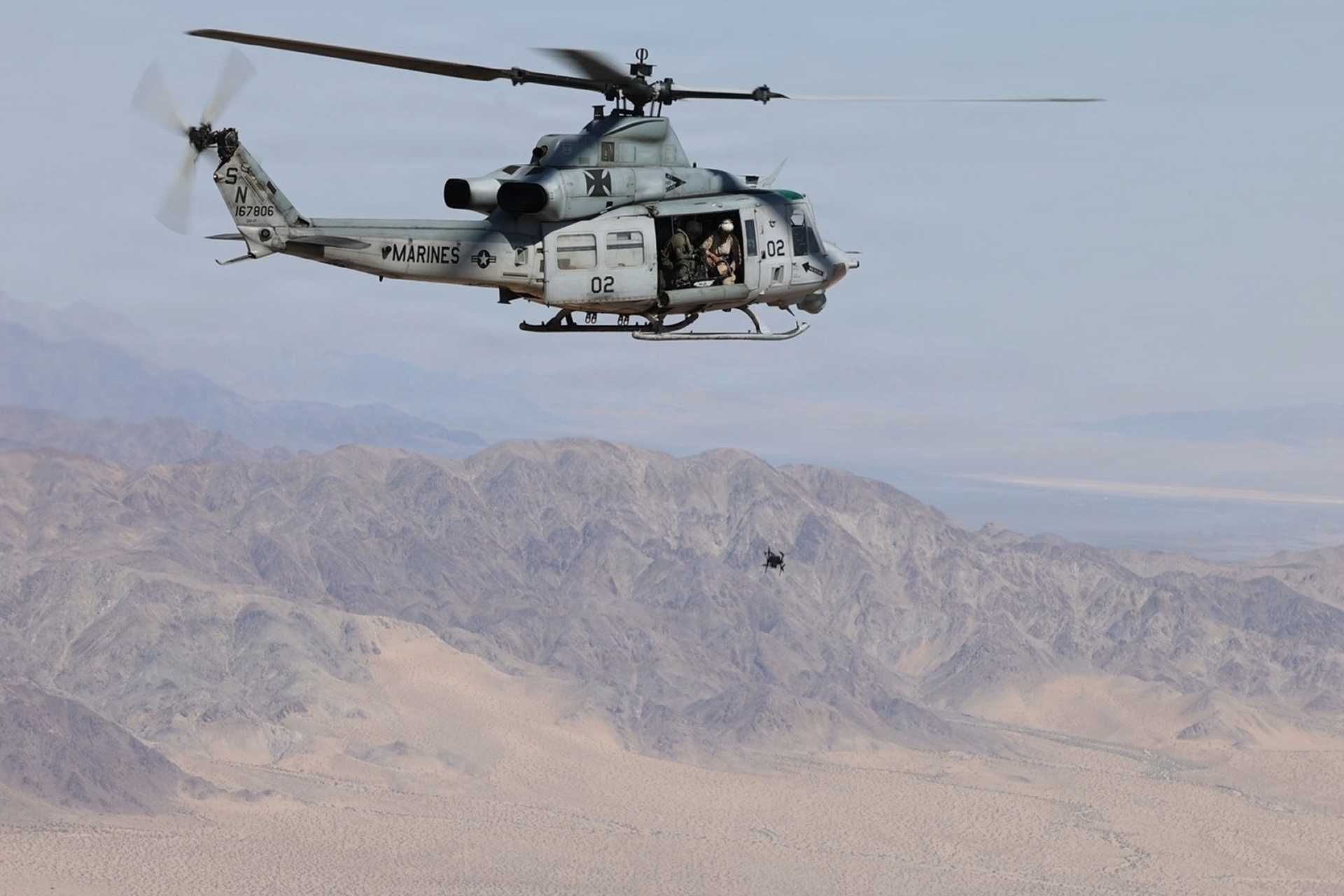 By using UH-1Y Venom helicopters as airborne control stations for Neros Archer FPV drones, the successful test allows Marines to launch and remotely guide low-cost attack drones toward targets while keeping helicopters and aircrews at safer distances from enemy air defenses. (Picture source: US Marines)
On May 14, 2026, the U.S. Marine Corps announced that the UH-1Y Venom helicopter from Marine Light Attack Helicopter Squadron 169 successfully operated as an airborne control platform for Neros Archer FPV drones during a live exercise conducted with the 3rd Light Armored Reconnaissance Battalion at Marine Corps Air Station Miramar, California. During the exercise, Marines launched a Neros Archer drone from a ground position before transferring command authority to operators aboard a UH-1Y orbiting miles away from the target area, effectively transforming the helicopter into a flying drone control station.
The test addressed the declining survivability of AH-1Z and UH-1Y helicopters against modern integrated air defense systems composed of MANPADS, SHORAD systems, radar-guided assets, passive detection networks, and electronic warfare capabilities. As part of a broader Force Design reform centered on stand-off strike capability, distributed operations, and manned-unmanned teaming, the demonstration shifted reconnaissance and strike functions toward expendable FPV drones costing close to $2,000 per unit. The operational architecture relied on three layers composed of a ground launch station, an airborne relay and control node, and a forward expendable strike or reconnaissance asset.
Marines from 3rd LAR launched the Neros Archer while the UH-1Y orbited at stand-off range before assuming command authority during flight. Capt. Quinton Thornbury identified the objective as validating non-kinetic drop and deployment alongside airborne FPV control from a moving aircraft. The Archer is optimized for low-altitude maneuvering, rapid assembly, direct operator input, and attritable employment concepts, carrying 2 kg payloads beyond 20 km at speeds reaching 145 km/h. Unlike Marine close air support operations in Iraq or Afghanistan, the H-1 helicopter never entered the target engagement area during the test.
The exercise, therefore, validated a new distributed operational chain linking ground launch teams, airborne communications nodes, and forward expendable strike drones. The test directly reflects changes in battlefield air defense density since the early 2000s. During operations in Iraq and Afghanistan, Marine helicopters generally operated in environments with limited radar coverage and fragmented short-range air defense (SHORAD) threats. Current peer-level environments instead include systems such as Pantsir-S1, Tor-M2, HQ-17A, FK-1000, and advanced man-portable air-defense systems (MANPADS), creating layered engagement zones extending beyond traditional helicopter attack distances.
Russian Ka-52 and Mi-28 operations in Ukraine demonstrated the vulnerability of traditional low-altitude penetration tactics, forcing a shift toward stand-off missile launches after sustained losses during early combat phases. Marine Corps planners appear to assess that AH-1Z and UH-1Y aircraft would face comparable survivability constraints against Chinese or Russian-style integrated air defense systems. The Neros Archer changes the exposure equation by transferring terminal risk from helicopters to expendable FPV systems. The Bell UH-1Y Venom was selected for the relay role because of its endurance, altitude, and networking capabilities.
Entering Marine Corps service in 2008 under the H-1 Upgrade Program, the utility helicopter shares approximately 84% component commonality with the AH-1Z Viper attack helicopter, including rotor systems, avionics, drivetrain components, and T700-GE-401C engines generating close to 1,800 shp each. The Venom reaches 164 knots, maintains endurance of approximately 3 hours and 18 minutes, and operates above 20,000 feet. Integrated systems include embedded GPS/INS navigation, multifunction displays, digital moving maps, UHF/VHF communications, and modem-based interoperability architecture.
Altitude significantly expands the radio horizon compared to ground FPV operators constrained by terrain masking or urban infrastructure. In practice, the UH-1Y functioned as an airborne communications extension node sustaining drone control beyond normal line-of-sight limitations. The experiment also carried implications for AH-1Z employment doctrine. The AH-1Z Viper reached its operational capability in 2010 and fully replaced the AH-1W Super Cobra by October 2020 by carrying AGM-114 Hellfire missiles, AGM-179 JAGM missiles, Hydra 70 and APKWS rockets, AIM-9 Sidewinders, and the 20 mm M197 cannon.
Traditional doctrine required Viper helicopters to approach close enough for direct target identification and engagement. The integration of the Neros Archer radically changes this tactic, as the drone performs forward reconnaissance and terminal strike functions while the helicopter itself remains outside the primary engagement envelope. Moreover, FPV drones possess significantly smaller radar, infrared, and visual signatures than helicopters operating at low altitude. Therefore, Marine aviation planners are increasingly examining concepts where AH-1Z crews coordinate reconnaissance drones, loitering munitions, electronic warfare drones, decoys, and maritime strike FPVs simultaneously.
The H-1 helicopter seems to be destined to increasingly function as an airborne battle management and drone coordination node rather than the sole strike asset. Cost-exchange calculations remain central to the Marine Corps' FPV procurement efforts. Current initiatives target unit prices below $4,000, and the Neros Archer remains close to $2,000 depending on payload and configuration. AGM-114 Hellfire missiles generally exceed $100,000 per round, while AGM-179 JAGM missiles are substantially more expensive. FPV drones, therefore, provide more favorable strike economics against enemy logistics vehicles, radar systems, observation posts, infantry positions, small boats, and lightly armored vehicles.
The Archer was also selected because it already existed within Marine sustainment channels, reducing integration costs and deployment timelines. In operational terms, helicopters coordinating multiple expendable FPV systems can generate broader precision strike coverage than helicopters relying exclusively on onboard guided munitions. This becomes increasingly important during prolonged conflicts where missile production and resupply rates constrain operational tempo, as demonstrated by Epic Fury. Electronic warfare remains the principal unresolved vulnerability affecting FPV operations.
Combat in Ukraine demonstrated that RF-controlled FPV drones are highly vulnerable to jamming, spoofing, signal interception, and geolocation targeting. Marine Corps units, as well as Neros, are already testing fiber-optic FPV systems because standard radio-frequency architectures become unreliable under sustained electronic attack. The airborne relay concept partially mitigates terrain-related signal obstruction while complicating enemy geolocation because the control node remains mobile rather than fixed on the ground.
Future architectures will likely require hardened datalinks, frequency agility, autonomous navigation backups, AI-assisted target tracking, and multi-path communications redundancy to remain operational inside contested electromagnetic environments. Without those protections, FPV drones risk severe degradation against peer-level electronic warfare capabilities integrated with radar and counter-drone networks. The Pacific theater represents one of the clearest operational applications for airborne FPV relay operations because island geography fragments communications coverage and line-of-sight control.
Marines involved in the exercise explicitly referenced maritime targeting linked to Expeditionary Advanced Base Operations doctrine, which depends on dispersed Marine formations operating across wide littoral areas. UH-1Y relay helicopters could support reconnaissance detachments, anti-ship missile teams, distributed infantry formations, and coastal surveillance units positioned on austere island locations. Neros Archer drones could also engage fast attack craft, logistics barges, unmanned surface vessels, amphibious landing elements, and coastal radar systems without exposing helicopters directly to defended littoral airspace. The portability and limited logistics footprint of FPV drones also simplify deployment across remote expeditionary positions compared to larger UAVs or heavy missile systems. Additionally, Neros internally developed Archer motors, radios, cameras, and PCB architecture rather than relying heavily on Chinese FPV components, improving domestic wartime sourcing resilience.
Written by Jérôme Brahy
Jérôme Brahy is a defense analyst and documentalist at Army Recognition. He specializes in naval modernization, aviation, drones, armored vehicles, and artillery, with a focus on strategic developments in the United States, China, Ukraine, Russia, Türkiye, and Belgium. His analyses go beyond the facts, providing context, identifying key actors, and explaining why defense news matters on a global scale.
Last edited by Otterotor; 25th May 2026 at 08:43. Reason: Additional Information
Thread Starter
Joined: Jan 2009
Posts: 84
Likes: 10
From: Corpus Christi, Texas
Possible production run for H-1 in Ukraine?
Interview with Bell Textron: Investing in the future in Ukraine
 by Yuri Svitlyk
02/06/2026
in ArticlesWe conducted an exclusive interview with Philip Anthony Fickes, Director of Bell Textron Ukraine, to discuss prospects for cooperation with Ukraine, potential production localization, the training of Ukrainian specialists, and the future of partnership between Bell Textron and Ukraine’s aviation industry.
The American company Bell Textron has taken a step that would have seemed unlikely just a few years ago: establishing a legal entity in Ukraine and openly discussing the possibility of industrial cooperation with the country’s aviation sector. Against the backdrop of the full-scale war, this decision appears not only as a business initiative, but also as a strategic investment in Ukraine’s future role within the European security architecture.
 Signing ceremony for the memorandum of understanding with Bell Textron. Source: me.gov.uaWe had the opportunity to speak with Philip Anthony Fickes, Director of Bell Textron Ukraine, about the company’s philosophy, the potential localization of H-1 helicopter production, cooperation with Ukrainian enterprises, technology transfer, and the prospects of Ukraine acquiring the AH-1Z Viper attack helicopter and the UH-1Y Venom utility helicopter.
Aeronaut: Bell Textron has a history of innovation spanning more than a century – from the first helicopters to modern tiltrotors. What is at the core of its philosophy today: engineering excellence, the pace of innovation, or the ability to adapt to new types of conflicts?
Bell Textron: Beginning with the X-1 aircraft that broke the sound barrier to the latest X-76 aircraft expanding vertical possibilities, excellence has been at the heart of Bell Textron for the past ninety years. We always strive for the most reliable and mission-capable products, the best safety, superior training and optimised maintenance. We believe that you must aspire to excellence in all aspects to be market leading, and that also includes innovation. We’re constantly innovating and evolving to fit market needs and to push boundaries – that’s why Bell is an ideal fit for so many different scenarios.
 Логотип компанії Bell TextronAN: How is the company adapting its engineering culture to the realities of modern warfare, where drones, digital systems, and rapid decision-making play a key role?
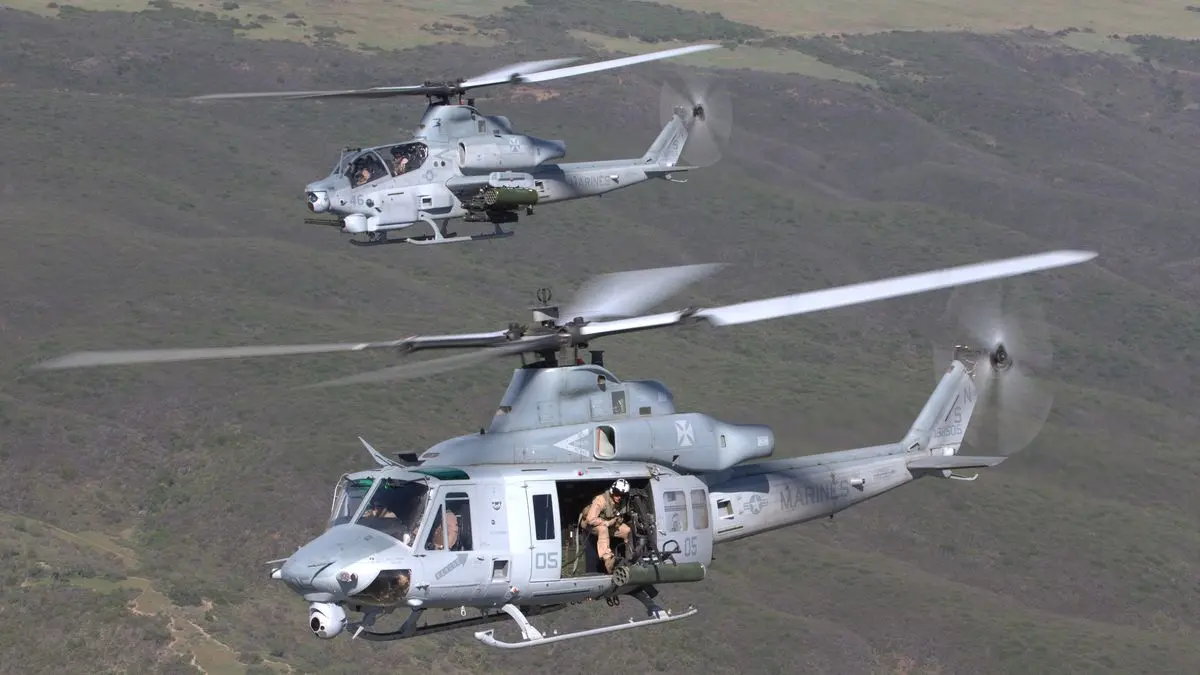
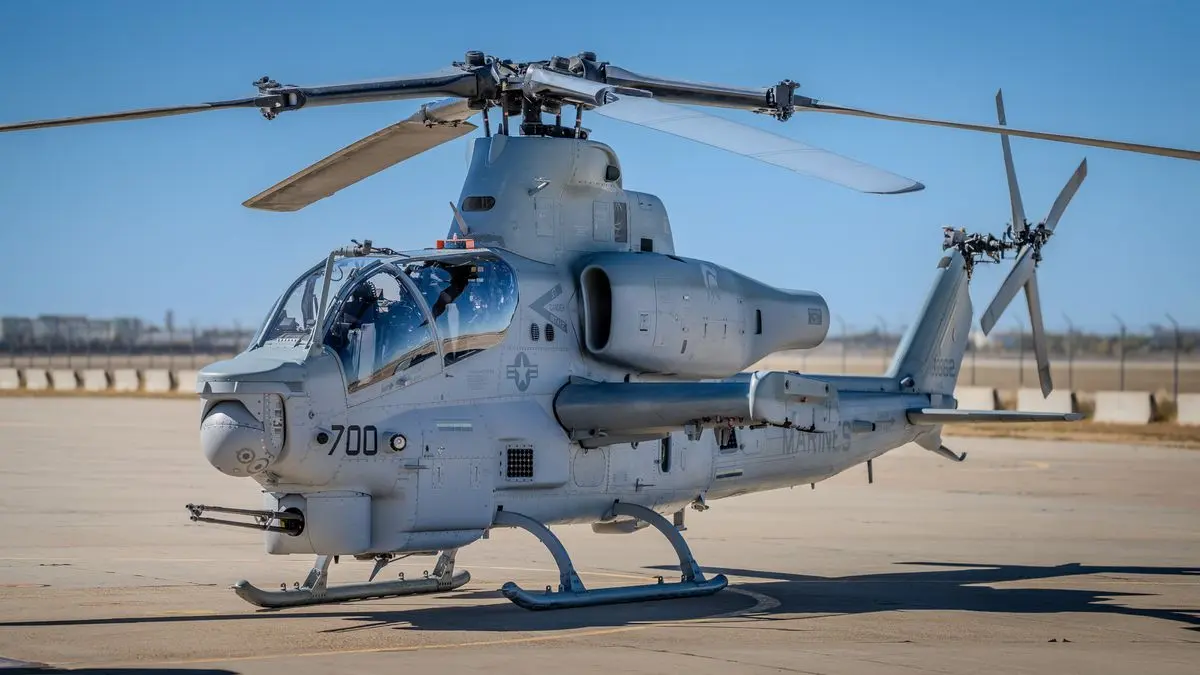
BT: The engineering culture remains the same as it has always been – adaptable, customer focused and mission centric. Modern warfare has changed some aspects of the way in which our platforms are used, and the missions they’re deployed in, but overall, we know we have the strongest duo platform in the AH-1Z Viper and UH-1Y Venom, and they’re proving to be more than a match for the new challenges of modern warzones. In fact, because of their greater firepower and 85%-part commonality – plus the ability to work in tandem so effectively – they’re becoming more vital as conflict zones are shifting.
AN: What principles guide Bell Textron’s selection of partners: technological capability, political reliability, or long-term synergy?
BT: Technological capability is vital of course, we strive to be the most innovative provider, but long-term synergy is crucial in choosing our partners. We offer the same support network, training programme and aftercare to every partner we work with.
AN: How has the company’s philosophy influenced the decision to enter Ukraine right now – amid a full-scale war? Is this a strategic risk, or a deliberate investment in Europe’s future defence cluster?
BT: Bell’s platforms are sold through the US Government’s Foreign Military Sales process and Direct Commercial Sales to the Government of Ukraine. Ukraine has expressed interest for Bell products to both it and the USG, and the LOI (letter of intent) signed with Ukraine is an exploration, identification and evaluation of areas for potential deep cooperation. Our recent entity announcement in Ukraine is a deliberate step in a long-term approach toward establishing possible industrial cooperation in country. The collaboration between Bell and Ukraine has a bright future, and we’re excited to see the partnership develop.
AN: How is Bell Textron integrating Ukraine into its global strategy: is Ukraine viewed as part of a new security and technological development framework, rather than merely as a market or manufacturing base?
BT: Bell Textron is evaluating Ukraine as a potential partner for H-1 production. Looking beyond the conflict, the country could be a key assembly point for H-1 aircraft, including maintenance and repair in Europe. Ukraine isn’t just a potential new market, it could be an initiative to further elevate Bell Textron globally, and this partnership will hopefully provide the foundation of an innovative, long-term collaboration between the two parties.
AN: What were the main reasons that prompted Bell Textron to sign a memorandum of understanding at this time and begin preparations to establish manufacturing facilities in Ukraine?
BT: The timing of the LOI came about through interest from Ukraine. Ultimately, we respond to the requests to discuss procurement of our products, but we could see this was an opportunity that would be mutually beneficial for both parties with scope beyond a straightforward transaction. We are currently in the process of exploring what that future might look like. There’s a long way to go, but things are moving in the right direction.
AN: A memorandum of understanding is a non-binding framework document. What specific criteria and timelines determine the transition from the signing of the MOU to the actual start of construction of production facilities in Ukraine?
BT: There are always a lot of moving parts involved in agreements of this nature, and we can’t provide a specific timeline or criteria for success right now. At this stage, the exploration is ongoing in terms of what the industrial participation might look like, but the recent filing of the Bell Textron Ukraine subsidiary in-country – which is only a legal entity at this stage – is a clear indicator of how seriously Bell Textron is taking this opportunity, and how dedicated we are to the region.
AN: How does Bell Textron assess the risks of locating manufacturing facilities in a country where active hostilities are ongoing and industrial infrastructure is regularly targeted by missile strikes – and what investment protection mechanisms are you considering?
BT: We follow every step in a foreign military sale (FMS) with US government oversight, to ensure as many risks are mitigated as possible, protocols are followed, and protections are taken. Right now, we’re too early in the process to be able to look at specific risks associated with physical manufacturing and maintenance facilities, but when that time comes, every consideration will be given to risk management and mitigation. Safety is always our priority, as well as longevity and process management, and it’s no different when it comes to discussions like this.
AN: What percentage of components do you plan to manufacture directly in Ukraine, and what will still be imported? Do you have a specific target localization rate for the first few years?
BT: It is too early to be specific, but we see an ambitious future in Ukraine where Ukraine could become an integral part of the future of the H-1 platforms.
AN: You mentioned the possibility of establishing a joint venture with Ukrainian partners. What criteria will be used to select them, and are there already specific candidates among Ukrainian aircraft manufacturers – for example, Motor Sich or Antonov?
BT: While it is too early to specify which companies we are considering, Bell is already having early conversations with Ukraine companies to learn their capabilities and to explain Bell’s criteria and processes. If the opportunity does present itself, and the company qualifies, then we will evaluate a direct relationship.
AN: Technology transfer is always a sensitive issue for any defence contractor. Where do you draw the line between what you are willing to transfer to Ukraine and what remains the exclusive property of Bell Textron?
BT: First, Bell will comply with all US export controls and policy decisions related to the transfer of technical data and services to Ukraine. Given Bell’s intentions in Ukraine, we are closely coordinating with US government agencies to understand these controls as early in the process as possible. Secondly, I think the question isn’t one of drawing technology transfer lines today so much as determining where and when Ukraine can be a partner and then scaling their participation over the life of a program.
AN: Ukraine has officially expressed interest in acquiring AH-1Z Viper attack helicopters since 2022. Is localizing production a step toward Ukraine finally obtaining this aircraft, and is this being discussed under the signed memorandum?
BT: The LOI signed to explore potential industrial participation is aligned with Ukraine acquiring AH-1Z Viper and UH-1Y Venom platforms through a Foreign Military Sale with the US Government. Bell sees our long-term industrial collaboration with Ukraine as a long-term partnership between both parties – beyond just a single acquisition of platforms.

AN: The program provides for the training of Ukrainian engineers in the United States. How many specialists do you plan to train in the first phase, and how quickly will they be able to independently maintain the production cycle without American mentors?
BT: For Military Sales, Bell will follow the parameters and requirements established as part of an FMS case between the US and Ukraine governments. As with every product transfer, we always provide the most in-depth and up-to-date training possible on all platforms. A possible solution might involve engineers invited to work with our specialist Bell Textron engineering teams to make sure they are fully proficient on the AH-1Z Viper and UH-1Y Venom.
The H-1 models have a unique benefit to support and maintenance; the AH-1Z and UH-1Y possess an 85% commonality across their parts to include maintenance procedures, support equipment, and training. This means that engineers can become experts in the field on two aircraft at the same time, only having to learn a very small differentiating section between the two platforms. It means that maintenance is swift, you don’t need a dedicated team for each aircraft, and the part commonality allows for maintenance costs to be lower as you’re essentially catering for two models within a single supply chain.
AN: Other manufacturers are also present on the Ukrainian market – Airbus, Leonardo, as well as Polish and Turkish partners. Why should Ukraine choose Bell Textron as its long-term strategic aviation partner?
BT: The many benefits of the AH-1Z and UH-1Y – their shared support, maintenance, and training structure and unique ability to work in tandem – make them mission ready in a wide array of scenarios, giving them benefits far beyond their counterparts. Modern and survivable attack and utility capabilities supported through a largely single supply, training, MR&O (maintenance, repair, and overhaul) is unique only to the Viper and Venom and presents cost savings and operational flexibility benefits to its owners.
Couple these cost savings and operational flexibility benefits with Bell’s long- term investment and partnership goals for Ukraine, the LOI between Bell Textron and Ukraine is not just exploring a standard platform purchase – it’s looking toward future long-term industrial partnership.
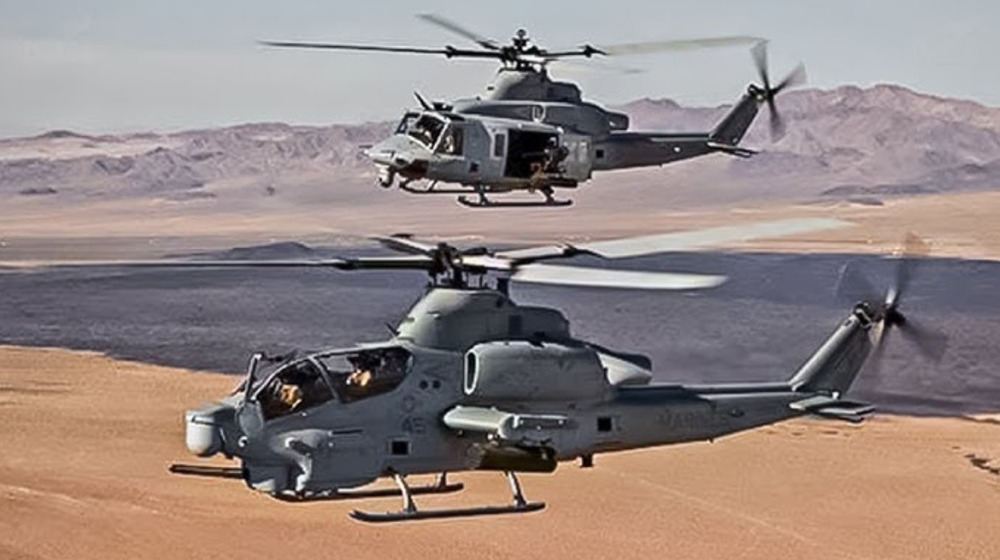
AN: Does your plan for Ukraine focus exclusively on military production, or does it also include civilian models – such as the Bell 505 for medical evacuation, the agricultural sector, or post-war reconstruction infrastructure projects?
BT: Bell offers solutions to meet the growing need of versatile public safety and defense requirements, If asked, we can offer Special Missions aircraft leveraging proven platforms such as the 505, 407M. 412M, and 429M.
AN: What is a realistic timeline: when might the first helicopter assembled in Ukraine bearing the Bell logo take off from a Ukrainian airfield – and what is the key condition for this to happen?
BT: As an AH-1Z and UH-1Y procurement would be through an FMS agreement between USG and Ukraine, we recommend directing this specific question to either the US or Ukraine governments. Bell will work with the USG and Ukraine to develop a timeline that meet the requirements of the FMS agreement.
The interview with Philip Anthony Fickes demonstrates that Bell Textron views Ukraine not as a temporary customer or another export destination, but as a potential long-term partner. Although the specific parameters of future cooperation are still under discussion, the establishment of Bell Textron Ukraine and the ongoing dialogue with Ukrainian industry indicate that the American company is approaching this partnership with serious strategic intent.
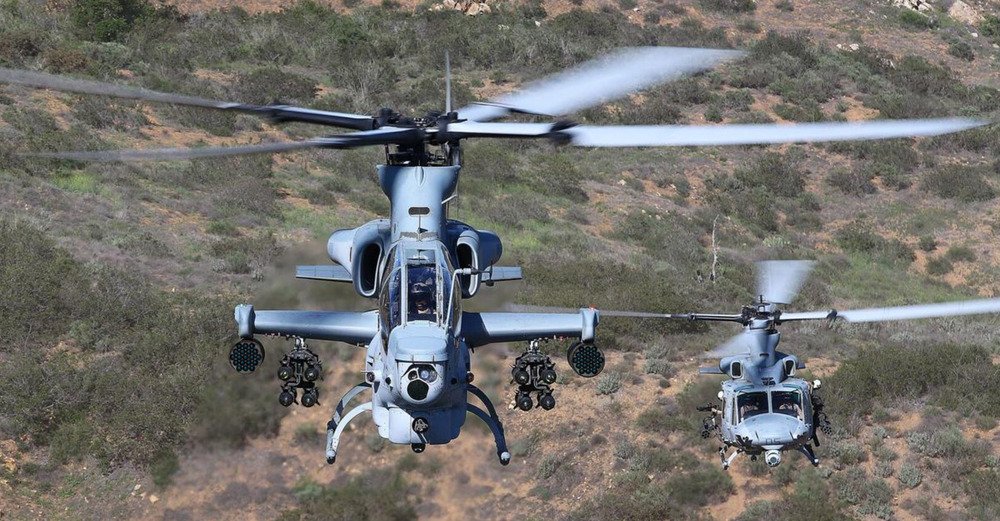
If these plans are ultimately implemented, Ukraine could gain not only new combat platforms such as the AH-1Z Viper and UH-1Y Venom, but also an opportunity to become one of Europe’s key hubs for the production, maintenance, and modernization of Bell Textron helicopter systems. For Ukraine’s aviation industry, this could become one of the largest international industrial partnerships of the past several decades.
