A U.S. Marine Corps AH-1Z Viper fired an AGM-179 Joint Air-to-Ground Missile during Exercise Steel Knight 25 over the Pacific on December 11, 2025. The event highlights how Marine attack aviation is adapting precision strike capabilities for maritime-focused, distributed operations.
On December 11, 2025, a U.S. Marine Corps
AH-1Z Viper assigned to Marine Light Attack Helicopter Squadron (HMLA) 267 conducted a live-fire of the AGM-179 Joint Air-to-Ground Missile during Exercise Steel Knight 25 over the Pacific Ocean, as
reported by DVIDS. The shot is more than a routine training event: it illustrates how Marine attack aviation is aligning its precision fires with distributed, maritime-focused operations. With sea denial and littoral maneuver back at the center of operational planning, integrating a multi-mode standoff missile onto a platform that routinely operates from austere locations directly supports the Navy–Marine Corps team’s push to respond forward, integrate across domains, and sustain Marine Air-Ground Task Force readiness.
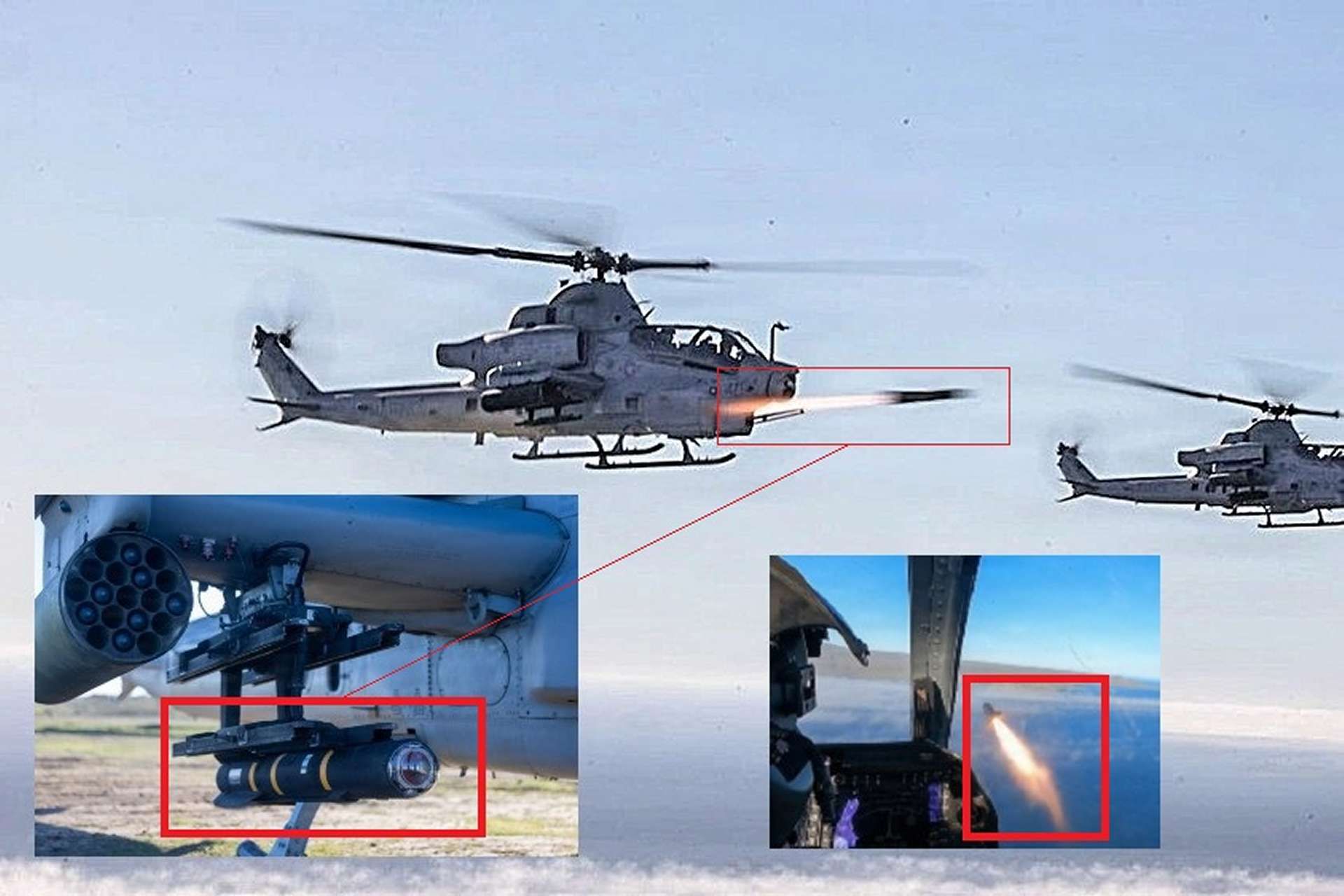
The AGM-179 Joint Air-to-Ground Missile (JAGM) is a precision strike weapon designed to provide aircrews with a single, versatile system capable of engaging a wide range of targets under varying conditions. By integrating semi-active laser guidance with millimeter-wave radar in one missile, JAGM can use laser designation when conditions permit or switch to radar guidance when visibility is reduced or continuous designation isn’t feasible.
For AH-1Z squadrons, this capability maintains the rapid response expected from light attack helicopters while enhancing engagement flexibility and reducing reliance on any single guidance mode.
Compared with earlier Hellfire-family options, JAGM’s practical advantage is its built-in flexibility. Laser-guided missiles remain highly effective but can be constrained by weather, smoke, dust, and the need to maintain designation through the terminal phase. Radar-guided variants mitigate some of those constraints but historically came as distinct configurations and employment assumptions. JAGM’s combined approach reduces that trade-off: the crew can adapt to conditions and target behavior without treating guidance as a pre-mission “either-or” decision. In operational terms, this can raise first-shot probability of effect, shorten decision cycles, and improve survivability by enabling employment from tactically favorable positions.
The most immediate operational implication for the AH-1Z is standoff precision that better supports maritime and littoral missions. A helicopter’s strength is responsiveness and the ability to reposition quickly; a missile that extends effective engagement options helps convert that mobility into credible, repeatable strike capacity. In sea denial scenarios, especially in complex coastal terrain where sensors, targets, and friendly units may be dispersed, this kind of precision fire supports small-unit maneuver, protects naval movements, and creates additional dilemmas for an adversary operating near the littorals.
Strategically, the live-fire underscores a broader shift toward distributed operations where aviation, surface forces, and naval elements are expected to operate as a network rather than as a single concentrated formation. A multi-mode precision missile on a widely deployed platform like the AH-1Z adds depth to that network by providing a scalable strike option that can be generated from forward arming and refueling points and integrated with joint targeting. It does not replace long-range maritime strike weapons, but it strengthens the “inside game” in contested seas by increasing the number of shooters, the variety of engagement angles, and the resilience of the force under disrupted conditions.
Steel Knight 25’s JAGM exercise underscores the Marine Corps’ commitment to turning modernization concepts into consistent, real-world training results. The live-fire demonstration from a forward-deployed attack helicopter in a maritime environment sent a clear signal: the measure of future readiness lies in how effectively Marine units can deliver precision fires from dispersed locations, maintain that operational pace, and synchronize their efforts within a broader naval campaign focused on sea denial, deterrence, and rapid crisis response.