


Bell 212



Joined: Dec 2004
Posts: 178
Likes: 5
From: Great White North
Agree Shawn,
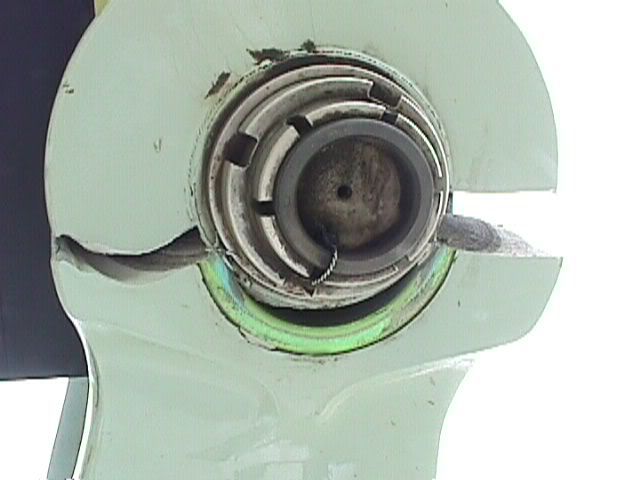
From the 'beach' marks on that fracture surface, that crack had been growing for some time and somebody was not looking
Regardless SM, I guess from your picture the aircraft landed OK. Would this qualify as a "redundant component"
From the 'beach' marks on that fracture surface, that crack had been growing for some time and somebody was not looking
Regardless SM, I guess from your picture the aircraft landed OK. Would this qualify as a "redundant component"
Joined: May 2010
Posts: 395
Likes: 0
From: New Zealand
shows how good they really are if it gets back while looking like that.
I don't give a rats what it looks like after i'v shut down, means i've walked away from it alive, and any bit can be replaced....
i bet it had a bit of a shake.
I don't give a rats what it looks like after i'v shut down, means i've walked away from it alive, and any bit can be replaced....
i bet it had a bit of a shake.


Joined: Oct 1999
Aviation Qualifications: ATPL
Posts: 7,373
Likes: 931
From: Den Haag
From the 'beach' marks on that fracture surface, that crack had been growing for some time and somebody was not looking
I guess from your picture the aircraft landed OK

Joined: Sep 2008
Posts: 285
Likes: 0
From: Croydon
The FAA finally managed an AD 3 years later that mandated a regular ultrasonic inspection on the bore of the grip:-
Bell Helicopter Textron, Inc. Model 204B, 205A,
I believe the PH accident was the third time a failure had occured.
Its amazing how readily some people blame their own QA or maintenance inspectors without mastering the subject first.
Bell Helicopter Textron, Inc. Model 204B, 205A,
This amendment is prompted by the discovery of 13 grips that cracked in the lower tang, three of which cracked in flight. The actions specified by this AD are intended to prevent failure of a grip, separation of a main rotor blade, and subsequent loss of control of the helicopter.
Its amazing how readily some people blame their own QA or maintenance inspectors without mastering the subject first.
Joined: Jun 2006
Posts: 27
Likes: 0
From: Indonesia
"Old" helicopters
A third Emergency AD has just been released (FAA AD 2010-25-51) together with ASB212-10-142, related to the inboard fittings in the 212 MR hub.
The directives mention a previous accident with fatalities which is related to the fitting failures. Anyone have any information about that accident? Google comes up blank.
For those who think this is "age" related, the part has a retirement life and changed out at hub overhaul.
The OEM has to constantly use different vendors to make their new parts, as the original vendor may be too busy, gone broke or no longer handling this type of work.
This incident appears to be from a recently manufactured batch of fittings. The risk of a defect being introduced during manufacture could happen to any OEM, and on any model, and has nothing to do with how long that model has been around.
Doc
The directives mention a previous accident with fatalities which is related to the fitting failures. Anyone have any information about that accident? Google comes up blank.
For those who think this is "age" related, the part has a retirement life and changed out at hub overhaul.
The OEM has to constantly use different vendors to make their new parts, as the original vendor may be too busy, gone broke or no longer handling this type of work.
This incident appears to be from a recently manufactured batch of fittings. The risk of a defect being introduced during manufacture could happen to any OEM, and on any model, and has nothing to do with how long that model has been around.
Doc
Joined: Dec 2000
Aviation Qualifications: Non-Aircrew
Posts: 724
Likes: 41
From: Arlington, Tx. US
Shellmanagement
This report indicates that the Puma/Super Puma should be disallowed.
The SultanAir Accidents Investigation: 7/2010 G-PUMI
This report indicates that the Puma/Super Puma should be disallowed.
The SultanAir Accidents Investigation: 7/2010 G-PUMI
Joined: Sep 2008
Posts: 285
Likes: 0
From: Croydon
The Shell replacement plan, as of mid 2007, is here on slide 26 from this IHST presentation
http://www.ihst.org/Portals/54/Partn.../Sheffield.ppt
The 212 (and S-61) can carry on in service with Shell until 2011, while the 332 has 2 years more it seems.
Those time limits, if set in 2004/2005 seem unagressive if Shell really does believe that newer is safer and 'ALARP'.
http://www.ihst.org/Portals/54/Partn.../Sheffield.ppt
The 212 (and S-61) can carry on in service with Shell until 2011, while the 332 has 2 years more it seems.
Those time limits, if set in 2004/2005 seem unagressive if Shell really does believe that newer is safer and 'ALARP'.
Joined: Mar 2002
Posts: 690
Likes: 0
From: Canada
Especially irresponsible if the 'Shell Management' postion really is that the rotor grip failure in 2000 in Nigeria was a catalyst for change.
The S-61 drops off the Shell list 49.5 years after the first flight. Not really in line with their own enthusiasm for new certification standards (it is the aged certification standards not the airframe age that Shell Management was inexpertly referencing).
The S-61 drops off the Shell list 49.5 years after the first flight. Not really in line with their own enthusiasm for new certification standards (it is the aged certification standards not the airframe age that Shell Management was inexpertly referencing).
Joined: Oct 1999
Aviation Qualifications: ATPL
Posts: 7,373
Likes: 931
From: Den Haag
Especially irresponsible if the 'Shell Management' postion really is that the rotor grip failure in 2000 in Nigeria was a catalyst for change
Joined: Jul 2013
Posts: 85
Likes: 0
From: Utrecht, Nederland
Airworthiness Directive / Blade Grips
FAA-2010-0564
http://www.rotor.com/rotornews/Aug13/2013-13-06.pdf
This AD is effective September 10, 2013.
Adoption of procedures based on Notice of Proposed Rulemaking (NPRM) on July 8, 2010 wherein helicopters with certain blade grips installed require creating a component history card or equivalent record for each grip; determining and recording the total hours TIS for each grip; visually inspecting the upper and lower tangs of the grip for a crack; inspecting the grip buffer pads for delamination and if delamination is present, inspecting the grip surface for corrosion or other damage; inspecting the grip for a crack using UT and fluorescent penetrant inspection methods; and establishing a retirement life for certain grips.
The NPRM was prompted by reports of three in-flight failures of grips, P/N 204-011-121-009 and 204-011-121-121, installed on Bell Model 212 helicopters. The failures resulted from cracks originating in the lower blade bolt lug. The cracking was attributed to subsurface fatigue, corrosion and mechanical damage. Grips with these same P/Ns are eligible for installation on certain restricted category helicopters. Grips, P/N 204-3 044-121-005 and 204-044-121-113, are also affected if they were ever installed on a Model 205B or UH-1N helicopter. The proposed requirements were intended to prevent failure of the grip, separation of a main rotor blade, and subsequent loss of control of the helicopter.
Adoption of procedures based on Notice of Proposed Rulemaking (NPRM) on July 8, 2010 wherein helicopters with certain blade grips installed require creating a component history card or equivalent record for each grip; determining and recording the total hours TIS for each grip; visually inspecting the upper and lower tangs of the grip for a crack; inspecting the grip buffer pads for delamination and if delamination is present, inspecting the grip surface for corrosion or other damage; inspecting the grip for a crack using UT and fluorescent penetrant inspection methods; and establishing a retirement life for certain grips.
The NPRM was prompted by reports of three in-flight failures of grips, P/N 204-011-121-009 and 204-011-121-121, installed on Bell Model 212 helicopters. The failures resulted from cracks originating in the lower blade bolt lug. The cracking was attributed to subsurface fatigue, corrosion and mechanical damage. Grips with these same P/Ns are eligible for installation on certain restricted category helicopters. Grips, P/N 204-3 044-121-005 and 204-044-121-113, are also affected if they were ever installed on a Model 205B or UH-1N helicopter. The proposed requirements were intended to prevent failure of the grip, separation of a main rotor blade, and subsequent loss of control of the helicopter.
Joined: Nov 2005
Posts: 15
Likes: 0
From: Everywhere I can't pay tax
212man - would you happen to have BHT-212-FMS-19??? Or know how I could get my hands on it? Looking for info on SCAS unserviceability in an IFR machine operating VFR on fire suppression... is SCAS MEL'able or is SCAS failure a grounding? AFCS is in MEL, but cannot find SCAS...... any help gratefully appreciated!
Joined: Oct 1999
Posts: 1,444
Likes: 21
From: Beyond the black stump!
If it is a non Bell installation, check the maintenance and operation certification paperwork for the system you have installed. If eligible, it will be included in the Instructions for Continued Airworthiness. Whether you can MEL it, will depend upon the regulatory approval of your MEL and the inclusion of the system installed - check very closely.
Joined: Oct 1999
Aviation Qualifications: ATPL
Posts: 7,373
Likes: 931
From: Den Haag
If it is a non Bell installation, check the maintenance and operation certification paperwork for the system you have installed. If eligible, it will be included in the Instructions for Continued Airworthiness. Whether you can MEL it, will depend upon the regulatory approval of your MEL and the inclusion of the system installed - check very closely.