


King Air down at Essendon?


Joined: Aug 2011
Posts: 438
Likes: 13
From: Australia
so what good is leaving your hand there beyond the point at which you can abort anyway?
Last edited by sheppey; 6th January 2021 at 12:50.


Joined: Nov 2001
Posts: 6,149
Likes: 1,264
From: Australia/India
For Groggy, I note the ATSB report says this about flight carried out in a Level D simulator for a similar model aircraft:
The yaw on take-off was manageable but at the limit of any normal control input. Should have rejected the take-off. After take-off the aircraft was manageable but challenging up to about 140 knots at which time because of aerodynamic flow around the rudder it became uncontrollable. Your leg will give out and then you will lose control. It would take an exceptional human to fly the aircraft for any length of time in this condition. The exercise was repeated 3 times with the same result each time. Bear in mind I had knowledge of the event before performing the take-offs.
The unambiguous implication of that outcome (assuming it substantially replicated the performance of ZCR) is that it is not physically possible for the aircraft to fly away ‘like a homesick angel’, if the rudder trim is set to full deflection (or at least full nose left deflection), unless the pilot is an “exceptional human”.
Have you any first-hand experience, either in the simulator or the aircraft, of flight with the rudder trim set to full nose left deflection and both engines delivering maximum thrust?
The pilot who performed the flight commented that:
The yaw on take-off was manageable but at the limit of any normal control input. Should have rejected the take-off. After take-off the aircraft was manageable but challenging up to about 140 knots at which time because of aerodynamic flow around the rudder it became uncontrollable. Your leg will give out and then you will lose control. It would take an exceptional human to fly the aircraft for any length of time in this condition. The exercise was repeated 3 times with the same result each time. Bear in mind I had knowledge of the event before performing the take-offs.
Have you any first-hand experience, either in the simulator or the aircraft, of flight with the rudder trim set to full nose left deflection and both engines delivering maximum thrust?
Joined: Jun 2006
Aviation Qualifications: ATPL
Posts: 2,698
Likes: 792
From: 3rd rock from the sun
For the same reason you should teach a child to still check all clear left and right before crossing a school pedestrian crossing with the Lollipop man. In this case, a precaution against A/T malfunction at low altitude which could cause un-commanded movement? Example: https://en.wikipedia.org/wiki/TAROM_Flight_371
Modern Airbus aircraft the thrust levers don’t move anyway, so it brings it back to the point that airmanship is about knowing your aircraft, and having your hands there in a modern Airbus aircraft is pointless.
Joined: Jan 2006
Posts: 386
Likes: 62
From: On my V Strom
Leadie
Yes. Have done it many times in the sim at 12,500. Sure, we knew it was coming, but with a failed engine, it still climbs away nicely. 2 engines, no problems at all. Not talking about good technique versus bad, just saying it can perform to ensure you should live
Yes. Have done it many times in the sim at 12,500. Sure, we knew it was coming, but with a failed engine, it still climbs away nicely. 2 engines, no problems at all. Not talking about good technique versus bad, just saying it can perform to ensure you should live
Joined: Nov 2001
Posts: 6,149
Likes: 1,264
From: Australia/India
Thanks TTL.
But just to be clear, have you ever (in the Sim or otherwise), slowed down to below 140kts, set the rudder trim to full nose left then (preferably with the undercarriage down) selected full thrust on both engines to see what happens as the aircraft accelerates through 140kts?
But just to be clear, have you ever (in the Sim or otherwise), slowed down to below 140kts, set the rudder trim to full nose left then (preferably with the undercarriage down) selected full thrust on both engines to see what happens as the aircraft accelerates through 140kts?
Joined: Apr 2020
Posts: 77
Likes: 12
From: itinerant
Can anyone tell me when this hand off the throttles at V1 technique originated?
The procedure helps prevent aborts such as this when an aircraft is still capable of flying -
"www.japantimes.co.jp/news/1997/11/20/national/garuda-crash-blamed-on-pilot-misjudgment/"
The procedure helps prevent aborts such as this when an aircraft is still capable of flying -
"www.japantimes.co.jp/news/1997/11/20/national/garuda-crash-blamed-on-pilot-misjudgment/"

Joined: Jan 2008
Posts: 2,296
Likes: 305
From: All at sea
Also there are other threads on when aborting above V1 may have actually saved lives (like when the aircraft proved to be unflyable or suffered an uncontained fire). This in no way is endorsing aborts above V1 as a matter of course, and is not criticizing those unfortunate crews who took an unflyable situation into the air and lost it.
Read and ye shall find...

Joined: Jun 2000
Aviation Qualifications: ATP+Mil
Posts: 4,692
Likes: 1,281
From: Australia
Read and ye shall find...
British HS 748 abort seconds after lift off due severe engine fire
https://assets.publishing.service.go...001_G-OJEM.pdf
Joined: Sep 2018
Posts: 0
Likes: 0
From: Melbourne
As we all know the V1 speed is the go no-go speed (although there is debate over that as well but that's another
story) but that speed is for that A/C on that day at that airfield for that Rwy & WX conditions, nothing precludes a command decision to abort after it if the commander considers it unsafe to continue! The commander may have but just a few seconds to decide after V1 but it better be right especially in today's litigations world & bean counters out for a head on a plate if you cock it up!
story) but that speed is for that A/C on that day at that airfield for that Rwy & WX conditions, nothing precludes a command decision to abort after it if the commander considers it unsafe to continue! The commander may have but just a few seconds to decide after V1 but it better be right especially in today's litigations world & bean counters out for a head on a plate if you cock it up!
Joined: Apr 2020
Posts: 77
Likes: 12
From: itinerant
Mach E. A. and Machtuk - interesting. I'll see how I go on my next sim when I abort after V1 for a fire warning or engine failure.
I seriously doubt, a few seconds after V1, that you have the slightest idea that a fire is uncontrollable/uncontained. That usually comes after you've completed the drills - and that doesn't happen soon after V1. In a B737, the second shot (if needed) isn't fired until 30 seconds after the first and after that is when you discover if the fire is controlled or not. Bit late to abort then!!!!!
Re the HS748: although the CAA thought the decision "sensible" they also commented "that there was no reason to abort the takeoff" (para 2.1.1) Had they continued and completed the drills correctly (including the LP cock), there is every chance the fire would have been extinguished notwithstanding the issue with the number 2 shot for that engine. The crew denied themselves the opportunity to carry out the drills in a timely manner. As it was, it was a happy ending but with a hull loss. It could have been worse - they had good fortune on their side.
( ................ or suffered an uncontained fire).
Re the HS748: although the CAA thought the decision "sensible" they also commented "that there was no reason to abort the takeoff" (para 2.1.1) Had they continued and completed the drills correctly (including the LP cock), there is every chance the fire would have been extinguished notwithstanding the issue with the number 2 shot for that engine. The crew denied themselves the opportunity to carry out the drills in a timely manner. As it was, it was a happy ending but with a hull loss. It could have been worse - they had good fortune on their side.
Last edited by kitchen bench; 9th January 2021 at 08:51.
Fleet Manager
Joined: Apr 2001
Aviation Qualifications: ATPL
Posts: 7,442
Likes: 307
From: various places .....
I think one needs not to take comments out of context.
Mach E Avelli (who has more runs on the career board than a very great many of the rest of us, and is a nice bloke to boot) observed (like when the aircraft proved to be unflyable or suffered an uncontained fire). This in no way is endorsing aborts above V1 as a matter of course. This does sort of suggest that there was no thought on his part that such non-standard decision processes should, in any way, be cavalier. That is to say, such decisions must represent an in extremis situation where the commander is convinced (rightly or wrongly) that he/she has no alternative at the time.
I think we all (should) accept that there is a world of difference between the second or two available to the commander on the day and the week or 20 available to the Monday morning quarterbackers to ponder the situation. We accept that the commander wears the consequences of his/her decision. Sully, Haynes, et al get adulating pats on the back, others get whipped mercilessly - just the nature of the Industry and sitting in the LHS. Often, manifestly "good show" efforts attract brickbats, eg
Another very pertinent example is the DC8/B727 mishap at Sydney, many years ago (Investigation: 197101202 - DC8-63 Aircraft CF-CPQ and Boeing 727 Aircraft VH-TJA at Sydney (Kingsford- Smith) Airport NSW, 29 January 1971 (atsb.gov.au)). Those of us with a performance background would have been aware of the stopping capability of the Boeing - most non-engineering pilots, on the other hand, would opt for the continued takeoff. For the TAA crew, it was manifestly unfortunate in the subsequent litigation that intra-cockpit comms went out over the VHF. Even with an extensive performance engineering background, I can recall (still very clearly) one of my early F27 flights (probably Devonport/Wynyard around 45 years ago) at critical weight. As V1 approached, the runway head was disappearing under the cutoff angle. I pondered the reject case for a second or two at the time ....
Fortunately, for the great majority of us, we are never put to the nitty gritty of character building testing on the line ... fortunately.
Mach E Avelli (who has more runs on the career board than a very great many of the rest of us, and is a nice bloke to boot) observed (like when the aircraft proved to be unflyable or suffered an uncontained fire). This in no way is endorsing aborts above V1 as a matter of course. This does sort of suggest that there was no thought on his part that such non-standard decision processes should, in any way, be cavalier. That is to say, such decisions must represent an in extremis situation where the commander is convinced (rightly or wrongly) that he/she has no alternative at the time.
I think we all (should) accept that there is a world of difference between the second or two available to the commander on the day and the week or 20 available to the Monday morning quarterbackers to ponder the situation. We accept that the commander wears the consequences of his/her decision. Sully, Haynes, et al get adulating pats on the back, others get whipped mercilessly - just the nature of the Industry and sitting in the LHS. Often, manifestly "good show" efforts attract brickbats, eg
Another very pertinent example is the DC8/B727 mishap at Sydney, many years ago (Investigation: 197101202 - DC8-63 Aircraft CF-CPQ and Boeing 727 Aircraft VH-TJA at Sydney (Kingsford- Smith) Airport NSW, 29 January 1971 (atsb.gov.au)). Those of us with a performance background would have been aware of the stopping capability of the Boeing - most non-engineering pilots, on the other hand, would opt for the continued takeoff. For the TAA crew, it was manifestly unfortunate in the subsequent litigation that intra-cockpit comms went out over the VHF. Even with an extensive performance engineering background, I can recall (still very clearly) one of my early F27 flights (probably Devonport/Wynyard around 45 years ago) at critical weight. As V1 approached, the runway head was disappearing under the cutoff angle. I pondered the reject case for a second or two at the time ....
Fortunately, for the great majority of us, we are never put to the nitty gritty of character building testing on the line ... fortunately.
Joined: Jan 2008
Posts: 2,296
Likes: 305
From: All at sea
Mach E. A. and Machtuk - interesting. I'll see how I go on my next sim when I abort after V1 for a fire warning or engine failure.
I seriously doubt, a few seconds after V1, that you have the slightest idea that a fire is uncontrollable/uncontained. That usually comes after you've completed the drills - and that doesn't happen soon after V1. In a B737, the second shot (if needed) isn't fired until 30 seconds after the first and after that is when you discover if the fire is controlled or not. Bit late to abort then!!!!!
I seriously doubt, a few seconds after V1, that you have the slightest idea that a fire is uncontrollable/uncontained. That usually comes after you've completed the drills - and that doesn't happen soon after V1. In a B737, the second shot (if needed) isn't fired until 30 seconds after the first and after that is when you discover if the fire is controlled or not. Bit late to abort then!!!!!
But, consider the Concorde crash. ATC told the pilots that fire was visible while the aircraft was still on the ground, though beyond V1. The pilots did what they thought was right in continuing the take-off. But with 20:20 hindsight that accident may have been survivable if they had attempted to stop.
Here's another one. A HS 748 at Sumburgh in the Shetlands (I was there flying DC3s at the time). Due to a failure in the system the control gust lock engaged and the aircraft went off the end into the sea. Had they realised the controls were jammed and aborted while still on the ground, though above V1, they may well have stopped on the hard surface, but even so, the over run into the sea was a better outcome than if they had tried to fly away.
A colleague had a major electrical fire in the cockpit of a Convair. They were in the cruise at the time and eventually dealt with it, but it must have been frightening. There was another cockpit fire in a Beech Baron many years ago in W.A.. After the cabin extinguisher only did part of the job they finished it off with beer!
Something like that happening at or slightly beyond V1 would, in my opinion justify an abort. Not all fires are accompanied by a bell or red light. Also when an aircraft is relatively light, or the runway well in excess of requirements, V1 may not be a stop-limited speed,
Back to the King Air, Even though Vr was 94 knots, and even though actual rotate was some 15 knots above that speed (for whatever reason we will never know) the aircraft probably could have been stopped from the greater Vr within the confines of the airfield. Again, I emphasise that I am not criticizing the pilot for continuing, as he clearly did not know that his aircraft was unflyable.
Joined: Mar 2005
Aviation Qualifications: Military
Posts: 6,563
Likes: 952
From: Aus
Re the HS748: although the CAA thought the decision "sensible" they also commented "that there was no reason to abort the takeoff" (para 2.1.1) Had they continued and completed the drills correctly (including the LP cock), there is every chance the fire would have been extinguished notwithstanding the issue with the number 2 shot for that engine. The crew denied themselves the opportunity to carry out the drills in a timely manner. As it was, it was a happy ending but with a hull loss. It could have been worse - they had good fortune on their side.
Remember a DC-9 that aborted on the eastern runway Hobart, nose hanging over the strip end but nose wheel still on the tarmac, had to be pushed back in order to turn it around. Friend safely aborted a RAAF C-130 in Darwin above refusal speed (V1) after multiple bird strikes, his thinking I assume may have been a lesson from the fatal Electra crash (Eastern Air Lines Flight 375) in the USA that was brought down by starlings they had hit six seconds after lift off, initially No 1 autofeathered, No 2 flamed out, partial power loss on No 4.
Joined: Sep 2018
Posts: 0
Likes: 0
From: Melbourne
I think most here understand what Mach E.A. & I where getting at, after V1 it's unknown territory as far as stopping goes but often better to crash slowly than at a much higher speed.
Some years ago I was departing DN Rwy 29 in a small corporate job, balanced field length was Calc on an intersection dep we elected to go full length due the Twr saying there where multiple birds over the last half of the Rwy, Twr boys got the safety officer to shoot the sh1it out of them then we where cleared to go. As you can guess the bloody birds headed down towards us, I/we belted a few inc one smack bang on my windscreen (CM1) just as the F/O yelled V1 birds! I rejected now officially above V1, stood on the brakes, max Rev, pulled up with half the Rwy left, glad we took full length, glad I pulled the pin regardless of V1! I considered the dangers greater airborne than on the deck from possible distorted view due blood and guts, engine issues, U/C and brake issues, I was used to birds, U/S'ed an Airbus in CS one night, bloody buggers!
Some years ago I was departing DN Rwy 29 in a small corporate job, balanced field length was Calc on an intersection dep we elected to go full length due the Twr saying there where multiple birds over the last half of the Rwy, Twr boys got the safety officer to shoot the sh1it out of them then we where cleared to go. As you can guess the bloody birds headed down towards us, I/we belted a few inc one smack bang on my windscreen (CM1) just as the F/O yelled V1 birds! I rejected now officially above V1, stood on the brakes, max Rev, pulled up with half the Rwy left, glad we took full length, glad I pulled the pin regardless of V1! I considered the dangers greater airborne than on the deck from possible distorted view due blood and guts, engine issues, U/C and brake issues, I was used to birds, U/S'ed an Airbus in CS one night, bloody buggers!
Joined: Jun 2000
Aviation Qualifications: ATP+Mil
Posts: 4,692
Likes: 1,281
From: Australia
I assume may have been a lesson from the fatal Electra crash (Eastern Air Lines Flight 375) in the USA that was brought down by starlings they had hit six seconds after lift off, initially No 1 autofeathered, No 2 flamed out, partial power loss on No 4.
About to depart from RAAF base Edinburgh in a RAAF Viscount to Canberra. No passengers so quite light. Lined up and saw dozens of sea gulls snacking on thousands of tiny worms on the runway about 200 metres in front of us. There had been rain earlier. Asked ATC to have fire crew hose the birds and worms from the runway which they did.
When the fire crew said birds had dispersed we elected to depart. Within seconds before Vr a whole bunch of birds arose from the grass adjacent to the runway and smacked into the aircraft. Edinburgh runway was very long with a ton of room to stop because we were light. Aborted the takeoff run and taxied back to the tarmac for maintenance inspection which showed multi bird strikes on fuselage, wings and tail. No damage evident. Maintenance then inspected the engines and did run up's and everything normal.
Meanwhile the fire crew found over twenty dead birds scattered on the runway. Once they were picked up we departed wuth no futher problems. We were fortunate there was plenty of excess runway which meant an abort at VR would have been comfortable. Immediate selection of ground fine prop pitch was very effective for deceleration and we did not need manual braking and still had runway to spare. I was aware of the fatal Electra crash in USA where multiple bird strikes after lift off caused engine failures. This may have unconsciously influenced my decision to abort at high speed, but it was not the thing that comes to mind in such a situation. The long runway made it a no-brainer.
The B200 Simulator at the Ansett Sim Centre, was the cause of much embarrassment, red faces, cursing, WTF moments, when doing engine failures.
Joined: Mar 2005
Aviation Qualifications: Military
Posts: 6,563
Likes: 952
From: Aus
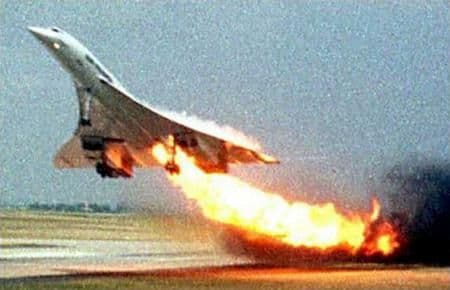
consider the Concorde crash. ATC told the pilots that fire was visible while the aircraft was still on the ground, though beyond V1. The pilots did what they thought was right in continuing the take-off. But with 20:20 hindsight that accident may have been survivable if they had attempted to stop
Last edited by megan; 10th January 2021 at 06:12.
Joined: Sep 1998
Posts: 1,234
Likes: 198
From: The Swan Downunder
I think most here understand what Mach E.A. & I where getting at, after V1 it's unknown territory as far as stopping goes but often better to crash slowly than at a much higher speed.
Some years ago I was departing DN Rwy 29 in a small corporate job, balanced field length was Calc on an intersection dep we elected to go full length due the Twr saying there where multiple birds over the last half of the Rwy, Twr boys got the safety officer to shoot the sh1it out of them then we where cleared to go. As you can guess the bloody birds headed down towards us, I/we belted a few inc one smack bang on my windscreen (CM1) just as the F/O yelled V1 birds! I rejected now officially above V1, stood on the brakes, max Rev, pulled up with half the Rwy left, glad we took full length, glad I pulled the pin regardless of V1! I considered the dangers greater airborne than on the deck from possible distorted view due blood and guts, engine issues, U/C and brake issues, I was used to birds, U/S'ed an Airbus in CS one night, bloody buggers!
Some years ago I was departing DN Rwy 29 in a small corporate job, balanced field length was Calc on an intersection dep we elected to go full length due the Twr saying there where multiple birds over the last half of the Rwy, Twr boys got the safety officer to shoot the sh1it out of them then we where cleared to go. As you can guess the bloody birds headed down towards us, I/we belted a few inc one smack bang on my windscreen (CM1) just as the F/O yelled V1 birds! I rejected now officially above V1, stood on the brakes, max Rev, pulled up with half the Rwy left, glad we took full length, glad I pulled the pin regardless of V1! I considered the dangers greater airborne than on the deck from possible distorted view due blood and guts, engine issues, U/C and brake issues, I was used to birds, U/S'ed an Airbus in CS one night, bloody buggers!
Joined: Apr 2000
Posts: 72
Likes: 12
From: East of Luxor
The V1 go case is for an engine failure or any other alert generated by the aircraft warning system. It does not include structural failure/damage or impact by an external source. In the case you have described on a 3,000 mtr runway is in my opinion the right decision. In the case of a shorter takeoff closer to balanced field length, I probably would go, then return to land and hope I made the right decision. The rejected takeoff at V1 remains the most poorly executed pilot manoeuvre.
The above usually results in extra paperwork out of places like KVNY or KTEB.
Joined: May 2000
Posts: 345
Likes: 1
From: Australia
For Groggy, I note the ATSB report says this about flight carried out in a Level D simulator for a similar model aircraft:The unambiguous implication of that outcome (assuming it substantially replicated the performance of ZCR) is that it is not physically possible for the aircraft to fly away ‘like a homesick angel’, if the rudder trim is set to full deflection (or at least full nose left deflection), unless the pilot is an “exceptional human”.
Have you any first-hand experience, either in the simulator or the aircraft, of flight with the rudder trim set to full nose left deflection and both engines delivering maximum thrust?
Have you any first-hand experience, either in the simulator or the aircraft, of flight with the rudder trim set to full nose left deflection and both engines delivering maximum thrust?
Lead,
It takes a long time, relatively, for a King Air to reach 140 KIAS after lift off if flown properly regards speeds. I train my guys to climb at max rate, about 125 kts, until through lowest safe however in visual conditions the subject pilot may have done it differently. I would expect you would be approaching 400 ft before reaching 140 kts in a normal situation. Getting back to gear retraction I want to reiterate the power lever snaps back very quickly and the pilot may never get to actually place his hand on the gear lever before grabbing the yoke with both hands in an effort to control a wildly yawing aircraft.
Groggy