


UK unveils new next generation fighter jet, the 'Tempest'


Joined: Oct 2007
Posts: 2,515
Likes: 151
From: A better place.
From a position of utter naivety- although they’ve bought a lot of British/Euro kit in the past, how geopolitically reliable would the Saudis be as a development partner? Deep pockets - sure.
And looking at Tempest, big wing area - presumably one design consideration is a long range air-sea battle scenario ie the Pacific?
And looking at Tempest, big wing area - presumably one design consideration is a long range air-sea battle scenario ie the Pacific?

Ecce Homo! Loquitur...

Joined: Jul 2000
Aviation Qualifications: Spotter
Posts: 24,510
Likes: 7,255
From: Peripatetic
Roberto Cingolani, CEO of @Leonardo_IT says the GCAP industry deal will be signed on December 13.
Presumably he is talking of the industries' Joint Venture Agreement to create the new company that will deliver the aircraft.
Presumably he is talking of the industries' Joint Venture Agreement to create the new company that will deliver the aircraft.


Joined: Feb 2006
Posts: 3,534
Likes: 293
From: The Alps
Excalibur air tests
2Excel's 757 test bed 'Excalibur' has been up and about from Boscombe Down last week.
https://uk.leonardo.com/en/news-and-...f-modification

cheers
https://uk.leonardo.com/en/news-and-...f-modification
cheers
Joined: Sep 2010
Posts: 2,107
Likes: 288
From: Nevada, USA
Article on Excalibur here https://www.twz.com/air/uks-757-base...ighter-emerges

Joined: Jul 2000
Posts: 4,236
Likes: 80
From: Just behind the back of beyond....
A better one, by someone who was actually there at Boscombe...
https://aerospaceglobalnews.com/news...ication-phase/
https://aerospaceglobalnews.com/news...ication-phase/
Joined: Jul 2000
Posts: 4,236
Likes: 80
From: Just behind the back of beyond....
and on the subject of GCAP.... “the only credible sixth generation programme out there, outside Russia, China and the US.”
https://aerospaceglobalnews.com/news...mbat-aircraft/
https://aerospaceglobalnews.com/news...mbat-aircraft/
Ecce Homo! Loquitur...
Joined: Jul 2000
Aviation Qualifications: Spotter
Posts: 24,510
Likes: 7,255
From: Peripatetic
https://ukdefencejournal.org.uk/brit...n-fighter-jet/
Britain highlights role of AI in next-generation fighter jet
The UK government has reaffirmed its commitment to integrating advanced AI and autonomous technologies into the development of the Tempest aircraft, the central platform of the Global Combat Air Programme (GCAP).
The details emerged in responses from Maria Eagle, Minister of State for Defence, to written parliamentary questions on the potential costs, timelines, and operational roles of piloted and uncrewed versions of the aircraft.
The Tempest platform is being designed to incorporate cutting-edge AI and autonomous systems, but the Ministry of Defence (MOD) confirmed that pilots will continue to play a vital role when the aircraft enters service. Eagle explained:
“We assess that pilots will still have a crucial role to play when GCAP comes into service and that their role, and the overall capability of the aircraft, will be augmented substantially by AI and autonomous technologies.”
AI and autonomy are expected to enhance sensor tasking, data analysis, and decision-making in contested environments, providing a significant operational advantage. However, the MOD make clear that the platform will initially be piloted, with autonomy maturing alongside the programme.
While the MOD is refining estimates through modelling and operational analysis, it has not made separate calculations for the costs or timelines of delivering piloted versus uncrewed versions of the aircraft. The focus remains on delivering a platform that blends human and autonomous capabilities.
Eagle stated: “The cost and time to ensure safety, training, and certification of these technologies is being refined. As the focus is on bringing into service a capability that is initially both piloted and involves substantial AI/autonomous technology, distinct estimates for a crewed versus an uncrewed capability have not been made.”
The development of Tempest forms part of a broader combat air system that includes uncrewed capabilities designed to complement piloted aircraft such as Typhoon, F-35, and the GCAP platform. Collaborative uncrewed systems, supported by AI, are a key focus of ongoing discussions with Italy and Japan, the UK’s GCAP partners.
Eagle highlighted the international cooperation underpinning the programme:
“We are in regular discussions with our Italian and Japanese partners on these issues, as together we seek to ensure we are ready to exploit technological opportunities for our joint military and industrial advantage.”
Britain highlights role of AI in next-generation fighter jet
The UK government has reaffirmed its commitment to integrating advanced AI and autonomous technologies into the development of the Tempest aircraft, the central platform of the Global Combat Air Programme (GCAP).
The details emerged in responses from Maria Eagle, Minister of State for Defence, to written parliamentary questions on the potential costs, timelines, and operational roles of piloted and uncrewed versions of the aircraft.
The Tempest platform is being designed to incorporate cutting-edge AI and autonomous systems, but the Ministry of Defence (MOD) confirmed that pilots will continue to play a vital role when the aircraft enters service. Eagle explained:
“We assess that pilots will still have a crucial role to play when GCAP comes into service and that their role, and the overall capability of the aircraft, will be augmented substantially by AI and autonomous technologies.”
AI and autonomy are expected to enhance sensor tasking, data analysis, and decision-making in contested environments, providing a significant operational advantage. However, the MOD make clear that the platform will initially be piloted, with autonomy maturing alongside the programme.
While the MOD is refining estimates through modelling and operational analysis, it has not made separate calculations for the costs or timelines of delivering piloted versus uncrewed versions of the aircraft. The focus remains on delivering a platform that blends human and autonomous capabilities.
Eagle stated: “The cost and time to ensure safety, training, and certification of these technologies is being refined. As the focus is on bringing into service a capability that is initially both piloted and involves substantial AI/autonomous technology, distinct estimates for a crewed versus an uncrewed capability have not been made.”
The development of Tempest forms part of a broader combat air system that includes uncrewed capabilities designed to complement piloted aircraft such as Typhoon, F-35, and the GCAP platform. Collaborative uncrewed systems, supported by AI, are a key focus of ongoing discussions with Italy and Japan, the UK’s GCAP partners.
Eagle highlighted the international cooperation underpinning the programme:
“We are in regular discussions with our Italian and Japanese partners on these issues, as together we seek to ensure we are ready to exploit technological opportunities for our joint military and industrial advantage.”
Ecce Homo! Loquitur...
Joined: Jul 2000
Aviation Qualifications: Spotter
Posts: 24,510
Likes: 7,255
From: Peripatetic
Unclear which, if any, will make their way into Tempest - but I like the deflating fuel tank used during transit when LO isn’t required, then deflated and the external weapons/sensors rotated into the internal bay when reaching the A2/AD area.
looking back at some BAE's concepts for internal bays some pop up a, so I'll make a little thread, some of the most interesting one are from the pre-Tempest era (around 2015) and very similar to one of the rotating one here proposed.
https://threadreaderapp.com/thread/1...872413101.html
…..and lastly we return to the so loved (by BAE at least it seems) rotating bay, it is the most recent one, being published in 2022, showing that the concept (maybe) is still alive. However there is a twist, it is the comeback of mdular fuel tanks in such bays.
This time it calls for the use of flexible fuel tanks, here called bladders, here it calls for the use of such bladders as means for increase fuel capacity in the non fighting part of mission: using rotating bays to keep the sensors out when the bladder is in use.
And once emptied (trough means that equilizes the pressure to reduce it's size) flipping the rotating bay and get under cover the sensor (or missiles).
More here: https://worldwide.espacenet.com/pate...n%3DGB2601781A
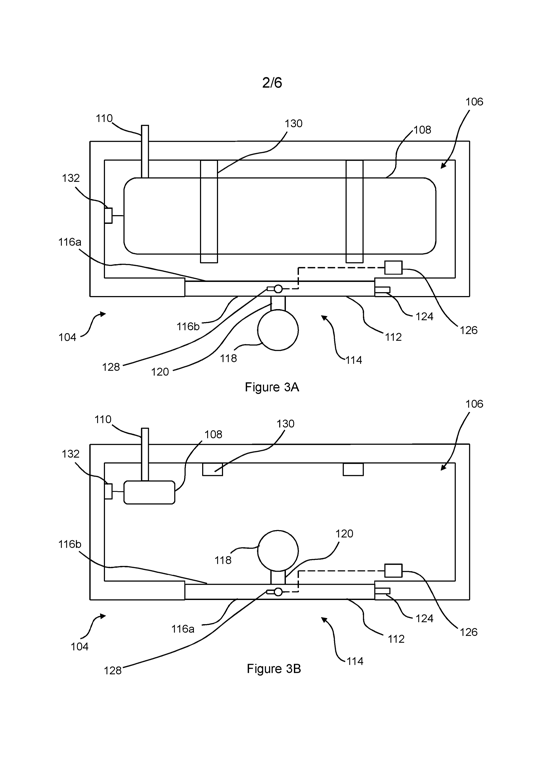
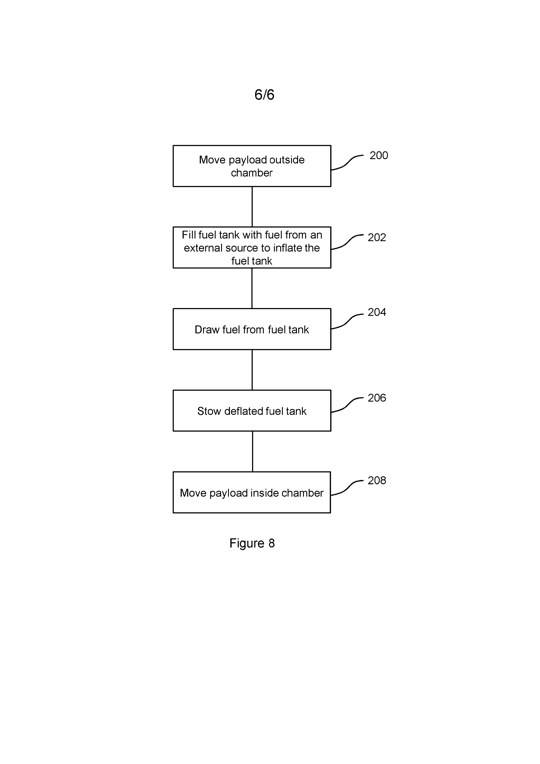
looking back at some BAE's concepts for internal bays some pop up a, so I'll make a little thread, some of the most interesting one are from the pre-Tempest era (around 2015) and very similar to one of the rotating one here proposed.
https://threadreaderapp.com/thread/1...872413101.html
…..and lastly we return to the so loved (by BAE at least it seems) rotating bay, it is the most recent one, being published in 2022, showing that the concept (maybe) is still alive. However there is a twist, it is the comeback of mdular fuel tanks in such bays.
This time it calls for the use of flexible fuel tanks, here called bladders, here it calls for the use of such bladders as means for increase fuel capacity in the non fighting part of mission: using rotating bays to keep the sensors out when the bladder is in use.
And once emptied (trough means that equilizes the pressure to reduce it's size) flipping the rotating bay and get under cover the sensor (or missiles).
More here: https://worldwide.espacenet.com/pate...n%3DGB2601781A

Joined: Oct 2013
Posts: 804
Likes: 96
From: UK
Unclear which, if any, will make their way into Tempest - but I like the deflating fuel tank used during transit when LO isn’t required, then deflated and the external weapons/sensors rotated into the internal bay when reaching the A2/AD area.
looking back at some BAE's concepts for internal bays some pop up a, so I'll make a little thread, some of the most interesting one are from the pre-Tempest era (around 2015) and very similar to one of the rotating one here proposed.
https://threadreaderapp.com/thread/1...872413101.html
…..and lastly we return to the so loved (by BAE at least it seems) rotating bay, it is the most recent one, being published in 2022, showing that the concept (maybe) is still alive. However there is a twist, it is the comeback of mdular fuel tanks in such bays.
This time it calls for the use of flexible fuel tanks, here called bladders, here it calls for the use of such bladders as means for increase fuel capacity in the non fighting part of mission: using rotating bays to keep the sensors out when the bladder is in use.
And once emptied (trough means that equilizes the pressure to reduce it's size) flipping the rotating bay and get under cover the sensor (or missiles).
More here: https://worldwide.espacenet.com/pate...n%3DGB2601781A
looking back at some BAE's concepts for internal bays some pop up a, so I'll make a little thread, some of the most interesting one are from the pre-Tempest era (around 2015) and very similar to one of the rotating one here proposed.
https://threadreaderapp.com/thread/1...872413101.html
…..and lastly we return to the so loved (by BAE at least it seems) rotating bay, it is the most recent one, being published in 2022, showing that the concept (maybe) is still alive. However there is a twist, it is the comeback of mdular fuel tanks in such bays.
This time it calls for the use of flexible fuel tanks, here called bladders, here it calls for the use of such bladders as means for increase fuel capacity in the non fighting part of mission: using rotating bays to keep the sensors out when the bladder is in use.
And once emptied (trough means that equilizes the pressure to reduce it's size) flipping the rotating bay and get under cover the sensor (or missiles).
More here: https://worldwide.espacenet.com/pate...n%3DGB2601781A
Joined: Oct 2013
Posts: 804
Likes: 96
From: UK
Joined: Jul 2006
Posts: 122
Likes: 76
From: Number 10 No longer
Edit: BTW I'm referring to the Mud Hen.
Ecce Homo! Loquitur...
Joined: Jul 2000
Aviation Qualifications: Spotter
Posts: 24,510
Likes: 7,255
From: Peripatetic
https://www.defensenews.com/global/e...gcap-warplane/
In Japan, a more muted cheering for the British-led GCAP warplane
In Japan, a more muted cheering for the British-led GCAP warplane
Joined: Oct 2013
Posts: 804
Likes: 96
From: UK
Also, note the 'failed takeoff'.
Anyway, moving back to GCAP specific news...
Ecce Homo! Loquitur...
Joined: Jul 2000
Aviation Qualifications: Spotter
Posts: 24,510
Likes: 7,255
From: Peripatetic
two word answer - have a guess.....
The US are like France - they'll cooperate as long as they provide the engines, and the flight controls, and the software.... oh, and everything is covered by ITAR and we have veto on any sales.....
https://asiatimes.com/2025/03/us-eye...hter-program/#
US eyes Euro-Japanese next-gen fighter program
US interest in GCAP fighter program, comprised of UK, Italy and Japan, comes as transatlantic defense ties reputedly on the rocks
A Trump administration envoy’s push for US involvement in a Euro-Japanese fighter jet program has sparked new intrigue, skepticism and strategic questions about transatlantic defense ties.
This month, Defense News reported that Paolo Zampolli, a close associate of US President Donald Trump and US special envoy to Italy, proposed US participation in the Euro-Japanese Global Combat Air Program (GCAP).
As of February 2025, Zampolli, who Trump recently appointed, held meetings with Italian officials, including Deputy Prime Minister Matteo Salvini, to bolster US-Italy defense ties. In discussions with Italian media and Defense News, Zampolli advocated for a unified transatlantic fighter jet program, claiming it would benefit the US and GCAP members—the UK, Italy and Japan—by reducing costs and improving collaboration. Zampolli also emphasized its potential to strengthen economic and commercial relations.
It was not immediately clear if Zampolli was speaking in his personal capacity or at Trump’s direction. Italian politicians, including Foreign Minister Antonio Tajani, were surprised at Zampolli’s mission, underscoring the proposal’s nascent stage—US defense contractor Lockheed Martin reserved comments, directing inquiries to relevant governments.
The GCAP’s capabilities could explain how US defense interests align or contrast with this program.
In a May 2024 article for the Royal United Services Institute (RUSI), Trevor Taylor and Isabella Antinozzi mention that the GCAP retains significant human-machine integration, similar to the US Next-Generation Air Dominance (NGAD) program. However, the NGAD program faces an uncertain future, with escalating costs, shifting strategic priorities and the rise of drone warfare casting doubt on its viability.
The US Air Force has paused the NGAD program, reassessing whether the US can maintain air superiority through a combination of existing platforms like the F-35, F-15EX, and F-22 alongside Collaborative Combat Aircraft (CCA).
Cost concerns are paramount, with each NGAD fighter projected to cost USD 250 million per unit. Some officials push for a scaled-down, software-driven light fighter as a cost-effective alternative.
Meanwhile, the US Navy is advancing its F/A-XX program to succeed the F/A-18 Super Hornet and integrate manned-unmanned teaming. However, budget constraints threaten this effort, with US Department of Defense (DOD) officials warning that prioritizing submarine production could render the F/A-XX “unexecutable.”
The US Air Force’s broader airpower readiness is in decline, with the service reporting its lowest mission-capable rates in decades.
The GCAP and NGAD are touted as “sixth-generation” fighters. While there is no consensus on what a sixth-generation fighter is, the type may have optionally-manned capability, manned-unmanned teaming capability and incorporation of new and emerging technologies such as AI, data fusion and advanced communications equipment.
Recent technology developments in the US NGAD program could benefit the GCAP, helping the US and its partners to speed up the development of sixth-generation fighters. For instance, Air & Space Forces Magazine reported in February 2025 that GE Aerospace and Pratt & Whitney have cleared the US Air Force’s Detailed Design Review for their Next-Generation Adaptive Propulsion (NGAP) engines, marking a critical step toward prototype fabrication.
Air & Space Forces Magazine says GE’s XA102 and Pratt & Whitney’s XA103 engines leverage model-based systems engineering and digital design tools, streamlining development. The report mentions that while Pratt & Whitney begins hardware procurement for XA103 ground testing in the late 2020s, GE continues refining its digital engine model.
The report says that although engines offer improved fuel efficiency, power management and survivability compared to existing models, the future of NGAP is unclear due to the US Air Force’s evaluation of NGAD’s feasibility. It adds that budget issues and strategic re-evaluations also impact its future.
US support for GCAP may help the latter’s stakeholders prepare for next-gen air power developments from China and Russia.
China’s introduction of the J-36 and J-50 fighters represents a significant advancement in its military aviation capabilities. The J-36, created by Chengdu Aircraft Corporation, showcases a tailless delta wing design with three engines, prioritizing stealth and high-speed performance. The J-50, from Shenyang Aircraft Corporation, has a twin-engine configuration and stealth technologies, including tailless designs to reduce radar signatures.
These aircraft, touted as sixth-generation fighters, reflect China’s ambition to achieve air superiority and challenge US dominance.
As for Russia, Lionel Becher mentions in an April 2024 article for the US Foreign Military Studies Office (FMSO) that Russia is actively pursuing the development of a sixth-generation combat aircraft, aiming for a prototype by 2050. Becher says the initiative, led by Russia’s State Research Institute of Aviation Systems, involves extensive research and collaboration with military specialists to anticipate future conflict demands. He states that the planned aircraft integrates advanced digital features, including AI, data fusion, and enhanced command, control and communication capabilities. He notes that despite historical challenges with delays and cost overruns in military aviation, Russia is determined to advance its air combat capabilities.
However, bringing the US into the GCAP program could undermine the latter’s rationale—strategic autonomy regarding defense capabilities for its stakeholders.
In a January 2024 article for the Royal Aeronautical Society, Joe Coles mentions that the UK’s commitment to the program stems from a desire to maintain sovereignty over its defense capabilities. Coles points out that relying solely on foreign platforms like the US F-35 restricts the UK’s operations, modifications and export autonomy.
He says that while historically international collaborations, such as the SEPECAT Jaguar and Eurofighter Typhoon, have faced challenges including project delays and complex upgrades, they also harness the combined expertise of participating nations.
Discussing Italy’s perspective on GCAP, Lorenzo Cladi and Andrea Locatelli mention in a December 2023 article in the peer-reviewed Contemporary Italian Politics journal that Italy’s decision to join the GCAP fighter program over the Franco-German Future Combat Air System (FCAS) stemmed from a convergence of military, industrial and strategic considerations. Cladi and Locatelli say that despite Italy’s historical support for EU defense initiatives, Italy prioritized continuity with the UK, a long-standing defense partner, even after Brexit.
They note that Italian defense firms, particularly Leonardo, saw more significant technological and economic advantages in GCAP, given its close ties with BAE Systems. They also add that the Italian Air Force favored GCAP due to extensive operational cooperation with the UK.
Japan’s troubled history with the US regarding fighter aircraft development may have led it to consider alternative partners. In a May 2019 Carnegie Endowment for International Peace (CEIP) article, Gregg Rubenstein says that while the US seeks alignment on operational requirements and alliance security, Japan prioritizes domestic defense industry growth and autonomy over key technologies.
Rubenstein says the US hesitates to share advanced fighter technology without clear strategic benefits. He recalls tensions from the FSX program of the 1980s when trade concerns overshadowed military priorities. He also notes that Japan’s participation in GCAP may raise US concerns about losing influence over Japan’s defense industry.
Given those concerns, bringing the US into GCAP could redefine transatlantic defense collaboration—or hobble the strategic autonomy the program aims to protect.
The US are like France - they'll cooperate as long as they provide the engines, and the flight controls, and the software.... oh, and everything is covered by ITAR and we have veto on any sales.....
https://asiatimes.com/2025/03/us-eye...hter-program/#
US eyes Euro-Japanese next-gen fighter program
US interest in GCAP fighter program, comprised of UK, Italy and Japan, comes as transatlantic defense ties reputedly on the rocks
A Trump administration envoy’s push for US involvement in a Euro-Japanese fighter jet program has sparked new intrigue, skepticism and strategic questions about transatlantic defense ties.
This month, Defense News reported that Paolo Zampolli, a close associate of US President Donald Trump and US special envoy to Italy, proposed US participation in the Euro-Japanese Global Combat Air Program (GCAP).
As of February 2025, Zampolli, who Trump recently appointed, held meetings with Italian officials, including Deputy Prime Minister Matteo Salvini, to bolster US-Italy defense ties. In discussions with Italian media and Defense News, Zampolli advocated for a unified transatlantic fighter jet program, claiming it would benefit the US and GCAP members—the UK, Italy and Japan—by reducing costs and improving collaboration. Zampolli also emphasized its potential to strengthen economic and commercial relations.
It was not immediately clear if Zampolli was speaking in his personal capacity or at Trump’s direction. Italian politicians, including Foreign Minister Antonio Tajani, were surprised at Zampolli’s mission, underscoring the proposal’s nascent stage—US defense contractor Lockheed Martin reserved comments, directing inquiries to relevant governments.
The GCAP’s capabilities could explain how US defense interests align or contrast with this program.
In a May 2024 article for the Royal United Services Institute (RUSI), Trevor Taylor and Isabella Antinozzi mention that the GCAP retains significant human-machine integration, similar to the US Next-Generation Air Dominance (NGAD) program. However, the NGAD program faces an uncertain future, with escalating costs, shifting strategic priorities and the rise of drone warfare casting doubt on its viability.
The US Air Force has paused the NGAD program, reassessing whether the US can maintain air superiority through a combination of existing platforms like the F-35, F-15EX, and F-22 alongside Collaborative Combat Aircraft (CCA).
Cost concerns are paramount, with each NGAD fighter projected to cost USD 250 million per unit. Some officials push for a scaled-down, software-driven light fighter as a cost-effective alternative.
Meanwhile, the US Navy is advancing its F/A-XX program to succeed the F/A-18 Super Hornet and integrate manned-unmanned teaming. However, budget constraints threaten this effort, with US Department of Defense (DOD) officials warning that prioritizing submarine production could render the F/A-XX “unexecutable.”
The US Air Force’s broader airpower readiness is in decline, with the service reporting its lowest mission-capable rates in decades.
The GCAP and NGAD are touted as “sixth-generation” fighters. While there is no consensus on what a sixth-generation fighter is, the type may have optionally-manned capability, manned-unmanned teaming capability and incorporation of new and emerging technologies such as AI, data fusion and advanced communications equipment.
Recent technology developments in the US NGAD program could benefit the GCAP, helping the US and its partners to speed up the development of sixth-generation fighters. For instance, Air & Space Forces Magazine reported in February 2025 that GE Aerospace and Pratt & Whitney have cleared the US Air Force’s Detailed Design Review for their Next-Generation Adaptive Propulsion (NGAP) engines, marking a critical step toward prototype fabrication.
Air & Space Forces Magazine says GE’s XA102 and Pratt & Whitney’s XA103 engines leverage model-based systems engineering and digital design tools, streamlining development. The report mentions that while Pratt & Whitney begins hardware procurement for XA103 ground testing in the late 2020s, GE continues refining its digital engine model.
The report says that although engines offer improved fuel efficiency, power management and survivability compared to existing models, the future of NGAP is unclear due to the US Air Force’s evaluation of NGAD’s feasibility. It adds that budget issues and strategic re-evaluations also impact its future.
US support for GCAP may help the latter’s stakeholders prepare for next-gen air power developments from China and Russia.
China’s introduction of the J-36 and J-50 fighters represents a significant advancement in its military aviation capabilities. The J-36, created by Chengdu Aircraft Corporation, showcases a tailless delta wing design with three engines, prioritizing stealth and high-speed performance. The J-50, from Shenyang Aircraft Corporation, has a twin-engine configuration and stealth technologies, including tailless designs to reduce radar signatures.
These aircraft, touted as sixth-generation fighters, reflect China’s ambition to achieve air superiority and challenge US dominance.
As for Russia, Lionel Becher mentions in an April 2024 article for the US Foreign Military Studies Office (FMSO) that Russia is actively pursuing the development of a sixth-generation combat aircraft, aiming for a prototype by 2050. Becher says the initiative, led by Russia’s State Research Institute of Aviation Systems, involves extensive research and collaboration with military specialists to anticipate future conflict demands. He states that the planned aircraft integrates advanced digital features, including AI, data fusion, and enhanced command, control and communication capabilities. He notes that despite historical challenges with delays and cost overruns in military aviation, Russia is determined to advance its air combat capabilities.
However, bringing the US into the GCAP program could undermine the latter’s rationale—strategic autonomy regarding defense capabilities for its stakeholders.
In a January 2024 article for the Royal Aeronautical Society, Joe Coles mentions that the UK’s commitment to the program stems from a desire to maintain sovereignty over its defense capabilities. Coles points out that relying solely on foreign platforms like the US F-35 restricts the UK’s operations, modifications and export autonomy.
He says that while historically international collaborations, such as the SEPECAT Jaguar and Eurofighter Typhoon, have faced challenges including project delays and complex upgrades, they also harness the combined expertise of participating nations.
Discussing Italy’s perspective on GCAP, Lorenzo Cladi and Andrea Locatelli mention in a December 2023 article in the peer-reviewed Contemporary Italian Politics journal that Italy’s decision to join the GCAP fighter program over the Franco-German Future Combat Air System (FCAS) stemmed from a convergence of military, industrial and strategic considerations. Cladi and Locatelli say that despite Italy’s historical support for EU defense initiatives, Italy prioritized continuity with the UK, a long-standing defense partner, even after Brexit.
They note that Italian defense firms, particularly Leonardo, saw more significant technological and economic advantages in GCAP, given its close ties with BAE Systems. They also add that the Italian Air Force favored GCAP due to extensive operational cooperation with the UK.
Japan’s troubled history with the US regarding fighter aircraft development may have led it to consider alternative partners. In a May 2019 Carnegie Endowment for International Peace (CEIP) article, Gregg Rubenstein says that while the US seeks alignment on operational requirements and alliance security, Japan prioritizes domestic defense industry growth and autonomy over key technologies.
Rubenstein says the US hesitates to share advanced fighter technology without clear strategic benefits. He recalls tensions from the FSX program of the 1980s when trade concerns overshadowed military priorities. He also notes that Japan’s participation in GCAP may raise US concerns about losing influence over Japan’s defense industry.
Given those concerns, bringing the US into GCAP could redefine transatlantic defense collaboration—or hobble the strategic autonomy the program aims to protect.
Joined: Apr 2014
Posts: 5
Likes: 2
From: uk
Tempest mission profile (previously) rules out a carrier based version. I wonder if this is being reconsidered? The FR/DE FCAS is from the start a carrier aircraft based on French needs. Putting to one side that the carriers have no catapults, another decision that looks absolutely crazy with the benefit of hindsight.
Joined: Sep 2024
Posts: 17
Likes: 15
From: uk
You would have multiple heavy weights near your aircraft with unpredictable flight paths whilst your aircraft is probably slowing and could have reduced control - you could have 15 or so free flying objects around you whilst you are trying to deal with whatever you are dealing with very close to the ground.
Also, note the 'failed takeoff'.
Anyway, moving back to GCAP specific news...
Also, note the 'failed takeoff'.
Anyway, moving back to GCAP specific news...