


RAF Rivet Joint




Joined: Aug 2006
Posts: 4,914
Likes: 659
From: West Sussex
Let's be clear, this discussion is not about those who currently work, and no doubt work hard, for the MAA and MAAIB, but about the MAA and MAAIB themselves. The last 'A' in MAA stands for authority, ie the buck stops with them. But it doesn't does it? A knowingly unairworthy aircraft is introduced to the military air register over their heads because it does not accord with their rules. So, as has been asked before, what is the point of the MAA?
A military aircraft escape system is found by the MAAIB to be unairworthy, having never had a Safety Case made for it. It kills a pilot because it is unairworthy, but the MAA responsible for its airworthiness congratulates it on its investigation instead of 'fessing up to its own failure. What is the point of it?
The future of military airworthiness lies with those who man the MAA and MAAIB (other than those within their ranks who have been involved in subversion and cover up in the past). They cannot begin to achieve their purpose until the buck really does stop with them, instead of with those who pull their strings and remain unchallenged.
Aviation doesn't give a damn about good intentions. It simply tries to kill, and often succeeds unless prevented. That is the purpose of the MAA and MAAIB. Time they had the authority to do so. Time they were made independent of the MOD and of each other.
Self Regulation Doesn't Work and in Aviation It Kills!
A military aircraft escape system is found by the MAAIB to be unairworthy, having never had a Safety Case made for it. It kills a pilot because it is unairworthy, but the MAA responsible for its airworthiness congratulates it on its investigation instead of 'fessing up to its own failure. What is the point of it?
The future of military airworthiness lies with those who man the MAA and MAAIB (other than those within their ranks who have been involved in subversion and cover up in the past). They cannot begin to achieve their purpose until the buck really does stop with them, instead of with those who pull their strings and remain unchallenged.
Aviation doesn't give a damn about good intentions. It simply tries to kill, and often succeeds unless prevented. That is the purpose of the MAA and MAAIB. Time they had the authority to do so. Time they were made independent of the MOD and of each other.
Self Regulation Doesn't Work and in Aviation It Kills!

Joined: Feb 2003
Posts: 3,311
Likes: 365
From: uk
Deskboundphixer
The reason I'd use the perfectly good instructions and procedures I was brought up on is this. I wouldn't trust the MoD/MAA to come up with anything better.
I recommend everyone read the MAA's document MMA02 "Master Glossary".
There are an alarming number of "intentional blanks". Take the first one, in alphabetical order - "Acceptable Deferred Faults". OK, there are a few here who don't give a toss about such things, but most do. Is everyone content the "Authority" can't offer an authoritative definition? Does that mean training on the subject is deferred as well?
What about Post Design Services? There is a definition, but it is wrong. The Chief of Defence Procurement's Instructions (CDPIs), which were meant to replace Controller Aircraft Instructions, made exactly the same mistake in 1993; which is why we reverted back to using CAIs even after they were withdrawn. Like I'd still do today.
The proper definition? "Maintain the Build Standard". Simple. Says it all. Why is it important? Because the Safety Case is based on a maintained Build Standard, and the RTS provides a release against a defined Build Standard with a valid Safety Case.
Relevance to Rivet Joint? The Build Standard has not been maintained, and cannot be resurrected or stabilised.
Programme Management 001 - Stabilise your Build Standard otherwise you cannot possibly satisfy mandated Configuration Milestones. See Rivet Joint.
If the MAA get it wrong, who can blame those who are wrongly taught, never appreciating just how important the subject is. That, however, does not absolve those who WERE taught correctly but knowingly suborned the regulations and condoned cancellation of contracts that were meant to maintain Safety Cases. Example: Nimrod. Remember, that's why we need Rivet Joint.
And then add this to Wg Cdr Spry's defintion of "Functional Safety", which is also dangerously wrong. There is a long way to go, and the MAA is not the answer.
The reason I'd use the perfectly good instructions and procedures I was brought up on is this. I wouldn't trust the MoD/MAA to come up with anything better.
I recommend everyone read the MAA's document MMA02 "Master Glossary".
There are an alarming number of "intentional blanks". Take the first one, in alphabetical order - "Acceptable Deferred Faults". OK, there are a few here who don't give a toss about such things, but most do. Is everyone content the "Authority" can't offer an authoritative definition? Does that mean training on the subject is deferred as well?
What about Post Design Services? There is a definition, but it is wrong. The Chief of Defence Procurement's Instructions (CDPIs), which were meant to replace Controller Aircraft Instructions, made exactly the same mistake in 1993; which is why we reverted back to using CAIs even after they were withdrawn. Like I'd still do today.
The proper definition? "Maintain the Build Standard". Simple. Says it all. Why is it important? Because the Safety Case is based on a maintained Build Standard, and the RTS provides a release against a defined Build Standard with a valid Safety Case.
Relevance to Rivet Joint? The Build Standard has not been maintained, and cannot be resurrected or stabilised.
Programme Management 001 - Stabilise your Build Standard otherwise you cannot possibly satisfy mandated Configuration Milestones. See Rivet Joint.
If the MAA get it wrong, who can blame those who are wrongly taught, never appreciating just how important the subject is. That, however, does not absolve those who WERE taught correctly but knowingly suborned the regulations and condoned cancellation of contracts that were meant to maintain Safety Cases. Example: Nimrod. Remember, that's why we need Rivet Joint.
And then add this to Wg Cdr Spry's defintion of "Functional Safety", which is also dangerously wrong. There is a long way to go, and the MAA is not the answer.

Joined: Aug 2006
Posts: 4,914
Likes: 659
From: West Sussex
DBP:-
You need to see the woods for the trees with respect, DBP. The CA Instructions were not outdated, they worked but were arbitrarily scrapped in favour of new CDPIs which were simply wrong, as tuc explains.
That is why he had to continue using CAIs despite them being scrapped. That is why there were now no working mandated regulations to abide by. That is why build standards could no longer be maintained. That is why Safety Cases stopped working. That is why Nimrod happened, that is why the Mk10 seat killed, all because the CAIs were withdrawn and not reintroduced.
That is why there are such large gaps in the MAA Glossary. That is why there are such large gaps in its corporate knowledge. That is why airworthiness related accidents continue to happen and to kill. That is why reform is so urgent. That is why the independence of the MAA must be the starting point of that process.
Self Regulation Doesn't Work and in Aviation It Kills!
Tuc has already said he would use his engineering judgment to use outdated CA instructions over current regs,
That is why he had to continue using CAIs despite them being scrapped. That is why there were now no working mandated regulations to abide by. That is why build standards could no longer be maintained. That is why Safety Cases stopped working. That is why Nimrod happened, that is why the Mk10 seat killed, all because the CAIs were withdrawn and not reintroduced.
That is why there are such large gaps in the MAA Glossary. That is why there are such large gaps in its corporate knowledge. That is why airworthiness related accidents continue to happen and to kill. That is why reform is so urgent. That is why the independence of the MAA must be the starting point of that process.
Self Regulation Doesn't Work and in Aviation It Kills!
Joined: Feb 2003
Posts: 3,311
Likes: 365
From: uk
That is why build standards could no longer be maintained. That is why Safety Cases stopped working.
The greatest confidence check a programme manager can have is achieving Transfer to PDS. It is money in the bank, akin to a pilot's final walk round and systems checks. Today, if PDS is contracted against the MAA definition, then about 95% of the work covered under the 17 core components (where are they now articulated?!) won't be done; culminating in an invalid Safety Case. As you say - Nimrod, Red Arrows (no Safety Case!), Tornado, Chinook, C130............Rivet Joint.
Not only do the MAA refuse to acknowledge this common denominator in all these accidents and procurement failures, they also condone the long time teaching that it is a waste. Why? Simple, there are VSOs to protect and the MAA forms part of the same club. As you also point out, instead of probing causes and trends their announcements are designed to divert attention from flagrant breaches of law, praising those who have failed while staying silent as those who have succeeded (and DE&S has many such) are vilified. An unhealthy (in fact, deadly) trait.
Joined: Feb 2008
Posts: 6,992
Likes: 3
From: East Sussex UK
The USAF has released an image showing a RAF RC-135W (ZZ664) receiving fuel on 26 June from a Boeing KC-135 from its 100th Air Refuelling Wing, based at RAF Mildenhall in Suffolk.

Image Credit : USAF, FlightGlobal
More here ...
FlightGlobal : RAF Rivet Joint AAR
Image Credit : USAF, FlightGlobal
More here ...
FlightGlobal : RAF Rivet Joint AAR
 The islands in the background look W.Scotland to me?
Joined: May 1999
Aviation Qualifications: ATP+Mil
Posts: 27,399
Likes: 857
From: Quite near 'An aerodrome somewhere in England'
It's a shame that the RAF can no longer refuel its own assets......
And no, onceapilot, your beloved TriShaw couldn't refuel it either!
Surely it'd make sense for, say, 3 Voyagers to be boom-equipped?
And no, onceapilot, your beloved TriShaw couldn't refuel it either!
Surely it'd make sense for, say, 3 Voyagers to be boom-equipped?
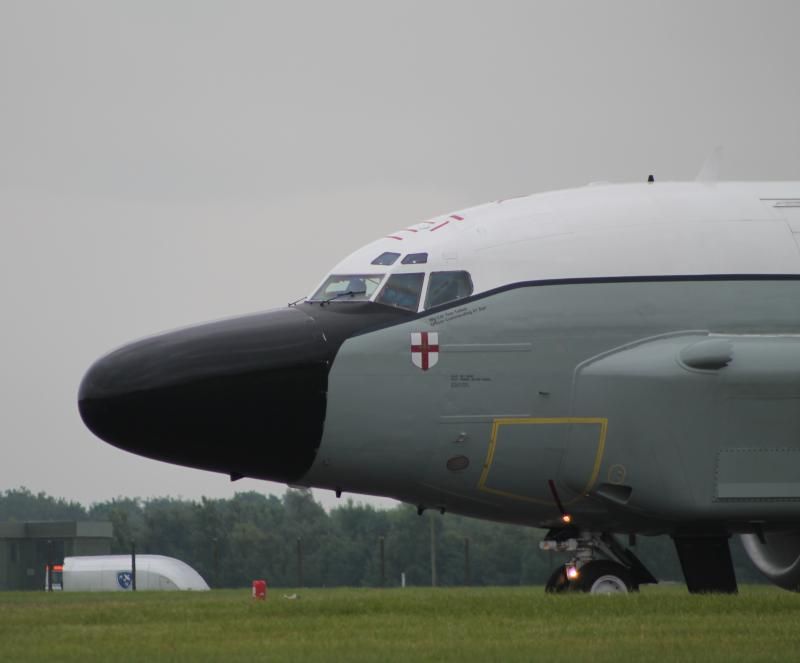
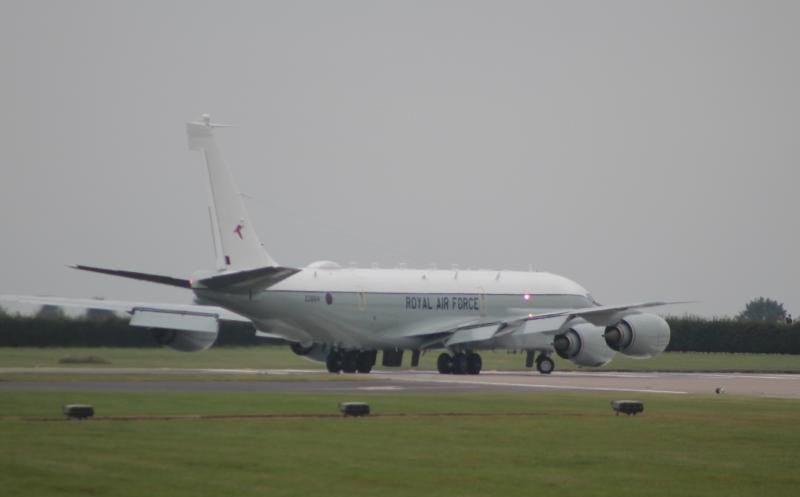
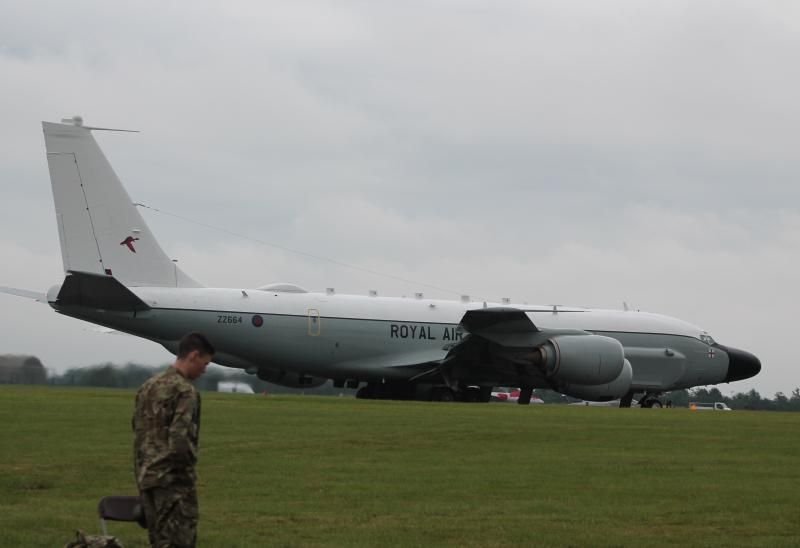
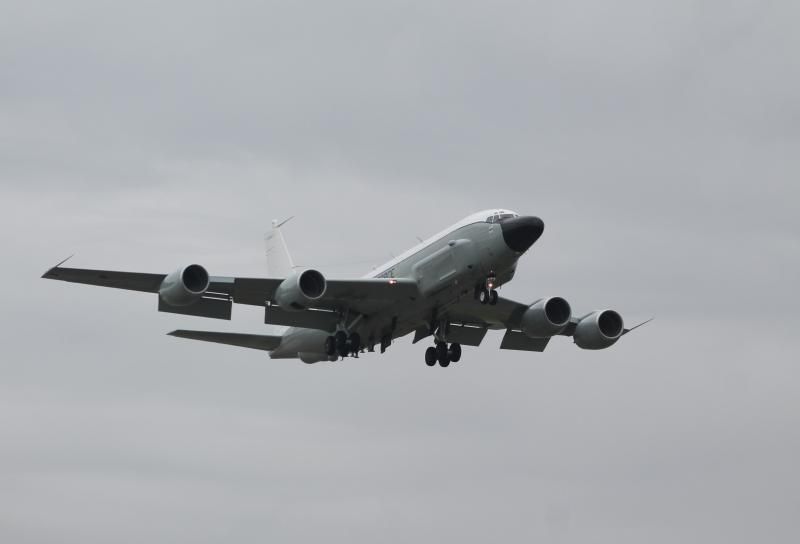
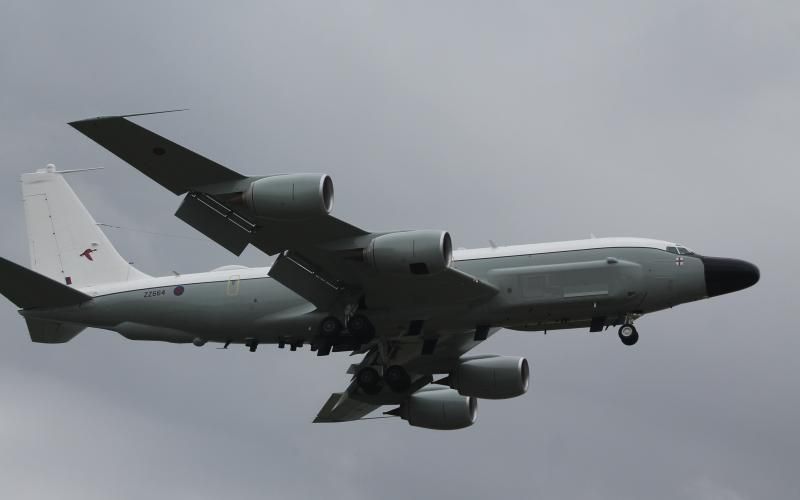
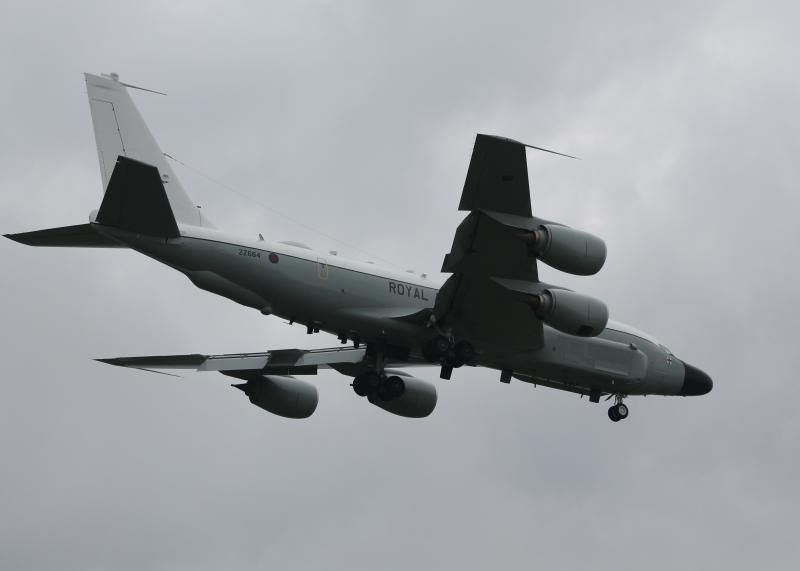
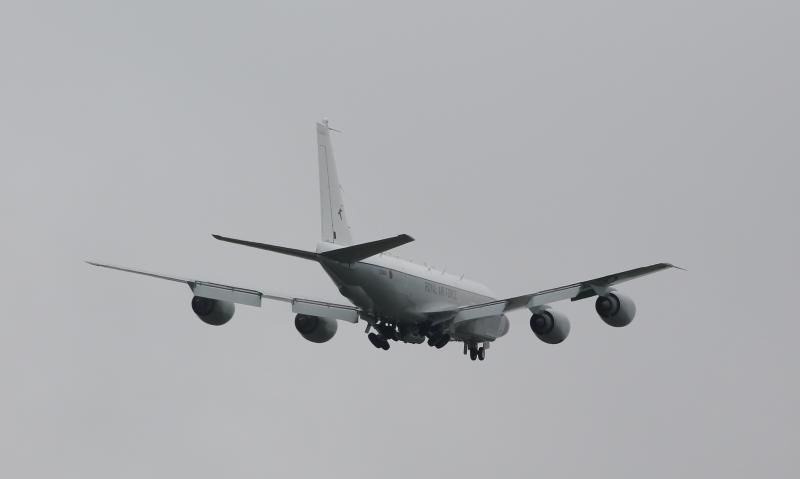
 ) and took pics of the first fly by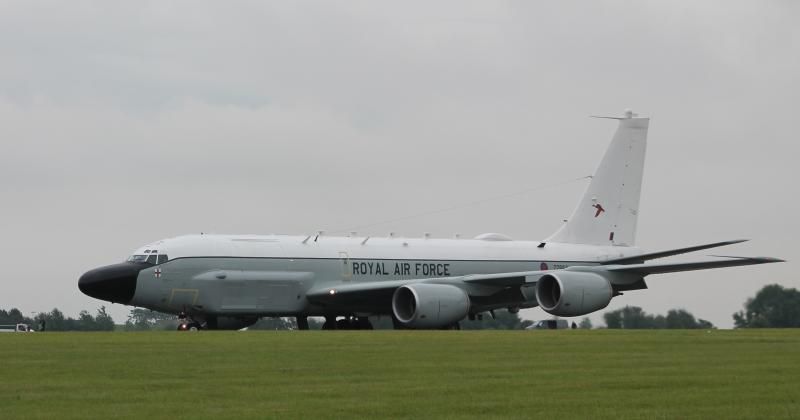



Joined: Aug 2006
Posts: 137
Likes: 0
From: 180INS500
Waddington display
So what's the story behind the display take-off where the nose was raised, lowered back onto the runway, and then raised again for an embarrassingly long take-off run? And the shut down on the runway on return with ground tow back to dispersal?
SS
SS
Joined: May 2005
Posts: 492
Likes: 2
From: home for good
no idea re the departure but have experienced a shutdown and recovery from the runway at an airshow before (in MR2) - that was to avoid effects of jetwash on the exhibitors/spectators etc. No idea if that was the case in this instance. Maybe someone from A-flt can let us know?