


Bell 212 Crash - Belize

Thread Starter
Joined: Aug 2001
Posts: 249
Likes: 0
From: Angleterre
 Bell 212 Crash - Belize
Not certain, but I think this happened 4 Sep 07
All BATSUB helicopters are grounded tonight after a Bell 212 crashed yesterday in an un-inhabited area south of the Maxboro housing community.
Two pilots were on board and they were doing landing drills in an empty shrimp pond on the Nova Farms Compound. Eyewitnesses say the nose of the Bell helicopter dipped too much forward, and its blades touched the ground. That caused the helicopter to flail to the ground and burst into flames. Both pilots escaped without any serious injury.
Commanding Officer for BATSUB in Belize Lt. Col. Peter Germaine confirmed that the helicopter started service in Belize in 2003. BATSUB has two others: one is working, but grounded as a precaution, and another is undergoing maintenance.
Because the copters are so widely relied upon for training British and BDF Forces, and mostly for emergency medical evacuations, Lt. Col. Germaine says the working one should be cleared tomorrow, and they will try to get the other and working by next week.
He confirmed that both pilots have gone for MRI tests and have no serious injuries. He says one of them is a qualified instructor and the other pilot was new to Belize and was undergoing required training to familiarize himself with flying and environmental conditions in Belize. They should both be back in the air next week, he adds.
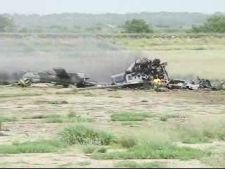
A team of British investigators have been brought in to determine the cause of the crash. Germaine confirmed that it is the first serious accident with a British military helicopter in Belize.
It seems the fatal Puma crash at Salamanca has been forgotten by the locals, and the Sioux that fell off Cadenas was pretty serious although unmanned at the time. I know Belize is a little behind the 21st century, but how did this one not get mentioned on a military forum? Griffins have not been grounded, because I saw one yesterday
All BATSUB helicopters are grounded tonight after a Bell 212 crashed yesterday in an un-inhabited area south of the Maxboro housing community.
Two pilots were on board and they were doing landing drills in an empty shrimp pond on the Nova Farms Compound. Eyewitnesses say the nose of the Bell helicopter dipped too much forward, and its blades touched the ground. That caused the helicopter to flail to the ground and burst into flames. Both pilots escaped without any serious injury.
Commanding Officer for BATSUB in Belize Lt. Col. Peter Germaine confirmed that the helicopter started service in Belize in 2003. BATSUB has two others: one is working, but grounded as a precaution, and another is undergoing maintenance.
Because the copters are so widely relied upon for training British and BDF Forces, and mostly for emergency medical evacuations, Lt. Col. Germaine says the working one should be cleared tomorrow, and they will try to get the other and working by next week.
He confirmed that both pilots have gone for MRI tests and have no serious injuries. He says one of them is a qualified instructor and the other pilot was new to Belize and was undergoing required training to familiarize himself with flying and environmental conditions in Belize. They should both be back in the air next week, he adds.
A team of British investigators have been brought in to determine the cause of the crash. Germaine confirmed that it is the first serious accident with a British military helicopter in Belize.
It seems the fatal Puma crash at Salamanca has been forgotten by the locals, and the Sioux that fell off Cadenas was pretty serious although unmanned at the time. I know Belize is a little behind the 21st century, but how did this one not get mentioned on a military forum? Griffins have not been grounded, because I saw one yesterday


Joined: Aug 2001
Posts: 1,795
Likes: 0
From: United Kingdom
I recall the Salamanca crash site, but do not remember the cause of the accident. Can anybody refresh? The accident itself was shortly before my time on the Puma I believe, early 80's??
Although quite near to the camp, it must have been some trek to get to the site A-A. Which I suspect is why there was anything left there for you to rummage through.
I know of other BoI incidents, (Gallon Jug - fire) and unpleasant forced landings (swamp post tail rotor problem) that occured there, so the comment of it being the first event is a lot far fetched. Perhaps if he had said 'Army' rather then 'British Military' it would have had some integrity.
Did the Gazelle flight ever have any drama's? The BDF binned an Islander not long ago, requiring extraction by a US Army Chinook.
Although quite near to the camp, it must have been some trek to get to the site A-A. Which I suspect is why there was anything left there for you to rummage through.
I know of other BoI incidents, (Gallon Jug - fire) and unpleasant forced landings (swamp post tail rotor problem) that occured there, so the comment of it being the first event is a lot far fetched. Perhaps if he had said 'Army' rather then 'British Military' it would have had some integrity.
Did the Gazelle flight ever have any drama's? The BDF binned an Islander not long ago, requiring extraction by a US Army Chinook.
Joined: Jun 2007
Posts: 1,460
Likes: 0
From: Detroit MI
I think it was a couple or three years before I visited it and that was backed up by the way the site was overgrown. That would put it around 1980-81 at a guess.
IIRC it was a single engine failure when the A/c was heavy on a hot day, (well, ok, they were all pretty darned warm). Once it hit the canopy it fell and thrashed itself to death, again, IIRC.
It really was surprisingly close to the camp just off the track. Maybe 2-300 yards if my mental picture is right. I seem to remember being able to see the camp from the track. The debris started about 10-20 yards into the jungle there. There's only really fuselage stuff there though I'm sure if you dug a bit deeper into the undergrowth there is probably some more "valuable" artifacts.
I seem to remember a Gazelle having an issue that required a Puma to lift it back to APC but that may just be the old brain playing tricks.
IIRC it was a single engine failure when the A/c was heavy on a hot day, (well, ok, they were all pretty darned warm). Once it hit the canopy it fell and thrashed itself to death, again, IIRC.
It really was surprisingly close to the camp just off the track. Maybe 2-300 yards if my mental picture is right. I seem to remember being able to see the camp from the track. The debris started about 10-20 yards into the jungle there. There's only really fuselage stuff there though I'm sure if you dug a bit deeper into the undergrowth there is probably some more "valuable" artifacts.
I seem to remember a Gazelle having an issue that required a Puma to lift it back to APC but that may just be the old brain playing tricks.
Joined: May 2000
Posts: 590
Likes: 0
From: Wiltshire
I know Belize is a little behind the 21st century, but how did this one not get mentioned on a military forum?
Joined: Dec 2001
Posts: 5,578
Likes: 0
From: Nottingham UK
Airborne Aircrew
I seem to remember a Gazelle having an issue that required a Puma to lift it back to APC but that may just be the old brain playing tricks.
I am sure that happened on a number of occasions. I recall one occasion in 1985 when I was visiting 25 Flight AAC a Gazelle had an engine failure in the vacinity of Orange Walk and was recovered underslung to base by a Puma. I was with the OC Flight in an accompanying Gazelle and as the Puma approached 25 Flt's pan with the underslung Gazelle the boys came out to marshall the aircraft in, wearing gigantic orange gloves made out of polyurethane foam. The OC boss was fuming and could not see the funny side of it at all.
I am sure that happened on a number of occasions. I recall one occasion in 1985 when I was visiting 25 Flight AAC a Gazelle had an engine failure in the vacinity of Orange Walk and was recovered underslung to base by a Puma. I was with the OC Flight in an accompanying Gazelle and as the Puma approached 25 Flt's pan with the underslung Gazelle the boys came out to marshall the aircraft in, wearing gigantic orange gloves made out of polyurethane foam. The OC boss was fuming and could not see the funny side of it at all.
Last edited by MReyn24050; 7th September 2007 at 19:30.

Joined: May 1999
Posts: 379
Likes: 5
From: uk
The Puma was on a practice night CASEVAC.
Single Engine failure, drop in RRPM, alternators cut-out.
No external visual cues either.
Loss of control followed.
I think that it may have killed a Medic too?
SAD.
lsh
Single Engine failure, drop in RRPM, alternators cut-out.
No external visual cues either.
Loss of control followed.
I think that it may have killed a Medic too?
SAD.
lsh
Joined: Aug 2000
Posts: 2,055
Likes: 31
From: Liverpool based Geordie, so calm down, calm down kidda!!
Old Beefer was flying the tail rotor failure aircraft. We had to dig it out, but it flew again!! That was a miracle no-one was injured seriously.
I had an oil cooler explode that ended in a brown trousers forced landing as well. That was up to the doors in water and we flew it out after a lots of repairs. Thanks to great techies!!
No serious incidents in the past?? I think not!
I had an oil cooler explode that ended in a brown trousers forced landing as well. That was up to the doors in water and we flew it out after a lots of repairs. Thanks to great techies!!
No serious incidents in the past?? I think not!
Joined: Jun 2007
Posts: 36
Likes: 0
From: Hampshire
I also seem to remember an ex Army pilot on 33, nicknamed "Looney", who flew his Puma into the jungle canopy at night on a casevac between Rideau and Salamanca. Must have been '87/'88 ish.
Crewman yells "Up Up Up" as the trees start brushing the undercarriage, Co cries out "F me, I'm gonna die!", Looney responds with an armpit-ful of lever, low and behold it all goes dark and quiet until the NR winds up again and the gens come back on line!! Crew force landed in a small village, Gingers pitch up following morning with 4 new blades (to replace the battered ones that cut a few branches), slap them on and fly the old girl home.
Crewman yells "Up Up Up" as the trees start brushing the undercarriage, Co cries out "F
me, I'm gonna die!", Looney responds with an armpit-ful of lever, low and behold it all goes dark and quiet until the NR winds up again and the gens come back on line!! Crew force landed in a small village, Gingers pitch up following morning with 4 new blades (to replace the battered ones that cut a few branches), slap them on and fly the old girl home.
Joined: Jun 2007
Posts: 1,460
Likes: 0
From: Detroit MI
I also seem to remember an ex Army pilot on 33, nicknamed "Looney", who flew his Puma into the jungle canopy at night on a casevac between Rideau and Salamanca. Must have been '87/'88 ish.
Chris, (Looney), L*****, (Sorry Chris, it was your nickname), and Andy [Last name on the tip of my tongue] were attempting to pick up a casualty from an old LZ deep in the mountains not too long after dark. Not sure how it occurred but a multiple tip strike occurred while trying to get in. I don't recall hearing about the Alts cutting out due to a loss of RRPM so I won't argue the point, (I got this story from Andy himself), but the biggest problem they had was the vibration that made all the instruments unreadable. They flew out of there and either the village hadn't yet cut off it's Genny or, (as I seem to remember it), they were flying around looking for somewhere to land and the village heard them and turned on the genny. Either way, they landed safely and the subsequent occurrences in my memory seem to gel with GHYH...
I say all of that with the detriment of almost 20 years of time having passed... Oh, it would have been 1987 or 1988 because Andy was relatively new and I was gone in mid 1988.
Someone recently told me Andy went Pilot and succeeded... If your watching this Andy... Congrats... You were a good man as was Chris.
Joined: Jun 2007
Posts: 36
Likes: 0
From: Hampshire
I believe the other guys on board were Budd P (co) and TT(crewman). The photos Andy (aka 'Arry or the xerox kid!) had seemed to show slightly more damage than a tip strike, more like holes in the blades mid section!!!
And yes, AP is now a pilot (having been a Nav as well!!), but flying a desk. Top bloke.
And yes, AP is now a pilot (having been a Nav as well!!), but flying a desk. Top bloke.
Joined: Jun 2007
Posts: 1,460
Likes: 0
From: Detroit MI
<LOL> I'll give you the "tip strike" on the grounds that it didn't come closer than about 1/3 of the way in on a couple of blades... I saw the piccies too... a few years ago... they were quite impressive... 
You have me with Bud P and TT... Old brain issue I guess... PM me please.. because I'm pretty sure I knew them but time takes it's toll...
And Andy and Chris were both good guys... Andy was always "hyper" and Chris was never really a "looney"... Well, sometimes he might have appeared so... but they were both effective and likable crew members and men. I'll stand by that statement... There were a lot worse and a few better in each of their trades.
You have me with Bud P and TT... Old brain issue I guess... PM me please.. because I'm pretty sure I knew them but time takes it's toll...
And Andy and Chris were both good guys... Andy was always "hyper" and Chris was never really a "looney"... Well, sometimes he might have appeared so... but they were both effective and likable crew members and men. I'll stand by that statement... There were a lot worse and a few better in each of their trades.
Joined: Oct 2006
Posts: 5,174
Likes: 7
From: UK
In the middle of the 70s there were a couple of Scouts in Belize.. Having had lots of experience dragging Scouts back to Aldergrove I ventured an opinion to the O/C, a Major, that we might well have to do the same thing one day to one of his. He was adamant that there was absolutely no chance of this happening. Two days later a Scout landed on a narrow O/P pad on the ridge above the police station at the extreme south west corner of Belize, the clouds of smoke indicated a turbine seal failure.
Off two of us went, Dennis Holland in the other Puma as far as I remember. He had a winch, the REME in the back and I had the load pole. They winched the crew down who removed the blades and hooked it up to me. Whilst I took it to Salamanca Den picked up the crew and blades and followed on.
We had to refuel so I put the Scout on the road, it was disconnected and I took on as much fuel as I dared. I swear the Scout climbed up the strop as we cleared the trees but then the problems started. This Scout had a winch fitted and it refused to behave above 55 knots against a Scouts normal 95knots underslung cruise.
The Puma being a constant fuel consumption variable noise machine it was apparent that I did not have enough fuel at this speed to get to the airport. Something had to be done.
There was an airstrip halfway between Salamanca and the airport so I my plan was to land the Scout at this airstrip, Dennis’s passengers would unhook it, then he would shut down and guard it whilst I bolted off to the airport, refueled and came back. This we did and after refueling I beetled back for the Scout. It was now dark.
This wasn’t a problem, Dennis’s anti-col light was more than enough guidance and as I descended into the heart of the airstrip I switched on the landing light and we went IFR in mosquitoes. The poor sods down there had been tormented for an hour and they weren’t happy.
I flew it back to Belize International and as I knew it was the officer’s mess cinema night I trained the landing light on the Scout and flew it slowly round the camp.
The Major never spoke to me afterwards.
Off two of us went, Dennis Holland in the other Puma as far as I remember. He had a winch, the REME in the back and I had the load pole. They winched the crew down who removed the blades and hooked it up to me. Whilst I took it to Salamanca Den picked up the crew and blades and followed on.
We had to refuel so I put the Scout on the road, it was disconnected and I took on as much fuel as I dared. I swear the Scout climbed up the strop as we cleared the trees but then the problems started. This Scout had a winch fitted and it refused to behave above 55 knots against a Scouts normal 95knots underslung cruise.
The Puma being a constant fuel consumption variable noise machine it was apparent that I did not have enough fuel at this speed to get to the airport. Something had to be done.
There was an airstrip halfway between Salamanca and the airport so I my plan was to land the Scout at this airstrip, Dennis’s passengers would unhook it, then he would shut down and guard it whilst I bolted off to the airport, refueled and came back. This we did and after refueling I beetled back for the Scout. It was now dark.
This wasn’t a problem, Dennis’s anti-col light was more than enough guidance and as I descended into the heart of the airstrip I switched on the landing light and we went IFR in mosquitoes. The poor sods down there had been tormented for an hour and they weren’t happy.
I flew it back to Belize International and as I knew it was the officer’s mess cinema night I trained the landing light on the Scout and flew it slowly round the camp.
The Major never spoke to me afterwards.
Last edited by Fareastdriver; 8th September 2007 at 16:02.

Avoid imitations


Joined: Nov 2000
Aviation Qualifications: ATPL
Posts: 15,110
Likes: 1,083
From: Wandering the FIR and cyberspace often at highly unsociable times
It's been a very long time away from the Puma for me but I do remember that an electrical system mod was carried out after the fatal Salamanca accident.
The alternators used to drop off line after two seconds at a reduced, but relatively high rotor RPM. The mod was to leave them on line until a droop to a lower rotor RPM occurred. I can't recall the RRPM figures after nearly fourteen years.... (The significance of the alternators dropping off-line was that the single channel autopilot came off-line and so there was suddenly no attitiude stabilisation).
Edit:
A few rusty old cogs have turned. I now recall that the normal governed band for the Puma's Nr was 265 +/-7 and I think that the alternators were initially rigged to drop off line after 2 seconds at 240 Nr. If my old brain has dusted off the correct file, they were subsequently modified to stay on line until 220 Nr, after which they would drop off line as before. The logic was that it was sometimes impossible to regain the Nr above 240 within 2 seconds after a single engine failure at low speed; 220 Nr was more sustainable.
The Salamanca accident was horrendous, I'm very glad to hear that these two 412 pilots are OK.
The alternators used to drop off line after two seconds at a reduced, but relatively high rotor RPM. The mod was to leave them on line until a droop to a lower rotor RPM occurred. I can't recall the RRPM figures after nearly fourteen years.... (The significance of the alternators dropping off-line was that the single channel autopilot came off-line and so there was suddenly no attitiude stabilisation).
Edit:
A few rusty old cogs have turned. I now recall that the normal governed band for the Puma's Nr was 265 +/-7 and I think that the alternators were initially rigged to drop off line after 2 seconds at 240 Nr. If my old brain has dusted off the correct file, they were subsequently modified to stay on line until 220 Nr, after which they would drop off line as before. The logic was that it was sometimes impossible to regain the Nr above 240 within 2 seconds after a single engine failure at low speed; 220 Nr was more sustainable.
The Salamanca accident was horrendous, I'm very glad to hear that these two 412 pilots are OK.
Last edited by ShyTorque; 9th September 2007 at 12:49.
Joined: Oct 2006
Posts: 5,174
Likes: 7
From: UK
Shy Torque
You are right about the mod but the Salamanca crash wasn’t the reason. The Puma was entering the civilian world and Group A performance requires the rotor to be deliberately drooped to 240 Rrpm on a single engined climb away after engine failure so the alternators have to stay on line. The Super Puma has a low Rrpm warning at 240 so you pull until it sounds and hold that to 500 ft. It wouldn’t have made any difference to Rog Whitely as the take off profile was totally different. I didn’t see him very much at Odiham but I did when he was an AEO on 90 Squadron. Nice chap, bloody shame.
You are right about the mod but the Salamanca crash wasn’t the reason. The Puma was entering the civilian world and Group A performance requires the rotor to be deliberately drooped to 240 Rrpm on a single engined climb away after engine failure so the alternators have to stay on line. The Super Puma has a low Rrpm warning at 240 so you pull until it sounds and hold that to 500 ft. It wouldn’t have made any difference to Rog Whitely as the take off profile was totally different. I didn’t see him very much at Odiham but I did when he was an AEO on 90 Squadron. Nice chap, bloody shame.
Avoid imitations
Joined: Nov 2000
Aviation Qualifications: ATPL
Posts: 15,110
Likes: 1,083
From: Wandering the FIR and cyberspace often at highly unsociable times
Fareastdriver,
I'm sure you're correct but the RAF's HC1 aircraft already in squadron service were modified / retrofitted 'post Salamanca' despite CAA Perf. A / Class 1 never having been an RAF requirement.
To be honest, I don't think the HC1 could comply with many CAA requirements even after 36 years in service, certainly not Perf. A. For example, in my three tours I considered having only one fire bottle between two engines a bit sparse in the peace of mind stakes, or a single tail rotor control cable breakage resulting in a servo runaway to full travel, not much of a luxury. Not to mention those 'uncrashworthy seats' over which the UK press found a shock horror story in the mid 80s. Good thing they never saw that Boscombe Handling Squadron report about the lack of engine response and tendency to suffer yaw roll divergence etc
I'm sure you're correct but the RAF's HC1 aircraft already in squadron service were modified / retrofitted 'post Salamanca' despite CAA Perf. A / Class 1 never having been an RAF requirement.
To be honest, I don't think the HC1 could comply with many CAA requirements even after 36 years in service, certainly not Perf. A. For example, in my three tours I considered having only one fire bottle between two engines a bit sparse in the peace of mind stakes, or a single tail rotor control cable breakage resulting in a servo runaway to full travel, not much of a luxury. Not to mention those 'uncrashworthy seats' over which the UK press found a shock horror story in the mid 80s. Good thing they never saw that Boscombe Handling Squadron report about the lack of engine response and tendency to suffer yaw roll divergence etc