


AA5342 Down DCA


Joined: Jul 2013
Aviation Qualifications: Non-Aircrew
Posts: 1,391
Likes: 678
From: Within AM radio broadcast range of downtown Chicago
I also seem to recall that somewhere in this thread ..... maybe it was a different thread ..... a handful of posts described the Army's own investigation process for accidents such as this, and the admittedly vague recollection includes reference having been made to the rank of the officers who typically run those processes or something else about the process. (Maybe about different levels of inquiry and hearing boards?) It would be logical for an IG not blessed with aviation expertise to nonetheless avail themselves of people with experience conducting official investigations, which would close much or even most of the gap.
Also, the NTSB hearing included testimony by Army witnesses who may not have had aviation expertise in the sense of flying but who according to the information from the hearing and Board docket were members of the Army's cadre of aviation experts. They could possibly be assigned to work with the IG (.....though I don't know how it actually works, obviously).


Joined: Dec 2003
Posts: 2,349
Likes: 840
From: Tring, UK
Fitting and enabling ADSB has to have some positives, so I don’t think it’s a waste of time. The elephant in the room is mixing IFR and VFR at night on routes that have no (or totally inadequate) separation; this is inside controlled airspace - it should be controlled! The whole point of separating traffic by level, speed, direction and/or SID/airway/STAR is that if ATC goes down (or is distracted) or has to revert to procedural separation, aircraft are not immediately going to start hitting each other.

Pegase Driver

Joined: May 1997
Aviation Qualifications: ATCO
Posts: 4,456
Likes: 1,168
From: Europe
I disagree. The operating theory was that the helicopter crew was looking at a plane that was farther out and not the one they hit. If they had had the presence of mind to look at an ADS-B display they would have seen two airplanes, not one, and seen the one they THOUGHT was #1 was really #2.
.
.
quoting the ROTOR Act : : Closes Federal Aviation Administration (FAA) loophole that permitted the Army Black Hawk to fly without broadcasting ADS-B Out.
ADS-B in, together with a CDTI, is what I said to be L
quoting myself : It might have changed something if the Heli was equipped with a CDTI ( ADS-B in display) as it is a powerful tool to help identify traffic visually


Joined: Oct 2019
Posts: 19
Likes: 8
From: New Jersey
"I'll litter the thread with legal stuff only a little more here. Anyone following the thread has seen posts about the application of part of sovereign immunity to claims against the Army and the FAA/DOT, despite the Federal Tort Claims Act. Specifically, sovereign immunity continues to apply where the alleged negligence resulted from a federal entity exercising "discretion" in making some decision based on weighing competing policy interests and requirements (apologies both for repeating myself from prior posts, and for the legal readers, for oversimplifying). ..."
I continue to doubt the discretionary exception will be important to this case. In my view the helicopter crew was clearly negligent (in ways that are not covered by the discretionary exception) and that is all that is needed to make the government liable. There is no need (and it would probably be inadvisable) for the plaintiffs to bring in anything that might be covered by the discretionary exception.
If I were the government I would be trying to settle these cases. I expect there are plenty of plaintiffs (and even some plaintiff's lawyers) who would rather have a certain $x now instead of an uncertain $3x in 5 years.
I continue to doubt the discretionary exception will be important to this case. In my view the helicopter crew was clearly negligent (in ways that are not covered by the discretionary exception) and that is all that is needed to make the government liable. There is no need (and it would probably be inadvisable) for the plaintiffs to bring in anything that might be covered by the discretionary exception.
If I were the government I would be trying to settle these cases. I expect there are plenty of plaintiffs (and even some plaintiff's lawyers) who would rather have a certain $x now instead of an uncertain $3x in 5 years.

Joined: Jan 2008
Posts: 630
Likes: 187
From: Netherlands
Joined: Jul 2013
Aviation Qualifications: Non-Aircrew
Posts: 1,391
Likes: 678
From: Within AM radio broadcast range of downtown Chicago
"I'll litter the thread with legal stuff only a little more here. Anyone following the thread has seen posts about the application of part of sovereign immunity to claims against the Army and the FAA/DOT, despite the Federal Tort Claims Act. Specifically, sovereign immunity continues to apply where the alleged negligence resulted from a federal entity exercising "discretion" in making some decision based on weighing competing policy interests and requirements (apologies both for repeating myself from prior posts, and for the legal readers, for oversimplifying). ..."
I continue to doubt the discretionary exception will be important to this case. In my view the helicopter crew was clearly negligent (in ways that are not covered by the discretionary exception) and that is all that is needed to make the government liable. There is no need (and it would probably be inadvisable) for the plaintiffs to bring in anything that might be covered by the discretionary exception.
If I were the government I would be trying to settle these cases. I expect there are plenty of plaintiffs (and even some plaintiff's lawyers) who would rather have a certain $x now instead of an uncertain $3x in 5 years.
I continue to doubt the discretionary exception will be important to this case. In my view the helicopter crew was clearly negligent (in ways that are not covered by the discretionary exception) and that is all that is needed to make the government liable. There is no need (and it would probably be inadvisable) for the plaintiffs to bring in anything that might be covered by the discretionary exception.
If I were the government I would be trying to settle these cases. I expect there are plenty of plaintiffs (and even some plaintiff's lawyers) who would rather have a certain $x now instead of an uncertain $3x in 5 years.
Without an assessment of potential liability and damages, no defense counsel I have ever known would recommend settlement negotiations to start. What you say about some plaintiffs and their counsel potentially wanting to buy certainty of recovery in exchange for waiving possibly larger recovery later on certainly can happen in litigation. However in this case, the attorneys who filed the Complaint are, to state it (or to try to state it) neutrally, about the biggest guns in the business of litigating claims on behalf of air crash victimns' families. Sure, they might take the earlier, lower dollar route, and/or recommend such a choice to clients, but their reputations - and track records - suggest this will be the least likely course, and only much futher down the timeline. On the other hand, I have no role in the case and do not know whether the two firms (one in NYC the other Chicago) actually represent all the passengers on the American Eagle flight. (And do the estates and survivors of the deceased airline pilots have representation? Or the estates and survivors of the decesased soldiers? I don't know - and not getting into why they might have representation in this case or in general. Or whether an organization on behalf of ATCOs, in the U.S., or more globally, might seek to intervene in light of the facts being asserted against one or more controllers.)
Further, the government attorneys as well as the airline attorneys on the defense would be (imo) pretty far outside practice norms to recommend settlement negotiations without joining issue on anything yet. Perhaps one or more defendants will not file their (respective) Answer to the Complaint before broaching settlement, but doubtful this will happen (insurers' counsel lurking off-stage probably would insist upon an Answer being filed). And, the defense applying sovereign immunity through the discretionary function exception to the FTCA waiver is most likely an "affirmative defense" which, under the Federal Rules of Civil Procedure, probably must be included in a defendant's Answer to the Complaint. Even if your continued doubts about its applicability prove correct, it strikes me as quite inconsistent with the current Department of Justice approach to things to skip the pleading stage and jump to settlement. Especially when the opposing attorneys are among the biggest guns in this part of the trial bar, and especially with the political overtones of the litigation looming (as in, funding by Congress of the new ATC system, and legislation which may be lurching ahead of NTSB findings, as in recent posts about 'the ROTOR Act').
As to the discretionary function exception on the merits:
On the current state of the public record, it is pretty straightforward to say that the helicopter crew deviated from the applicable duty of care (i.e., negligence) - as noted, though, I can't imagine the Army component of the Defendant-USA just declining to contest liability at this stage. It must be noted that plenty of acts and/or failures to act by the FAA component of the Defendant-USA also appear to have departed substantially from the applicable duty of care. Maybe it's too cyncial to have this view, but I think FAA is more deeply entrenched in trying to prevent a litigated result that it had mismanaged the DCA airspace - more deeply entrenched than the Army because, as the airline company attorney reportedly said, the helicopter flew into the airliner, pretty simple. I cannot quite verbalize how the FAA would try to shift major responsibility to the Army and off itself, but the discretionary judgments FAA might argue drove its methods and processes for operating the DCA airspace could be the way FAA tries to do so. Of course, ultimately that still leaves Defendant-USA fully liable - just a politically different outcome.
But recall that the defense of sovereign immunity through the discretiionary function exception to the FTCA waiver is an Affirmative Defense. The defendant can rasie it even when the plaintiff has not sought to plead anything which would, by itself, invoke the issue. And in federal court (unless things have drastically changed since I last stepped up to the lectern in a courtroom with the Big Eagle on the wall behind the bench) the standard for pleading is "notice pleading" not "fact pleading". The Complaint just has to give sufficient notice of what the claims are about and what they're based on, and not all the facts necessary to state a particular claim under the specific substantive law. (Certain State courts still follow "fact pleading" though....been a minute.)
I think the point you were making is that nothing the Complaint has alleged factually, and nothing else about the accident that is in the public record at this time, suggests that a defense based on the discretionary function exception would work, or in fact would be worth trying. My view is that the government will take a very close look at trying to assert it. For example, the way the Army operated the proficiency flights in general and in DCA airspace in partiucular, including but not limited to use of NVGs, draws upon (it would be argued) policy judgments about the critical importance of "continuity of government" operations, and even the more routine VIP transport. Will that be enough to overcome the assertedly "clear negiigence" of the helicopter crew in their visual scan for visual separation, and altitude adherence (and possibly other related operational factors)? Maybe not, but I have no clear idea what process the Army went through to devise the rules by which those proficiency flights are conducted, evaluated, and so on. (And which a proper Army Inspector General inquiry and review would delineate, and with clarity.)
And for the FAA, how many times on this forum have posters pointed out that FAA's operating principle has been to move traffic in volume, and not to focus on what FAA eviderntly considers minor details of proper ATC methods and procedures? Sloppy discretion, maybe, but Congress recently expanded the slots at DCA (iirc) and so in a sense the United States did indeed exercise discretion.
I have posted several times that I do not believe the defense should be successful here. But what some non-pilot SLF and attorney writes (hoping not to overstay my guest-on-the-forum status) here might be many levels of altitude below what will actually happen in the litigation and in the courtroom.
Joined: Jul 2013
Aviation Qualifications: CPL
Posts: 611
Likes: 474
From: Maryland USA
Sort of. I think everyone needs ADS-B in and out. That said, in this particular case it would have helped the helicopter immensely and AA maybe. It also is no substitute for common sense, no one not in a mental institution would think helicopters should be dodging and ducking planes below 500 feet on short final.
Pegase Driver
Joined: May 1997
Aviation Qualifications: ATCO
Posts: 4,456
Likes: 1,168
From: Europe
, no one not in a mental institution would think helicopters should be dodging and ducking planes below 500 feet on short final.
Last edited by ATC Watcher; 20th October 2025 at 10:59. Reason: typos
Joined: Mar 2000
Posts: 831
Likes: 141
From: You live where

Joined: Oct 2019
Aviation Qualifications: Non-Aircrew
Posts: 1,704
Likes: 1,085
From: USA
The crew in the helicopter could not focus on an ADS-B In display as they didn't have one. However, if they had one, they could have glanced at the ADS-B In display to see which aircraft the ATC was referring to and to compare that position to the outside. They would know the airliner was very close and crossing just ahead of them. There was no need to check altitude as they knew the other plane was on final and they were not trying to scoot under it.
The following video is from NTSB, about 8 years ago concerning the midair collision between Cessna 150M, N3601V and Lockheed Martin F-16CM, 96-0085
From the description:
The following video is from NTSB, about 8 years ago concerning the midair collision between Cessna 150M, N3601V and Lockheed Martin F-16CM, 96-0085
From the description:
A reconstruction of the airborne traffic information that could have been provided by Cockpit Display of Traffic Information (CDTI) equipment, had it been available, is displayed in the upper left corner of the screen. The animation also recreates the aural traffic alerts that would accompany the graphical presentation of these alerts on the CDTI.
Joined: Dec 2013
Aviation Qualifications: ATP+Mil
Posts: 990
Likes: 554
From: US
Sort of. I think everyone needs ADS-B in and out. That said, in this particular case it would have helped the helicopter immensely and AA maybe. It also is no substitute for common sense, no one not in a mental institution would think helicopters should be dodging and ducking planes below 500 feet on short final.
Joined: Jul 2013
Aviation Qualifications: CPL
Posts: 611
Likes: 474
From: Maryland USA
They had TCAS in the RJ. I am not sure what additional aid ADSB would have provided. ADSB would however have provided extremely valuable data to the Helo if the RJ had ADSB out. It still may have provided data even without ADSB out if the RJ was still painting on the approach radars depending on altitude. A radar rebroadcast is not quite as accurate but at least as good as TCAS.
(the same thing happens with boat transponders, once you get close enough to throw a beer at the other boat they can be on the opposite side of you as the traffic display shows)
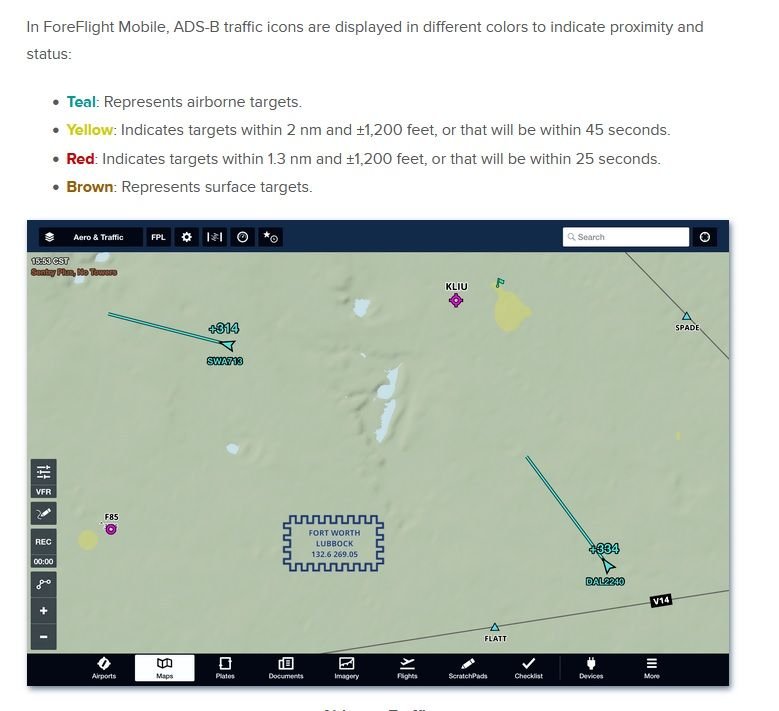
For myself, I get to look at the pretty colors. If I was the AA plane the helo would have been red, but it was close enough to be red even if it was going behind me.
Last edited by island_airphoto; 20th October 2025 at 22:54.
Joined: Apr 2009
Posts: 2,049
Likes: 535
From: Wherever it is this month
In respect of the Army pilots' height keeping, how relevant might it be that the FAA Airman Certfication Standards for helicopter instrument ratings (IH.IV.A.S1 and elsewhere) specify a required accuracy of plus or minus 100 feet? An argument that the pilots were negligent for deviating by less than that would surely be open to challenge, even before considering that they were flying visually and therefore would have been expected to spend more time looking outside than scanning instruments (leading to less accurate height keeping). This would bring the focus squarely back onto the FAA's airspace management and control. Was it reasonable to expect pilots to fly at precisely 200 feet, plus or minus zero?

Joined: Aug 2009
Aviation Qualifications: Military
Posts: 9,346
Likes: 2,187
From: Texas
In respect of the Army pilots' height keeping, how relevant might it be that the FAA Airman Certfication Standards for helicopter instrument ratings (
Also, as an aside the term "altitude" is typically used in aviation.
 (Yes, I know that DH for a precision approach is "decision height"...and HAT is shown on approach plates (Height Above Touchdown).
 Joined: Apr 2009
Posts: 2,049
Likes: 535
From: Wherever it is this month
What has that got to do with this event? They were not on an IFR flight plan.
Also, as an aside the term "altitude" is typically used in aviation. (Yes, I know that DH for a precision approach is "decision height"...and HAT is shown on approach plates (Height Above Touchdown).
Also, as an aside the term "altitude" is typically used in aviation.
(Yes, I know that DH for a precision approach is "decision height"...and HAT is shown on approach plates (Height Above Touchdown).Why do I think the IFR ACS might be relevant? Because it specifies the accuracy the FAA requires of skilled pilots when separation is to be achieved by procedural means. The fact that the "designed" separation between the 33 approach slope and the top of Route 4 was less than the allowable error for skilled pilots could be used to rebut an allegation of negligent flying as the cause of the accident. The Army no doubt has its own standards document, but I'd be surprised if it was radically different. Building the argument off the FAA's own document forces the focus onto its route design and visual separation procedures.
As to why this might be relevant to VFR flying - is it your opinion that parameters should be flown more accurately in VFR than in IFR? In any case, I have now dug further into the ACS and the same tolerance is prescribed for commercial VFR helicopter operations (see CH.VII.A.S8).
Last edited by Easy Street; 21st October 2025 at 14:16.
Joined: Mar 2015
Posts: 905
Likes: 321
From: Virginia, USA
Joined: Apr 2009
Posts: 2,049
Likes: 535
From: Wherever it is this month
Joined: Jul 2013
Aviation Qualifications: Non-Aircrew
Posts: 1,391
Likes: 678
From: Within AM radio broadcast range of downtown Chicago
Thank you, I'd missed that. And on re-reading the preliminary report, I see that the NTSB described the routes using amsl. So I stand corrected on the route definition. That brings altimetry errors into play for erosion of the "designed" separation margin, which makes the design even more unsafe. But the point remains that PAT25's 78 foot deviation above the route maximum altitude is within the FAA's tolerance for commercial and instrument flying accuracy by helicopter pilots.
That being said, even though the FAA published a certain tolerance, and the helicopter's 78 foot deviation was within that tolerance, I think it is quite likely (if not certain) that on this particular subpart of the overall factual record, the plaintiffs will argue that the Army knew or should have known that despite the deviation being within the tolerance, such a deviation nonetheless was significantly unsafe and therefore negligent on the Army's part. It would be argued that the Army had a legal duty independent of what FAA published to operate its helicopters safely. The acts and omissions of more than one actor in a given situation can be oustide the established duties of care and therefore negligent. (I'm imagining that military aviators may disagree insofar as it may be an article of faith as well as military regulation that the FAA is absolutely the one responsible party for civil controlled airspace, but as a legal point I think plaintiffs will attack it.)
Joined: Apr 2009
Posts: 2,049
Likes: 535
From: Wherever it is this month
Pegase Driver
Joined: May 1997
Aviation Qualifications: ATCO
Posts: 4,456
Likes: 1,168
From: Europe
The 78 feet deviation by the Mil Heli is not the cause of this accident . I hope the lawyers during the trial do not focus on that and minimize the rest .
Bit of historical background : when designing this route decades ago they must have followed basic ICAO/ FAA principles . separation IFR-VFR is 500 feet . allowed deviation then was 100 ft either way , so even if one a/c is 100ft above and the other 100ft too low , there would still be 300 ft separation preventing a collision ,
When that was introduced decades ago I bet you a bottle of (real) Champagne that the procedure was use of that route 4 was restricted during RWY 33 arrivals and RWY 15 departures. It was one or the other but not both simultaneously .
How , when and why , over time , did it degraded to the point that this restriction could be disregarded would be interested to investigate and unveil . The why I think we know, i.e. enabling to move more and more traffic, but when and by who we don't. How and on who's pressure did the numerous previous incidents got disregarded is another question worth asking . Not why the Heli pilot was flying 78 ft too high .
Throwing the Heli pilot (and perhaps also the controller on duty) "under the bus" as you say in your country, would be so wrong as it would prevent getting to the truth and learn the real lessons of this accident .
Bit of historical background : when designing this route decades ago they must have followed basic ICAO/ FAA principles . separation IFR-VFR is 500 feet . allowed deviation then was 100 ft either way , so even if one a/c is 100ft above and the other 100ft too low , there would still be 300 ft separation preventing a collision ,
When that was introduced decades ago I bet you a bottle of (real) Champagne that the procedure was use of that route 4 was restricted during RWY 33 arrivals and RWY 15 departures. It was one or the other but not both simultaneously .
How , when and why , over time , did it degraded to the point that this restriction could be disregarded would be interested to investigate and unveil . The why I think we know, i.e. enabling to move more and more traffic, but when and by who we don't. How and on who's pressure did the numerous previous incidents got disregarded is another question worth asking . Not why the Heli pilot was flying 78 ft too high .
Throwing the Heli pilot (and perhaps also the controller on duty) "under the bus" as you say in your country, would be so wrong as it would prevent getting to the truth and learn the real lessons of this accident .