


Flying TRACK iso HEADING


Joined: Jun 2007
Posts: 3,443
Likes: 39
From: Wanderlust

Only half a speed-brake

Joined: Apr 2003
Posts: 4,459
Likes: 136
From: Commuting not home
NGjockey
EO climb out paths are no IFR procedures, it's operators responsibility. How much of allowance is included depends on the provider to whom it is outsourced, and what the airline would ask for.
IT IS SURVIVAL CRITICAL TO FLY TRACKS AS PRECISELY AS POSSIBLE.
In an obstacle limited environment, usually witnessed by a complex routing of the EFP such as you provided, any extra padding beyond the regulatory minimum width of the protection area will incur a payload restriction. For every single departure. This is a massive economical problem and for long haul liners a real payload range issue. Hence any performance evaluation / guarantee will include the MTOM at common less than-favourite conditions for the given homebase rwy and EFP.
You do not need to ask at all then if the calculated corridor has been widened beyond the minimum. And when you see those numbers it is freaking narrow. IIRC 800 m each side from the theoretical centreline EASA rules, though I heard once the FAA are more reasonable.
EO climb out paths are no IFR procedures, it's operators responsibility. How much of allowance is included depends on the provider to whom it is outsourced, and what the airline would ask for.
IT IS SURVIVAL CRITICAL TO FLY TRACKS AS PRECISELY AS POSSIBLE.
In an obstacle limited environment, usually witnessed by a complex routing of the EFP such as you provided, any extra padding beyond the regulatory minimum width of the protection area will incur a payload restriction. For every single departure. This is a massive economical problem and for long haul liners a real payload range issue. Hence any performance evaluation / guarantee will include the MTOM at common less than-favourite conditions for the given homebase rwy and EFP.
You do not need to ask at all then if the calculated corridor has been widened beyond the minimum. And when you see those numbers it is freaking narrow. IIRC 800 m each side from the theoretical centreline EASA rules, though I heard once the FAA are more reasonable.

Joined: Sep 2016
Posts: 937
Likes: 67
From: USA
I don't doubt that many different airplanes have this feature. But it's specifically designed in and provided to the pilots. But what Tolip is saying is that every IFR plane has this ability naturally as a side effect of being able to fly an instrument approach. After all, if it can follow a track defined by a localizer or VOR radial, why can't it follow a track when ATC says "fly track 280" (from your present position?)
You can see that those are two separate things and the former doesn't imply the latter, but Tolip doesn't seem to be seeing it. Not even having RNAV means you can necessarily do this (i.e., routine vectoring). It may or may not be possible with obscure FMS jiu jitsu (like someone posted for the 737) but even that's still a far cry from having it on a heading-type knob on the glareshield (like your 767), which is what would be needed when they're firing off speeds, headings, and altitudes at you every few seconds.

Joined: May 2001
Posts: 1,424
Likes: 34
From: London,England
If you fly a SRA into Gibraltar nowadays (A320) ATC ask you if you would like to fly tracks or headings, I guess tracks makes everyone's life easier in the shifting winds around the rock. The instructions still come as heading but we have the aircraft in track mode, I have no idea if this is done elsewhere as GIB is the only place I have flown an SRA for years.


Joined: Nov 1999
Aviation Qualifications: ATPL
Posts: 3,150
Likes: 744
From: UK
Yes, good point. At GIB, there are only a few aircraft in the airspace at any one time and well spaced out, so easy for ATC to allow for both tracks and headings I guess.
tolip1 asks about flying tracks in procedures. Simple aircraft without IRS/GPS will not be able to measure and allow for wind, so they cannot automatically follow a track unless it is referenced to a suitable ground based navaid.
tolip1 asks about flying tracks in procedures. Simple aircraft without IRS/GPS will not be able to measure and allow for wind, so they cannot automatically follow a track unless it is referenced to a suitable ground based navaid.
Joined: Oct 2009
Posts: 45
Likes: 0
From: Prescott, AZ
In the absence of an engine out special procedure provided by the carrier or operator the engine out obstacle clearance criteria are based on flying runway track until clean up altitude. That is why the Boing defaults to track on takeoff.
Joined: Jan 2007
Posts: 352
Likes: 6
From: Canada
I've never been asked to fly an assigned track by ATC but it would make my day if it happened. IRS is over 70 years old. GPS has been widely available for over 30 years. Time enough for procedures to catch up to technology. It's been a long time since I saw an IFR aircraft that didn't have at least a GPS, which means 99.99% of IFR aircraft can fly track. Sadly, this is not normally part of training and many pilots don't understand how to do this in their aircraft even though it's a basic flying skill.
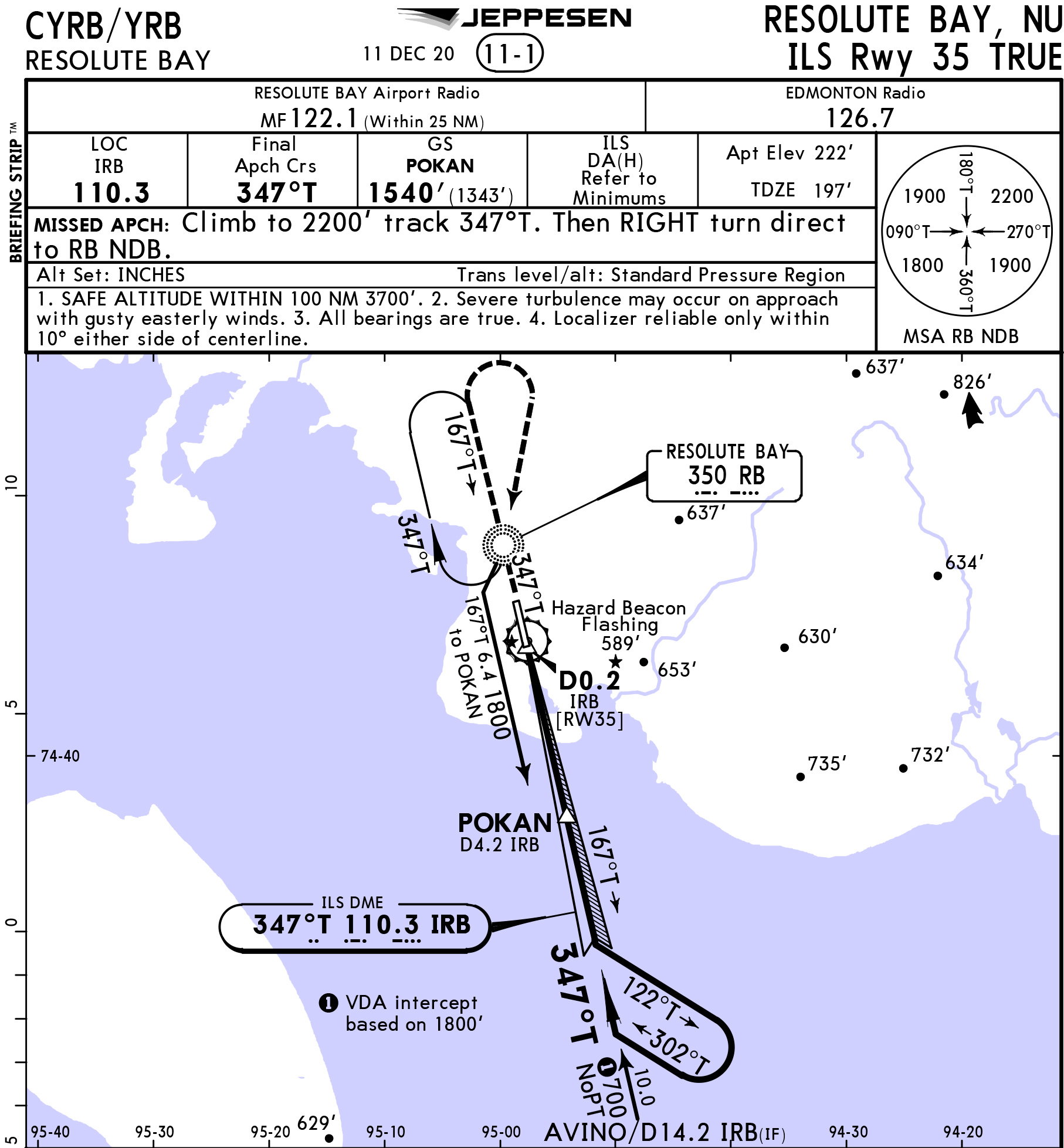
It's ridiculous that in this day and age we are using magnetic heading instead of true track, but some day we'll get there.
It's ridiculous that in this day and age we are using magnetic heading instead of true track, but some day we'll get there.
Joined: Nov 1999
Aviation Qualifications: ATPL
Posts: 3,150
Likes: 744
From: UK
"I've never been asked to fly an assigned track by ATC...............IRS is over 70 years old. GPS has been widely available for over 30 years. Time enough for procedures to catch up to technology. It's been a long time since I saw an IFR aircraft that didn't have at least a GPS, which means 99.99% of IFR aircraft can fly track............
It's ridiculous that in this day and age we are using magnetic heading instead of true track, but some day we'll get there."
Using magnetic must be a PITA in places such as Canada, but isn't it because we still have basic C152s etc. using the same runways as IRS/GPS aircraft? And if all the ADIRUs + GPS failed, (yes, I know....), even an A320 has a normal magnetic field powered compass.
It's ridiculous that in this day and age we are using magnetic heading instead of true track, but some day we'll get there."
Using magnetic must be a PITA in places such as Canada, but isn't it because we still have basic C152s etc. using the same runways as IRS/GPS aircraft? And if all the ADIRUs + GPS failed, (yes, I know....), even an A320 has a normal magnetic field powered compass.
Only half a speed-brake
Joined: Apr 2003
Posts: 4,459
Likes: 136
From: Commuting not home
Time elapsed between taking a seat in GPS-equipped SEP and GPS equipped CS-25 jet is 6 years for me, in the favour of the bug-smasher. Midpoint Y2k.
Having said so, that particullar jetliner knew how to fly IRS based tracks since about 1984.
Having said so, that particullar jetliner knew how to fly IRS based tracks since about 1984.
Guest
Joined: Apr 2009
Posts: 3,336
Likes: 0
From: On the Beach
Joined: Mar 2017
Posts: 290
Likes: 130
From: Bristol
Let’s consider this situation (in an A320)
You’re asked to fly a track of (say) 270deg. Let us assume that parallels your landing runway to the north, effectively a left downwind leg. You are currently in HDG so you push HDG/VS to change to TRK and adjust to 270.
The reason ATC want you flying a track is because there is a strong northerly wind and they want you away from the runway.
The gusty wind gets stronger.
What happens to the a/c?
You’re asked to fly a track of (say) 270deg. Let us assume that parallels your landing runway to the north, effectively a left downwind leg. You are currently in HDG so you push HDG/VS to change to TRK and adjust to 270.
The reason ATC want you flying a track is because there is a strong northerly wind and they want you away from the runway.
The gusty wind gets stronger.
What happens to the a/c?
Joined: Feb 2003
Posts: 543
Likes: 338
From: Blue sky
Joined: Feb 2003
Posts: 543
Likes: 338
From: Blue sky
As a pilot I would say heading is the gold standard, as track is ground based. Relative air movement is what makes us fly, not relative ground movement.The difference is wind. A pilot who is not wind minded lacks a lot of situational awareness as everybody seems to think at the end of the day flying is all about a single straight line. It is a continuous correction based on outside wind values. It is a correction of turn radius when turning final, in the departure,... Knowledge of wind vector is important at every stage of the flight. Liftoff, touchdown, climb, cruise, descent,...
The track based vectors surely aren't going to reduce the number of localiser overshoots on parallel runways I've witnessed... Are we going to blame ATC now for that?
The track based vectors surely aren't going to reduce the number of localiser overshoots on parallel runways I've witnessed... Are we going to blame ATC now for that?
Joined: Jan 2007
Posts: 352
Likes: 6
From: Canada
Uplinker
The real reason is not because there are still a few aircraft around that find it more convenient, but because all aircraft found it more convenient way back when the system was put in place. The technology has moved on, the procedures haven't. That's the way we've always done it may not be a great reason, but it's still the reason. If we make the change, the C152 can equip with a cheap VFR GPS or do the math for the variation. I can't imagine a situation where an A320 would only have compass for direction information while still having flight controls to use that information but in that case they could do the math as well.
The fact is, at some point we are going to make the change. Why not now?
The real reason is not because there are still a few aircraft around that find it more convenient, but because all aircraft found it more convenient way back when the system was put in place. The technology has moved on, the procedures haven't. That's the way we've always done it may not be a great reason, but it's still the reason. If we make the change, the C152 can equip with a cheap VFR GPS or do the math for the variation. I can't imagine a situation where an A320 would only have compass for direction information while still having flight controls to use that information but in that case they could do the math as well.
The fact is, at some point we are going to make the change. Why not now?
Joined: Feb 2003
Posts: 543
Likes: 338
From: Blue sky
So will ATC be allowed to have us fly groundspeeds then? Makes their life a lot easier when dealing with converging traffic as well... Because we couldn’t measure it "back then” but have the technology now.
We can perfectly fall out of the sky in the airmass providing the perfect requested track at a certain groundspeed... There is a difference between what we use and need to fly, and what we provide to the outside world. It's not because we have to comply with a track request, we have to change what we use on the flightdeck. We can perfectly fly HDG up and provide tracks on many aircraft. Tracks are dynamic influenced by the wind. But our primary point of reference is the air mass because that’s how our wings work.
What about hovering heli's? Their track indication is going to be all over the place close to zero airspeed. What in visual circuits? In track values all turns are going to be 90°. That should to be easy turning... right...?
We can perfectly fall out of the sky in the airmass providing the perfect requested track at a certain groundspeed... There is a difference between what we use and need to fly, and what we provide to the outside world. It's not because we have to comply with a track request, we have to change what we use on the flightdeck. We can perfectly fly HDG up and provide tracks on many aircraft. Tracks are dynamic influenced by the wind. But our primary point of reference is the air mass because that’s how our wings work.
What about hovering heli's? Their track indication is going to be all over the place close to zero airspeed. What in visual circuits? In track values all turns are going to be 90°. That should to be easy turning... right...?
Last edited by BraceBrace; 7th April 2021 at 17:28.
Joined: Jan 2007
Posts: 352
Likes: 6
From: Canada
BraceBrace you seem to be indicating that flying a given track is difficult. It's really not that hard and all pilots manage it when learning to fly in order to navigate to a given point. Maybe your instructor hasn't covered that yet but don't worry, you'll get there.
When flying a visual circuit yes, turns are 90°. If the runway direction is 180°, downwind track is 360°, base is 90°, and final is 180°. It's very simple and there's no need to worry about air masses.
When flying a visual circuit yes, turns are 90°. If the runway direction is 180°, downwind track is 360°, base is 90°, and final is 180°. It's very simple and there's no need to worry about air masses.