


a320 ECAM gotcha's

Thread Starter
Joined: Feb 2011
Posts: 98
Likes: 0
From: Europe
a320 ECAM gotcha's
Hi everyone. I just thought it would be useful for all of us to share some ECAM gotcha's we know or we have experienced. I've flown the A320 for a good few years now and I know a few but I am sure I do not know most of them.
I start:
If ENG1 is failed and ENG2 is on fire, the ECAM will ask you to shut ENG2 down! - not something you want to do really.
Your turn, which ones can you share for the benefit of us all?
I start:
If ENG1 is failed and ENG2 is on fire, the ECAM will ask you to shut ENG2 down! - not something you want to do really.
Your turn, which ones can you share for the benefit of us all?


Joined: Sep 2011
Posts: 352
Likes: 148
From: FL390
I don't think there are any gotchas any more, really, other than the one you describe. Just read it really carefully (ie don't turn off GEN 2 if it's GEN 1 that failed... 🙁 and remember that there is often useful information in the level 3 text in the FCOM that can aid your decision making.
and remember that there is often useful information in the level 3 text in the FCOM that can aid your decision making.


Joined: Jun 2007
Posts: 3,443
Likes: 39
From: Wanderlust
If ENG1 is failed and ENG2 is on fire, the ECAM will ask you to shut ENG2 down! - not something you want to do really.

Joined: Feb 2000
Posts: 4,705
Likes: 589
From: 500 miles from Chaikhosi, Yogistan
Besides the memory items (and even then somewhat) THINK before DO.
ECAMs are not to memorise, but what I did as study notes is write out the steps of the ECAM and beside each step note WHY that button is being pushed and WHAT will happen then.
ECAMs are not to memorise, but what I did as study notes is write out the steps of the ECAM and beside each step note WHY that button is being pushed and WHAT will happen then.
Joined: Mar 2006
Posts: 1,115
Likes: 86
From: England
Was the issue identified in the simulator or elsewhere.
Has Airbus been asked to comment, to confirm or otherwise that the aircraft is the same. If not why not, what specific inputs does the ECAM consider.
What is the manufacturer's advice on ECAM / checklist use - think before do, or a mix of must do vs should do, and what aspects should be considered and when. Would this advice differ between ECAM and FCOM.
Has Airbus been asked to comment, to confirm or otherwise that the aircraft is the same. If not why not, what specific inputs does the ECAM consider.
What is the manufacturer's advice on ECAM / checklist use - think before do, or a mix of must do vs should do, and what aspects should be considered and when. Would this advice differ between ECAM and FCOM.
Only half a speed-brake

Joined: Apr 2003
Posts: 4,459
Likes: 136
From: Commuting not home
Reaching my ATPL check ride at about 2500 total, a friendly captain mentioned in a discussion: "That old mantra to Aviate, Navigate, Communicate and Manage the Systems".
That got my attention, before that day I never heard there were 4 elements. Probably not even any time since, including echoes within the PPRuNe. With the technology and inherent procedures of contemporary Airbus, such 4 stepped dance works very well.
One of the ECAM perils is its existence itself if not properly understood. In this respect the necessary repetition of EFATO drills every SIM complicates things a bit on the liveware side, creating a room to form a wrong habit of acting the ECAM lines straight away, instead of thinking first.
A case for my point: How many pilots and airlines you know, who'd say "ECAM action - I have communication". Formally not required and implied by the task sharing rules, but you cannot really fault their urge. Compare that to how many people you know who'd shout "confirm the malfunction"?
With a pencil and paper in hand, reading the FCTM, one can count 7 maybe 9 cognitive steps needed before calling "ECAM ACTIONS". That is my gotcha.
N.B. by definition, if it's on the ECAM it is not a critical task.
FCTM ECAM / ABN PROC trivia:
That got my attention, before that day I never heard there were 4 elements. Probably not even any time since, including echoes within the PPRuNe. With the technology and inherent procedures of contemporary Airbus, such 4 stepped dance works very well.
One of the ECAM perils is its existence itself if not properly understood. In this respect the necessary repetition of EFATO drills every SIM complicates things a bit on the liveware side, creating a room to form a wrong habit of acting the ECAM lines straight away, instead of thinking first.
A case for my point: How many pilots and airlines you know, who'd say "ECAM action - I have communication". Formally not required and implied by the task sharing rules, but you cannot really fault their urge. Compare that to how many people you know who'd shout "confirm the malfunction"?
With a pencil and paper in hand, reading the FCTM, one can count 7 maybe 9 cognitive steps needed before calling "ECAM ACTIONS". That is my gotcha.
N.B. by definition, if it's on the ECAM it is not a critical task.
FCTM ECAM / ABN PROC trivia:
- NORMAL OPERATIONS: The first responsibility of the PM is to MONITOR the flight path, the navigation [...]
Last edited by FlightDetent; 13th May 2020 at 17:56.
Joined: Nov 2007
Posts: 225
Likes: 15
From: malta
Lots of people tend to blindly follow procedures when new on an aircraft because there is so much new stuff to get through.
Such an failure might "wake them up again" and force them again to stay thinking for themselves again.


Joined: Mar 2018
Posts: 2,265
Likes: 1,171
From: Central UK
This is simply the root of what so many modern accidents are made of.
Last edited by meleagertoo; 13th May 2020 at 19:07.
Joined: Apr 2020
Posts: 28
Likes: 0
From: Borders
You'd hope so, but I've seen more than one person shut down the only engine that was developing thrust. To be fair, I've seen that happen with the same exercise on a type without ECAM, so it's not a specific Airbus issue!
Only half a speed-brake
Joined: Apr 2003
Posts: 4,459
Likes: 136
From: Commuting not home
Because it is intrinsically human to act on impulse when overloaded. And thus there is value in SIM scenarios where the trainees get served more than they can handle, although careful guidance of the instructor is needed to stay on the beneficial side.
Given the choice in a possible real-life complex engine fail event, as a pax I'd rather sit behind a jockey whose hand had slipped in the forming years compared to a virgin.
Modern accidents are made of the same old good stuff that has always worked: Complacency, incompetence and fatigue. Far easier to sort with fresh colleagues, as opposed to experienced bums if their motivation got eroded through various perils of life.
Given the choice in a possible real-life complex engine fail event, as a pax I'd rather sit behind a jockey whose hand had slipped in the forming years compared to a virgin.
This is simply the root of what so many modern accidents are made of.
Last edited by FlightDetent; 16th May 2020 at 09:39.
Joined: Mar 2005
Aviation Qualifications: Military
Posts: 6,563
Likes: 953
From: Aus
Because it is intrinsically human to act on impulse when overloaded
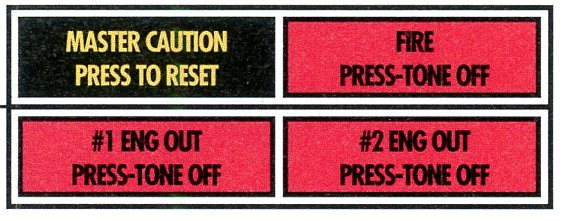
Trick played was at the end of a training sortie and the engine cool down requirements had been met he would give you an engine fire, right hand caption in the block of four, #2 engine, right? Well, everyone grabbed the #2 engine fire handle which also closed the fuel shut off and closed the throttle. Problem always was the fire he simulated was in #1 engine. Lesson, cockpit ergonomics of having the fire warning caption immediately above the #2 engine out caption, AND LOOK AT THE FIRE HANDLE TO SEE WHICH ONE IS LIT.

Joined: Nov 1999
Aviation Qualifications: ATPL
Posts: 3,150
Likes: 744
From: UK
SOP on all the fleets I have flown was to ALWAYS cross confirm with PF any thrust lever, engine master switch and fire push button BEFORE moving them. That surely is day-one of multi-engine flying training ??
That helicopter fire warning panel is awful design - just asking for problems. Like the engine instrument display panels in the B737 at Kegworth.
....Unless Eng 2 is about to take out hydraulics, or fuel tank, or wing?. Depends on the situation - at least you can fly a FBW Airbus with no engines, and you might be able to restart Eng 1.
People much cleverer than I, have determined the ECAM priorities. They are probably right.
That helicopter fire warning panel is awful design - just asking for problems. Like the engine instrument display panels in the B737 at Kegworth.
If ENG1 is failed and ENG2 is on fire, the ECAM will ask you to shut ENG2 down! - not something you want to do really.
People much cleverer than I, have determined the ECAM priorities. They are probably right.
Joined: Jun 2007
Posts: 3,443
Likes: 39
From: Wanderlust
Suggesting to shutdown Engine on fire is proper nothing wrong with that. You may not want to at the moment is a different matter. If on approach then you may not but if there's no airfield nearby the engine needs to be shut down rather than wait till it explodes. Off course you would have identified the forced landing field.
