


New 30-40 seats regional?

Thread Starter
Joined: Jul 2008
Posts: 2
Likes: 0
From: South Korea
New 30-40 seats regional?
Since 37-seat Embraer ERJ-135 and 34-seat Fairchild Dornier 328JET entered service in 1999, there has been no new development in this segment.
Mitsubishi MRJ was orginally planned as a 30-50 seater in 2003 but it grew up to 70-90 seats in 2005 and it seems no OEM is seriously looking at the 30-40 seat segment.
Will there be no new development in the 30-40 seat segment in the next 10 years and existing regionals such as Jetstream 31/41, Saab 340, EMB-120 Brasilia linger on until replaced by larger new planes?
Mitsubishi MRJ was orginally planned as a 30-50 seater in 2003 but it grew up to 70-90 seats in 2005 and it seems no OEM is seriously looking at the 30-40 seat segment.
Will there be no new development in the 30-40 seat segment in the next 10 years and existing regionals such as Jetstream 31/41, Saab 340, EMB-120 Brasilia linger on until replaced by larger new planes?
Last edited by datafuser; 11th September 2008 at 07:16.


Joined: Oct 2007
Posts: 782
Likes: 21
From: netherlands
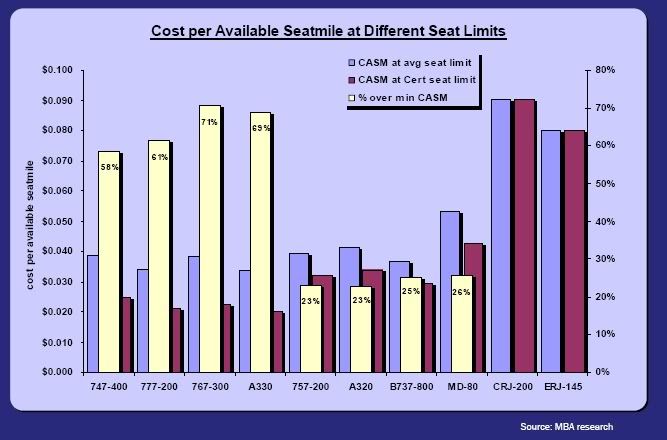
I think unit costs of the CRJ and Emb 135 / 145's have become unfeasible. So maybe there is a market for something really smashing unit prices..
Probably a next gen prop (fuel efficient) significantly lighter / smaller then the Bombardier Dash series and ATR's. On longer flights airlines will probably rather cut frequencies / fly bigger aircraft ..
Boeing / Airbus see a market for 2000-3000 in the next 20 yrs.
Probably a next gen prop (fuel efficient) significantly lighter / smaller then the Bombardier Dash series and ATR's. On longer flights airlines will probably rather cut frequencies / fly bigger aircraft ..
Boeing / Airbus see a market for 2000-3000 in the next 20 yrs.
Joined: Aug 2005
Posts: 834
Likes: 0
From: Estonia
a next gen prop (fuel efficient) significantly lighter / smaller then the Bombardier Dash series and ATR's. On longer flights airlines will probably rather cut frequencies / fly bigger aircraft ..


Joined: Aug 2002
Posts: 1,320
Likes: 9
From: Switzerland, Singapore
correct, but it's not (only) the unit cost but mainly the fuel costs that made most regional jet redundant.
Tendency goes towards 100+ seaters, since already 70seaters and even 100- seaters become less efficient. Workhorses are still the biggest narrow bodies like the A320 and the B737. You have the least fix costs per seat, that's why most low cost carriers use them.
Dani
Tendency goes towards 100+ seaters, since already 70seaters and even 100- seaters become less efficient. Workhorses are still the biggest narrow bodies like the A320 and the B737. You have the least fix costs per seat, that's why most low cost carriers use them.
Dani
Joined: Aug 2005
Posts: 834
Likes: 0
From: Estonia
correct, but it's not (only) the unit cost but mainly the fuel costs that made most regional jet redundant.
Tendency goes towards 100+ seaters, since already 70seaters and even 100- seaters become less efficient. Workhorses are still the biggest narrow bodies like the A320 and the B737. You have the least fix costs per seat, that's why most low cost carriers use them.
Tendency goes towards 100+ seaters, since already 70seaters and even 100- seaters become less efficient. Workhorses are still the biggest narrow bodies like the A320 and the B737. You have the least fix costs per seat, that's why most low cost carriers use them.
Joined: Oct 2007
Posts: 782
Likes: 21
From: netherlands
correct, but it's not (only) the unit cost but mainly the fuel costs that made most regional jet redundant.
Dani, excuse me I meant costs per unit, so more all costs per seatmile. Crew, write off, fuell, landing rights, maintenance etc.
What would the target cruise true airspeed be?
Chornedsnorkack, the regional jets are pretty fast enabling them to do significant distances. I guess an aircraft bringing down cost would be slower, like a Q400 or even lower making it less suitable for longer flights.
Dani, excuse me I meant costs per unit, so more all costs per seatmile. Crew, write off, fuell, landing rights, maintenance etc.
What would the target cruise true airspeed be?
Chornedsnorkack, the regional jets are pretty fast enabling them to do significant distances. I guess an aircraft bringing down cost would be slower, like a Q400 or even lower making it less suitable for longer flights.
Joined: May 2000
Posts: 510
Likes: 0
From: New York
37-50 seat RJs are junk airplanes that have very high seat mile costs. Even then, when flying some routes that require alternates, they wind up throwing pax off the airplane for weight restrictions. The problem is airline managements in the US have been improperly using them on inappropriate routes in attempts to damage major airline unions and drive down compensation levels.
Joined: Oct 2007
Posts: 782
Likes: 21
From: netherlands
3 Abreast seems most likely for such a small seat count meaning a cabin lenght of about 14 rows x 30 inch = 420 inch or 10.5 meters.
4 Abreast (maybe frontal area / drag is less improtant for a slower prop 12 rows 360 inch 9 meters.
Engines : modern scimitar props and 2200hp per engine.
High wing to ease quick (de)boarding.
Maybe a modern smaller/lighter ATR/F50 kind of design.. Maybe double bubble to avoid the typical luggage issues of existing RJ's.
Max speed 340 mph (540 km/h) ? Range 2000km / 1200nm?
Maybe the DHC-8-200 is an oldish heavy shrink?
Goal would be to keep OEW under 10.000 kg

4 Abreast (maybe frontal area / drag is less improtant for a slower prop 12 rows 360 inch 9 meters.
Engines : modern scimitar props and 2200hp per engine.
High wing to ease quick (de)boarding.
Maybe a modern smaller/lighter ATR/F50 kind of design.. Maybe double bubble to avoid the typical luggage issues of existing RJ's.
Max speed 340 mph (540 km/h) ? Range 2000km / 1200nm?
Maybe the DHC-8-200 is an oldish heavy shrink?
Goal would be to keep OEW under 10.000 kg
Last edited by keesje; 14th October 2008 at 13:58.
Joined: Aug 2005
Posts: 834
Likes: 0
From: Estonia
I guess an aircraft bringing down cost would be slower, like a Q400 or even lower making it less suitable for longer flights.
Engines : modern scimitar baldes and 2200hp per engine.
Max speed 340 mph (540 km/h) ? Range 2000km / 1200nm?
Joined: Oct 2007
Posts: 782
Likes: 21
From: netherlands
Would you want a turboprop for those speeds, or infernal combustion engine? How would a brand new designed and optimized infernal combustion engine compare against turbine?
I think in general power requirements >500 hp favor turbines. I read theoretically they could be ~ 20 % more fuel efficient then turbines.
A infernal combustion engines would weigh a lot more however, requiring a heavier wing, orsionbox, landinggear etc. and it would be a challenge to make as reliable as a turbine. (lots of moving parts, resonance)
Dryweight of a RR Griffon is 900kg, a PW100 about half (450kg) Add up all additional structure. The more efficient fuel consumption would have to compensate the weight on high frequency short trips..
But I'm not aware of the latest development in this area (couldn't fin a new high powered cilinder engine..
I think in general power requirements >500 hp favor turbines. I read theoretically they could be ~ 20 % more fuel efficient then turbines.
A infernal combustion engines would weigh a lot more however, requiring a heavier wing, orsionbox, landinggear etc. and it would be a challenge to make as reliable as a turbine. (lots of moving parts, resonance)
Dryweight of a RR Griffon is 900kg, a PW100 about half (450kg) Add up all additional structure. The more efficient fuel consumption would have to compensate the weight on high frequency short trips..
But I'm not aware of the latest development in this area (couldn't fin a new high powered cilinder engine..
Joined: Aug 2005
Posts: 834
Likes: 0
From: Estonia
An infernal combustion engine does not need to have pistons. Wankel engine is distinguished for having high power to weight and few moving parts.
How would you design a big (2000 hp) wankel engine?
Also, a wankel engine is neither a "turbine" nor "piston" engine. What kind of performance limits apply to wankels?
How would you design a big (2000 hp) wankel engine?
Also, a wankel engine is neither a "turbine" nor "piston" engine. What kind of performance limits apply to wankels?
Joined: Nov 2007
Posts: 256
Likes: 4
From: California
a wankel engine is neither a "turbine" nor "piston" engine. What kind of performance limits apply to wankels?
The Wankel is considerably less efficient, fuel wise, than a piston 4 stroke engine, but can weigh much less.
There are some smaller two stroke diesels (jet A) engines on the market that are extremely fuel efficient. I have no idea what that might weigh in the 1500-2000hp category, but certainly much more than a turbine or a wankel.
