


Jeff Bezoz - Spaceflight


Joined: Feb 2001
Posts: 6,729
Likes: 104
From: The Winchester
 system whereas other sources say it’s retro rockets (which is what Soyuz uses), be interesting to know what’s actually used.

Joined: Feb 2001
Posts: 6,729
Likes: 104
From: The Winchester
FWIW the answer (as far as it goes) is tucked away on the Blue Origin website and was a phrase used pretty much verbatim by the official commentator on the day..
“ The bottom of the capsule has a retro-thrust system that expels a pillow of air so the capsule lands at just 1.6 km/h (1 mph) ”…
so unlike Soyuz it’s not a pyrotechnic system, which would explain the lack of flames, smoke, and relative lack of dust.
“ The bottom of the capsule has a retro-thrust system that expels a pillow of air so the capsule lands at just 1.6 km/h (1 mph) ”…
so unlike Soyuz it’s not a pyrotechnic system, which would explain the lack of flames, smoke, and relative lack of dust.




Ecce Homo! Loquitur...

Joined: Jul 2000
Aviation Qualifications: Spotter
Posts: 24,662
Likes: 7,348
From: Peripatetic
https://spaceflightnow.com/2022/09/1...-ns-23-launch/
Blue Origin capsule escapes rocket failure on uncrewed flight over Texas
The suborbital rocket developed by Jeff Bezos’s space company Blue Origin suffered its first launch failure Monday, when the main engine on the New Shepard booster appeared to cut out about a minute after liftoff from West Texas. The crew capsule, which carried NASA-funded experiments but no people, safely landed under parachutes after firing an abort motor to escape the stricken booster.
The unplanned in-flight abort saved the company’s reusable capsule, and the mission’s experiment payloads stowed inside. But one of Blue Origin’s two operational suborbital New Shepard boosters, which hosted its own research payloads, was lost in the launch failure.
Blue Origin’s live webcast showed the rocket lifting off from the company’s sprawling 80,000-acre launch facility north of Van Horn, Texas, around 10:26 a.m. EDT (9:26 a.m. CDT; 1426 GMT), after a nearly hour-long delay.
A single hydrogen-fueled BE-3 engine powered the 60-foot-tall (18-meter) booster off the launch pad. About a minute after liftoff, as the rocket neared supersonic speed, the plume from the BE-3 engine appeared to change color and shape, then the powerplant appeared to shut down, causing the rocket to tilt off its planned trajectory at an altitude of around 28,000 feet (8,500 meters).
The solid-fueled abort motor on bottom of the crew capsule fired immediately, delivering an instant pulse of 70,000 pounds of thrust to push the craft away from the failing rocket.
The four-ton capsule spun around and tumbled after the abort motor’s brief firing, which propelled the vehicle hundreds of feet away from the New Shepard rocket. Guided by reaction control system thrusters, the capsule’s motion stabilized as it deployed three drogue parachutes and three main chutes for a relatively gentle ride back to the ground. The capsule was designed to touch down at a speed of around 3 mph (5 kilometers per hour).
Blue Origin capsule escapes rocket failure on uncrewed flight over Texas
The suborbital rocket developed by Jeff Bezos’s space company Blue Origin suffered its first launch failure Monday, when the main engine on the New Shepard booster appeared to cut out about a minute after liftoff from West Texas. The crew capsule, which carried NASA-funded experiments but no people, safely landed under parachutes after firing an abort motor to escape the stricken booster.
The unplanned in-flight abort saved the company’s reusable capsule, and the mission’s experiment payloads stowed inside. But one of Blue Origin’s two operational suborbital New Shepard boosters, which hosted its own research payloads, was lost in the launch failure.
Blue Origin’s live webcast showed the rocket lifting off from the company’s sprawling 80,000-acre launch facility north of Van Horn, Texas, around 10:26 a.m. EDT (9:26 a.m. CDT; 1426 GMT), after a nearly hour-long delay.
A single hydrogen-fueled BE-3 engine powered the 60-foot-tall (18-meter) booster off the launch pad. About a minute after liftoff, as the rocket neared supersonic speed, the plume from the BE-3 engine appeared to change color and shape, then the powerplant appeared to shut down, causing the rocket to tilt off its planned trajectory at an altitude of around 28,000 feet (8,500 meters).
The solid-fueled abort motor on bottom of the crew capsule fired immediately, delivering an instant pulse of 70,000 pounds of thrust to push the craft away from the failing rocket.
The four-ton capsule spun around and tumbled after the abort motor’s brief firing, which propelled the vehicle hundreds of feet away from the New Shepard rocket. Guided by reaction control system thrusters, the capsule’s motion stabilized as it deployed three drogue parachutes and three main chutes for a relatively gentle ride back to the ground. The capsule was designed to touch down at a speed of around 3 mph (5 kilometers per hour).

Ecce Homo! Loquitur...
Joined: Jul 2000
Aviation Qualifications: Spotter
Posts: 24,662
Likes: 7,348
From: Peripatetic
https://spaceflightnow.com/2023/05/1...nder-contract/
NASA awards Blue Origin $3.4 billion Artemis moon lander contract
Blue Origin, the rocket company owned by Amazon-founder Jeff Bezos, has won a $3.4 billion NASA contract to build an Artemis lunar lander that will provide a downstream alternative to the Starship variant already being developed by SpaceX, the agency announced Friday.
“We are going to the Moon! Honored to be on this journey with @nasa to land astronauts on the Moon — this time to stay,” Bezos said in an Instagram post.
John Couluris, Blue Origin vice president for lunar transportation, said the company expects to chip in “well north” of the contract value to fully develop its “Blue Moon” lander, pushing the total cost of the project to around $7 billion. The first piloted landing, part of the fifth Artemis mission, is expected in the 2029 timeframe.
“On behalf of Blue Origin and the national team, I want to thank NASA personally,” Couluris said. “We’re very honored and humbled to be part of this incredible experience. We’re looking forward to participating on Artemis 5, and we’re looking forward to working together.”
Blue Origin’s national team includes Lockheed Martin, which will provide a refueling and servicing spacecraft; Boeing, which will supply docking technology; Draper, supplying guidance, navigation and simulator technology; Astrobotic Technology, with expertise in payload accommodations; and Honeybee Robotics to handle cargo delivery systems.
The contract requires Blue Origin to fly an unpiloted dress-rehearsal landing before astronauts float aboard and descend to the lunar surface during the Artemis 5 mission. That flight will follow the initial Artemis 3 moon landing, using SpaceX’s lander, in the 2025-26 timeframe.…
NASA awards Blue Origin $3.4 billion Artemis moon lander contract
Blue Origin, the rocket company owned by Amazon-founder Jeff Bezos, has won a $3.4 billion NASA contract to build an Artemis lunar lander that will provide a downstream alternative to the Starship variant already being developed by SpaceX, the agency announced Friday.
“We are going to the Moon! Honored to be on this journey with @nasa to land astronauts on the Moon — this time to stay,” Bezos said in an Instagram post.
John Couluris, Blue Origin vice president for lunar transportation, said the company expects to chip in “well north” of the contract value to fully develop its “Blue Moon” lander, pushing the total cost of the project to around $7 billion. The first piloted landing, part of the fifth Artemis mission, is expected in the 2029 timeframe.
“On behalf of Blue Origin and the national team, I want to thank NASA personally,” Couluris said. “We’re very honored and humbled to be part of this incredible experience. We’re looking forward to participating on Artemis 5, and we’re looking forward to working together.”
Blue Origin’s national team includes Lockheed Martin, which will provide a refueling and servicing spacecraft; Boeing, which will supply docking technology; Draper, supplying guidance, navigation and simulator technology; Astrobotic Technology, with expertise in payload accommodations; and Honeybee Robotics to handle cargo delivery systems.
The contract requires Blue Origin to fly an unpiloted dress-rehearsal landing before astronauts float aboard and descend to the lunar surface during the Artemis 5 mission. That flight will follow the initial Artemis 3 moon landing, using SpaceX’s lander, in the 2025-26 timeframe.…
Ecce Homo! Loquitur...
Joined: Jul 2000
Aviation Qualifications: Spotter
Posts: 24,662
Likes: 7,348
From: Peripatetic
FAA Statement on closure to the New Shepard mishap investigation:
"The FAA has closed the Blue Origin New Shepard 23 mishap investigation. The final report cites the proximate cause of the Sept. 12, 2022, mishap as the structural failure of an engine nozzle caused by higher-than-expected engine operating temperatures. The FAA required Blue Origin implement 21 corrective actions to prevent mishap reoccurrence, including redesign of engine and nozzle components to improve structural performance during operation as well as organizational changes.
During the mishap the onboard launch vehicle systems detected the anomaly, triggered an abort and separation of the capsule from the propulsion module as intended and shut down the engine. The capsule landed safety and the propulsion module was destroyed upon impact with the ground. All debris landed within the designated hazard area. Public safety was maintained at all times with no injuries or public property damage."
Addition notes on the FAA e-mail:
The closure of the mishap investigation does not signal an immediate resumption of New Shepard launches. Blue Origin must implement all corrective actions that impact public safety and receive a license modification from the FAA that addresses all safety and other applicable regulatory requirements prior to the next New Shepard launch.
Background:
The FAA oversaw the Blue Origin-led investigation to ensure the company complied with its FAA-approved mishap plan, the terms and conditions of its license and other regulatory requirements.
The FAA was involved in every step of the mishap investigation and granted NASA and the National Transportation Safety Board official observer status.
The mishap investigation report contains proprietary data and U.S Export Control information and is not available for public release.
"The FAA has closed the Blue Origin New Shepard 23 mishap investigation. The final report cites the proximate cause of the Sept. 12, 2022, mishap as the structural failure of an engine nozzle caused by higher-than-expected engine operating temperatures. The FAA required Blue Origin implement 21 corrective actions to prevent mishap reoccurrence, including redesign of engine and nozzle components to improve structural performance during operation as well as organizational changes.
During the mishap the onboard launch vehicle systems detected the anomaly, triggered an abort and separation of the capsule from the propulsion module as intended and shut down the engine. The capsule landed safety and the propulsion module was destroyed upon impact with the ground. All debris landed within the designated hazard area. Public safety was maintained at all times with no injuries or public property damage."
Addition notes on the FAA e-mail:
The closure of the mishap investigation does not signal an immediate resumption of New Shepard launches. Blue Origin must implement all corrective actions that impact public safety and receive a license modification from the FAA that addresses all safety and other applicable regulatory requirements prior to the next New Shepard launch.
Background:
The FAA oversaw the Blue Origin-led investigation to ensure the company complied with its FAA-approved mishap plan, the terms and conditions of its license and other regulatory requirements.
The FAA was involved in every step of the mishap investigation and granted NASA and the National Transportation Safety Board official observer status.
The mishap investigation report contains proprietary data and U.S Export Control information and is not available for public release.
Ecce Homo! Loquitur...
Joined: Jul 2000
Aviation Qualifications: Spotter
Posts: 24,662
Likes: 7,348
From: Peripatetic
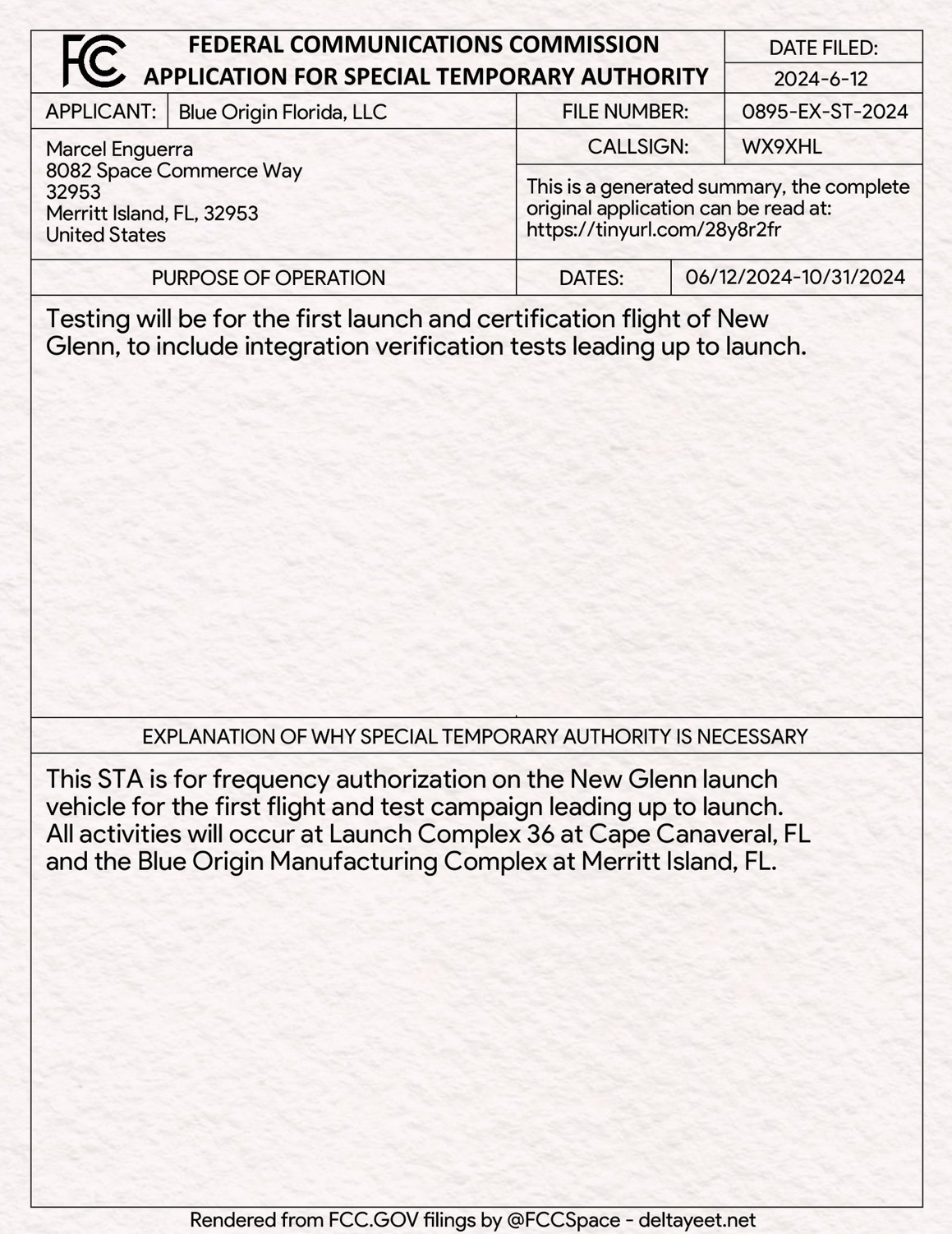
New Glenn erect on launch pad for first time for tests…
https://www.blueorigin.com/news/blue...our-launch-pad
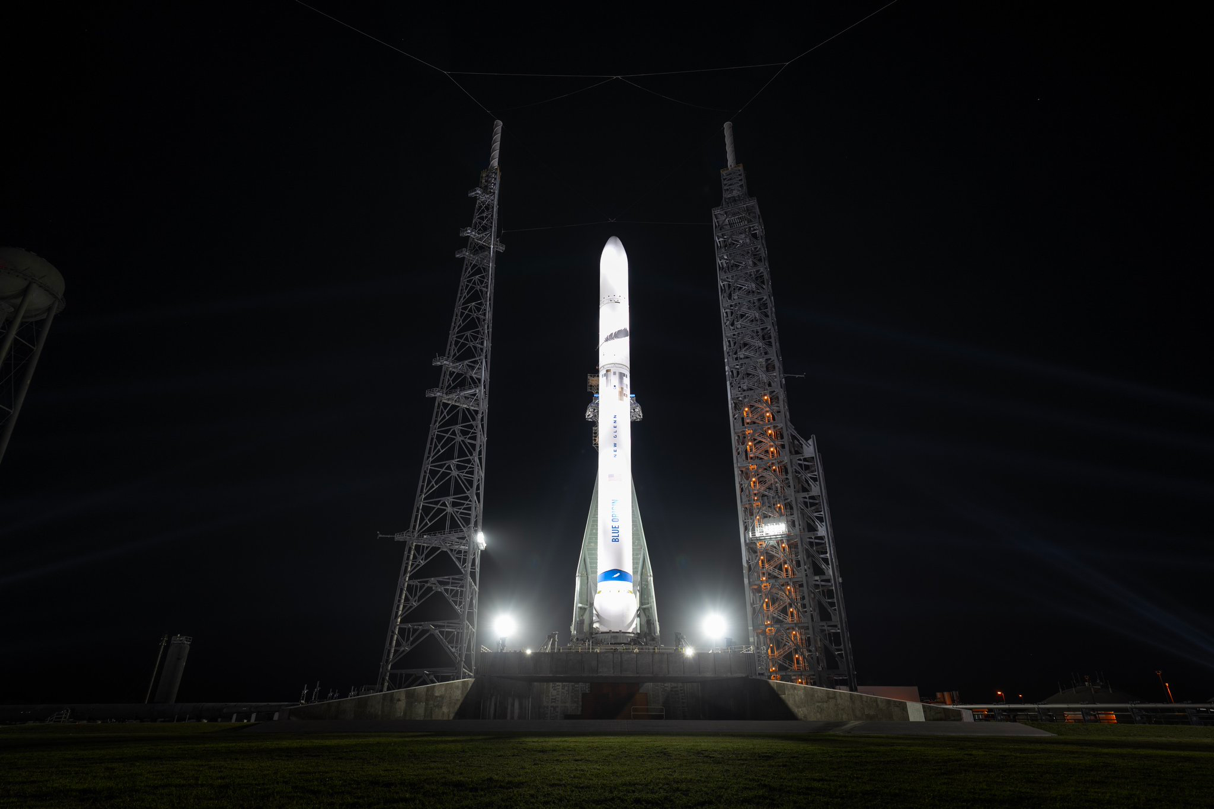
https://www.blueorigin.com/news/blue...our-launch-pad
Ecce Homo! Loquitur...
Joined: Jul 2000
Aviation Qualifications: Spotter
Posts: 24,662
Likes: 7,348
From: Peripatetic
Second test flight of the day - Blue Origin currently on a hold - now scrubbed for the day. GPS issue.
We’re standing down on today’s launch attempt to troubleshoot a GPS issue. New launch target forthcoming. #NS27
We’re standing down on today’s launch attempt to troubleshoot a GPS issue. New launch target forthcoming. #NS27


Ecce Homo! Loquitur...
Joined: Jul 2000
Aviation Qualifications: Spotter
Posts: 24,662
Likes: 7,348
From: Peripatetic
Blue Origin booster touchdown.
Ecce Homo! Loquitur...
Joined: Jul 2000
Aviation Qualifications: Spotter
Posts: 24,662
Likes: 7,348
From: Peripatetic
Video.STATIC FIRE! Blue Origin New Glenn conducts its first fully integrated Static Fire test at LC-36.
Then the sound arrives (cameras a long distance away). BE-4's singing.
Then the sound arrives (cameras a long distance away). BE-4's singing.

Joined: Oct 2004
Aviation Qualifications: Military (Retired)
Posts: 454
Likes: 134
From: Norfolk, UK
Following a successful 24-second static fire of a full integrated stack for the first time on Dec. 27, Blue Origin is set to debut its New Glenn heavy-lift launcher on Sunday, Jan. 5, at 11:30 PM EST (04:30 UTC on Jan 6) from Launch Complex 36 (LC-36) at the CCSFS in Florida.
Ecce Homo! Loquitur...
Joined: Jul 2000
Aviation Qualifications: Spotter
Posts: 24,662
Likes: 7,348
From: Peripatetic
https://www.blueorigin.com/news/new-...ing-january-10
New Glenn Launch Targeting No Earlier Than January 10
New Glenn’s inaugural mission (NG-1) is targeting no earlier than Friday, January 10, from Launch Complex 36 at Cape Canaveral Space Force Station, Florida.
The three-hour launch window opens at 1 a.m. EST (0600 UTC)…….
New Glenn Launch Targeting No Earlier Than January 10
New Glenn’s inaugural mission (NG-1) is targeting no earlier than Friday, January 10, from Launch Complex 36 at Cape Canaveral Space Force Station, Florida.
The three-hour launch window opens at 1 a.m. EST (0600 UTC)…….
Last edited by ORAC; 7th January 2025 at 13:25.

Ecce Homo! Loquitur...
Joined: Jul 2000
Aviation Qualifications: Spotter
Posts: 24,662
Likes: 7,348
From: Peripatetic
https://www.nasaspaceflight.com/2025...oundup-010625/
Blue Origin’s long-awaited New Glenn heavy-lift rocket, which started in the early 2010s before being formally announced in 2016, is finally on the launch pad at Launch Complex 36 (LC-36) at the CCSFS being prepared for its debut flight.
Blue Origin, founded by Amazon creator and billionaire Jeff Bezos in 2000, developed the two-stage New Glenn as its first orbital-class rocket, following its New Shepard suborbital human launch vehicle. New Glenn, named after John Glenn, the first American to orbit the Earth, is scheduled to launch on Friday, Jan. 10 at 1:00 AM EST (06:00 UTC) at the start of a three-hour 45-minute window.
New Glenn will carry the DarkSky-1 Blue Ring Pathfinder, a prototype of Blue Origin’s Blue Ring platform. The Blue Ring platform is designed to refuel satellites, transport them to different orbits, and host payloads. It can also act as a satellite bus or a “space tug” and is launch vehicle agnostic, though New Glenn is expected to fly Blue Ring missions in the future.
The 57 m tall booster stage, Glenn Stage 1 (GS1), known as “So You’re Telling Me There’s a Chance” or GS1-SN001, will attempt to land on Blue Origin’s Landing Platform Vessel 1 (LPV1) named Jacklyn after Jeff Bezos’ mother. The GS1 stage, equipped with seven BE-4 engines using methane and liquid oxygen as propellants, will use all seven engines during launch and up to three during landing. The stage will also use fins and thrusters to guide its path to Jacklyn, which will be out in the Atlantic hundreds of kilometers off the Florida coast.
The 23 m tall Glenn Stage 2 (GS2), equipped with two BE-3U engines using liquid oxygen and liquid hydrogen as propellants, will send the Blue Ring prototype into a medium-Earth orbit. GS2 is not reusable, though Blue Origin has worked on a project called “Jarvis” in the past that was a concept to enable full reuse of both stages of the vehicle.
This flight was originally scheduled for October 2024 with NASA’s ESCAPADE Mars payload, but New Glenn was not expected to be ready for its maiden flight by October. The ESCAPADE flight has since been moved to a later date, and the results of this flight will determine the cadence Blue Origin achieves with New Glenn in 2025.
Blue Origin’s long-awaited New Glenn heavy-lift rocket, which started in the early 2010s before being formally announced in 2016, is finally on the launch pad at Launch Complex 36 (LC-36) at the CCSFS being prepared for its debut flight.
Blue Origin, founded by Amazon creator and billionaire Jeff Bezos in 2000, developed the two-stage New Glenn as its first orbital-class rocket, following its New Shepard suborbital human launch vehicle. New Glenn, named after John Glenn, the first American to orbit the Earth, is scheduled to launch on Friday, Jan. 10 at 1:00 AM EST (06:00 UTC) at the start of a three-hour 45-minute window.
New Glenn will carry the DarkSky-1 Blue Ring Pathfinder, a prototype of Blue Origin’s Blue Ring platform. The Blue Ring platform is designed to refuel satellites, transport them to different orbits, and host payloads. It can also act as a satellite bus or a “space tug” and is launch vehicle agnostic, though New Glenn is expected to fly Blue Ring missions in the future.
The 57 m tall booster stage, Glenn Stage 1 (GS1), known as “So You’re Telling Me There’s a Chance” or GS1-SN001, will attempt to land on Blue Origin’s Landing Platform Vessel 1 (LPV1) named Jacklyn after Jeff Bezos’ mother. The GS1 stage, equipped with seven BE-4 engines using methane and liquid oxygen as propellants, will use all seven engines during launch and up to three during landing. The stage will also use fins and thrusters to guide its path to Jacklyn, which will be out in the Atlantic hundreds of kilometers off the Florida coast.
The 23 m tall Glenn Stage 2 (GS2), equipped with two BE-3U engines using liquid oxygen and liquid hydrogen as propellants, will send the Blue Ring prototype into a medium-Earth orbit. GS2 is not reusable, though Blue Origin has worked on a project called “Jarvis” in the past that was a concept to enable full reuse of both stages of the vehicle.
This flight was originally scheduled for October 2024 with NASA’s ESCAPADE Mars payload, but New Glenn was not expected to be ready for its maiden flight by October. The ESCAPADE flight has since been moved to a later date, and the results of this flight will determine the cadence Blue Origin achieves with New Glenn in 2025.
Joined: Oct 2004
Aviation Qualifications: Military (Retired)
Posts: 454
Likes: 134
From: Norfolk, UK
Slipped again
According to Blue Origin's team, the shift to a three-hour window opening at 0600 UTC on January 12 is due to unfavorable conditions in the Atlantic, where it hopes to land the first stage on a barge.