


Underslung loads in emergency

Thread Starter

Joined: Nov 1998
Posts: 62
Likes: 62
From: Midlands, UK
Underslung loads in emergency
Forgive the daft question, as my helo experience has mainly been limited to being an enthusiastic passenger while a cadet a longer time ago that I wish to think about.
Watching UK 'Traitors' final last night, I was surprised to see a helicopter flying around with two people suspended beneath. Not on a winch, as far as I could tell, just a fixed length of rope.It got me wondering about emergencies (and also what on earth they put in their risk assessment 😄!).
I'm pretty sure it was a twin Eurocopter, so at least the risk of an engine issue was mitigated a bit, but in the event of an emergency (it's filmed nr Inverness in Scotland, so let's say an Osprey birdstrike into one or both engines) what chance is there for the people underneath? Could a pilot/crew successfully maintain enough control to allow both danglers and occupants to survive a forced landing?
Obviously stuff like this happens in SAR too, like the Sea King at Scar Lathing. Is the procedure with a winch to just haul in and hope the winch can wind quicker than the rate of descent?
If it's a non-human underslung load, do you have the ability to just dump it? (Thinking about those helicopters that carry bag loads of rock up mountains in the Lakes to repair paths)
Watching UK 'Traitors' final last night, I was surprised to see a helicopter flying around with two people suspended beneath. Not on a winch, as far as I could tell, just a fixed length of rope.It got me wondering about emergencies (and also what on earth they put in their risk assessment 😄!).
I'm pretty sure it was a twin Eurocopter, so at least the risk of an engine issue was mitigated a bit, but in the event of an emergency (it's filmed nr Inverness in Scotland, so let's say an Osprey birdstrike into one or both engines) what chance is there for the people underneath? Could a pilot/crew successfully maintain enough control to allow both danglers and occupants to survive a forced landing?
Obviously stuff like this happens in SAR too, like the Sea King at Scar Lathing. Is the procedure with a winch to just haul in and hope the winch can wind quicker than the rate of descent?
If it's a non-human underslung load, do you have the ability to just dump it? (Thinking about those helicopters that carry bag loads of rock up mountains in the Lakes to repair paths)


Joined: May 2002
Aviation Qualifications: ATP+Mil
Posts: 18,633
Likes: 1,072
From: Downeast
Actually that is a very good question for discussion.
When I began to do that kind of work the sense of responsibility for those folks dangling on the line below you gets very serious.
The simple version of our operating philosophy was their safety came first always....no question of it.
We were prepared to afford them the safest return to the ground we could....then worry about getting the aircraft down.
All my work was done in a single engine aircraft (outside winching ops) thus engine failures were considered to be the most likely problem for us.
We were have done an autorotation landing if possible assuming we were in flight.....but doing the first landing for the people on the rope....then completing the landing of the helicopter as best possible.
If we encountered other problems that might prevent that then it was figuring out how to get them the softest most survivable landing available.
An engine failure at a hover was a bit more straight forward....set the folks down then move the helicopter in a pre-briefed direction...as we flew Left Seat single pilot we tried to always move the aircraft left...and brief the folks to exit to the right of the aircraft so the combined movements granted the maximum separation.
I know that for me that kind of flying was the most stressful there was due to the concern I had for the people beneath the Helicopter as a mistake could severely injure or kill them.
Gordy as usual can speak to this as I know he has done this kind of flying. Others here have such experience I am sure and can add to this conversation.
When I began to do that kind of work the sense of responsibility for those folks dangling on the line below you gets very serious.
The simple version of our operating philosophy was their safety came first always....no question of it.
We were prepared to afford them the safest return to the ground we could....then worry about getting the aircraft down.
All my work was done in a single engine aircraft (outside winching ops) thus engine failures were considered to be the most likely problem for us.
We were have done an autorotation landing if possible assuming we were in flight.....but doing the first landing for the people on the rope....then completing the landing of the helicopter as best possible.
If we encountered other problems that might prevent that then it was figuring out how to get them the softest most survivable landing available.
An engine failure at a hover was a bit more straight forward....set the folks down then move the helicopter in a pre-briefed direction...as we flew Left Seat single pilot we tried to always move the aircraft left...and brief the folks to exit to the right of the aircraft so the combined movements granted the maximum separation.
I know that for me that kind of flying was the most stressful there was due to the concern I had for the people beneath the Helicopter as a mistake could severely injure or kill them.
Gordy as usual can speak to this as I know he has done this kind of flying. Others here have such experience I am sure and can add to this conversation.

Avoid imitations


Joined: Nov 2000
Aviation Qualifications: ATPL
Posts: 15,110
Likes: 1,083
From: Wandering the FIR and cyberspace often at highly unsociable times
I used to fly SAR in a twin engined helicopter (S-76, with no single engined hover performance). Immediately prior to winching we always confirmed in the final crew safety brief what actions we would take in the event of an engine failure. The plan varied because of the actual rescue situation. If winching from a hillside we tried to have an escape route to fly away from, hopefully winching anyone on the cable safely inboard, or placing them on the ground. If it was over a sea vessel it was sometimes a matter of damage limitation! The very last part of the brief was normally to remind the winch operator that it was his decision whether to cut the winch cable or not. That was because as pilots we couldn’t see the winch (on the starboard side) due to the aircraft design. The normal intention was to place any persons on the cable on the ground, move away then land….how successful all of that could be in practice was only conjecture. If the winch op didn’t fire the cable cutter and the pilot really had to, he could do so. Not to be done lightly!
As far as flying people as underslung loads is concerned, it cannot be done (at least, not in U.K.) without a CAA written permission. I know one pilot who unknowingly flew a worker in an underslung load net for a short distance and having owned up to the CAA found himself prosecuted and heavily fined.
As far as flying people as underslung loads is concerned, it cannot be done (at least, not in U.K.) without a CAA written permission. I know one pilot who unknowingly flew a worker in an underslung load net for a short distance and having owned up to the CAA found himself prosecuted and heavily fined.

Joined: Jul 2011
Posts: 191
Likes: 25
From: S England
Shy's quote: "As far as flying people as underslung loads is concerned, it cannot be done (at least, not in U.K.) without a CAA written permission. I know one pilot who unknowingly flew a worker in an underslung load net for a short distance and having owned up to the CAA found himself prosecuted and heavily fined."
One day a long time ago in the RN, with no planned flying and whilst the ship was operating alone way out at sea, I was told by my flight commander that the underslung load net was being attached to our Wessex 3 (single engine). On asking, why?, I was told that a photographer would be in the net and that I was to position the aircraft directly over the ship so that a camera with a fisheye lens could be used to take an unobstructed view of the ship, together with the all round horizon. I refused ... and was asked if I was disobeying a direct order. The flight commander ended his career as a Vice Admiral ... I got a very bad written report..
One day a long time ago in the RN, with no planned flying and whilst the ship was operating alone way out at sea, I was told by my flight commander that the underslung load net was being attached to our Wessex 3 (single engine). On asking, why?, I was told that a photographer would be in the net and that I was to position the aircraft directly over the ship so that a camera with a fisheye lens could be used to take an unobstructed view of the ship, together with the all round horizon. I refused ... and was asked if I was disobeying a direct order. The flight commander ended his career as a Vice Admiral ... I got a very bad written report..

Avoid imitations
Joined: Nov 2000
Aviation Qualifications: ATPL
Posts: 15,110
Likes: 1,083
From: Wandering the FIR and cyberspace often at highly unsociable times
76Fan,
In the early 1980s I was flying RAF helicopters in W. Germany. One summer I was providing a week’s support for an army exercise on the North German Plain (Grenadier Guards, who were the Berlin Regiment at the time). On the final day I was told by the Major in charge that he wanted me to fly his Land Rover as an underslung load to the location of the final exercise battle “Coup de Grace” which was on a bridge. That was no problem until he said he would be sitting in the vehicle so he could view the build up from height and he would point the way to the bridge for us! I told him that I couldn’t do that on safety grounds. He replied that he intended to wear his seat belt, a helmet and goggles! My first reaction was that he was trying to wind me up, but it became obvious that he was being perfectly serious! Trying to let him down as politely as could, I advised him that from experience, Land Rovers spun round and round when underslung and that we would be able to navigate to the battle location without him pointing the way. That didn’t put him off so I advised him that in the event of an engine malfunction I’d have to jettison the Land Rover. He thought about that for about two seconds and said he’d better drive.
I never heard anything more but in any case, our Squadron Commander was very supportive of his staff so it would have gone no further - the mad Major would have been laughed out of court.
In the early 1980s I was flying RAF helicopters in W. Germany. One summer I was providing a week’s support for an army exercise on the North German Plain (Grenadier Guards, who were the Berlin Regiment at the time). On the final day I was told by the Major in charge that he wanted me to fly his Land Rover as an underslung load to the location of the final exercise battle “Coup de Grace” which was on a bridge. That was no problem until he said he would be sitting in the vehicle so he could view the build up from height and he would point the way to the bridge for us! I told him that I couldn’t do that on safety grounds. He replied that he intended to wear his seat belt, a helmet and goggles! My first reaction was that he was trying to wind me up, but it became obvious that he was being perfectly serious! Trying to let him down as politely as could, I advised him that from experience, Land Rovers spun round and round when underslung and that we would be able to navigate to the battle location without him pointing the way. That didn’t put him off so I advised him that in the event of an engine malfunction I’d have to jettison the Land Rover. He thought about that for about two seconds and said he’d better drive.
I never heard anything more but in any case, our Squadron Commander was very supportive of his staff so it would have gone no further - the mad Major would have been laughed out of court.
Last edited by ShyTorque; 25th January 2025 at 14:56.

Joined: Apr 2010
Posts: 1,184
Likes: 541
From: Lost again...

Joined: Oct 1999
Aviation Qualifications: ATPL
Posts: 7,371
Likes: 926
From: Den Haag
As far as flying people as underslung loads is concerned, it cannot be done (at least, not in U.K.) without a CAA written permission.
Thread Starter
Joined: Nov 1998
Posts: 62
Likes: 62
From: Midlands, UK
OvertHawk
HSE not big fans of a just reporting culture then?
I can imagine plenty of situations where that could happen without the knowledge of the PIC. Seems a bit harsh to prosecute after owning up. Glad the employer stepped in!
HSE not big fans of a just reporting culture then?
I can imagine plenty of situations where that could happen without the knowledge of the PIC. Seems a bit harsh to prosecute after owning up. Glad the employer stepped in!
Last edited by Bogner; 25th January 2025 at 18:19.
Thread Starter
Joined: Nov 1998
Posts: 62
Likes: 62
From: Midlands, UK
Thanks for the reply SASless
Yeah, I can imagine the worry, particularly when your visibility directly underneath is restricted.
I guess a good observer/winchperson is invaluable in the event of a problem!
How difficult would a two stage autorotation be?! Even a plain vanilla one looks pretty hard. Trying to judge an arrest of the descen, at altitude, based on verbal instructions from a third party while trying to fly and manage an emergency seems nigh on impossible! Is it something that’s even possible to practise, realistically?
Yeah, I can imagine the worry, particularly when your visibility directly underneath is restricted.
I guess a good observer/winchperson is invaluable in the event of a problem!
How difficult would a two stage autorotation be?! Even a plain vanilla one looks pretty hard. Trying to judge an arrest of the descen, at altitude, based on verbal instructions from a third party while trying to fly and manage an emergency seems nigh on impossible! Is it something that’s even possible to practise, realistically?
Joined: Sep 2011
Posts: 522
Likes: 77
From: USA
As far as flying people as underslung loads is concerned, it cannot be done (at least, not in U.K.) without a CAA written permission. I know one pilot who unknowingly flew a worker in an underslung load net for a short distance and having owned up to the CAA found himself prosecuted and heavily fined.
Joined: Sep 2005
Posts: 768
Likes: 45
From: Montreal
Anybody ever fly shake blocks with a 500? Do you swear you never gave the ground crew a ride “on the hook”?
In Canada, single-engine Class D external load flying people at the end of a long line is done often for rescue. Yes, single engine, your EASA heads are gonna explode. My fuzzy recall is the single-engine helicopter needs chip plugs and an auto-relight system, pilot needs minimum hours (2000?) plus training. Approval from the regulator (ops spec) for Class D written into the ops manual.

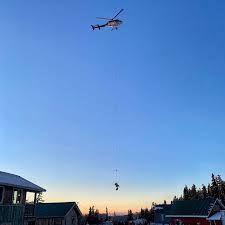
In Canada, single-engine Class D external load flying people at the end of a long line is done often for rescue. Yes, single engine, your EASA heads are gonna explode. My fuzzy recall is the single-engine helicopter needs chip plugs and an auto-relight system, pilot needs minimum hours (2000?) plus training. Approval from the regulator (ops spec) for Class D written into the ops manual.
Last edited by malabo; 25th January 2025 at 21:11.
Avoid imitations
Joined: Nov 2000
Aviation Qualifications: ATPL
Posts: 15,110
Likes: 1,083
From: Wandering the FIR and cyberspace often at highly unsociable times
Apart from the UK’s CHIRP program, which is meant to be confidential and de-personalised, to highlight safety issues experienced by those in the industry, it’s more or less a case of “Anything you do say may be taken down and used in court as evidence”.
Joined: Apr 2008
Aviation Qualifications: Spotter
Posts: 611
Likes: 249
From: on the ground
Watching UK 'Traitors' final last night, I was surprised to see a helicopter flying around with two people suspended beneath. Not on a winch, as far as I could tell, just a fixed length of rope.It got me wondering about emergencies (and also what on earth they put in their risk assessment 😄!).
By the way, have a google of the NSCA Victorian division if you've never heard of them; it was an extraordinary affair.
Joined: Mar 2005
Aviation Qualifications: Military
Posts: 6,562
Likes: 952
From: Aus
Chap suspended below an R-22 killed during crocodile egg collecting.
https://www.atsb.gov.au/sites/defaul...09%20Final.pdf
https://www.atsb.gov.au/sites/defaul...09%20Final.pdf
Joined: May 2002
Aviation Qualifications: ATP+Mil
Posts: 18,633
Likes: 1,072
From: Downeast
Back in the late 60's we started doing lifts using Maguire Rigs and Ladders and down through the years the Militaries around the World have improved upon the technique and later brought in Fast Roping as an Insertion method.
Ladders very quickly were found to be useless and quite dangerous as well as slow and cumbersome.
This is a very common Military procedure these days especially for SpecOps troops.
The US Forest Service also conducts what it calls "Short Haul Operations" used to move Human External Cargo (HEC).
https://www.fs.usda.gov/sites/defaul...Operations.pdf
Ladders very quickly were found to be useless and quite dangerous as well as slow and cumbersome.
This is a very common Military procedure these days especially for SpecOps troops.
The US Forest Service also conducts what it calls "Short Haul Operations" used to move Human External Cargo (HEC).
https://www.fs.usda.gov/sites/defaul...Operations.pdf
Joined: Mar 2002
Posts: 132
Likes: 33
From: England
I did a trial of the RTES (rope troop extraction system) in an RAF Merlin (those were the days!) with the absolute legend Wg Cdr John Coxen (killed in the Lynx shootdown in Iraq 2006).
I remember Boscombe had flown the first trial with dummies and we did the first ‘live’ trial. We flew 6 Rocks who knew something was up and had invited their families to watch! It all went well but downwind at 1000’ in the circuit at Benson I have never wished for a flight to be over as quickly as that one, putting them back on the ground was a very delicate exercise and took quite a while to do safely.
i think it went down as a success but just too risky to be done for anything other than an emergency. As an endnote all the Rocks had a great day out apart from one, who had trapped a testicle in the harness during the initial lift and spent the next 15 minutes in severe discomfort. I have a photo somewhere I can maybe share. As for the traitors I think it was pretty silly for a tv show….ours was pretty silly too but potentially for lifesaving operations.
I remember Boscombe had flown the first trial with dummies and we did the first ‘live’ trial. We flew 6 Rocks who knew something was up and had invited their families to watch! It all went well but downwind at 1000’ in the circuit at Benson I have never wished for a flight to be over as quickly as that one, putting them back on the ground was a very delicate exercise and took quite a while to do safely.
i think it went down as a success but just too risky to be done for anything other than an emergency. As an endnote all the Rocks had a great day out apart from one, who had trapped a testicle in the harness during the initial lift and spent the next 15 minutes in severe discomfort. I have a photo somewhere I can maybe share. As for the traitors I think it was pretty silly for a tv show….ours was pretty silly too but potentially for lifesaving operations.
Joined: Sep 2003
Posts: 2,081
Likes: 189
From: Redding CA, or on a fire somewhere
Yes, we do this daily in our power line operations in a Bell 407, single engine, single pilot. An observer on the aircraft would not help, we do it all VR…
Two pilots here, but one is riding along as part of our training program. These guys are being lifted to the top of an inaccessible pole.
Just headed to bed, but can elaborate more tomorrow.
Two pilots here, but one is riding along as part of our training program. These guys are being lifted to the top of an inaccessible pole.
Just headed to bed, but can elaborate more tomorrow.
Joined: Feb 2000
Posts: 1,992
Likes: 511
From: UK
Hmmm ! - Looking at two different areas here ... underslung and winch suspended. Involved in both
Underslung both for inanimate and intended live loads were attached via the underslung load hook a device which was manufactired by Hobbies of Dereham (not necessarily the most reassuring labelling
Had two occasions of inadvertent release and the 'foot stamper' method had obvious potential for problems. At Boscombe,did the initial trial flight with the six man 'jungle penetrator' , which may be what Simon K put into practice. We used the Sea King with 300' of nylon rope attached to the u/s hook and 6 dummies on the penetrator. The test schedule was vertical lift to low level, then progressive speed increments checking for stability etc. The forward flight position became increasingly to the rear well behind the tail rotor and as we reached (from memory ) 60kts-ish, the rope attachment started to develop a rotary motion which quickly combined with a sinusoidal component and, before we could take action, the 'load' went solo ! ! I understand the principle was that this was intended as a 'last ditch' recovery procedure for specialist troops in the jungle ... as I wrote at the beginning ... Hmmm !
Re, the winching process, we used 30cwt cable with (obviously) control of deployment and a built-in explosive charge for cable cutting in the event of such being essential. Trust and faith in one's fellow man was an essential ingredient for S&R crews -particularly the winchman.! ... that trust was strained somewhat with a check flight for a new navigator winch-op who decided that deploying me at 1500' en route was acceptable. ! Words and (especially) gestures quickly disabused him of the idea !
As regards engine failures, my winching experience was primarily with the Whirlwind and, thankfully, have no such experience. but it would, likely, have been a rock and hard place choice !
Underslung both for inanimate and intended live loads were attached via the underslung load hook a device which was manufactired by Hobbies of Dereham (not necessarily the most reassuring labelling
Had two occasions of inadvertent release and the 'foot stamper' method had obvious potential for problems. At Boscombe,did the initial trial flight with the six man 'jungle penetrator' , which may be what Simon K put into practice. We used the Sea King with 300' of nylon rope attached to the u/s hook and 6 dummies on the penetrator. The test schedule was vertical lift to low level, then progressive speed increments checking for stability etc. The forward flight position became increasingly to the rear well behind the tail rotor and as we reached (from memory ) 60kts-ish, the rope attachment started to develop a rotary motion which quickly combined with a sinusoidal component and, before we could take action, the 'load' went solo ! ! I understand the principle was that this was intended as a 'last ditch' recovery procedure for specialist troops in the jungle ... as I wrote at the beginning ... Hmmm !
Re, the winching process, we used 30cwt cable with (obviously) control of deployment and a built-in explosive charge for cable cutting in the event of such being essential. Trust and faith in one's fellow man was an essential ingredient for S&R crews -particularly the winchman.! ... that trust was strained somewhat with a check flight for a new navigator winch-op who decided that deploying me at 1500' en route was acceptable. ! Words and (especially) gestures quickly disabused him of the idea !
As regards engine failures, my winching experience was primarily with the Whirlwind and, thankfully, have no such experience. but it would, likely, have been a rock and hard place choice !