


Starlink for helicopters?

Thread Starter

Joined: Nov 2003
Posts: 1,937
Likes: 28
From: UK/OZ
Starlink for helicopters?
Years ago we investigated phased array antennas on the tailboom as an alternative to microwave links in the boon docks.
The rotors did not have a serious effect on reception.
These guys have installed one of the new Starlink dishes which are designed for moving vehicles, in competitors vehicles in a desert rally.
The concept looks promising for rotary applications.
https://www.facebook.com/groups/4461...ibextid=Nif5oz
The rotors did not have a serious effect on reception.
These guys have installed one of the new Starlink dishes which are designed for moving vehicles, in competitors vehicles in a desert rally.
The concept looks promising for rotary applications.
https://www.facebook.com/groups/4461...ibextid=Nif5oz
Last edited by Senior Pilot; 25th November 2022 at 23:30. Reason: Hyperlink


Thread Starter
Joined: Nov 2003
Posts: 1,937
Likes: 28
From: UK/OZ
Sorry for linking to a closed group.
I was drawn to a poster who says they made a ruggedised mount for the new High Performance In-Motion Dish and they tested "on a few racecars at the Baja 1000"
They live streamed video.
Wow.
This website has pictures of the Starlink high performance antenna on a race vehicle. They have commercialised the mounting fixture.
https://star-mountsystems.com/products/quick-release-mount-for-starlink-high-performance-in-motion-dish
In respect to a tail mount, having developed a derigable gimbal nosemount for the AS350, I was keen to investigate using BGAN to live link SD video in very remote areas. The idea was to make a flyaway kit of a bracket a gimbal and means to transmit.
From the engineering perspective, there were no impossible hurdles for completing a tail boom mount. However, the Starlink antenna is larger.
I haven't investigated how Starlink frequencies are effected by the rotors, but preliminary ground testing of a Starlink antenna under a rotor is a simple procedure.
In respect to live video, that is always a tall order, although there may be significant improvements in buffering which could mitigate dropout,
I'd be investigating a novel multiple antenna solution rather than a auto tracking self pointing antenna as exists for air to ground microwave links.
I dropped the BGAN idea as 4G was becoming more widespread and also flyaway sat kit was reducing in size, a Scandanavian broadcaster had adapted one to stow on back seat of a R44.
Phased array is in use on commercial passenger aircraft and Starlink is also entering the field.
https://www.starlink.com/aviation
Mjb
I was drawn to a poster who says they made a ruggedised mount for the new High Performance In-Motion Dish and they tested "on a few racecars at the Baja 1000"
They live streamed video.
Wow.
This website has pictures of the Starlink high performance antenna on a race vehicle. They have commercialised the mounting fixture.
https://star-mountsystems.com/products/quick-release-mount-for-starlink-high-performance-in-motion-dish
In respect to a tail mount, having developed a derigable gimbal nosemount for the AS350, I was keen to investigate using BGAN to live link SD video in very remote areas. The idea was to make a flyaway kit of a bracket a gimbal and means to transmit.
From the engineering perspective, there were no impossible hurdles for completing a tail boom mount. However, the Starlink antenna is larger.
I haven't investigated how Starlink frequencies are effected by the rotors, but preliminary ground testing of a Starlink antenna under a rotor is a simple procedure.
In respect to live video, that is always a tall order, although there may be significant improvements in buffering which could mitigate dropout,
I'd be investigating a novel multiple antenna solution rather than a auto tracking self pointing antenna as exists for air to ground microwave links.
I dropped the BGAN idea as 4G was becoming more widespread and also flyaway sat kit was reducing in size, a Scandanavian broadcaster had adapted one to stow on back seat of a R44.
Phased array is in use on commercial passenger aircraft and Starlink is also entering the field.
https://www.starlink.com/aviation
Mjb
Last edited by mickjoebill; 26th November 2022 at 17:39.
Joined: Feb 2008
Posts: 341
Likes: 3
From: New York City
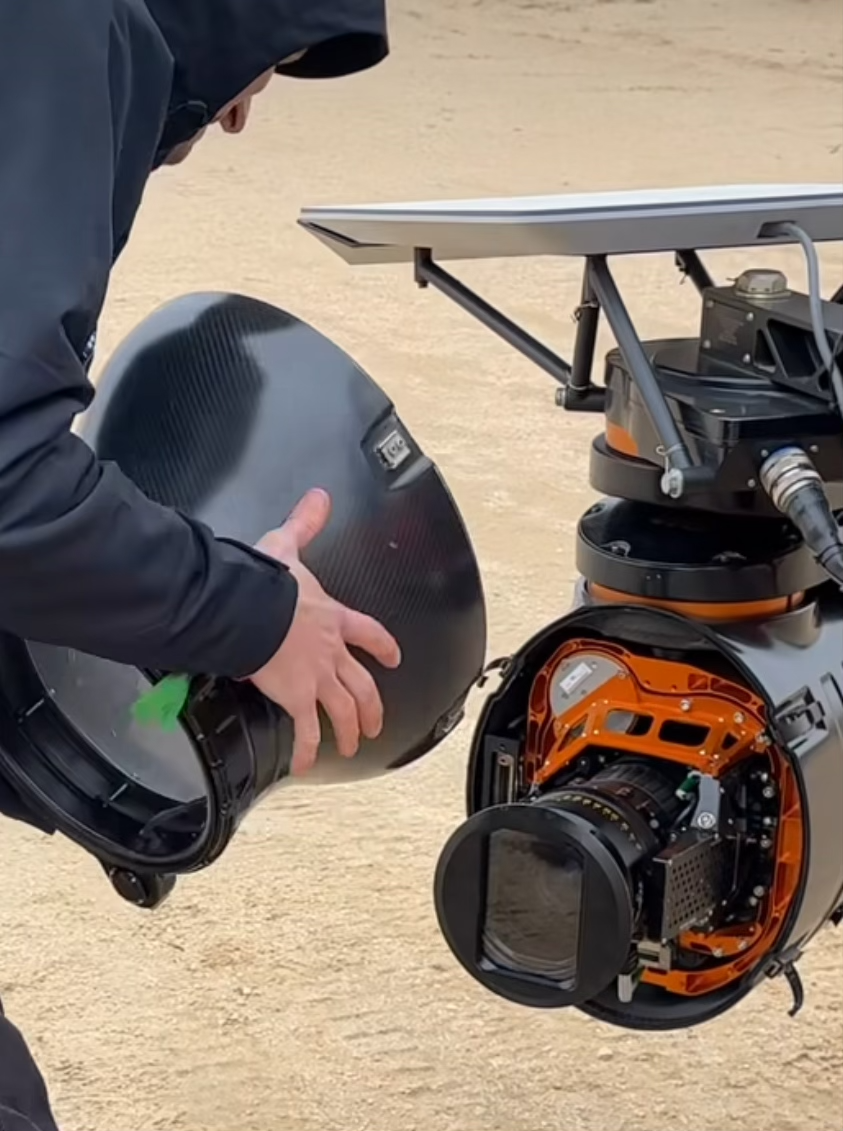
Bumping this thread as Starlink was recently flown on a few helicopters (AS350's and 355's) in support of filming. It appears to be the flat panel version mounted to the filming gimbal. Apparently it took coordination with Starlink to ease the speed restrictions with the service plan and hardware they had, but was otherwise successful.

Joined: Feb 2008
Posts: 341
Likes: 3
From: New York City
Bumping this thread, as Starlink is now being seen deployed on ENG aircraft. There's a company called TT Aero that makes the mount, which attaches to an AFSP-1 (a standard gimbal mount for H125's).

Last edited by MikeNYC; 12th January 2025 at 17:16.
Joined: Feb 2008
Posts: 341
Likes: 3
From: New York City
Farmpilot - I don't think a website has launched for this. Will send you some contact info via DM. Some more info I've found below:
https://www.linkedin.com/posts/bryan...119898624-Xgw2
https://www.reddit.com/r/Starlink/co...ion_broadcast/
https://www.linkedin.com/posts/bryan...119898624-Xgw2
https://www.reddit.com/r/Starlink/co...ion_broadcast/

Joined: Apr 2025
Posts: 1
Likes: 0
From: Las Vegas
Starlink mount
I currently manufacture the mount for the As350 running meeker booms. I tried to share a pic here , but no luck. My partner in this handles sales and the electronic side. I designed and machine the components. You can contact me at [email protected] with any questions. Hope this helps.
Post Approved by Senior Pilot 👍
Post Approved by Senior Pilot 👍
Ecce Homo! Loquitur...

Joined: Jul 2000
Aviation Qualifications: Spotter
Posts: 24,543
Likes: 7,271
From: Peripatetic
NEWS: SpaceX says a new @Starlink update means that the internet will keep working even if trees or other obstacles partially block your home’s view of the sky.
"As a Starlink terminal communicates with satellites overhead, it continuously builds a real-time obstruction map, allowing Starlink to dynamically understand its environment. With this information, it can proactively select the best and most stable connection. For dynamic obstructions, such as are encountered by mobile terminals, the system reactively switches in less than 1/10th of a second, allowing a connection to remain stable. The dynamic nature of Starlink combined with the many paths for the system to route traffic provide a high degree of resiliency in obstructed and changing environments.
Additionally, to help customers get the most out of their service, the Starlink app includes a built-in tool to preview the install location and guide customers to the best placement with the fewest obstructions. After setup, the Starlink app provides a live obstruction map that shows exactly where signal blockages are occurring and how they may affect your experience, so that users can make informed decisions about optimizing their installation. Starlink also measures uptime 10 times a second from every terminal, transparently reporting any outage that is longer than 1/10th of a second in the app. For well-installed, even partially obstructed terminals, this uptime is typically at the 99.9% level."
"As a Starlink terminal communicates with satellites overhead, it continuously builds a real-time obstruction map, allowing Starlink to dynamically understand its environment. With this information, it can proactively select the best and most stable connection. For dynamic obstructions, such as are encountered by mobile terminals, the system reactively switches in less than 1/10th of a second, allowing a connection to remain stable. The dynamic nature of Starlink combined with the many paths for the system to route traffic provide a high degree of resiliency in obstructed and changing environments.
Additionally, to help customers get the most out of their service, the Starlink app includes a built-in tool to preview the install location and guide customers to the best placement with the fewest obstructions. After setup, the Starlink app provides a live obstruction map that shows exactly where signal blockages are occurring and how they may affect your experience, so that users can make informed decisions about optimizing their installation. Starlink also measures uptime 10 times a second from every terminal, transparently reporting any outage that is longer than 1/10th of a second in the app. For well-installed, even partially obstructed terminals, this uptime is typically at the 99.9% level."


