


US HEMS Accident


Joined: Jun 2008
Posts: 71
Likes: 1
From: Canada
Well, it looks like a typical CFIT......
I don't know how people fly at night but this idea to be in contact with the ground all time is....impossible.
You have to stay around urban area or town to be able to do that.
How would you fly EMS doing that?
The fact is, the FAA and Transport Canada have regulation who make no sense, are not appropriate to any operation, and of course, refuse to change it because they perfectly know the consequences.
In many places, you go for a night flight and a big part of this flight is done in complete darkness. In reality, a night flight is an instrument flight and nothing else.
We go to many places where it does not matter looking outside because you won't see anything. Of course, now we have NVG"s, so we see everything.
But, I flown for a very long time without them and what you do, is an instrument flight.
Looking at one lonely light somewhere won't help you anyway, it is the best way to get disoriented.
The FAA and TC know that perfectly well, they know what everybody is doing, but do they change anything??
I don't know how people fly at night but this idea to be in contact with the ground all time is....impossible.
You have to stay around urban area or town to be able to do that.
How would you fly EMS doing that?
The fact is, the FAA and Transport Canada have regulation who make no sense, are not appropriate to any operation, and of course, refuse to change it because they perfectly know the consequences.
In many places, you go for a night flight and a big part of this flight is done in complete darkness. In reality, a night flight is an instrument flight and nothing else.
We go to many places where it does not matter looking outside because you won't see anything. Of course, now we have NVG"s, so we see everything.
But, I flown for a very long time without them and what you do, is an instrument flight.
Looking at one lonely light somewhere won't help you anyway, it is the best way to get disoriented.
The FAA and TC know that perfectly well, they know what everybody is doing, but do they change anything??


Joined: May 2004
Posts: 917
Likes: 11
From: Tax-land.
Joined: Oct 2006
Posts: 268
Likes: 0
From: Florida
Yes and no. Their minimums are the FAA EMS minimums of 800 and three day and 1,000 and three at night, aided. These are the same minimums as where I work (a very a safe and reputable company that I'll leave out). Their primary competitor's minimums are higher and very often decline flights with very good weather. I can't really blame them if they want to capitalize on this. So if you have a problem with Survival Flight's minimums, you really need to take it up with the FAA. As far as this accident, it's starting to look like CFIT, probably from spacial disorientation. If that is the case, the pilot (ahem) probably didn't quite meet the minimums on the accident flight. Now you will probably want bring up pressure to fly. I worked there and I was never pressured to fly (ever) and I never heard another pilot say anything to that effect, either. You've got a bit of a nothing burger going on.


Joined: May 2002
Aviation Qualifications: ATP+Mil
Posts: 18,633
Likes: 1,072
From: Downeast
Crab....you know as well as anyone....there are "pressures" applied that are even sub-conscious pressures.
Even at a 1000 foot ceiling and 3sm Vis....on an overcast night....there are more than a few times there is n nothing to be seen outside the aircraft in remote areas.
Could it have simply been as easy as merely losing control of the aircraft due to vertigo?
That can happen with zero overt pressure to fly being applied by anyone.
Even at a 1000 foot ceiling and 3sm Vis....on an overcast night....there are more than a few times there is n nothing to be seen outside the aircraft in remote areas.
Could it have simply been as easy as merely losing control of the aircraft due to vertigo?
That can happen with zero overt pressure to fly being applied by anyone.
Joined: Oct 2006
Posts: 268
Likes: 0
From: Florida
Originally Posted by [email protected]
So if the weather minima are fine and there is no pressure to go flying - how come we keep seeing HEMS helicopters spread all over the hillsides?
Joined: Jun 2000
Posts: 231
Likes: 0
From: UK
HELONORTH
Of course Crab has. All SAR pilots have and they have the most demanding pressure of all aviators to get airborne. Decisions never come easy. The difference being this is as a highly trained team of 4 crew. You get what you pay for, equipment, crew training and logistical support...
Sadly, cheap options are going to be spread out across the ground for years to come as a result.
Of course Crab has. All SAR pilots have and they have the most demanding pressure of all aviators to get airborne. Decisions never come easy. The difference being this is as a highly trained team of 4 crew. You get what you pay for, equipment, crew training and logistical support...
Sadly, cheap options are going to be spread out across the ground for years to come as a result.
Joined: Oct 2006
Posts: 268
Likes: 0
From: Florida
HELONORTH
Of course Crab has. All SAR pilots have and they have the most demanding pressure of all aviators to get airborne. Decisions never come easy. The difference being this is as a highly trained team of 4 crew. You get what you pay for, equipment, crew training and logistical support...
Sadly, cheap options are going to be spread out across the ground for years to come as a result.
Of course Crab has. All SAR pilots have and they have the most demanding pressure of all aviators to get airborne. Decisions never come easy. The difference being this is as a highly trained team of 4 crew. You get what you pay for, equipment, crew training and logistical support...
Sadly, cheap options are going to be spread out across the ground for years to come as a result.
"Just a pilot"
Joined: May 2001
Posts: 633
Likes: 8
From: Jefferson GA USA
There are several reasons US HEMS has 'so many accidents.' There is more of it, covering more area with minimal support and regulation built around operator's interest.
Beyond being told landing was 'an acceptable option' if I could not proceed safely, nothing in the company culture or structure encouraged that decision easy. It was never trained in initial or recurrent, and seldom even mentioned in discussion. Weather minimums are secondary to decision making, forecasts are guesses, observations are history, the weather is what you see from the cockpit, you have to deal with what exists. The vis, ceilings may be officially acceptable but if you're working hard to just control and fly the aircraft safely, you are behind the aircraft and it is flying you. A competent PIC's job is to evaluate and plan to complete the leg if possible, but definitely maximize survival and perhaps, just perhaps not break the aircraft. Approaching each flight prepared to abort, divert, land somewhere uncomfortable to survive or minimize the chance that you sacrifice an aircraft to merely survive would, I think, go a long way to reducing all accidents.
When I flew Gulf of Mexico, our training emphasized the fact that a power on ditching was much, much safer than an autorotative ditching. How many pilots would put a running helicopter on the water, or in the trees, merely because he wasn't certain he could extend the fuel to a safe, undamaged landing? Extending the glide kills crews regularly, avoiding the decision that you have to land now does too. I found it much more comfortable and easy to avoid the possibility at every opportunity, because I knew with certainty that better pilots than I had died pushing it. Been to a lot of funerals over the years.
Joined: May 2002
Aviation Qualifications: ATP+Mil
Posts: 18,633
Likes: 1,072
From: Downeast
I never regretted landing when I did because of deteriorating weather....on the other hand I have rued deciding to push on.
I very much was into the "Chicken out early....mode of thinking!".
If you think Taxi Fare is expensive....try adding up the cost of an accident.
I very much was into the "Chicken out early....mode of thinking!".
If you think Taxi Fare is expensive....try adding up the cost of an accident.
Joined: Aug 2004
Posts: 321
Likes: 1
From: Earth
Autopilot and NVIS should be mandatory for this type of 24/7 flying. I doubt they are though. One thing I have found as I get more experienced, I find it much easier to refuse to fly in marginal conditions.

Joined: Mar 2019
Posts: 22
Likes: 1
From: Cartersville, GA
The Temperature/Dewpoint was 6C/10C ( 42.8 DegF/50.0 DegF).
The current Temperature/Dewpoint SPREAD was 7.2 Deg in the NEGATIVE direction, well B E L O W the temperature at which the air would become
saturated and fog would form! Then...if there were flat valleys or streams, HEAVY fog would have formed faster than the wind could sweep away.
The current Temperature/Dewpoint SPREAD was 7.2 Deg in the NEGATIVE direction, well B E L O W the temperature at which the air would become
saturated and fog would form! Then...if there were flat valleys or streams, HEAVY fog would have formed faster than the wind could sweep away.
Joined: Mar 2011
Posts: 226
Likes: 25
From: Arizona
The Temperature/Dewpoint was 6C/10C ( 42.8 DegF/50.0 DegF).
The current Temperature/Dewpoint SPREAD was 7.2 Deg in the NEGATIVE direction, well B E L O W the temperature at which the air would become
saturated and fog would form! Then...if there were flat valleys or streams, HEAVY fog would have formed faster than the wind could sweep away.
The current Temperature/Dewpoint SPREAD was 7.2 Deg in the NEGATIVE direction, well B E L O W the temperature at which the air would become
saturated and fog would form! Then...if there were flat valleys or streams, HEAVY fog would have formed faster than the wind could sweep away.
Joined: Mar 2019
Posts: 22
Likes: 1
From: Cartersville, GA
That wouldn't make any sense for foggy conditions. It must be a typo. If it was 21 DegF outside, all moisture would have fallen as
frost already and the humidity would be ZERO. If the temperature dropped from 21 DegF to 14 DegF, I'm pretty sure the air would
not become saturated.
frost already and the humidity would be ZERO. If the temperature dropped from 21 DegF to 14 DegF, I'm pretty sure the air would
not become saturated.
Joined: Mar 2011
Posts: 226
Likes: 25
From: Arizona
That wouldn't make any sense for foggy conditions. It must be a typo. If it was 21 DegF outside, all moisture would have fallen as
frost already and the humidity would be ZERO. If the temperature dropped from 21 DegF to 14 DegF, I'm pretty sure the air would
not become saturated.
frost already and the humidity would be ZERO. If the temperature dropped from 21 DegF to 14 DegF, I'm pretty sure the air would
not become saturated.
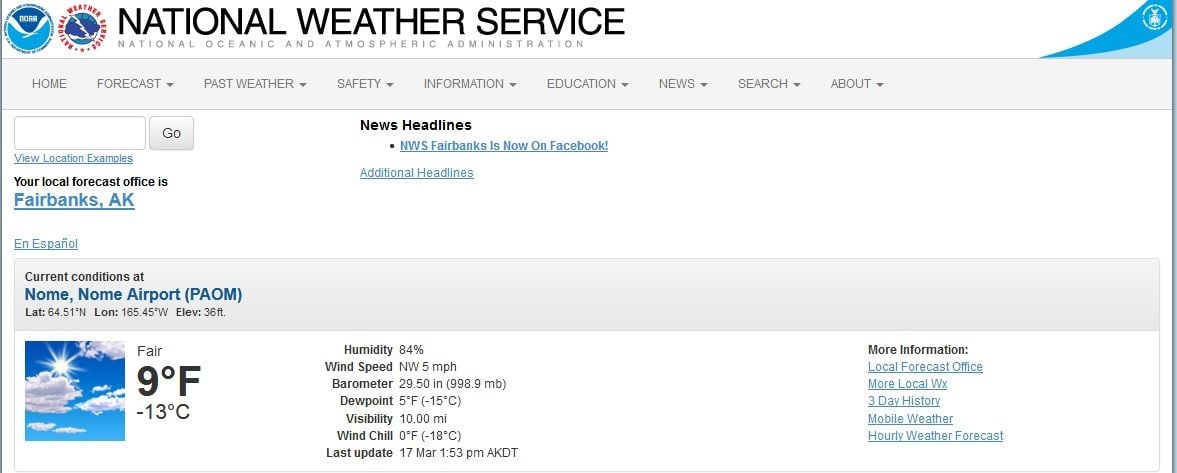
No offense intended, but you might want to research that theory.
Joined: Mar 2005
Aviation Qualifications: Military
Posts: 6,563
Likes: 952
From: Aus
Water can remain liquid down to -40°C. Then you can have ice fog which only forms under specific conditions; the humidity has to be near 100% as the air temperature drops to well below 0 °C (32 °F), allowing ice crystals to form in the air.

Joined: Aug 2003
Posts: 580
Likes: 0
From: LOS
That wouldn't make any sense for foggy conditions. It must be a typo. If it was 21 DegF outside, all moisture would have fallen as
frost already and the humidity would be ZERO. If the temperature dropped from 21 DegF to 14 DegF, I'm pretty sure the air would
not become saturated.
frost already and the humidity would be ZERO. If the temperature dropped from 21 DegF to 14 DegF, I'm pretty sure the air would
not become saturated.