


Bride Killed in Helicopter Crash


Joined: Apr 2000
Aviation Qualifications: ATP+Mil
Posts: 10,959
Likes: 1,814
From: EGDC
I may have mentioned this before, but about 20 years ago, a colleague and I (both Brit mil) took part in a simulator assessment at RAE Bedford which was one of the first studies into helicopter flight in DVE (degraded visual environment).
We flew the same profile each time but with the simulator staff adjusting the control responses (everything from a full ASE/SAS to a completely unstabilised aircraft which was modeled on R22) and then changing the quality of the visual cues.
For two experienced mil pilots (both QHIs) it was a chastening experience to see how quickly our performance degraded as both the stability of the helo and the visual cues went downwards.
The worst was, of course, the R22 in the worst visual cues (still not fully IMC but pretty close) - absolutely 100% concentration just to keep it the right way up but with no capacity for navigation, communication or any other tasks.
Sadly there will still be pilots out there who think they are better, more skillful or just luckier - and they are the same pilots we will be reading about on this forum in the years to come.
Don't do it!
We flew the same profile each time but with the simulator staff adjusting the control responses (everything from a full ASE/SAS to a completely unstabilised aircraft which was modeled on R22) and then changing the quality of the visual cues.
For two experienced mil pilots (both QHIs) it was a chastening experience to see how quickly our performance degraded as both the stability of the helo and the visual cues went downwards.
The worst was, of course, the R22 in the worst visual cues (still not fully IMC but pretty close) - absolutely 100% concentration just to keep it the right way up but with no capacity for navigation, communication or any other tasks.
Sadly there will still be pilots out there who think they are better, more skillful or just luckier - and they are the same pilots we will be reading about on this forum in the years to come.
Don't do it!


Joined: Dec 2014
Posts: 550
Likes: 12
From: Africa
Should Harness
In a Robinson, the "Five-Point Shoulder Harness System" is an optional extra (additional USD 2,750 on the 2014 price list), and only available for the front seats. The downside of this 5-point harness system is that it requires an additional crossbar to be installed, in parallel to the existing cross bar but some 20 cm higher.
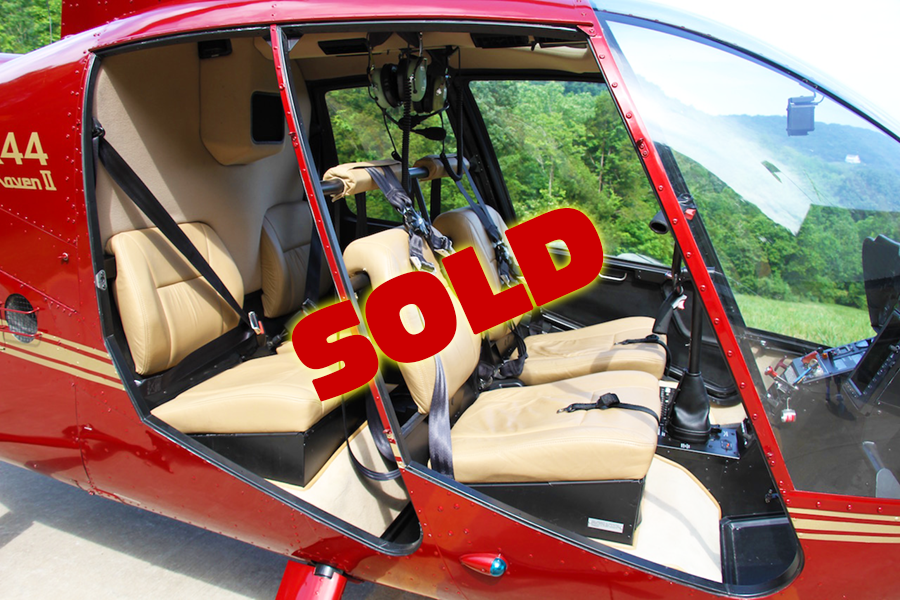
Not only drastically reduces this the experience of spaciousness of the back seat pax, but more importantly, the new crossbar is in the exact trajectory of the heads of the rear pax, should they be flung forward
 (hence the slight padding visible in the picture above). So you reduce one risk in front, but introduce a new problem in the back! In the balance of probabilities, many owners decide against the 5-point harness system.
Another problem is that here the inertia reels cannot be locked manually (as flying the aircraft requires to be able to lean forward, e.g., to set the DI or to operate the moving map visible in this pic above, and in the mishap flight video).
There have been cases (http://www.pprune.org/rotorheads/589...ml#post9640834) where - despite should harness - the initial speed of the pilot's torso moving forward was not fast enough to auto-lock the inertia reels, and the pilot was still pushed onto their cyclic control.
Joined: Apr 2005
Posts: 280
Likes: 20
From: OZ
I think all this talk of IF in various platforms is missing the point.
(I've got enough actual IMC in an unstablzed B206 to understand the challenge and possibilities. Obviously above LSALT, or on a published approach.)
IMHO, this crash possibly started the day the flight was booked.
Many years ago one thing I always used to try and instill in my students was to highlight to customers/passengers that the flight was weather dependent, right from the first planning stage. This can make it a lot easier to cancel the flight, or turn around when required.
In the above example:
Booking the flight – “Dependent on weather”
Day of the flight – “Weather is far from ideal – consider an alternative, or we can continue to assess”
Departing – “Weather is still marginal. We can ‘give it a go’, but there is a chance we will end up back here. Want to try an alternative method, or run the risk of being back here? (Still owing for some flying)”
I believe this reduces the pressure on the pilot to take risks with the weather. Much easier to make the correct decision when the time comes.
A chilling video, which might have a place in every CPL course.
The more experienced pilots turn around, while the less experienced pilots “push on”.
The most experienced pilots are drinking coffee, and wondering why anyone would take off in the current met conditions.
(I've got enough actual IMC in an unstablzed B206 to understand the challenge and possibilities. Obviously above LSALT, or on a published approach.)
IMHO, this crash possibly started the day the flight was booked.
Many years ago one thing I always used to try and instill in my students was to highlight to customers/passengers that the flight was weather dependent, right from the first planning stage. This can make it a lot easier to cancel the flight, or turn around when required.
In the above example:
Booking the flight – “Dependent on weather”
Day of the flight – “Weather is far from ideal – consider an alternative, or we can continue to assess”
Departing – “Weather is still marginal. We can ‘give it a go’, but there is a chance we will end up back here. Want to try an alternative method, or run the risk of being back here? (Still owing for some flying)”
I believe this reduces the pressure on the pilot to take risks with the weather. Much easier to make the correct decision when the time comes.
A chilling video, which might have a place in every CPL course.
The more experienced pilots turn around, while the less experienced pilots “push on”.
The most experienced pilots are drinking coffee, and wondering why anyone would take off in the current met conditions.


Joined: Oct 2016
Posts: 450
Likes: 0
From: UK
A very good point! However, this R44 was only equipped with the standard "automotive style" seat belts.
Low time Robbie guy here. If you haven't tried it, it's not nearly as difficult as you think.
I ... did the requisite 5 hours under the hood in an R44, mostly at night. I wouldn't be scared at the idea of flying an R44 in IMC,
What has to be done to make it stick?


Joined: May 2002
Aviation Qualifications: ATP+Mil
Posts: 18,633
Likes: 1,072
From: Downeast
The chances of your continued longevity being negatively influenced by events when it comes to IMC Flight....depends hugely upon the amount of planning that goes on before One enters IMC.
Add in the other filter to the data....that being the amount of Gucci Kit available to you....that is set up and in operation, combined with your actual ability determined by real currency demonstrated by recent experience flying in actual instrument conditions.
Said differently, if you pop into IMC with zero notice, in a non-IFR capable aircraft, you are probably about to render your Organ Donor Card excess to need.
We can have all the Rules, Regulations, Training, and Education in the World....but absent the Judgement to use those inputs....we shall continue to see outcomes just like in the Video....no matter the experience level of the Pilot.
Inadvertent IMC, just like Fog, will straight up kill you.
Add in the other filter to the data....that being the amount of Gucci Kit available to you....that is set up and in operation, combined with your actual ability determined by real currency demonstrated by recent experience flying in actual instrument conditions.
Said differently, if you pop into IMC with zero notice, in a non-IFR capable aircraft, you are probably about to render your Organ Donor Card excess to need.
We can have all the Rules, Regulations, Training, and Education in the World....but absent the Judgement to use those inputs....we shall continue to see outcomes just like in the Video....no matter the experience level of the Pilot.
Inadvertent IMC, just like Fog, will straight up kill you.
Joined: Apr 2005
Posts: 280
Likes: 20
From: OZ
2. Even though it was certainly certified for IFR flight, and flying on an IFR plan, I still asked myself the same question. "Why am I doing this?"

Joined: Dec 2015
Posts: 1
Likes: 0
From: Somerset, UK
Long time stalker, first time poster. Picked this up on another thread. The same thread offered a translation of the conversation between the photographer and pilot which said that she asked him if he'd been to the landing site before and he said that he had...
I am not qualified to comment or pass judgement, but did think this was worth contributing to your discussion - I hope you don't mind!
"The videos on youtube of this tragedy of which there are many show a reporter doing the flight to show what they could've expected upon arrival....power lines right over top of lawn they expected to land on."
Skip to @10:35 https://www.youtube.com/watch?v=cKpPg4un7Bw
I am not qualified to comment or pass judgement, but did think this was worth contributing to your discussion - I hope you don't mind!
"The videos on youtube of this tragedy of which there are many show a reporter doing the flight to show what they could've expected upon arrival....power lines right over top of lawn they expected to land on."
Skip to @10:35 https://www.youtube.com/watch?v=cKpPg4un7Bw
Joined: Jul 2014
Posts: 33
Likes: 0
From: Spain
People still "mixing" things. We should return to basics.
One thing is VMC and IMC classification and another related-but-different thing is VFR and IFR types of flight. VFR flight in VMC conditions and IFR flight in IMC conditions don't represent any problem. VFR in IMC does. Point two: IMC can imply but not always, severe weather. I mean, you can get into IMC because of fog, or dust.
A pilot with proper IFR training can fly ANY helicopter (stabilized or not) equipped with the "five basics" sticking to IFR for a short amount of time without any problem. Of course, he will experience some excess of workload but this won't kill him/her in the short term. That a helicopter is not IFR approved doesn't mean that it's not "flyable" in IMC at a certain moment. For instance, to be IFR certified a helicopter needs an stby att indicator with an independent power source. But in a normal situation you only need one operating att indicator. If you have the five basics, and you have IFR training, you can fly IFR in an emergency situation and give explanations at arrival. It's better losing your licence than losing your life.
If the helicopter is stabilized or not is not conclusive in this matter. If you fly the AS332 or the S76 they have good stabilization systems ¿right? but to be IFR rated in those types you should be capable of flying them in IMC without the stabilizations (i'm thinking about an electrical failure or fire in IMC, flying with the stby att indicator and flashlights to illuminate the instruments... situations that you are required to pass in the simulator). And let me tell you that a Superpuma without SAS is far more unstable and difficult to fly that an"unstabilized" R44. Nothing that a medium IFR trained pilot can not do, though.
What makes the difference here is a pilot trying to maintain VFR while in IMC (but not strong weather, just low visibility). Why? Perhaps he had no IFR training. But the R44 is perfectly flyable in IMC and IFR without strong weather for the short time required to a) make a 180º turn to regain VMC or b) switch to IFR and initiate an emergency climb to the msa and see what happens (most probably he would have met clear skies above the fog, wich means VMC as well).
In sum: it was not the helicopter nor the IMC condition what killed the pilot but his wrong decision due to his lack of training in IFR. IFR training is like a red pill that opens your eyes about the risks of flying in IMC. It's not a question of making "light inputs" in the cyclic stick as read here. In IMC you can suffer from vestibular illusions and vertigoes and end in inverted position without noticing even with those "small inputs". If you are not IFR rated, avoid IMC by all means. If accidentally in IMC, return ASAP to VMC. No matter the helicopter, no matter the stabilization system. BUT, if you have IFR training and your helicopter is IFR certified you have another option which is changing to IFR and keep in IMC (changing route and altitudes, of course). AND in a desperate situation you can fly IFR even a non-IFR-certified helicopter while it is equipped with operating five basics in order to save your life. Full stop.
One thing is VMC and IMC classification and another related-but-different thing is VFR and IFR types of flight. VFR flight in VMC conditions and IFR flight in IMC conditions don't represent any problem. VFR in IMC does. Point two: IMC can imply but not always, severe weather. I mean, you can get into IMC because of fog, or dust.
A pilot with proper IFR training can fly ANY helicopter (stabilized or not) equipped with the "five basics" sticking to IFR for a short amount of time without any problem. Of course, he will experience some excess of workload but this won't kill him/her in the short term. That a helicopter is not IFR approved doesn't mean that it's not "flyable" in IMC at a certain moment. For instance, to be IFR certified a helicopter needs an stby att indicator with an independent power source. But in a normal situation you only need one operating att indicator. If you have the five basics, and you have IFR training, you can fly IFR in an emergency situation and give explanations at arrival. It's better losing your licence than losing your life.
If the helicopter is stabilized or not is not conclusive in this matter. If you fly the AS332 or the S76 they have good stabilization systems ¿right? but to be IFR rated in those types you should be capable of flying them in IMC without the stabilizations (i'm thinking about an electrical failure or fire in IMC, flying with the stby att indicator and flashlights to illuminate the instruments... situations that you are required to pass in the simulator). And let me tell you that a Superpuma without SAS is far more unstable and difficult to fly that an"unstabilized" R44. Nothing that a medium IFR trained pilot can not do, though.
What makes the difference here is a pilot trying to maintain VFR while in IMC (but not strong weather, just low visibility). Why? Perhaps he had no IFR training. But the R44 is perfectly flyable in IMC and IFR without strong weather for the short time required to a) make a 180º turn to regain VMC or b) switch to IFR and initiate an emergency climb to the msa and see what happens (most probably he would have met clear skies above the fog, wich means VMC as well).
In sum: it was not the helicopter nor the IMC condition what killed the pilot but his wrong decision due to his lack of training in IFR. IFR training is like a red pill that opens your eyes about the risks of flying in IMC. It's not a question of making "light inputs" in the cyclic stick as read here. In IMC you can suffer from vestibular illusions and vertigoes and end in inverted position without noticing even with those "small inputs". If you are not IFR rated, avoid IMC by all means. If accidentally in IMC, return ASAP to VMC. No matter the helicopter, no matter the stabilization system. BUT, if you have IFR training and your helicopter is IFR certified you have another option which is changing to IFR and keep in IMC (changing route and altitudes, of course). AND in a desperate situation you can fly IFR even a non-IFR-certified helicopter while it is equipped with operating five basics in order to save your life. Full stop.
Last edited by palacio802; 9th July 2017 at 13:50.

Joined: Apr 2010
Posts: 850
Likes: 0
From: USA

So now I know that while an R44 won't immediately become uncontrollable in IMC, real IMC and fake IMC are a world apart, and being successful in training is not a good indicator of real world performance in this area.
Not really a worry for me, I am not planning on performing any Stupid Helicopter Tricks, and my personal minimums remain extremely conservative, as they should at my experience level.
Joined: May 2002
Aviation Qualifications: ATP+Mil
Posts: 18,633
Likes: 1,072
From: Downeast
We flew Huey's IFR for decades.....and I was too young and immortal to even ask Question Two....much less guess at an answer.
Joined: Dec 2008
Posts: 2,191
Likes: 26
From: Top of the World
Gold bars = added protection (not)
This imbecile is a murderer in my eyes...pressing on & on when basic Airmanship told him to bug out a long time before. Who gives a toss about commercial pressures, he didn't have a gun to his head & now all are dead. I know 4 Dangerous Pricks like this, 2 are now dead, (killed in weather & their PAX) the other 2 boast about punching through clouds at the end of a valley, nothing short of accidents waiting to happen & it's all to do with Ego. Ego is a big killer in this industry, especially in the Mountains
If in doubt......bug out, better sooner than when it's too late
Ego is a big killer in this industry, especially in the Mountains If in doubt......bug out, better sooner than when it's too late
Joined: Mar 2004
Posts: 54
Likes: 0
From: west in australia
This imbecile is a murderer in my eyes...pressing on & on when basic Airmanship told him to bug out a long time before. Who gives a toss about commercial pressures, he didn't have a gun to his head & now all are dead. I know 4 Dangerous Pricks like this, 2 are now dead, (killed in weather & their PAX) the other 2 boast about punching through clouds at the end of a valley, nothing short of accidents waiting to happen & it's all to do with Ego. Ego is a big killer in this industry, especially in the Mountains
If in doubt......bug out, better sooner than when it's too late
Ego is a big killer in this industry, especially in the Mountains If in doubt......bug out, better sooner than when it's too late
Joined: Jul 2002
Posts: 230
Likes: 0
From: Murica.
What's up with the bar hatred?
I am repeatedly amused at how most helicopter pilots have this aversion to epaulets/bars, golden or otherwise. Helicopter crashes, pilot wore bars....obvisouly he was a complete imbecile that thought wearing bars made him bulletproof. Really? How many commercial pilots can choose what to wear at work? If you can, awesome...I wish I could. But don't judge people on what they are wearing or are not wearing. Most likely that's one choice this guy didn't have... I have to wear the white shirt, black pants, shiny shoes...and yes...bars. Would I rather wear a polo shirt? Of course. Does it make any difference whatsoever in how I fly? Of course not....
Joined: Apr 2010
Posts: 1,185
Likes: 542
From: Lost again...
TIMTS
I see you point, and it's a fair one as far as it goes...
However, I think that much of the scorn and mockery that you see directed at people wearing "Bars" in threads like this is driven by the fact that, for one reason or another, they have invariably demonstrated that they are not worthy of them.
Wearing our gold (or silver) bars is a privilege that goes with being the Commander of an aircraft and accepting responsibility for it and for those whom we fly. It's a privilege that most of us worked very hard for and take extremely seriously.
Therefore when we see a video or a photo of some d!ckhe@d doing something stupid, illegal, or dangerous whilst sporting a nice shiny set of bars then we will not take kindly to it.
Just my opinion.
I see you point, and it's a fair one as far as it goes...
However, I think that much of the scorn and mockery that you see directed at people wearing "Bars" in threads like this is driven by the fact that, for one reason or another, they have invariably demonstrated that they are not worthy of them.
Wearing our gold (or silver) bars is a privilege that goes with being the Commander of an aircraft and accepting responsibility for it and for those whom we fly. It's a privilege that most of us worked very hard for and take extremely seriously.
Therefore when we see a video or a photo of some d!ckhe@d doing something stupid, illegal, or dangerous whilst sporting a nice shiny set of bars then we will not take kindly to it.
Just my opinion.
Joined: Feb 2006
Posts: 927
Likes: 12
From: Germany
I am repeatedly amused at how most helicopter pilots have this aversion to epaulets/bars, golden or otherwise. Helicopter crashes, pilot wore bars....obvisouly he was a complete imbecile that thought wearing bars made him bulletproof. Really? How many commercial pilots can choose what to wear at work? If you can, awesome...I wish I could. But don't judge people on what they are wearing or are not wearing. Most likely that's one choice this guy didn't have... I have to wear the white shirt, black pants, shiny shoes...and yes...bars. Would I rather wear a polo shirt? Of course. Does it make any difference whatsoever in how I fly? Of course not....
you have a point- never the less - experience shows, that more often than seldom, the guys in the little helicopters, who show lack of expertise- step out of their helicopters, wearing shiny bars....
Recall the Formula 1 racings at the Nürnburg Race Course - except for passenger drop off only sloping landing spots.
Had a black trouser and a white shirt as well (no bars so) and enjoyed with my fellow pilots the attempts of the "bar guys", trying to get their Robbie's down.
Only a few of the turbine pilots had bars, but most of the Robbie's....
And it seems, that I'm not the only one charing the same experience....
Joined: Apr 2003
Posts: 3,012
Likes: 1
From: USA
Time to weigh in on this:
1) Airplanes passed through this same Mayhem-by-Air phase in the late 1920's, when crashes due to CFIT were more common than any other cause. Mandatory routes, IFR equippage and mandatory commercial IFR were the result and the accident rate plummeted.
2) Helicopter IFR procedures simply do not exist. I mean routes, approaches and departures from heliports and to heliports. Yes, we get to borrow airplane procedures, but actual helicopter IFR where the trip is done substantially on airways and to helicopter destinations is beyond our regulator's ability to understand.
3) All commercial helicopters should be IFR equipped, and able to file and fly their missions on helicopter airways and down helicopter approaches.
4) Blaming "Training" and "Pilot Error" for CFIT is a waste of time, as accurate as it is. Blame regulators who won't approve helicopter routes and approaches, operators too cheap to equip properly, and pilots who cannot see the forest for the trees.
Look at the new thread I posted for an article I wrote a decade ago about this sad and sickening problem, "Driving on the Planet Mongo"
1) Airplanes passed through this same Mayhem-by-Air phase in the late 1920's, when crashes due to CFIT were more common than any other cause. Mandatory routes, IFR equippage and mandatory commercial IFR were the result and the accident rate plummeted.
2) Helicopter IFR procedures simply do not exist. I mean routes, approaches and departures from heliports and to heliports. Yes, we get to borrow airplane procedures, but actual helicopter IFR where the trip is done substantially on airways and to helicopter destinations is beyond our regulator's ability to understand.
3) All commercial helicopters should be IFR equipped, and able to file and fly their missions on helicopter airways and down helicopter approaches.
4) Blaming "Training" and "Pilot Error" for CFIT is a waste of time, as accurate as it is. Blame regulators who won't approve helicopter routes and approaches, operators too cheap to equip properly, and pilots who cannot see the forest for the trees.
Look at the new thread I posted for an article I wrote a decade ago about this sad and sickening problem, "Driving on the Planet Mongo"
Joined: Jul 2004
Posts: 816
Likes: 5
From: Home
Heck, the customers even complain about the higher landing fees of the 407 over the 206L (>2t vs. <2t).
With an L3 in the house the 407 gets flat feet and you want me to step up to IFR certified multi crew twins ?
Right, let's just close the doors...
May I remind everyone that an EASA MEIR cost in excess of $50k ? Good luck on crewing all those commercially operated machines.