

Quote:
I saw some videos of your tests plus had a couple friends involved in the process. Big aircraft, big flare! Were you looking out the skylight to get your reference?Originally Posted by JohnDixson
from the fellow who did the two S-92 auto’s.

I've been in a few Astar full autos with a big flare but can't imagine what it was like in that big tub. At least with a nose wheel you didn't ride over on the nose and rip out your pitot tube....
Wrench 1 wrote:
“At least with a nose wheel you didn't ride over on the nose and rip out your pitot tube....”
Indeed an issue with some machines. Once upon a time in a place called Camp Holloway, I had a side job as unit Standardization Pilot and gave the newbies a local check ride/local procedure ride, which included some power recovery autos. The point of which was simple: the Central Highlands had a lot of red clay and in dry season the coefficient of friction of that stuff was a very big number, thus in any real auto, one wanted to get as close to zero speed as possible in the flare. One young aviator just out of Ft Rucker was really not getting it slowed down, so at the end of his flare and rock over to level I told him I had the controls and began a takeoff from say 20 kts. Put the nose down, raised the collective and got to maybe 50 ft when the T-53 stalled and the Nr drooped. Managed to get it level and used what potential energy still in the rotor to cushion, but we were going maybe 25 or so on flat red clay. Ship rolled up on its nose and broke the chin bubbles but I kept the cyclic centered so the tail was ok. New engine, plastic and skids and it flew the next day. Wasn’t quite sure it wasn’t going to nose over to be honest. The main rotor was very close to hitting the ground directly in front, but didn’t.
“At least with a nose wheel you didn't ride over on the nose and rip out your pitot tube....”
Indeed an issue with some machines. Once upon a time in a place called Camp Holloway, I had a side job as unit Standardization Pilot and gave the newbies a local check ride/local procedure ride, which included some power recovery autos. The point of which was simple: the Central Highlands had a lot of red clay and in dry season the coefficient of friction of that stuff was a very big number, thus in any real auto, one wanted to get as close to zero speed as possible in the flare. One young aviator just out of Ft Rucker was really not getting it slowed down, so at the end of his flare and rock over to level I told him I had the controls and began a takeoff from say 20 kts. Put the nose down, raised the collective and got to maybe 50 ft when the T-53 stalled and the Nr drooped. Managed to get it level and used what potential energy still in the rotor to cushion, but we were going maybe 25 or so on flat red clay. Ship rolled up on its nose and broke the chin bubbles but I kept the cyclic centered so the tail was ok. New engine, plastic and skids and it flew the next day. Wasn’t quite sure it wasn’t going to nose over to be honest. The main rotor was very close to hitting the ground directly in front, but didn’t.
ShyTorque
Avoid imitations
close


6th June 2026
- Join DateNov 2000
- LocationWandering the FIR and cyberspace often at highly unsociable times
- Posts:15,111
-
Likes:241
-
Liked:1,085 Times in 511 Posts
Quote:
Secondly, let's think about when an Osprey autorotation would be necessary?
How would a one-sided transmission failure be dealt with?Secondly, let's think about when an Osprey autorotation would be necessary?
With regard to the license requirements I recently had a conversation with the 609 training team in Philly and showed them the CASA powered lift requirements, link below. He was a little surprised CASA already had the implementation planned, powered lift PPL, CPL and ATP all available.
Open the table of contents at the top of the page, select Volume 2, Part 61 and scroll down to the relevant license.
CASA regulations
Open the table of contents at the top of the page, select Volume 2, Part 61 and scroll down to the relevant license.
CASA regulations
212man
close

6th June 2026
- Join DateOct 1999
- LocationDen Haag
- Age59
- Posts:7,373
-
Likes:672
-
Liked:931 Times in 527 Posts
Quote:
Open the table of contents at the top of the page, select Volume 2, Part 61 and scroll down to the relevant license.
CASA regulations
Technically true, but no reference to credit for other types of aircraft and currently only achievable by an ex-military PL pilot I would say (unless I missed something).Originally Posted by bigglesbutler
With regard to the license requirements I recently had a conversation with the 609 training team in Philly and showed them the CASA powered lift requirements, link below. He was a little surprised CASA already had the implementation planned, powered lift PPL, CPL and ATP all available.Open the table of contents at the top of the page, select Volume 2, Part 61 and scroll down to the relevant license.
CASA regulations
50 hrs in the 609 sim and bobs your uncle, 609 type and Powered lift license. Thats how I read it but it has yet to be done so we shall have to see.
si
si
SASless
close


30th May 2026
- Join DateMay 2002
- LocationDowneast
- Age77
- Posts:18,633
-
Likes:237
-
Liked:1,072 Times in 428 Posts
The FAA does allow for a Military Pilot to obtain a Commercial Pilot License under the "Military Competency" method.
How will that work for those Military Pilots rated in the V-22 Osprey or any of its derivatives?
https://www.faa.gov/training_testing...ia/mcn_acs.pdf
How will that work for those Military Pilots rated in the V-22 Osprey or any of its derivatives?
https://www.faa.gov/training_testing...ia/mcn_acs.pdf

Quote:
Last time I was in the sim it had a more traditional collective, not the V-22 setup. I assume it hasn’t been changed during AW’s ownership of the program, but I suppose that’s possible. Originally Posted by Jack Carson
Does the 609 have a traditional collective power control or is it configured with the V-22 type Blottle?
609 and V280 use a conventional "collective" arrangement, both to ease the transition of rotary wing pilots already familiar with the setup. The TCL on V22 so far is the only implementation of the other paradigm.
chopper2004
close
5th June 2026
- Join DateFeb 2006
- LocationThe Alps
- Posts:3,536
-
Likes:644
-
Liked:295 Times in 154 Posts
N609PH made a first with achieving long range flight Verigiate to Dubai last October. It was there for both the World Expo and the Dubai Air Show (of which I attended) so here are my photos below.
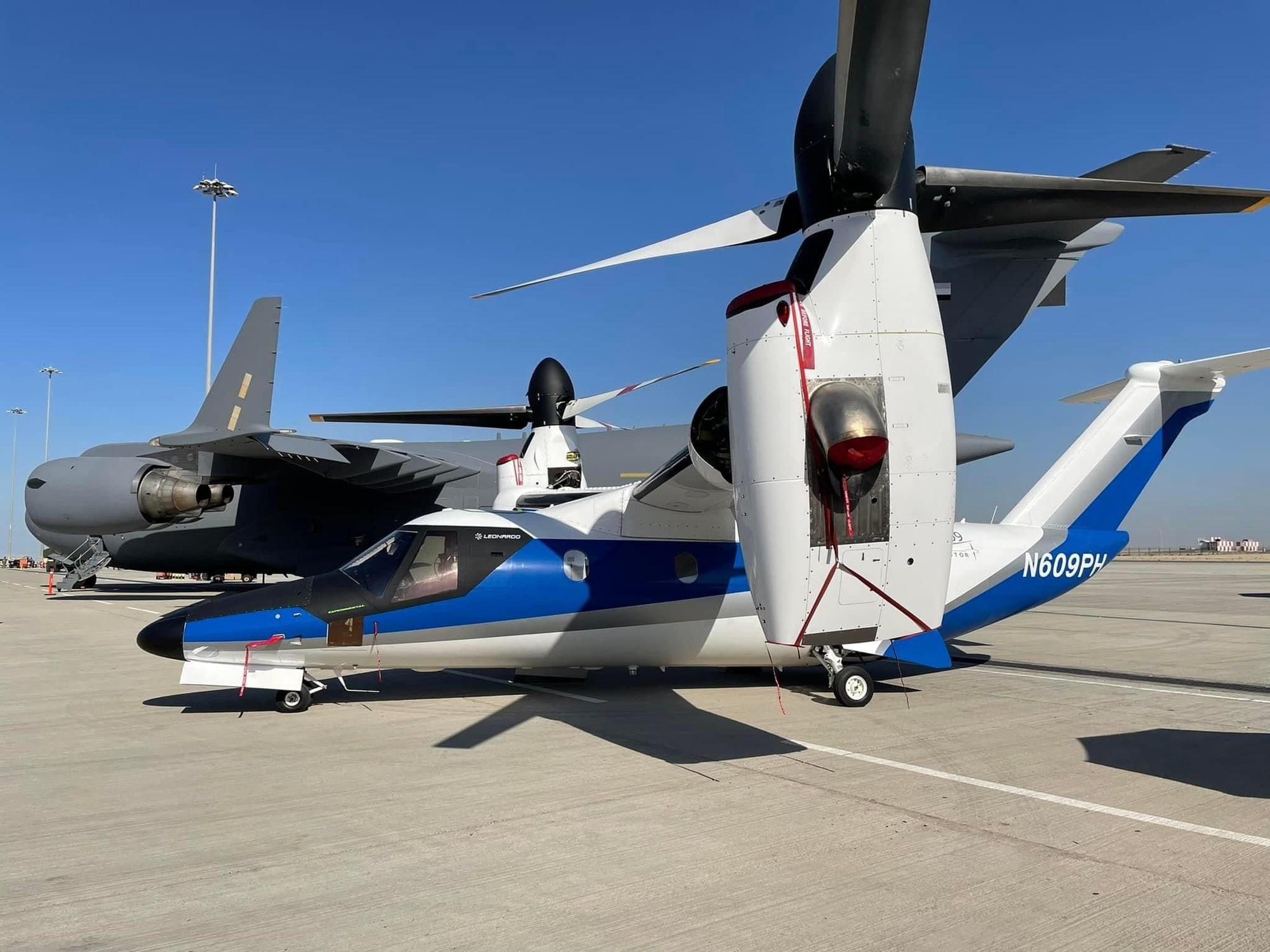


cheers
cheers
chopper2004
close
5th June 2026
- Join DateFeb 2006
- LocationThe Alps
- Posts:3,536
-
Likes:644
-
Liked:295 Times in 154 Posts
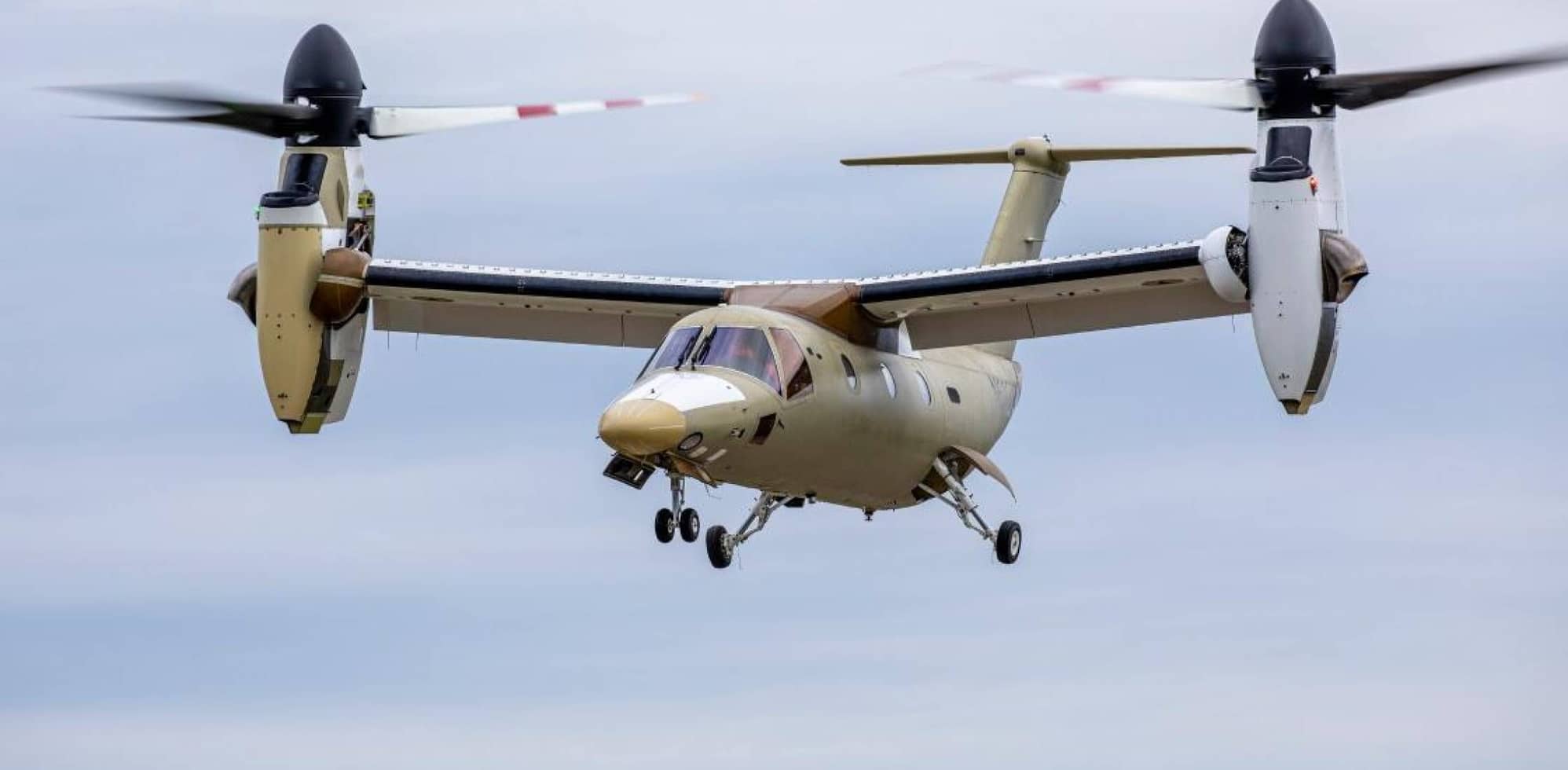
I prefer the painted one. The mismatched engine cowlings don't work for me.
If I recall correctly, one of the EMS operations in Australia was seriously considering one of these.
I don't know much about they work. Do both engines power a common gearbox to keep both props turning if one engine fails? Does the wing take over the load for gliding if both props stop? I wonder if these things have been tested if so.
If I recall correctly, one of the EMS operations in Australia was seriously considering one of these.
I don't know much about they work. Do both engines power a common gearbox to keep both props turning if one engine fails? Does the wing take over the load for gliding if both props stop? I wonder if these things have been tested if so.
Quote:
Yes, like the V-22, both prop rotor gearboxes are shafted together to allow a single engine to power both rotors in the event of a failure.Originally Posted by Tickle
Do both engines power a common gearbox to keep both props turning if one engine fails? Does the wing take over the load for gliding if both props stop? I wonder if these things have been tested if so.
Additionally, unlike the V-22 that needed to compromise rotor diameter to fit on the deck of an aircraft carrier folded, the 609 rotors are large enough to provide capability for auto rotation all the way to the ground safely.
I think it has its merits as a tool and here in Australia on EMS to locations without a strip it would be hard to beat. As an EMS pilot I'd love to see how it would go for remote work. That said, and not a criticism, most of the population is based around the coast and more often than not a helicopter can get the job done. Inland, a different story.
CTR-any idea what the auto descent rate is at max weight? Ditto for auto Nr?
Also, did the certification authority require an autorotation landing?
Also, did the certification authority require an autorotation landing?
SASless
close
30th May 2026
- Join DateMay 2002
- LocationDowneast
- Age77
- Posts:18,633
-
Likes:237
-
Liked:1,072 Times in 428 Posts
The Achilles heel of the Osprey as I understand it is the lack of a full regime autorotative landing capability....compounded by its OEI weight limits in OGE Hovers.
A shame it couldn't have been a type rating that could be acquired, perhaps for dual rated pilots, then as a whole separate license category.
Definitely limits the pool available who are cleared to fly it to either being military trained or civilians with a boatload of money.
Definitely limits the pool available who are cleared to fly it to either being military trained or civilians with a boatload of money.
Quote:
Also, did the certification authority require an autorotation landing?
Like the V-22, the 609 has the ability to perform a run on landing in the event AEO. So for certification I recall it being a marketing plus, not a requirement.Originally Posted by JohnDixson
CTR-any idea what the auto descent rate is at max weight? Ditto for auto Nr?Also, did the certification authority require an autorotation landing?
The aircraft max weight has grown since AW took over responsibility, so I cannot state if it is possible at max weight.
When Bell test pilot Roy Hopkins flew the simulated auto rotation test flight, he throttled both engines back in airplane mode, proceeded to go through emergency reconversion to VTOL mode, the simulated and autorotation to ground landing at a safe altitude to allow recovery. Looking at the telemetry altitude traces, upon first flaring for the autorotation landing the aircraft actually gained altitude and required lowering the collective to finally land.
The 609 minimum Nr is actually more critical to maintaining support to the fly by wire systems continued operation versus adequate kinetic energy for auto rotation. When reconverting to VTOL excessive Nr decay from lack of air flow windmilling the rotors can cause generators and pumps to go off-line.