


KC-135 reported down in Iraq.


Joined: Oct 2008
Posts: 11
Likes: 0
From: Sydney
While in the case of this incident, the advantage of a tanker being able to receive fuel is as follows. Tankers often conduct a racetrack pattern when on station. They may get lots of receivers and give all their available fuel to receivers or not get receivers while on station and have excess fuel than they require to get back home. In that case, if the incoming tanker can receive fuel, the outgoing tanker can offload fuel so the incoming tanker has more fuel to off land while on station. Without that extra fuel, they are already down on fuel from the transit to being on station, plus they may not have been able to take off full of fuel to factors such as runway length, temperature etc.


Joined: Jun 2011
Posts: 75
Likes: 10
From: n.ireland
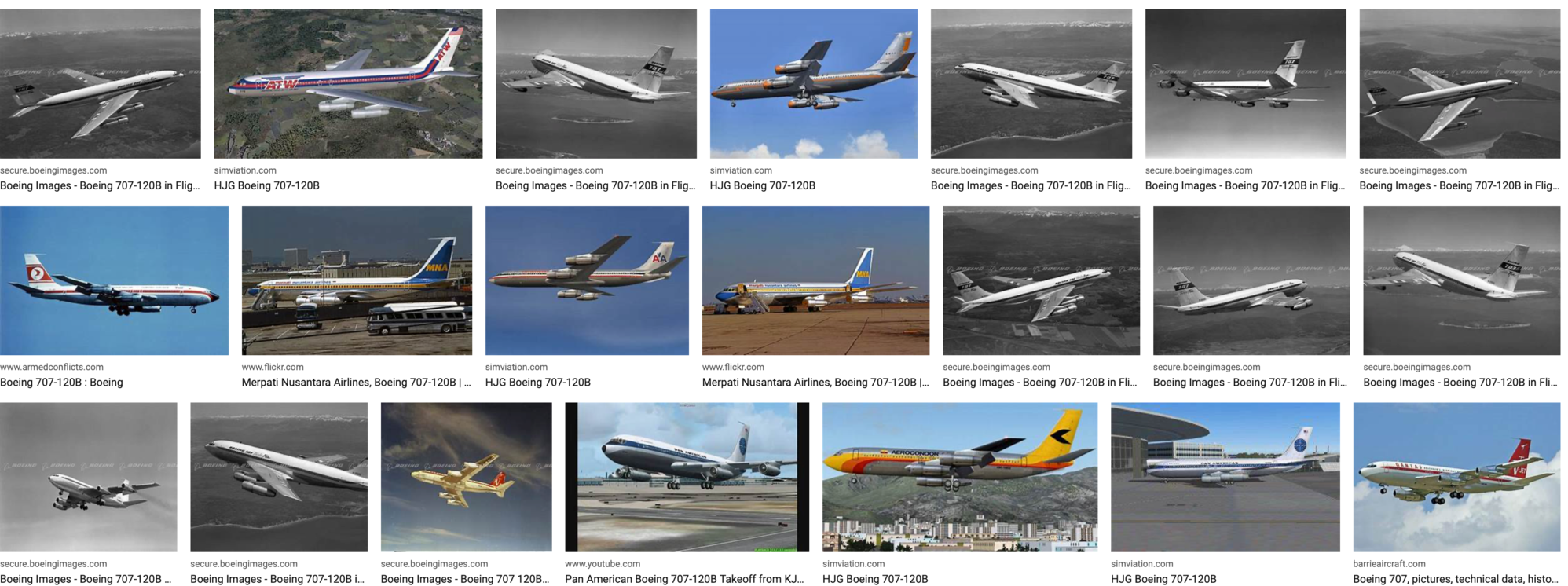
The HF aerial is the spear like projection on top of the vertical stabiliser which these type of aircraft always had.
N4790P
Joined: Jun 2002
Posts: 2,557
Likes: 231
From: Asia

Joined: Jan 2008
Posts: 17,687
Likes: 2,030
From: Reading, UK
Here, courtesy of af.mil, is background on the 2008 decision - whether one agrees with it or not - to no longer carry parachutes on the KC-135:
Air Force pulls parachutes from KC-135s
Air Force pulls parachutes from KC-135s

Joined: Jan 2008
Posts: 17,687
Likes: 2,030
From: Reading, UK
Just to clarify the two apparently inconsistent statements about the other three crew members' origin - both are technically correct.
They were with the 99th ARS, based at Sumpter Smith ANGB (co-located with Birmingham, AL airport).
But the 99th ARS is part of the 6th ARW, whose HQ is MacDill AFB, Tampa.
Meet the Black Knights: 99th Air Refueling Squadron
They were with the 99th ARS, based at Sumpter Smith ANGB (co-located with Birmingham, AL airport).
But the 99th ARS is part of the 6th ARW, whose HQ is MacDill AFB, Tampa.
Meet the Black Knights: 99th Air Refueling Squadron

Joined: Oct 2002
Aviation Qualifications: ATPL
Posts: 1,552
Likes: 775
From: The Coal Face
Here, courtesy of af.mil, is background on the 2008 decision - whether one agrees with it or not - to no longer carry parachutes on the KC-135:Air Force pulls parachutes from KC-135s
"If the plane is under control, you are going to stay with it," Sergeant Austin said. "If it's out of control, you're not going to be able to get to the parachute anyway."

Joined: May 1999
Aviation Qualifications: ATP+Mil
Posts: 27,394
Likes: 856
From: Quite near 'An aerodrome somewhere in England'
The proposed crew escape system fitted to the VC10K was complete nonsense.
The first few VC10K courses were taught how it was to be used and we listened with incredulous disdain.
The idea was that the aircraft could be abandoned having given away all its fuel to tanks dry - or nearly so as we still needed some eletrical and hydraulic power. The Air Engineer would operate a low level override button on the fuel panel, then spill the pressurisation to reduce differential pressure so that operation of the crew escape chute wouldn't cause an explosive decompression. Then the chute would be extended after which the crew was supposed to take turns diving out.
However, it was impossible to fly in parachutes as the seats wouldn't accomodate them. Also when the chute was operated, the sealing strip around the external door would most likely be ingested by the left hand engines, which would probably explode.
To add to the joy, we were supposed to use a walk round portable oxygen cylinder each as the cabin pressure rose. Thus we were supposed to unstrap, transfer to walk round oxygen, walk back to the cabin and don parachutes. One pilot would stay at the controls until the other had kitted up, then he would go back whilst the other pilot held the aircraft straight and level by leaning over the seat and holding the control column! After the chute had been deployed and everyone else had gone, the remaining pilot was supposed to leg it back to the cabin and dive out....if he could. No intercom of course, so any communication would be by shouting after releasing one's oxygen mask. The rubber jungle would also have dropped automatically as cabin altitude increased.....
In the K3, the wretched thing was right over the access hatch to the underfloor area. So if the Air Engineer needed to go downstairs, he had to do a limbo dance to wriggle down through the hatch. The BWoS test crew tried to convince us that it was easy when the first K3 arrived and we went on board to study it.
We were issued with immersion suits and bone domes (I think?) and there was a storage area in the squadron built for the purpose. I think that we did the single seat dinghy drill at SCSR as well as the multi-seat, but I might be wrong.
Eventually 'They' had an attack of commonsense and the whole nonsense was removed, leaving just a differential pressure gauge and part of the structure - which was the perfect size to hold a gash bag for galley rubbish etc. Which became known as the 'Million Pound Dustbin'.
There was no plausible scenario for use of the system and it certainly couldn't be used to abandon a damaged aircraft. Those who'd been rear crew in Victors thought their system was bad enough, but the proposed VC10K2/3 system was laughably ridiculous!
The first few VC10K courses were taught how it was to be used and we listened with incredulous disdain.
The idea was that the aircraft could be abandoned having given away all its fuel to tanks dry - or nearly so as we still needed some eletrical and hydraulic power. The Air Engineer would operate a low level override button on the fuel panel, then spill the pressurisation to reduce differential pressure so that operation of the crew escape chute wouldn't cause an explosive decompression. Then the chute would be extended after which the crew was supposed to take turns diving out.
However, it was impossible to fly in parachutes as the seats wouldn't accomodate them. Also when the chute was operated, the sealing strip around the external door would most likely be ingested by the left hand engines, which would probably explode.
To add to the joy, we were supposed to use a walk round portable oxygen cylinder each as the cabin pressure rose. Thus we were supposed to unstrap, transfer to walk round oxygen, walk back to the cabin and don parachutes. One pilot would stay at the controls until the other had kitted up, then he would go back whilst the other pilot held the aircraft straight and level by leaning over the seat and holding the control column! After the chute had been deployed and everyone else had gone, the remaining pilot was supposed to leg it back to the cabin and dive out....if he could. No intercom of course, so any communication would be by shouting after releasing one's oxygen mask. The rubber jungle would also have dropped automatically as cabin altitude increased.....
In the K3, the wretched thing was right over the access hatch to the underfloor area. So if the Air Engineer needed to go downstairs, he had to do a limbo dance to wriggle down through the hatch. The BWoS test crew tried to convince us that it was easy when the first K3 arrived and we went on board to study it.
We were issued with immersion suits and bone domes (I think?) and there was a storage area in the squadron built for the purpose. I think that we did the single seat dinghy drill at SCSR as well as the multi-seat, but I might be wrong.
Eventually 'They' had an attack of commonsense and the whole nonsense was removed, leaving just a differential pressure gauge and part of the structure - which was the perfect size to hold a gash bag for galley rubbish etc. Which became known as the 'Million Pound Dustbin'.
There was no plausible scenario for use of the system and it certainly couldn't be used to abandon a damaged aircraft. Those who'd been rear crew in Victors thought their system was bad enough, but the proposed VC10K2/3 system was laughably ridiculous!
Joined: Oct 2011
Posts: 2
Likes: 1
From: Austin, TX
RIP ZEUS95
Ecce Homo! Loquitur...

Joined: Jul 2000
Aviation Qualifications: Spotter
Posts: 24,510
Likes: 7,255
From: Peripatetic
The 707-120B's mostly didn't have them.
Joined: Jan 2008
Posts: 17,687
Likes: 2,030
From: Reading, UK

Notably absent are TWA, none of whose 40-odd -120B's sported the HF stinger, and only a proportion of American's did.
I'll stick with "mostly didn't", overall, thanks.
Joined: Jan 2008
Posts: 17,687
Likes: 2,030
From: Reading, UK
The KC-135R was double crewed - one from 6th ARW USAF from McDill AFB, FL and one from 121st ARW ANG, Rickenbacker ANGB, OH. All 6 crew members now identified.r
Klinner, Savino and Pruitt were from the 99th ARS though, as noted and linked in a previous post, their unit in fact operated from Birmingham, AL rather than from MacDill.


Joined: Jan 2019
Aviation Qualifications: LAME
Posts: 803
Likes: 642
From: Cumbria
Not sure of relevance to the HF thing, but don't lose sight of the fact that a KC-135 is not a Boeing 707 with a boom and a paint job. It's a Boeing 717, with a separate development line from Boeing's original Dash-80 demonstrator. As the company's "717" designation did not feature prominently in marketing, Boeing decades later felt able to re-use the number for its legacy Douglas/MD DC-9 offspring.
Amongst other things, there are significant dimensional differences to a 707.
Respect and sympathies to the crew in this incident. Is it just me or, futher to the loss of life, the loss of something as graceful and majestic as a Stratotanker (or Nimrod, or Victor) make these events so much more tragic?
Amongst other things, there are significant dimensional differences to a 707.
Respect and sympathies to the crew in this incident. Is it just me or, futher to the loss of life, the loss of something as graceful and majestic as a Stratotanker (or Nimrod, or Victor) make these events so much more tragic?
Joined: Jan 2008
Posts: 52
Likes: 46
From: Maryland
The KC-135 had a slightly wider fuselage than the -80. During the 707 design, the airlines wanted to end up with a 3+3 seat configuration, so the 707 fuselage is wider than the 135. To add to the confusion, the US military operates various version of the 135 and the 707.
Joined: May 2005
Posts: 3,862
Likes: 444
From: QLD - where drivers are yet to realise that the left lane goes to their destination too.
Considering that the bean counters had decided that their lives weren't worth the money to even attempt to save, let's hope the ride down was relatively swift.
Joined: Jul 2002
Posts: 152
Likes: 15
From: Sussex
If they weren't refuelling how much credence can we give to a theory that the Ohio ANG crew were being overseen by an active service crew, detected what they thought was an incoming missile, turned and climbed to avoid and then collided?
Joined: Sep 2014
Aviation Qualifications: Military
Posts: 153
Likes: 28
From: Coltishall
The proposed crew escape system fitted to the VC10K was complete nonsense.
The first few VC10K courses were taught how it was to be used and we listened with incredulous disdain.
The idea was that the aircraft could be abandoned having given away all its fuel to tanks dry - or nearly so as we still needed some eletrical and hydraulic power. The Air Engineer would operate a low level override button on the fuel panel, then spill the pressurisation to reduce differential pressure so that operation of the crew escape chute wouldn't cause an explosive decompression. Then the chute would be extended after which the crew was supposed to take turns diving out.
However, it was impossible to fly in parachutes as the seats wouldn't accomodate them. Also when the chute was operated, the sealing strip around the external door would most likely be ingested by the left hand engines, which would probably explode.
To add to the joy, we were supposed to use a walk round portable oxygen cylinder each as the cabin pressure rose. Thus we were supposed to unstrap, transfer to walk round oxygen, walk back to the cabin and don parachutes. One pilot would stay at the controls until the other had kitted up, then he would go back whilst the other pilot held the aircraft straight and level by leaning over the seat and holding the control column! After the chute had been deployed and everyone else had gone, the remaining pilot was supposed to leg it back to the cabin and dive out....if he could. No intercom of course, so any communication would be by shouting after releasing one's oxygen mask. The rubber jungle would also have dropped automatically as cabin altitude increased.....
In the K3, the wretched thing was right over the access hatch to the underfloor area. So if the Air Engineer needed to go downstairs, he had to do a limbo dance to wriggle down through the hatch. The BWoS test crew tried to convince us that it was easy when the first K3 arrived and we went on board to study it.
We were issued with immersion suits and bone domes (I think?) and there was a storage area in the squadron built for the purpose. I think that we did the single seat dinghy drill at SCSR as well as the multi-seat, but I might be wrong.
Eventually 'They' had an attack of commonsense and the whole nonsense was removed, leaving just a differential pressure gauge and part of the structure - which was the perfect size to hold a gash bag for galley rubbish etc. Which became known as the 'Million Pound Dustbin'.
There was no plausible scenario for use of the system and it certainly couldn't be used to abandon a damaged aircraft. Those who'd been rear crew in Victors thought their system was bad enough, but the proposed VC10K2/3 system was laughably ridiculous!
The first few VC10K courses were taught how it was to be used and we listened with incredulous disdain.
The idea was that the aircraft could be abandoned having given away all its fuel to tanks dry - or nearly so as we still needed some eletrical and hydraulic power. The Air Engineer would operate a low level override button on the fuel panel, then spill the pressurisation to reduce differential pressure so that operation of the crew escape chute wouldn't cause an explosive decompression. Then the chute would be extended after which the crew was supposed to take turns diving out.
However, it was impossible to fly in parachutes as the seats wouldn't accomodate them. Also when the chute was operated, the sealing strip around the external door would most likely be ingested by the left hand engines, which would probably explode.
To add to the joy, we were supposed to use a walk round portable oxygen cylinder each as the cabin pressure rose. Thus we were supposed to unstrap, transfer to walk round oxygen, walk back to the cabin and don parachutes. One pilot would stay at the controls until the other had kitted up, then he would go back whilst the other pilot held the aircraft straight and level by leaning over the seat and holding the control column! After the chute had been deployed and everyone else had gone, the remaining pilot was supposed to leg it back to the cabin and dive out....if he could. No intercom of course, so any communication would be by shouting after releasing one's oxygen mask. The rubber jungle would also have dropped automatically as cabin altitude increased.....
In the K3, the wretched thing was right over the access hatch to the underfloor area. So if the Air Engineer needed to go downstairs, he had to do a limbo dance to wriggle down through the hatch. The BWoS test crew tried to convince us that it was easy when the first K3 arrived and we went on board to study it.
We were issued with immersion suits and bone domes (I think?) and there was a storage area in the squadron built for the purpose. I think that we did the single seat dinghy drill at SCSR as well as the multi-seat, but I might be wrong.
Eventually 'They' had an attack of commonsense and the whole nonsense was removed, leaving just a differential pressure gauge and part of the structure - which was the perfect size to hold a gash bag for galley rubbish etc. Which became known as the 'Million Pound Dustbin'.
There was no plausible scenario for use of the system and it certainly couldn't be used to abandon a damaged aircraft. Those who'd been rear crew in Victors thought their system was bad enough, but the proposed VC10K2/3 system was laughably ridiculous!
Remember it well. That was one of my AF jobs to replace the black bin bag with masking tape😁 Oh, and also to empty the ash trays in the seat arms (you were only allowed to smoke when you weren't Tanking 🤣

Joined: Jan 2008
Aviation Qualifications: Military
Posts: 3,346
Likes: 2,119
From: Glorious Devon
That is not telling the whole story. How many of those losses were of crewed aircraft actually flying on ops and at a height where a bail out might have been possible?