


NATO vs Russia


Joined: Aug 2013
Aviation Qualifications: Military (Retired)
Posts: 1,345
Likes: 562
From: Washington.
Takes less fuel to fight the enemy closer to our own shores
Shorter deployments
availability to attack drug boats nearby
Russia and Europe are sooo far away
availability to attack drug boats nearby
Russia and Europe are sooo far away

Thread Starter
Ecce Homo! Loquitur...

Joined: Jul 2000
Aviation Qualifications: Spotter
Posts: 24,510
Likes: 7,255
From: Peripatetic
This applies to Europe as much as Taiwan, as the recently advised indefinite postponement of all deliveries, including those already paid for, testifies.
https://x.com/MichaelTLester/status/...125398683?s=20
"There is no supply ship coming..."
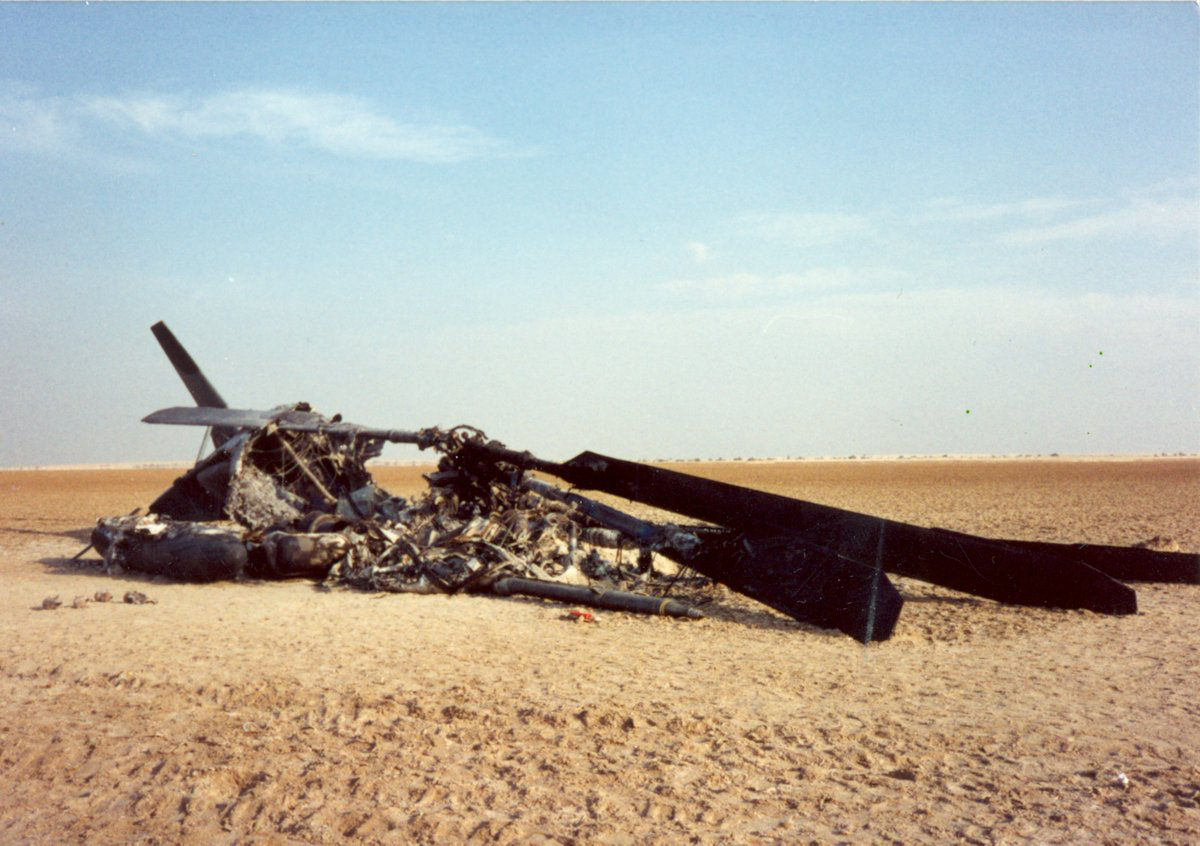
I flew CH-53E helicopters in Desert Storm.
Before the push north, a pilot asked our CO when the resupply ship was coming. We needed .50 cal. We needed engines. The Saudi sand was so fine it bypassed our particle separators and ate the compressor blades. We were throwing compressor stalls on landing. One of our aircraft caught fire, lit the magnesium gearbox, and burned to the ground before the war started.
The CO's answer: there is no ship coming.
The American public thought we were an unstoppable machine. We were rationing pistol ammunition.
I learned at the Naval Postgraduate School, taking Maritime Strategy, that Congress had spent years diverting conventional ammunition and parts funding into new missile programs.
Promises to backfill next year. They never did. By 1990 the backlog was unrecoverable.
Today we have burned through half our THAAD stockpile defending Israel. No new interceptors delivered since 2023. None coming until 2027.
Trump is now wavering on the Taiwan arms sale.
There is no supply ship coming.
"There is no supply ship coming..."
I flew CH-53E helicopters in Desert Storm.
Before the push north, a pilot asked our CO when the resupply ship was coming. We needed .50 cal. We needed engines. The Saudi sand was so fine it bypassed our particle separators and ate the compressor blades. We were throwing compressor stalls on landing. One of our aircraft caught fire, lit the magnesium gearbox, and burned to the ground before the war started.
The CO's answer: there is no ship coming.
The American public thought we were an unstoppable machine. We were rationing pistol ammunition.
I learned at the Naval Postgraduate School, taking Maritime Strategy, that Congress had spent years diverting conventional ammunition and parts funding into new missile programs.
Promises to backfill next year. They never did. By 1990 the backlog was unrecoverable.
Today we have burned through half our THAAD stockpile defending Israel. No new interceptors delivered since 2023. None coming until 2027.
Trump is now wavering on the Taiwan arms sale.
There is no supply ship coming.

Joined: Feb 2009
Posts: 57
Likes: 28
From: Poland
More like another attempt at this, which did not go according to plan.
https://tvpworld.com/91448638/liberi...-in-baltic-sea
https://tvpworld.com/91448638/liberi...-in-baltic-sea
Thread Starter
Ecce Homo! Loquitur...
Joined: Jul 2000
Aviation Qualifications: Spotter
Posts: 24,510
Likes: 7,255
From: Peripatetic
another way to look at the US cuts to NATO is that Russia is a depleted nation and simply would not be able to mount a meaningful attack on NATO for decades.


Joined: Mar 2018
Posts: 2,243
Likes: 1,154
From: Central UK
When will people ever learn?
And if the US is to pull heavy support fron NATO then maybe, just maybe our decision to build thiose two useless/pointless carriers might just prove to have been a wise move, even tho the absence of cats remains a crippling limitation.

Joined: Sep 2004
Aviation Qualifications: ATPL(H)
Posts: 2,371
Likes: 877
From: Canada
Ah Yes the old “ Wishful Thinking / Peace in Our Time / Head stuck in Sand “ scenario.
When I say Sand I’m not thinking Sand.
Keep in mind the deluded maniacs in charge in Russia and elsewhere.
Thread Starter
Ecce Homo! Loquitur...
Joined: Jul 2000
Aviation Qualifications: Spotter
Posts: 24,510
Likes: 7,255
From: Peripatetic
Please define “Meaningful Attack”
GCHQ boss reveals how Russia is 'relentlessly targeting' the UK
Russia is "relentlessly targeting" critical infrastructure and democracy in the UK and across Europe, the head of the intelligence agency GCHQ will warn.
Anne Keast-Butler will also use the first of what is set to be an annual threat assessment to reveal that her officers are helping to counter "reckless sabotage and assassination attempts" by the Kremlin.
She will warn that the risk of miscalculation, which could trigger wider conflict, "is as high as I have ever seen it"…….
Russia is "relentlessly targeting" critical infrastructure and democracy in the UK and across Europe, the head of the intelligence agency GCHQ will warn.
Anne Keast-Butler will also use the first of what is set to be an annual threat assessment to reveal that her officers are helping to counter "reckless sabotage and assassination attempts" by the Kremlin.
She will warn that the risk of miscalculation, which could trigger wider conflict, "is as high as I have ever seen it"…….
Joined: Dec 2020
Aviation Qualifications: Non-Aircrew
Posts: 1,568
Likes: 1,380
From: Over the rainbow
Be grateful Russia isn't in the lead with AI. There is a patching war going on at the moment. Traditionally a product might be patched several times a year. Now using AI to detect issues products are patched hundreds of times a year.
Should the AI attackers get ahead of the AI patcher's it is entirely possible for the aggressor to shut down those applications.
If the application is your banking network you have a problem.
Should the AI attackers get ahead of the AI patcher's it is entirely possible for the aggressor to shut down those applications.
If the application is your banking network you have a problem.
Thread Starter
Ecce Homo! Loquitur...
Joined: Jul 2000
Aviation Qualifications: Spotter
Posts: 24,510
Likes: 7,255
From: Peripatetic
https://x.com/Microinteracti1/status...847183511?s=20
Norway Has Joined the French Nuclear Club. And About Time.
For decades, the polite fiction of European security went something like this: America provides the nuclear umbrella.
Well. Norway has just kicked that fiction into the fjord.
Jonas Gahr Støre and his defense minister Tore O. Sandvik flew to Paris today and formally accepted France’s invitation to join a nuclear weapons cooperation framework.
This is extraordinary. Norway, a country better known for salmon, sovereign wealth funds and a constitutional allergy to conflict, has just signed up to sit at the adult table of nuclear strategy. The Vikings are back, and this time they brought Charles de Gaulle.
Washington’s imperial project, built on seven decades of forward deployment, treaty commitments and the implicit promise that an attack on Tallinn is an attack on Texas, is visibly fraying.
The Europeans have watched this happen and drawn the only logical conclusion available to sentient adults: if you want security, you need to build it yourself.
Norway joining this framework is not just symbolically significant. It is a formal signal that a Nordic country with deep NATO roots, a border with Russia and no prior interest in nuclear arrangements has decided that French deterrence is a serious proposition worth serious engagement.
When Oslo moves, others will notice.
The White House, watching its carefully constructed European empire rearrange itself without asking, must be having a deeply unpleasant morning.
Norway Has Joined the French Nuclear Club. And About Time.
For decades, the polite fiction of European security went something like this: America provides the nuclear umbrella.
Well. Norway has just kicked that fiction into the fjord.
Jonas Gahr Støre and his defense minister Tore O. Sandvik flew to Paris today and formally accepted France’s invitation to join a nuclear weapons cooperation framework.
This is extraordinary. Norway, a country better known for salmon, sovereign wealth funds and a constitutional allergy to conflict, has just signed up to sit at the adult table of nuclear strategy. The Vikings are back, and this time they brought Charles de Gaulle.
Washington’s imperial project, built on seven decades of forward deployment, treaty commitments and the implicit promise that an attack on Tallinn is an attack on Texas, is visibly fraying.
The Europeans have watched this happen and drawn the only logical conclusion available to sentient adults: if you want security, you need to build it yourself.
Norway joining this framework is not just symbolically significant. It is a formal signal that a Nordic country with deep NATO roots, a border with Russia and no prior interest in nuclear arrangements has decided that French deterrence is a serious proposition worth serious engagement.
When Oslo moves, others will notice.
The White House, watching its carefully constructed European empire rearrange itself without asking, must be having a deeply unpleasant morning.
Norway will come under France’s nuclear umbrella
Norway will come under France’s nuclear umbrella, Prime Minister Jonas Gahr Stoere told news agency NTB on Wednesday, as concerns grow in Europe over U.S. commitment to the region’s security.
The move by Norway is significant as it has long been a so-called Atlanticist nation, one which believed its security was best achieved via close alignment with Washington.
Stoere travelled to Paris on Wednesday afternoon to meet President Emmanuel Macron and sign a new defence agreement with France, which includes Norway joining a French-led nuclear weapons initiative.
“We are doing this in light of the security policy situation in Europe, including Russia’s massive rearmament, also in the nuclear domain, and that it is waging a full-scale war against another European country,” Stoere told Norwegian news agency NTB.
No nuclear weapons will be deployed in Norway in peacetime, he added.
The Nordic nation of 5.6 million inhabitants is a member of NATO, but not of the European Union, and shares a border with Russia in the Arctic.
In March, France offered to extend the protection of its nuclear umbrella to other European countries which, in practice, means that an attack on Norway could trigger a French nuclear response.
Norway becomes the latest country to receive France’s nuclear protection, after Poland and Lithuania, which also share borders with Russia.
Russia and the U.S. are the world’s biggest nuclear powers, with over 5,000 nuclear warheads each. China has about 500, France has 290 and Britain 225, according to the Federation of American Scientists.
Norway will come under France’s nuclear umbrella, Prime Minister Jonas Gahr Stoere told news agency NTB on Wednesday, as concerns grow in Europe over U.S. commitment to the region’s security.
The move by Norway is significant as it has long been a so-called Atlanticist nation, one which believed its security was best achieved via close alignment with Washington.
Stoere travelled to Paris on Wednesday afternoon to meet President Emmanuel Macron and sign a new defence agreement with France, which includes Norway joining a French-led nuclear weapons initiative.
“We are doing this in light of the security policy situation in Europe, including Russia’s massive rearmament, also in the nuclear domain, and that it is waging a full-scale war against another European country,” Stoere told Norwegian news agency NTB.
No nuclear weapons will be deployed in Norway in peacetime, he added.
The Nordic nation of 5.6 million inhabitants is a member of NATO, but not of the European Union, and shares a border with Russia in the Arctic.
In March, France offered to extend the protection of its nuclear umbrella to other European countries which, in practice, means that an attack on Norway could trigger a French nuclear response.
Norway becomes the latest country to receive France’s nuclear protection, after Poland and Lithuania, which also share borders with Russia.
Russia and the U.S. are the world’s biggest nuclear powers, with over 5,000 nuclear warheads each. China has about 500, France has 290 and Britain 225, according to the Federation of American Scientists.


Joined: Oct 2004
Aviation Qualifications: CPL
Posts: 419
Likes: 39
From: California
Joined: May 2010
Posts: 1,569
Likes: 373
From: PLanet Earth
Thread Starter
Ecce Homo! Loquitur...
Joined: Jul 2000
Aviation Qualifications: Spotter
Posts: 24,510
Likes: 7,255
From: Peripatetic
FT: https://archive.is/20260527083257/ht...a-301a45d93eb2
EU defence chief urges states to stop making ‘haute couture’ missiles
The EU’s defence chief has urged countries to open up their arms stockpiles to supply Ukraine and boost production by moving away from “haute couture” weapons production.
“Governments should open their stockpiles to provide Ukraine with what they need,” the EU’s defence commissioner Andrius Kubilius told the FT.
Strengthening Ukraine’s military was all the more important if Europe reopened formal negotiating channels with Russia, Kubilius said, as momentum grows in Europe for such talks.
“The only formula which can bring peace is so-called peace through strength. Strength should be on the Ukrainian side,” and Europe can help with that, he stressed.
The former Lithuanian prime minister also warned that Europe was lagging behind Russia and Ukraine in missile manufacturing because its companies were producing sophisticated and expensive weapons that were difficult to scale up.
“Europeans produce what they call ‘haute couture’ production. Technologically very sophisticated, very advanced, very expensive, and impossible to ramp up,’’ he said. ‘‘Ukrainians produce, what those European industries call, ‘good enough’.”
Kubilius, who is spearheading Brussels’ efforts to strengthen Europe’s defence industrial base, said Europe needed to learn from Ukraine’s wartime methods and shift to cheaper systems that could be manufactured rapidly and at scale.
“The Ukrainians started to produce their own cruise missile Flamingo, and this year they are ready to produce around 700.”
By contrast, he said, the EU made fewer than 300. Russia produced 1,200.
Ukraine could buy EU weapons from stockpiles using a €60bn weapons pot from a recently agreed €90bn loan, he said. The sellers could then use that money to buy more or scale up production.
His call comes as the EU is preparing initiatives aimed at boosting defence production and reducing the fragmentation of Europe’s arms industry. Brussels is due to present a plan in July to create a more integrated market.
The proposal is set to tackle a patchwork of national rules and procurement practices that he said had in effect closed off defence markets and hampered cross-border industrial defence co-operation. “There is really no market and plenty of obstacles,” Kubilius said.
He argued that national governments heavily protect domestic defence champions, with large countries such as France and Germany buying 70 per cent of what their own industries produced, while only about 10 per cent was sold to other EU countries.
The planned reforms are set to tackle technical barriers such as mutual recognition of testing and certification procedures and simplifying intra-EU transfer licences for military components, which vary across member states.
Kubilius also said consolidation in the defence sector should be encouraged. Governments often invoke national security exemptions to avoid following market principles in defence procurement, creating what he described as a “really closed system”.
Europe should not fear the planned tie-up, dubbed Project Bromo, between Airbus, Thales and Leonardo, which aims to create a European space and satellite champion capable of competing with Elon Musk’s SpaceX, Kubilius said.
For global competition, you need “scale and size”, he added. “This is exactly what Bromo is bringing. Now how to keep competitive environment back domestically, that’s always an issue, but I think it should not be an obstacle for us to scale up some of our champions.”
The EU’s defence chief has urged countries to open up their arms stockpiles to supply Ukraine and boost production by moving away from “haute couture” weapons production.
“Governments should open their stockpiles to provide Ukraine with what they need,” the EU’s defence commissioner Andrius Kubilius told the FT.
Strengthening Ukraine’s military was all the more important if Europe reopened formal negotiating channels with Russia, Kubilius said, as momentum grows in Europe for such talks.
“The only formula which can bring peace is so-called peace through strength. Strength should be on the Ukrainian side,” and Europe can help with that, he stressed.
The former Lithuanian prime minister also warned that Europe was lagging behind Russia and Ukraine in missile manufacturing because its companies were producing sophisticated and expensive weapons that were difficult to scale up.
“Europeans produce what they call ‘haute couture’ production. Technologically very sophisticated, very advanced, very expensive, and impossible to ramp up,’’ he said. ‘‘Ukrainians produce, what those European industries call, ‘good enough’.”
Kubilius, who is spearheading Brussels’ efforts to strengthen Europe’s defence industrial base, said Europe needed to learn from Ukraine’s wartime methods and shift to cheaper systems that could be manufactured rapidly and at scale.
“The Ukrainians started to produce their own cruise missile Flamingo, and this year they are ready to produce around 700.”
By contrast, he said, the EU made fewer than 300. Russia produced 1,200.
Ukraine could buy EU weapons from stockpiles using a €60bn weapons pot from a recently agreed €90bn loan, he said. The sellers could then use that money to buy more or scale up production.
His call comes as the EU is preparing initiatives aimed at boosting defence production and reducing the fragmentation of Europe’s arms industry. Brussels is due to present a plan in July to create a more integrated market.
The proposal is set to tackle a patchwork of national rules and procurement practices that he said had in effect closed off defence markets and hampered cross-border industrial defence co-operation. “There is really no market and plenty of obstacles,” Kubilius said.
He argued that national governments heavily protect domestic defence champions, with large countries such as France and Germany buying 70 per cent of what their own industries produced, while only about 10 per cent was sold to other EU countries.
The planned reforms are set to tackle technical barriers such as mutual recognition of testing and certification procedures and simplifying intra-EU transfer licences for military components, which vary across member states.
Kubilius also said consolidation in the defence sector should be encouraged. Governments often invoke national security exemptions to avoid following market principles in defence procurement, creating what he described as a “really closed system”.
Europe should not fear the planned tie-up, dubbed Project Bromo, between Airbus, Thales and Leonardo, which aims to create a European space and satellite champion capable of competing with Elon Musk’s SpaceX, Kubilius said.
For global competition, you need “scale and size”, he added. “This is exactly what Bromo is bringing. Now how to keep competitive environment back domestically, that’s always an issue, but I think it should not be an obstacle for us to scale up some of our champions.”
Joined: Dec 2002
Posts: 2,766
Likes: 345
From: UK

Joined: Apr 2001
Aviation Qualifications: ATP+Mil
Posts: 4,914
Likes: 608
From: surfing, watching for sharks
Joined: Oct 2005
Aviation Qualifications: Military
Posts: 665
Likes: 145
From: UK/Philippines/Italy
We don't get much in this thread on Intelligent probably because not a great deal of information is out there; rightly so. This makes this address by Anne Keast-Butler important. I participate recommend her final thoughts.
https://www.gchq.gov.uk/speech/gchq-...6-as-delivered
https://www.gchq.gov.uk/speech/gchq-...6-as-delivered
Thread Starter
Ecce Homo! Loquitur...
Joined: Jul 2000
Aviation Qualifications: Spotter
Posts: 24,510
Likes: 7,255
From: Peripatetic
A Russian drone has attacked Turkish ANT bulk carrier en route to Turkey from one of the ports in Odesa region.
Two crew members were injured, and there's a fire on board.
Up to Turkey how they respond, but it is an attack on a NATO member and the area where the attack took place is within the NATO area of responsibility.
https://www.turkiyetoday.com/nation/...ntment-3220878
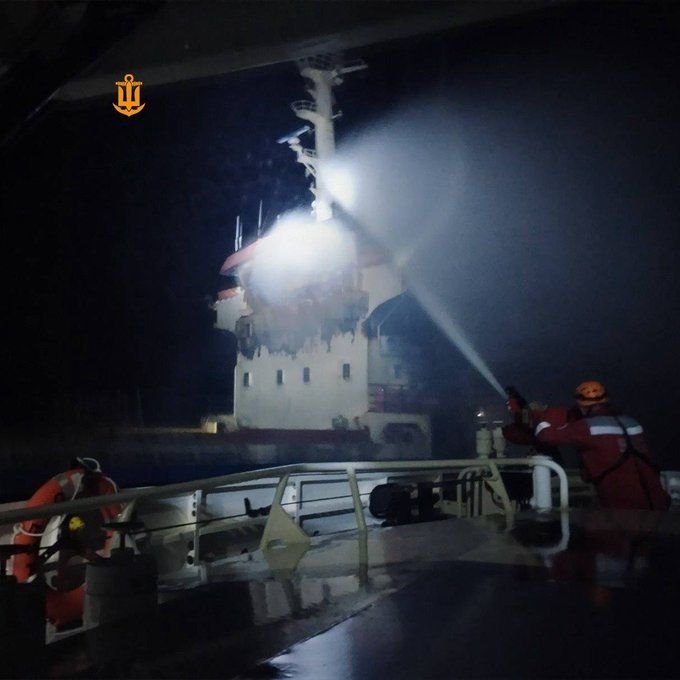
Probale response to an Ukrainian drone attack on 3 sanctioned tankerstrans-shipping Russia embargoed off north of the Turkish coast.
https://www.reuters.com/world/three-...ys-2026-05-28/
Two crew members were injured, and there's a fire on board.
Up to Turkey how they respond, but it is an attack on a NATO member and the area where the attack took place is within the NATO area of responsibility.
https://www.turkiyetoday.com/nation/...ntment-3220878
Probale response to an Ukrainian drone attack on 3 sanctioned tankerstrans-shipping Russia embargoed off north of the Turkish coast.
https://www.reuters.com/world/three-...ys-2026-05-28/
https://x.com/Beefeater_Fella/status...726987667?s=20
Three Russian tankers from the “shadow fleet” were quietly reloading oil in the Black Sea near Türkiye. That’s when naval drones intervened — Reuters, citing the shipping agency Tribeca.....
Three Russian tankers from the “shadow fleet” were quietly reloading oil in the Black Sea near Türkiye. That’s when naval drones intervened — Reuters, citing the shipping agency Tribeca.....
Last edited by ORAC; 29th May 2026 at 09:44.