https://ukdefencejournal.org.uk/brit...g-of-carriers/
Britain ‘assessing options’ to increase air wing of carriers
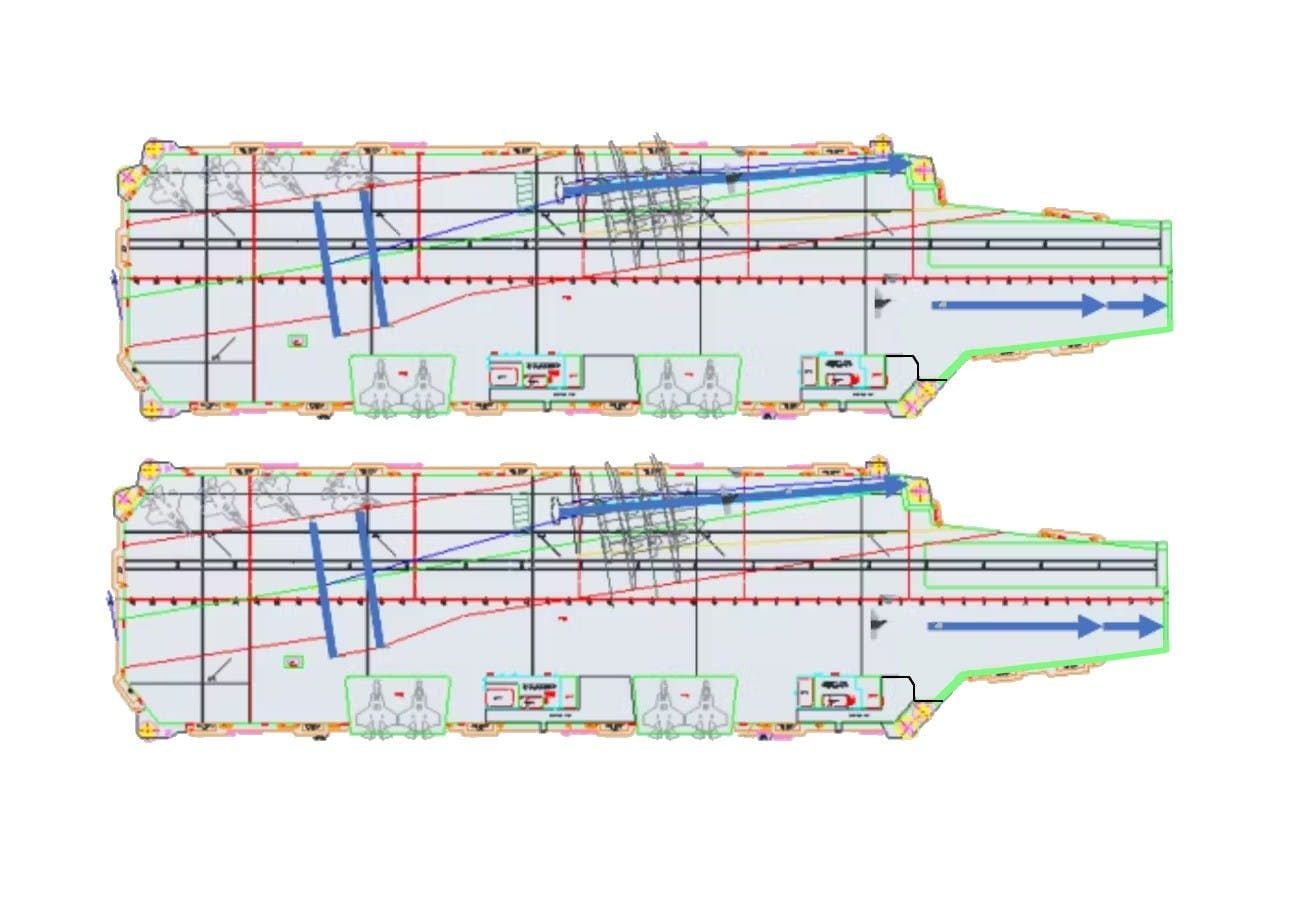
In response to a parliamentary question from Conservative MP Damien Moore, the Ministry of Defence has addressed the potential retrofitting of Queen Elizabeth Class (QEC) aircraft carriers.Moore inquired if the Department would evaluate the benefits of adding catapults, additional angled decks, and arresting wires to the carriers.
James Cartlidge, the Minister of State for Defence, provided insight into the ongoing plans for these state-of-the-art vessels. According to Cartlidge, the aircraft carriers were constructed with the flexibility to accommodate future capability enhancements throughout their operational lives.
“The Queen Elizabeth Class Aircraft Carriers (QEC) were built to allow for capability changes over the lifetime of these ships. The Royal Navy is committed to developing capabilities that will allow it to build combat mass, whilst remaining at the forefront of technology, and this includes a strong focus on uncrewed air systems,” Cartlidge stated.
He further explained that the aviation capabilities of the QEC carriers are set to evolve in the coming years. A detailed analysis is currently underway to explore and assess various options for operating a broader range of aircraft. This includes a review of the launch and recovery systems, spurred by the recent successful trials of the Mojave and Windracer systems.
“As such, the aviation capabilities of the QEC aircraft carriers will continue to evolve in the coming years and the operation of a wider variety of aircraft is being considered as part of a detailed analysis to scope and assess options. The launch and recovery systems for these new capabilities is currently under review, following the recent successful trials of Mojave and Windracer,” Cartlidge added.
What are those plans?
At the ‘Combined Naval Event 2023’ conference held in Farnborough in May, Colonel Phil Kelly, the Head of Carrier Strike and Maritime Aviation within the Royal Navy’s Develop Directorate, presented an ambitious vision for the Royal Navy’s future in maritime aviation.
This vision, part of the broader Future Maritime Aviation Force (FMAF) initiative, includes ‘Project Ark Royal’.
Colonel Kelly’s presentation highlighted several pivotal challenges and objectives:
- F-35 Deployment Limitations: The colonel pointed out the current constraints, stating, “Lack of Mass – F35 mass will not reach level required to resource both QEC with full Combat Air potential.“
- Urgency for Uncrewed Platforms: Emphasising the inevitability of adopting these platforms, he noted, “The question is not ‘if’ the Naval force will prioritise and leverage un-crewed platforms and systems, but how quickly and efficiently, in resource constrained environments.“
- Automation for Increased Capacity: Colonel Kelly underscored the importance of automation, “We must free up warfighter capabilities for critical operations, by automating routine/repetitive tasks.“
- Operational Complexities: The focus is on “operating in complex and contested areas all the while reducing the risk to life, force, and mission.“
- Enhancing Operational Reach: The presentation highlighted the need to “increase our range, endurance, and persistence in order to build advantage.“
As part of the FMAF vision, the Royal Navy aims to retrofit arrestor gear and assisted launch equipment to the Queen Elizabeth class,
you can read more on this here.