


Cold Soaked Fuel Frost Rule of Thumb

Thread Starter

Joined: Jun 2010
Posts: 25
Likes: 1
From: Europe
Cold Soaked Fuel Frost Rule of Thumb
Our company offers some vague advice on avoiding the above phenomenon. I’m well aware that the easiest way to avoid it is not to tanker but I wondered if there was a rule of thumb anyone uses when deciding whether to tanker please? On the assumption the fuel has had hours to cool in the cruise, perhaps there is a temperature/dew point split rule you use? I’d be interested to hear your opinions.

Joined: Aug 2009
Aviation Qualifications: ATPL
Posts: 615
Likes: 56
From: GPS L INVALID
It depends on the type of course, and whether your authority allows you to take off with light coatings of CSFF on the top of the wings or not. I'd avoid landing somewhere with full or nearly full wing tanks if its colder than 10 degrees and when you had a reasonably long cruise segment, of course especially when precipitation is forecast (then CSFF of course isn't the issue anymore, but instead you're dealing with lovely invisible clear ice)...

Joined: Jan 2006
Aviation Qualifications: CPL
Posts: 1,409
Likes: 46
From: Between a rock and a hard place
My experience tells me it's got more to do with the state of the atmosphere than the amount of fuel in the wing. I have picked up lots of frost with < 2000 kg and no frost with > 6000 kg after landing. Very unpredictable.
On the A320Neo I try to get the outer cells empty before landing (if conditions allow). My gut tells me its easier to manage the CSFF if you can fill them up with fresh warm fuel instead of a having 700 kg very cold fuel left in them after landing.
On the A320Neo I try to get the outer cells empty before landing (if conditions allow). My gut tells me its easier to manage the CSFF if you can fill them up with fresh warm fuel instead of a having 700 kg very cold fuel left in them after landing.

Joined: Feb 2000
Posts: 4,704
Likes: 589
From: 500 miles from Chaikhosi, Yogistan
Exactly right. Which is how 320 family LR aircraft land and depart in dry polar regions with no de-icing facilities, after a 4.5 hour sector and full wings on landing.
Last edited by compressor stall; 22nd May 2025 at 12:03.

Joined: Apr 2003
Aviation Qualifications: ATPL
Posts: 3,649
Likes: 491
From: Europe
There are no hard and fast rules. There will almost always be a touch of frost on arrival. That does not stop me from tankering on most of my flights. Occasionally a limit the amount of tankering fuel. My considerations:
-how much (warm) fuel will we uplift at destination?
-how long is the turn around, and will the frost melt in that period due to the warming effect of the running fuel pumps (A320).
-how long is the taxy in and out and will the fuel heat exchanger recirculation be enough to melt that last bit of frost? (A320).
-any risk of precipitation?
In the past couple of years the above factors have almost always been enough to melt the last bits of frost, especially the dreaded ‘T’ on the A320 wing. I have only once had to call for de-icing, in conditions where I least expected there to be frost.
-how much (warm) fuel will we uplift at destination?
-how long is the turn around, and will the frost melt in that period due to the warming effect of the running fuel pumps (A320).
-how long is the taxy in and out and will the fuel heat exchanger recirculation be enough to melt that last bit of frost? (A320).
-any risk of precipitation?
In the past couple of years the above factors have almost always been enough to melt the last bits of frost, especially the dreaded ‘T’ on the A320 wing. I have only once had to call for de-icing, in conditions where I least expected there to be frost.
Joined: May 2001
Posts: 1,424
Likes: 34
From: London,England
It certainly has more to do with the conditions than fuel temp and quantity. If you are uplifting any quantity of fuel the outer tanks will have the cold soaked fuel moved out of them by the refuelling process.
The fuel enters the system through bottom of the outer tanks and the fuel already there "spills" over into the inner tanks so the outers will have fresh fuel in them by the end.
Still doesn't help that much if the uplifted fuel is cold and it is a cold day but in a normal environment the frost on top of the outer tanks seems to go pretty quickly after refuelling.
If the mains still have a lot of cold fuel in them that is more of a problem and often getting de-iced or waiting for the ice to melt is all you can do.
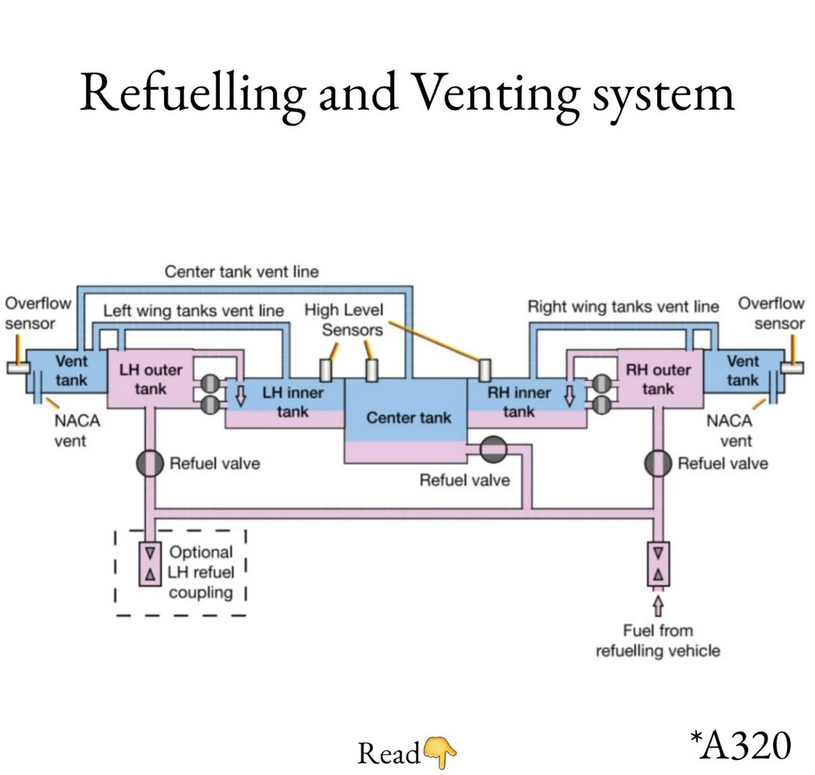
The fuel enters the system through bottom of the outer tanks and the fuel already there "spills" over into the inner tanks so the outers will have fresh fuel in them by the end.
Still doesn't help that much if the uplifted fuel is cold and it is a cold day but in a normal environment the frost on top of the outer tanks seems to go pretty quickly after refuelling.
If the mains still have a lot of cold fuel in them that is more of a problem and often getting de-iced or waiting for the ice to melt is all you can do.
Thread Starter
Joined: Jun 2010
Posts: 25
Likes: 1
From: Europe
My type (B737) is more concerned with frost formed on the upper wing surface. More fuel means more contact with the upper wing surface and more frost in the wrong place, hence why the guidance is to consider tankering carefully.
I had not considered the effect of the fuel/oil heat exchangers. Mind you, if deicing is on stand, the decision would need to be made before engine start.
I suppose I could transfer all remaining fuel to the centre tank and fill the wings with nice fresh warm fuel but I imagine this is time consuming. In warm humid destinations this may be the only option though.
I’ll continue with my wet-finger-in-the-air approach to the decision. Thank you again for your useful input.
I had not considered the effect of the fuel/oil heat exchangers. Mind you, if deicing is on stand, the decision would need to be made before engine start.
I suppose I could transfer all remaining fuel to the centre tank and fill the wings with nice fresh warm fuel but I imagine this is time consuming. In warm humid destinations this may be the only option though.
I’ll continue with my wet-finger-in-the-air approach to the decision. Thank you again for your useful input.
Joined: Apr 2003
Aviation Qualifications: ATPL
Posts: 3,649
Likes: 491
From: Europe
My type (B737) is more concerned with frost formed on the upper wing surface. More fuel means more contact with the upper wing surface and more frost in the wrong place, hence why the guidance is to consider tankering carefully.
I had not considered the effect of the fuel/oil heat exchangers. Mind you, if deicing is on stand, the decision would need to be made before engine start.
I suppose I could transfer all remaining fuel to the centre tank and fill the wings with nice fresh warm fuel but I imagine this is time consuming. In warm humid destinations this may be the only option though.
I’ll continue with my wet-finger-in-the-air approach to the decision. Thank you again for your useful input.
I had not considered the effect of the fuel/oil heat exchangers. Mind you, if deicing is on stand, the decision would need to be made before engine start.
I suppose I could transfer all remaining fuel to the centre tank and fill the wings with nice fresh warm fuel but I imagine this is time consuming. In warm humid destinations this may be the only option though.
I’ll continue with my wet-finger-in-the-air approach to the decision. Thank you again for your useful input.

Does your company not allow cold soak frost on the upper wing on the 737? I remember our 737's receiving the alleviation from Boeing to depart with cold soak frost within a certain defined area on top of the wing. It made a huge difference in day to day ops. I was equally surprised to find that there was no such alleviation on the A320, not even for the ever present 'T'.
ECON cruise, LR cruise...
Joined: Apr 2002
Posts: 569
Likes: 0
From: MIRSI hold - give or take...
On the 737NG, we used to tanker to some destinations where we knew cold-soak would be an issue. Solution - dump cold fuel into CTR tank, refill wings with warm fuel - problem solved ;-)
Joined: Sep 2001
Posts: 1,030
Likes: 262
From: Blighty
Re: 737NG upper surface frost. Boeing issued an alleviation. I don't know of a single regulatory authority that approved it, but I could be wrong. In the UK the clean wing policy applies to all aircraft.
Moving cold fuel to the centre tank before refuelling used to be a standard procedure on the MD80 series after a couple of incidents of sheet clear ice coming off in flight and taking out the engine!
As for tankering in the EU. At least one Middle Eastern airline continues to regularly tanker in to Europe.
Moving cold fuel to the centre tank before refuelling used to be a standard procedure on the MD80 series after a couple of incidents of sheet clear ice coming off in flight and taking out the engine!
As for tankering in the EU. At least one Middle Eastern airline continues to regularly tanker in to Europe.
Joined: Apr 2003
Aviation Qualifications: ATPL
Posts: 3,649
Likes: 491
From: Europe
Re: 737NG upper surface frost. Boeing issued an alleviation. I don't know of a single regulatory authority that approved it, but I could be wrong. In the UK the clean wing policy applies to all aircraft.
Moving cold fuel to the centre tank before refuelling used to be a standard procedure on the MD80 series after a couple of incidents of sheet clear ice coming off in flight and taking out the engine!
As for tankering in the EU. At least one Middle Eastern airline continues to regularly tanker in to Europe.
Moving cold fuel to the centre tank before refuelling used to be a standard procedure on the MD80 series after a couple of incidents of sheet clear ice coming off in flight and taking out the engine!
As for tankering in the EU. At least one Middle Eastern airline continues to regularly tanker in to Europe.
Joined: Apr 2003
Aviation Qualifications: ATPL
Posts: 3,649
Likes: 491
From: Europe
Joined: Sep 2001
Posts: 1,030
Likes: 262
From: Blighty
Joined: Apr 2003
Aviation Qualifications: ATPL
Posts: 3,649
Likes: 491
From: Europe
Joined: Apr 2005
Posts: 141
Likes: 15
From: yyz
My type (B737) is more concerned with frost formed on the upper wing surface. More fuel means more contact with the upper wing surface and more frost in the wrong place, hence why the guidance is to consider tankering carefully.
I had not considered the effect of the fuel/oil heat exchangers. Mind you, if deicing is on stand, the decision would need to be made before engine start.
I suppose I could transfer all remaining fuel to the centre tank and fill the wings with nice fresh warm fuel but I imagine this is time consuming. In warm humid destinations this may be the only option though.
I’ll continue with my wet-finger-in-the-air approach to the decision. Thank you again for your useful input.
I had not considered the effect of the fuel/oil heat exchangers. Mind you, if deicing is on stand, the decision would need to be made before engine start.
I suppose I could transfer all remaining fuel to the centre tank and fill the wings with nice fresh warm fuel but I imagine this is time consuming. In warm humid destinations this may be the only option though.
I’ll continue with my wet-finger-in-the-air approach to the decision. Thank you again for your useful input.
Joined: Aug 2002
Posts: 508
Likes: 16
From: Under the sea
