


Bushing lubrication

Thread Starter

Joined: Dec 2003
Posts: 643
Likes: 30
From: Global Vagabond
Bushing lubrication

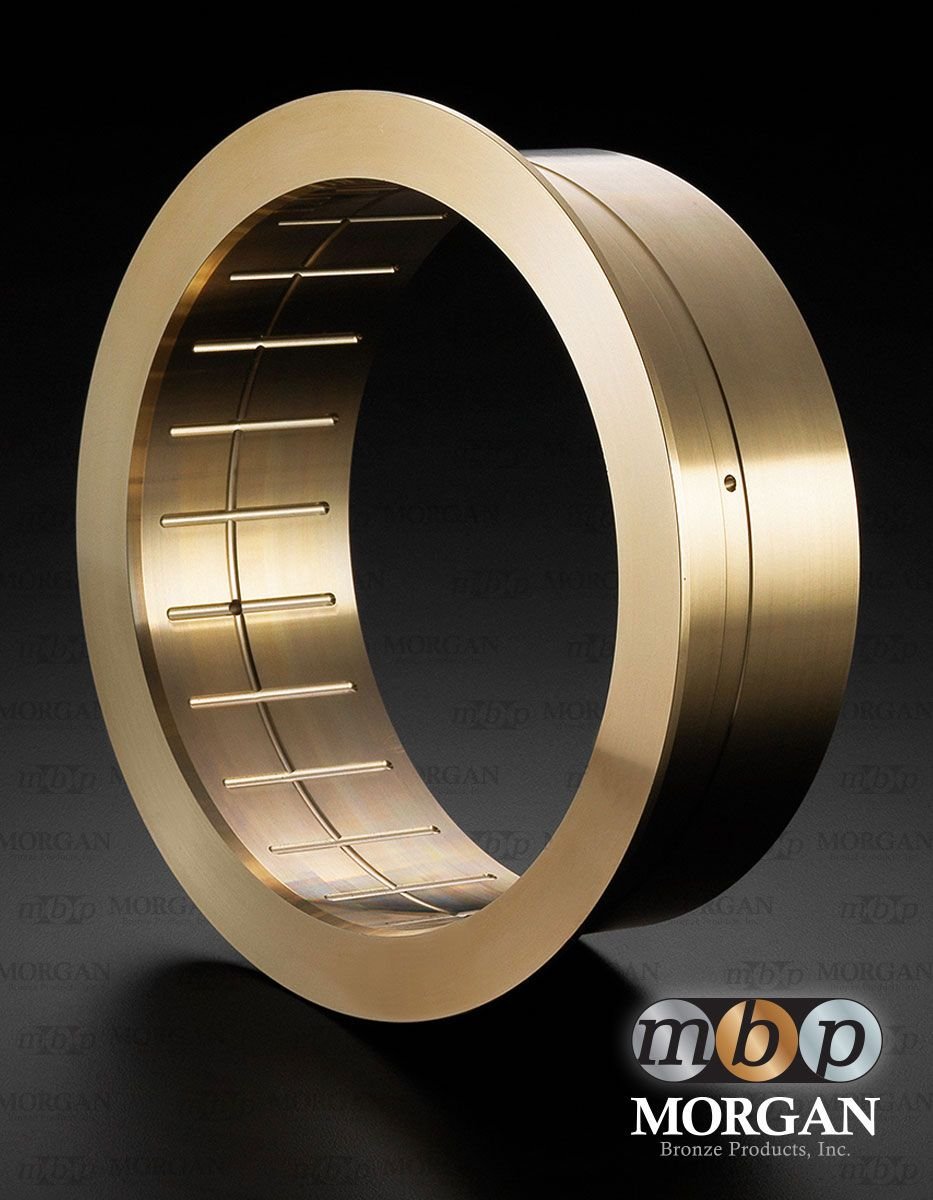
I was browsing another site on a non aircraft related matter and whilst down that rabbit hole I came across an image that intrigued me.
The picture posted is from a Safran undercarriage repair facility.
Can anyone explain the channel arrangement cut into the bronze (?) bushing. How is it lubricated? what is the material?
Thanks in advance.


Joined: Oct 2019
Aviation Qualifications: Non-Aircrew
Posts: 1,704
Likes: 1,085
From: USA
The housing has a hole drilled at the correct place along the axis of the hole to align with that groove on the bushing outer surface and a grease fitting is inserted into that housing.
Grease enters the fitting and follows that outer groove path until it intercepts a hole in the bushing that leads to the inside grooves. This means the bushing can be installed without caring the alignment between the hole in the housing and the hole in the bushing.
I generally don't like these very much as the failure mode of grease is for the oil fraction to be exhausted leaving the thickener behind, potentially plugging the inner grooves and the hole in the bushing that leads to it. Some perform the "push until some comes out" method but that new grease may cut a channel from the hole in the bushing to the outside, leaving the oil-starved thickener every where else. Notice that there are two, diametrically opposite holes in the Morgan advertisement. If one plugs then the grease thickener will prevent new grease from being distributed over roughly half the bearing.
Even if the core piece is pulled out and the inner diameter cleaned, one can still have exhausted thickener in that groove on the outside.
The offset to this is that it usually takes a tremendous amount of wear before the joint fails, but it is still annoying to put all these features in to the parts and have such a poor lubrication result.
If one is thinking that oil will leach from the new grease to the old thickener, that is probably correct, but that leaves the new grease starved of oil instead and ready to be a plug later on.
My preference is to use o-rings, felt packing and a suitable oil. With no thickener it can never become a blockage and the felt, which is often used to retain oil in really large electric motors, ensures a long lasting supply of lubrication can bleed out slowly. But everyone loves grease ever since Mr. Oscar Zerk patented the first grease fitting. He worked at a company that made oilers.
On a more real-life disaster, this problem with the thickener was a key reason for the Alaska Air famous crash. The thickener accumulated in the screw threads, but the maintainers didn't notice that because a small channel through the thickener allowed some new grease to squirt out, leaving the majority of the thread unlubricated. I think the thickener filled the gap that was forming, hiding the fact that the threads were nearly gone.
Grease enters the fitting and follows that outer groove path until it intercepts a hole in the bushing that leads to the inside grooves. This means the bushing can be installed without caring the alignment between the hole in the housing and the hole in the bushing.
I generally don't like these very much as the failure mode of grease is for the oil fraction to be exhausted leaving the thickener behind, potentially plugging the inner grooves and the hole in the bushing that leads to it. Some perform the "push until some comes out" method but that new grease may cut a channel from the hole in the bushing to the outside, leaving the oil-starved thickener every where else. Notice that there are two, diametrically opposite holes in the Morgan advertisement. If one plugs then the grease thickener will prevent new grease from being distributed over roughly half the bearing.
Even if the core piece is pulled out and the inner diameter cleaned, one can still have exhausted thickener in that groove on the outside.
The offset to this is that it usually takes a tremendous amount of wear before the joint fails, but it is still annoying to put all these features in to the parts and have such a poor lubrication result.
If one is thinking that oil will leach from the new grease to the old thickener, that is probably correct, but that leaves the new grease starved of oil instead and ready to be a plug later on.
My preference is to use o-rings, felt packing and a suitable oil. With no thickener it can never become a blockage and the felt, which is often used to retain oil in really large electric motors, ensures a long lasting supply of lubrication can bleed out slowly. But everyone loves grease ever since Mr. Oscar Zerk patented the first grease fitting. He worked at a company that made oilers.
On a more real-life disaster, this problem with the thickener was a key reason for the Alaska Air famous crash. The thickener accumulated in the screw threads, but the maintainers didn't notice that because a small channel through the thickener allowed some new grease to squirt out, leaving the majority of the thread unlubricated. I think the thickener filled the gap that was forming, hiding the fact that the threads were nearly gone.
Joined: Oct 2022
Posts: 55
Likes: 30
From: Surrey
I was browsing another site on a non aircraft related matter and whilst down that rabbit hole I came across an image that intrigued me.
The picture posted is from a Safran undercarriage repair facility.
Can anyone explain the channel arrangement cut into the bronze (?) bushing. How is it lubricated? what is the material?
Thanks in advance.
Thread Starter
Joined: Dec 2003
Posts: 643
Likes: 30
From: Global Vagabond
I generally don't like these very much as the failure mode of grease is for the oil fraction to be exhausted leaving the thickener behind, potentially plugging the inner grooves and the hole in the bushing that leads to it. Some perform the "push until some comes out" method but that new grease may cut a channel from the hole in the bushing to the outside, leaving the oil-starved thickener every where else. Notice that there are two, diametrically opposite holes in the Morgan advertisement. If one plugs then the grease thickener will prevent new grease from being distributed over roughly half the bearing.
Thanks all.
