


Absolute minimum temperature?

Only half a speed-brake

Joined: Apr 2003
Posts: 4,459
Likes: 136
From: Commuting not home
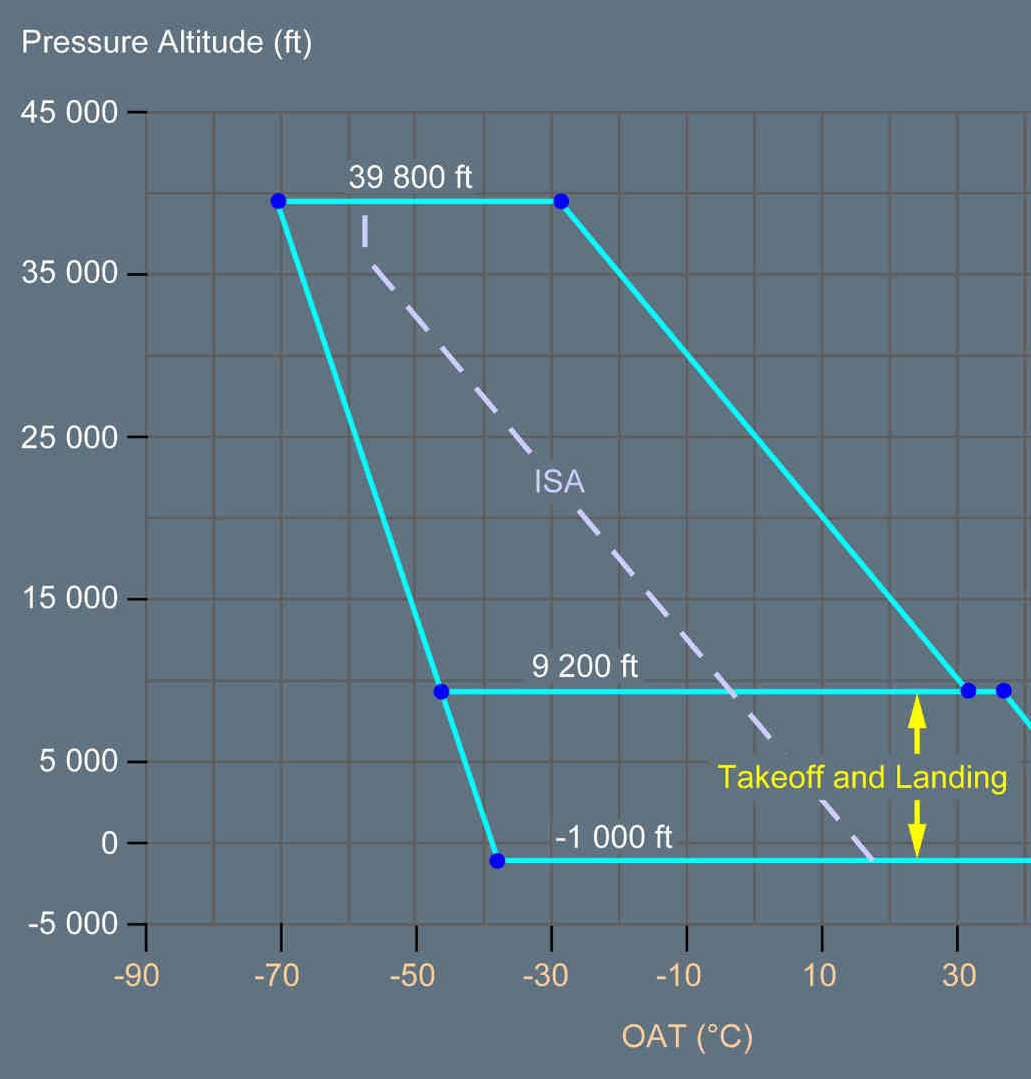
Competitor's airframe. Ugly point at FL330 with -65 degrees,
- Avionics ventilation gets confused and misbehaves, although nobody understands what the skin heat exchanger normal operation is anyway.
- Fuel temperature in the outer, wing-tip tanks is not manageable over extended periods of time (low limit for JET A1 is -45 or so)


Joined: Jan 2014
Posts: 3
Likes: 1
From: Melbourne

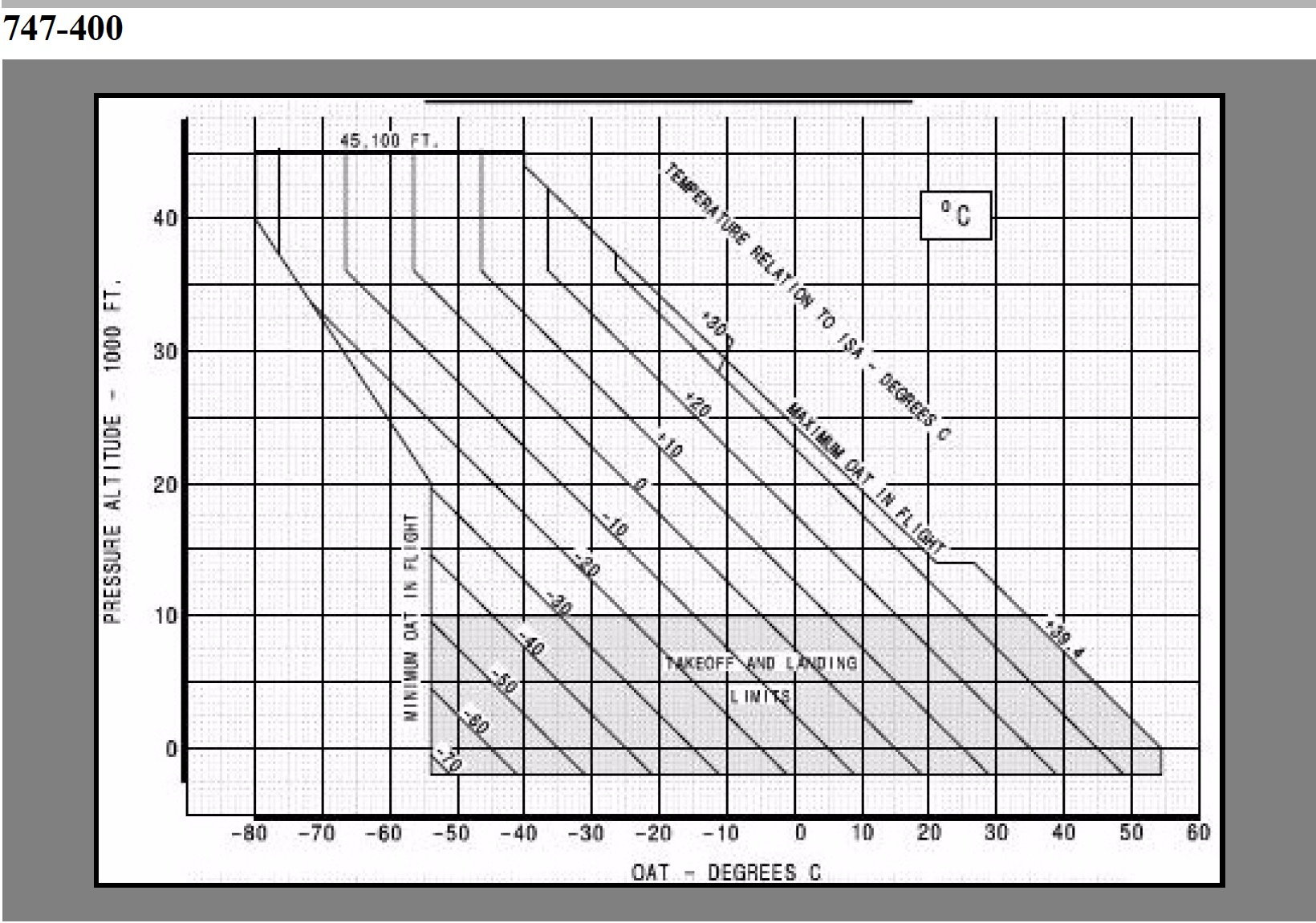


Joined: Sep 2010
Aviation Qualifications: ATPL
Posts: 886
Likes: 235
From: by the seaside
John T
BA 38..jury out..mate operated the first service and wrote to his manager about the intense cold over Siberia..told not to worry.
Apparently the fuel wasn't allowed to settle after refuelling before the water check in Peking.
Crew ignored the planned descent into warmer warmer in the later stages of the flight.
iirc no fuel heat.
On the iron duck we had different min fuel temps depending the type uploaded.
Could have been either ice or wax but what is definate it didn't put BA in good light.
Apparently the fuel wasn't allowed to settle after refuelling before the water check in Peking.
Crew ignored the planned descent into warmer warmer in the later stages of the flight.
iirc no fuel heat.
On the iron duck we had different min fuel temps depending the type uploaded.
Could have been either ice or wax but what is definate it didn't put BA in good light.

Joined: Mar 2001
Posts: 79
Likes: 2
From: Longitude Zero
Back in the mid 70s, we were conducting an external load lift of a 105mm howitzer in the Norwegian mountains. The indicated OAT was -44 degrees C. The recirculating snow was an issue but dissipated quickly although much blew into the cabin through the open doors. My lasting memory is of the crewman using a brush to clear the snow out of the door. The joy of operations in such cold temperatures is that the snow does not stick. Engine and airframe entirely happy but not sure about the PUMA HC1 ODM.
Joined: Mar 2002
Posts: 4,569
Likes: 1
From: Florida
Joined: Jan 2013
Posts: 263
Likes: 0
From: Seattle Area
BA38 was conclusively determined to be water ice in the fuel, not the fuel reaching its wax point. The event led to fuel/oil heat exchanger changes required by AD 2010-07-01.
https://lessonslearned.faa.gov/ll_ma...abID=1&LLID=79
https://lessonslearned.faa.gov/ll_ma...abID=1&LLID=79
Only half a speed-brake
Joined: Apr 2003
Posts: 4,459
Likes: 136
From: Commuting not home
- above tropopause the temperature gets warmer
- we're discussing ISA -20 conditions so far, which at high flight levels are quite rare (frequency of exposure) yet encountered repeatedly by civilian craft on polar routes
- military would not stay in such cold air mass for the duration of many hours unless purposely built
- it could be a case of certification / guaranteed performance / uncharted territory
- higher TAS and Mach do make a difference, for the cold fuel case that's what the QRH drill is
Still sounds a far fetch.
Last edited by FlightDetent; 1st January 2021 at 11:22.
Joined: Feb 2000
Posts: 4,705
Likes: 589
From: 500 miles from Chaikhosi, Yogistan
Although I suspect - as Flight Detent posted above - the reason is that at in the A320F at the limit of -70*C ventilation valves can start to play up. Seen it.

Joined: Oct 2013
Posts: 183
Likes: 3
From: McHales Island
Dave Therhino,
With regards to BA38, I'm not totally convinced of the results of the investigation, extensive as it was. My point being, after having read the final report, with all that was done throughout the investigation I believe one important thing was omitted. That being undercowl "heat soak".
With the aircraft flying for 12 plus hours all engine components are subject to heat soak and with the cowls closed the surrounding undercowl environment will be rather warm and well and truely above room temperature. Therefore the FOHE casing and components should be warmed not only by the hot oil passing through the internals of the FOHE but also from the surrounding heat soak. With the combination of heat soak, hot oil and cold fuel over time, the FOHE should reach a " happy medium" temperature wise and this temp IMHO would be above freezing. This was not done in the investigation process.
From experience from being around an engine when an aircraft has arrived on chocks and the cowls immediately opened, things are well and truely warm to touch and some components too hot to touch. Open to correction, but food for thought.....
Rgds McHale.
With regards to BA38, I'm not totally convinced of the results of the investigation, extensive as it was. My point being, after having read the final report, with all that was done throughout the investigation I believe one important thing was omitted. That being undercowl "heat soak".
With the aircraft flying for 12 plus hours all engine components are subject to heat soak and with the cowls closed the surrounding undercowl environment will be rather warm and well and truely above room temperature. Therefore the FOHE casing and components should be warmed not only by the hot oil passing through the internals of the FOHE but also from the surrounding heat soak. With the combination of heat soak, hot oil and cold fuel over time, the FOHE should reach a " happy medium" temperature wise and this temp IMHO would be above freezing. This was not done in the investigation process.
From experience from being around an engine when an aircraft has arrived on chocks and the cowls immediately opened, things are well and truely warm to touch and some components too hot to touch. Open to correction, but food for thought.....
Rgds McHale.
Last edited by Capt Quentin McHale; 3rd January 2021 at 22:15.
Only half a speed-brake
Joined: Apr 2003
Posts: 4,459
Likes: 136
From: Commuting not home
likely made from different thicknesses. Might be an issue of brittleness at the thickness of a Airbus skin.
Although I suspect - as Flight Detent posted above - the reason is that at in the A320F at the limit of -70*C ventilation valves can start to play up. Seen it.
Although I suspect - as Flight Detent posted above - the reason is that at in the A320F at the limit of -70*C ventilation valves can start to play up. Seen it.


Joined: Jul 2013
Aviation Qualifications: Non-Aircrew
Posts: 5,682
Likes: 3,347
From: Everett, WA
Dave Therhino,
With regards to BA38, I'm not totally convinced of the results of the investigation, extensive as it was. My point being, after having read the final report, with all that was done throughout the investigation I believe one important thing was omitted. That being undercowl "heat soak".
With regards to BA38, I'm not totally convinced of the results of the investigation, extensive as it was. My point being, after having read the final report, with all that was done throughout the investigation I believe one important thing was omitted. That being undercowl "heat soak".
I was no longer involved by the time they were testing the FOHE icing (I was working 747/767 at the time, brought into the early investigation as a subject matter expert), but I know several people who were and they were quite convinced they'd found the smoking gun. Further, we were able to go back through historical data and find evidence that this wasn't the first time the FOHE had iced up (e.g.otherwise unexplained increases in oil temp during steady state operation) - just the first time it had caused a major problem.
Joined: Feb 2001
Posts: 6,729
Likes: 105
From: The Winchester
The step down built into the fuel plan was to simply make sure you had loaded enough fuel in the tanks to make destination if the step down to a significantly lower level was was needed..
tdracer - thanks for your insight, much appreciated.
Last edited by wiggy; 4th January 2021 at 20:22.
Joined: Dec 2000
Posts: 2,132
Likes: 3
From: on the golf course (Covid permitting)
As an aside, I recall flying over Siberia in winter probably about 15 years ago.
We were in a B744 @ FL370 or so. The SAT outside was pretty much standard ISA at about -56degC, the temperature on the ground at Irkutsk (or wherever) was -57deg C!
We were in a B744 @ FL370 or so. The SAT outside was pretty much standard ISA at about -56degC, the temperature on the ground at Irkutsk (or wherever) was -57deg C!
Joined: Feb 2001
Posts: 6,729
Likes: 105
From: The Winchester
Yup, Certainly looking at trop level on the Siberian charts some winters days it was clear you'd have to descend a heck of a long way before you saw the OAT increase. I've certainly seen the SAT rise by a degree or two as a result of a step climb when "up north" .


