


Speed vs Turbulence

Thread Starter
Joined: Mar 2009
Posts: 95
Likes: 0
From: HK
@Goeasy
I agree with 99% of what you just said. There is no way of knowing how slowing down affected the ride unless we fly thru the same (theoretically and practically impossible) pocket of turbulence 2 times at two different airspeeds.
No question, at optimum cruise altitudes we cant slow down significantly. Sometimes not at all.
In my airplane, if we fly at optimum altitude .80 above FL430, we are already at Vref or very close to it so there is no margin to slow down anyway.
However, if you depart Shanghai to Tokyo, Chinese will keep you at FL260 for 250nm. That is where we have an option to fly 320 knots or as slow as 240 knots at moderate weights and still have safe margins to stall (like Vref +70 or so).
@FE Hoppy
In my airplane turb pen speed is 240 below 10000ft and 270/.80 above
It doesnt take a rocket scientist to realise that it doesnt work like that: 240 knots at 9999ft and 270 knots at 10001ft.
For me personally, if I have a very good margin to Vref at current configuration and altitude with PAX, I will slow down below 270 KIAS for light to moderate and above. If it is ferry flight, I normally never slow down below Vb.
I agree with 99% of what you just said. There is no way of knowing how slowing down affected the ride unless we fly thru the same (theoretically and practically impossible) pocket of turbulence 2 times at two different airspeeds.
No question, at optimum cruise altitudes we cant slow down significantly. Sometimes not at all.
In my airplane, if we fly at optimum altitude .80 above FL430, we are already at Vref or very close to it so there is no margin to slow down anyway.
However, if you depart Shanghai to Tokyo, Chinese will keep you at FL260 for 250nm. That is where we have an option to fly 320 knots or as slow as 240 knots at moderate weights and still have safe margins to stall (like Vref +70 or so).
@FE Hoppy
In my airplane turb pen speed is 240 below 10000ft and 270/.80 above
It doesnt take a rocket scientist to realise that it doesnt work like that: 240 knots at 9999ft and 270 knots at 10001ft.
For me personally, if I have a very good margin to Vref at current configuration and altitude with PAX, I will slow down below 270 KIAS for light to moderate and above. If it is ferry flight, I normally never slow down below Vb.

Thread Starter
Joined: Mar 2009
Posts: 95
Likes: 0
From: HK
After reading all the input, it appears that if turbulence imposes lift changes (ie vertical wind shear or horizontal turbulence which comes on the nose or tail) than its:
increase speed by 1% = increase bumps by 2%
If it is horizontal wind shear from 3 or 9 O'clock, than its linear as there is no lift change involved:
increase speed by 1% = increase bumps by 1%
Comments?
increase speed by 1% = increase bumps by 2%
If it is horizontal wind shear from 3 or 9 O'clock, than its linear as there is no lift change involved:
increase speed by 1% = increase bumps by 1%
Comments?
Joined: Sep 1998
Posts: 1,615
Likes: 1
From: wherever
@Goeasy
I agree with 99% of what you just said. There is no way of knowing how slowing down affected the ride unless we fly thru the same (theoretically and practically impossible) pocket of turbulence 2 times at two different airspeeds.
No question, at optimum cruise altitudes we cant slow down significantly. Sometimes not at all.
In my airplane, if we fly at optimum altitude .80 above FL430, we are already at Vref or very close to it so there is no margin to slow down anyway.
However, if you depart Shanghai to Tokyo, Chinese will keep you at FL260 for 250nm. That is where we have an option to fly 320 knots or as slow as 240 knots at moderate weights and still have safe margins to stall (like Vref +70 or so).
@FE Hoppy
In my airplane turb pen speed is 240 below 10000ft and 270/.80 above
It doesnt take a rocket scientist to realise that it doesnt work like that: 240 knots at 9999ft and 270 knots at 10001ft.
For me personally, if I have a very good margin to Vref at current configuration and altitude with PAX, I will slow down below 270 KIAS for light to moderate and above. If it is ferry flight, I normally never slow down below Vb.
I agree with 99% of what you just said. There is no way of knowing how slowing down affected the ride unless we fly thru the same (theoretically and practically impossible) pocket of turbulence 2 times at two different airspeeds.
No question, at optimum cruise altitudes we cant slow down significantly. Sometimes not at all.
In my airplane, if we fly at optimum altitude .80 above FL430, we are already at Vref or very close to it so there is no margin to slow down anyway.
However, if you depart Shanghai to Tokyo, Chinese will keep you at FL260 for 250nm. That is where we have an option to fly 320 knots or as slow as 240 knots at moderate weights and still have safe margins to stall (like Vref +70 or so).
@FE Hoppy
In my airplane turb pen speed is 240 below 10000ft and 270/.80 above
It doesnt take a rocket scientist to realise that it doesnt work like that: 240 knots at 9999ft and 270 knots at 10001ft.
For me personally, if I have a very good margin to Vref at current configuration and altitude with PAX, I will slow down below 270 KIAS for light to moderate and above. If it is ferry flight, I normally never slow down below Vb.
you are taking the mickey right?
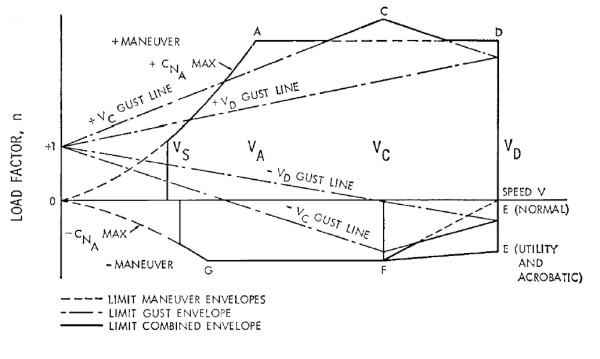
Would you rather have 3 numbers to remember or a graph?


Joined: Aug 2013
Posts: 30
Likes: 0
From: PA
Joined: Mar 2007
Posts: 88
Likes: 0
From: Hong Kong
 Thanks.

Joined: Mar 2010
Posts: 118
Likes: 99
From: Reading
The point being made is that slowing by M.02 is not going to make any meaningful difference in ride. The advice is there to protect the structure of the plane in severe turbulence, in everyday stuff it really isn't necessary for that purpose, and will make no practical difference to the ride.
Thread Starter
Joined: Mar 2009
Posts: 95
Likes: 0
From: HK
Read the thread. Its not about slowing down from .82 to .80
