


bank into wind during strong cross wind takeoff

Joined: Mar 2002
Aviation Qualifications: ATPL
Posts: 9,217
Likes: 982
From: Seat 1A
I'm with Centaurus. Anybody who tries to land a Cheetah in 45-55kts of crosswind is a hazard to themselves and their unsuspecting passengers and shouldn't have a licence.
Kiwiguy, so you honestly believe that Gulfstream couldn't find a crosswind of more than 11 kts to "demonstrate" it in?
Kiwiguy, so you honestly believe that Gulfstream couldn't find a crosswind of more than 11 kts to "demonstrate" it in?

Joined: Sep 2005
Posts: 298
Likes: 0
From: NZWN New Zealand
At Wellington when the winds are too strong as happened just a couple of weeks ago the aircraft use airbridges on the lee side of the piers. I worked for Air NZ for several years and then as a caterer. I have had a ringside seat to many hairy landings at WLG.
Last October I saw a 733 wheelbarrow in exceptionally gusty conditions and in July last year saw a Qantas hydroplane sideways down the runway on 16. These incidents never turned up in CAA incident reports either. The captain was very red faced when I stepped aboard at gate 23.
The item I mentioned to Centaurus was from the archives here:
http://http://www.pprune.org/forums/.../t-226895.html
and that item talked of Boeing's FTCM with apologies if I have misquoted any of it. It seems I did.
Incidentally the youtube clip above of a Boeing 777 landing in 50 knot crosswinds was piloted by John Cashman. I have read an account by a test engineer aboard who mentioned that the B777 has got a facility to swivel the main gear slightly, only intended for ground manouvering, but the engineer noted that pilots often mis-use the facility to crab the main wheels a la B-52 style prior to crosswind landings.
The A340-600 was tested landing in 45 knot crosswinds at Keflavik on 27 October 2004. The A380 was also tested landing in 50 knot crosswinds at Keflavik on 10 November 2006. These aircraft are capable of such things.
I touched down as smoth as silk. The Groundspeed almost matched the airspeed. I have seen harier landings by ATPLs with a planeload of passengers, by people who call themselves professionals.
Last October I saw a 733 wheelbarrow in exceptionally gusty conditions and in July last year saw a Qantas hydroplane sideways down the runway on 16. These incidents never turned up in CAA incident reports either. The captain was very red faced when I stepped aboard at gate 23.
The item I mentioned to Centaurus was from the archives here:
http://http://www.pprune.org/forums/.../t-226895.html
and that item talked of Boeing's FTCM with apologies if I have misquoted any of it. It seems I did.
Incidentally the youtube clip above of a Boeing 777 landing in 50 knot crosswinds was piloted by John Cashman. I have read an account by a test engineer aboard who mentioned that the B777 has got a facility to swivel the main gear slightly, only intended for ground manouvering, but the engineer noted that pilots often mis-use the facility to crab the main wheels a la B-52 style prior to crosswind landings.
The A340-600 was tested landing in 45 knot crosswinds at Keflavik on 27 October 2004. The A380 was also tested landing in 50 knot crosswinds at Keflavik on 10 November 2006. These aircraft are capable of such things.
I touched down as smoth as silk. The Groundspeed almost matched the airspeed. I have seen harier landings by ATPLs with a planeload of passengers, by people who call themselves professionals.
Joined: Jun 2004
Posts: 94
Likes: 0
From: Atlanta,GA
You also state the "these aircraft are capable of such things" which is quite clearly indicated by the filmclips provided by previous posters. It is however not always prudent to fly an aircraft to its limits and I must say I have my doubts about ANZ pilots making landings in 60kts crosswind. Not that I have ever flown in to WLG myself but I do regularly land in strong (I guess its just a breeze to you) winds. At gusty winds up to 40 kts I dont really feel like trying another 20 across the runway but then again I aint a caterer.
Nah mate, I think you are talkin a wee bit rubbish here.
Back on the topic tho:
I dont fly the tripple, but the bobby version but I our FCTMs is pretty much similar on the xwind takeoff chapters.
I read a memo from Boeing a while back about applying intowind aileron during takeoff and if I remeber clearly it stated "that its easy to overapply intowind aileron during takeoff roll and thus causing spoiler deflection with a degredation in performance as a result" The memo further went on to state that the Boeing recommended procedure would be changed to "apply no intowind aileron during take off roll but do apply slight upwind aileron once rotation is started and maintain until mainwheels are airborne."
I probably didnt get the wording correct on that one but I believe that was the context of the bulletin.
Would anyone happen to know where I could find that bulletin again?
Duece


Joined: Dec 2002
Aviation Qualifications: ATP+Mil
Posts: 3,984
Likes: 568
From: Where the Quaboag River flows, USA
It should be obvious-professional pilot experience, training and company policy and regulations are irrelevant in the presence of the catering staff. I can't wait until my boss, who already thinks we are worthless primadonnas, hear what can be accomplished by the ground staff. 60 knot crosswinds would make some of those Kai Tek landings look like child's play.
I do salute those Boeing landings--anyone with flagging belief in the structures engineers should be reassured.
GF
I do salute those Boeing landings--anyone with flagging belief in the structures engineers should be reassured.
GF

Joined: Dec 2003
Posts: 2,347
Likes: 838
From: Tring, UK

Incidentally the youtube clip above of a Boeing 777 landing in 50 knot crosswinds was piloted by John Cashman. I have read an account by a test engineer aboard who mentioned that the B777 has got a facility to swivel the main gear slightly, only intended for ground manouvering, but the engineer noted that pilots often mis-use the facility to crab the main wheels a la B-52 style prior to crosswind landings.
one last question. This technique with not de-crabbing, is it a 777 thingy or is it valid for most jets.
Last edited by FullWings; 22nd November 2006 at 07:54.
Joined: May 2006
Posts: 399
Likes: 0
My B777 instructor told me not to bank into wind during strong cross wind takeoff, because it will induce roll spoilers to extend. But I still think that we must give a little bank into wind to keep wing level for high swept back wing aircraft. My instuctor told me that to bank into wind is the thing of the past. Any comments.
Back to the begining.
Reading the above replies, it appears only a couple of you have actually flown an aircraft, let alone a heavy jet. If Aileron is not required with a decent crosswind (a relative thing & probably the real issue here) try it some time..... see what happens !!!!!...... Bungfai do you work for SQ ??
PS: Kiwiguy has got a little out of his depth, maybe the sharks could stop nipping his feet.
Thread Starter

Joined: Sep 2005
Posts: 120
Likes: 0
From: Far east
My B777 max cross wind limit company dry 30 wet 25. And some FI are trying to change to about 45 demonstration speed. But it will require crab landing technique avoiding engine touching the ground. What are your limits?
Joined: Aug 2000
Posts: 3,648
Likes: 2
From: UK
The 737 is limited to 19 knots crosswind with minimal flaps and 23 knot crosswinds with 40 degrees flap. The limit applies to aircraft which are not de-crabbed. The limit is set not by the aerodynamic limit of the aircraft but rather by the strength of the undercarriage to resist hitting the runway sideways.
If the aircraft is de-crabbed to align with the runway in the flare then the risk is removed and theoretically if you use proper technique there is no limit.
I landed a Gulfstream Cheetah at Wellington's runway 16 in 45 knot winds gusting 55 knots from 240 degrees once. The crosswind limit on a Cheetah was 11 knots, but if you land properly it will handle that. The limit is on the undercarriage strength and not aerodynamic factors.
If the aircraft is de-crabbed to align with the runway in the flare then the risk is removed and theoretically if you use proper technique there is no limit.
I landed a Gulfstream Cheetah at Wellington's runway 16 in 45 knot winds gusting 55 knots from 240 degrees once. The crosswind limit on a Cheetah was 11 knots, but if you land properly it will handle that. The limit is on the undercarriage strength and not aerodynamic factors.
...The inference I took however was that if you de-crab in effect limit is not an issue. My humble opinion. Anyway you can take it from my equally humble efforts as a test pilot that this aeroplane (Cheetah) handles a damn sight more than the placarded limit.
...
That is, the crosswind limits on most aircraft are only the demonstrated limits and not the actual aerodynamic limits. Thing is FAA or CAA certifiers can not conjure up 50 knot crosswinds to test an aircraft. They demonstrate the aircraft to the maximum crosswinds they can find and then certify that as a demonstrated limit.
...
That is, the crosswind limits on most aircraft are only the demonstrated limits and not the actual aerodynamic limits. Thing is FAA or CAA certifiers can not conjure up 50 knot crosswinds to test an aircraft. They demonstrate the aircraft to the maximum crosswinds they can find and then certify that as a demonstrated limit.
It is not set by "the strength of the undercarriage to resist hitting the runway sideways". Certification requires at least a certain minimum value to be demonstrated, and some manufacturers stop there. For light aircraft the value is 20% of the stall speed in landing configuration, which probably explains the 11 knots for the Cheetah.
There are both theoretical and practical limits on crosswind landing capability. For example if "the aircraft is de-crabbed to align with the runway in the flare" then the maximum achievable yaw rate will contribute to a limit.
Joined: Aug 2000
Posts: 3,648
Likes: 2
From: UK
My B777 instructor told me not to bank into wind during strong cross wind takeoff, because it will induce roll spoilers to extend. But I still think that we must give a little bank into wind to keep wing level for high swept back wing aircraft. My instuctor told me that to bank into wind is the thing of the past. Any comments.
I would imagine that the B777 needs a significant pitch rotation to get it to fly, thus the lift generated in ground attitude just before rotation may not be sufficient to cause directional issues without aileron input, even in strong crosswinds. For aircraft that "fly themselves off" at rotation, into-wind aileron is required.
Joined: Jan 2003
Posts: 811
Likes: 0
From: The Heart
I think some people are missing the wind-up merchant here.
Kiwiguy's statements about his Cheetah experience are plain bar talk. There, at least, people might believe him if it is late enough.
I have found most 'demonstrated crosswind' figures to be fairly realistic; most definitely conservative but not far off. But I suggest landing with 4-5 times the max demonstrated crosswind value is either stupid or reckless, possibly both.
Then there is the bit about the CFI being present. So that he could show a student how it should be done. Doesn't that ring strange to any one else?
Next time, get it on video:
Kiwiguy's statements about his Cheetah experience are plain bar talk. There, at least, people might believe him if it is late enough.
I have found most 'demonstrated crosswind' figures to be fairly realistic; most definitely conservative but not far off. But I suggest landing with 4-5 times the max demonstrated crosswind value is either stupid or reckless, possibly both.
Then there is the bit about the CFI being present. So that he could show a student how it should be done. Doesn't that ring strange to any one else?
Next time, get it on video:
Psychophysiological entity
Joined: Jun 2001
Aviation Qualifications: ATPL
Posts: 3,383
Likes: 169
From: Walton on the Naze Essex.
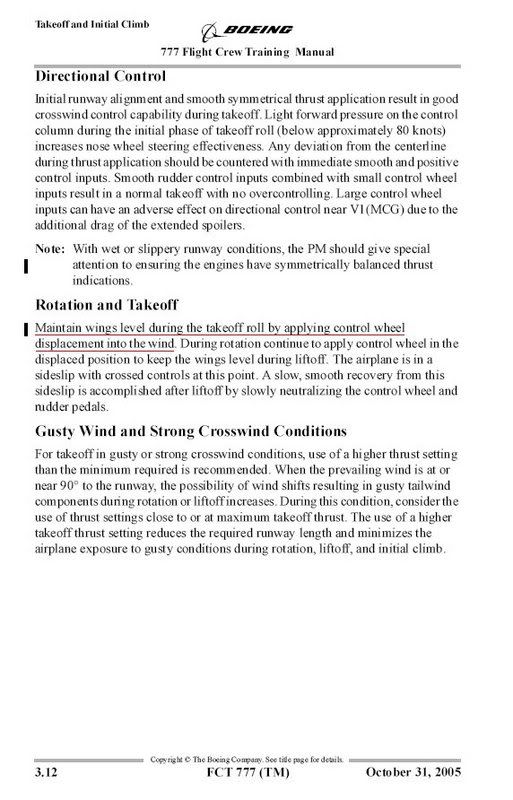
Thank heavens! I thought I was entering the twilight zone.
The funny thing is, that when I was trying to think how I would do it, it was not really clear. It's just sort of automatic, but the page reads just as I would have expected.
I spent some time flying in conditions that often far exceeded the normal limits, there were no civilian passengers and it was certainly out of the CAA's remit, but I had the advantage of first flying with guys that had done it for years.
The point is, that people that have to routinely do this kind of flying seem to be able to do it without the slightest increase in stresses on the aircraft. In fact, compared to the test-flying shots, most of the landings were non events.
I cannot pontificate about FBW, but certainly heavy turbo prop and the early swept wing jet transports were all perfectly controllable way over book limits. It was just a question of being allowed to enter that territory. Clearly you can't fool around with hundreds of $m worth of kit, so you can never get confident about the more extreme conditions. But if you were allowed to, you would do it with ease...after a few interesting moments.
Despite all this, the worst ever single gust I ever experienced was at Leeds. 60kts on the rear quarter -- just as we were touching down. The air-stairs bowled across the pan and the young lady was blown over and had to be replaced by a (this is so non-PC) by a man.
Joined: Dec 2003
Posts: 2,347
Likes: 838
From: Tring, UK
If faced with a landing "in extremis" at or above the x-wind maximum for the type I was flying, I would use as much "wing down" as I thought was reasonable and let the gear take the rest of the leftover crab. I wouldn't revert to a "crab only" touchdown...
