


Is NASA’s SLS Doomed?

Thread Starter
Ecce Homo! Loquitur...

Joined: Jul 2000
Aviation Qualifications: Spotter
Posts: 24,662
Likes: 7,348
From: Peripatetic
https://arstechnica.com/space/2024/0...w-earth-orbit/
NASA may alter Artemis III to have Starship and Orion dock in low-Earth orbit
Although NASA is unlikely to speak about it publicly any time soon, the space agency is privately considering modifications to its Artemis plan to land astronauts on the surface of the Moon later this decade.
Multiple sources have confirmed that NASA is studying alternatives to the planned Artemis III landing of two astronauts on the Moon, nominally scheduled for September 2026, due to concerns about hardware readiness and mission complexity.
Under one of the options, astronauts would launch into low-Earth orbit inside an Orion spacecraft and rendezvous there with a Starship vehicle, separately launched by SpaceX. During this mission, similar to Apollo 9, a precursor to the Apollo 11 lunar landing, the crew would validate the ability of Orion and Starship to dock and test habitability inside Starship. The crew would then return to Earth.
In another option NASA is considering, a crew would launch in Orion and fly to a small space station near the Moon, the Lunar Gateway, and then return to Earth.
To discuss these options, Ars asked for an interview with Catherine Koerner, a deputy associate administrator who oversees Exploration Systems Development for NASA. Instead, the space agency offered a noncommittal statement.
"NASA continues to work toward the Artemis II crewed test flight in September of 2025 and the Artemis III test flight to land astronauts near the lunar South Pole in September of 2026," the statement read. "The agency evaluates element progress and status on a daily basis and uses that data to make decisions at the right time for each mission as a part of prudent programmatic and mission management.
“Should a particular hardware element not be available to support a mission as scheduled or planned, NASA will evaluate the readiness of available hardware for options to make those decisions with crew safety as the number one priority."…..
NASA has asked SpaceX to look at a mission where Orion would rendezvous with the Starship vehicle in orbit around Earth. Such a mission—whether called Artemis IIS or Artemis III—would solve a lot of problems for the space agency and appears to be the preferred option at this time. ….
Critically, it would verify the ability of the two spacecraft to dock in an environment where, if there were a problem, it would be much easier for the crew to return safely home. It would also validate the ability of astronauts to live inside Starship and perform some ascent and descent maneuvers.
Perhaps just as importantly, such a mission would allow the space agency to avoid a long gap between Artemis II and Artemis III.
No one is quite certain how long it will take SpaceX to deliver a Starship vehicle that is capable of landing safely on the Moon and then taking back off. The company is known for moving very fast in the development phase, but it still has a tremendous amount of work to do with Starship….
NASA may alter Artemis III to have Starship and Orion dock in low-Earth orbit
Although NASA is unlikely to speak about it publicly any time soon, the space agency is privately considering modifications to its Artemis plan to land astronauts on the surface of the Moon later this decade.
Multiple sources have confirmed that NASA is studying alternatives to the planned Artemis III landing of two astronauts on the Moon, nominally scheduled for September 2026, due to concerns about hardware readiness and mission complexity.
Under one of the options, astronauts would launch into low-Earth orbit inside an Orion spacecraft and rendezvous there with a Starship vehicle, separately launched by SpaceX. During this mission, similar to Apollo 9, a precursor to the Apollo 11 lunar landing, the crew would validate the ability of Orion and Starship to dock and test habitability inside Starship. The crew would then return to Earth.
In another option NASA is considering, a crew would launch in Orion and fly to a small space station near the Moon, the Lunar Gateway, and then return to Earth.
To discuss these options, Ars asked for an interview with Catherine Koerner, a deputy associate administrator who oversees Exploration Systems Development for NASA. Instead, the space agency offered a noncommittal statement.
"NASA continues to work toward the Artemis II crewed test flight in September of 2025 and the Artemis III test flight to land astronauts near the lunar South Pole in September of 2026," the statement read. "The agency evaluates element progress and status on a daily basis and uses that data to make decisions at the right time for each mission as a part of prudent programmatic and mission management.
“Should a particular hardware element not be available to support a mission as scheduled or planned, NASA will evaluate the readiness of available hardware for options to make those decisions with crew safety as the number one priority."…..
NASA has asked SpaceX to look at a mission where Orion would rendezvous with the Starship vehicle in orbit around Earth. Such a mission—whether called Artemis IIS or Artemis III—would solve a lot of problems for the space agency and appears to be the preferred option at this time. ….
Critically, it would verify the ability of the two spacecraft to dock in an environment where, if there were a problem, it would be much easier for the crew to return safely home. It would also validate the ability of astronauts to live inside Starship and perform some ascent and descent maneuvers.
Perhaps just as importantly, such a mission would allow the space agency to avoid a long gap between Artemis II and Artemis III.
No one is quite certain how long it will take SpaceX to deliver a Starship vehicle that is capable of landing safely on the Moon and then taking back off. The company is known for moving very fast in the development phase, but it still has a tremendous amount of work to do with Starship….


Joined: Jul 2022
Aviation Qualifications: LAME
Posts: 897
Likes: 533
From: Down Sarf
https://arstechnica.com/space/2024/0...w-earth-orbit/
NASA may alter Artemis III to have Starship and Orion dock in low-Earth orbit
Although NASA is unlikely to speak about it publicly any time soon, the space agency is privately considering modifications to its Artemis plan to land astronauts on the surface of the Moon later this decade.
Multiple sources have confirmed that NASA is studying alternatives to the planned Artemis III landing of two astronauts on the Moon, nominally scheduled for September 2026, due to concerns about hardware readiness and mission complexity.
Under one of the options, astronauts would launch into low-Earth orbit inside an Orion spacecraft and rendezvous there with a Starship vehicle, separately launched by SpaceX. During this mission, similar to Apollo 9, a precursor to the Apollo 11 lunar landing, the crew would validate the ability of Orion and Starship to dock and test habitability inside Starship. The crew would then return to Earth.
In another option NASA is considering, a crew would launch in Orion and fly to a small space station near the Moon, the Lunar Gateway, and then return to Earth.
To discuss these options, Ars asked for an interview with Catherine Koerner, a deputy associate administrator who oversees Exploration Systems Development for NASA. Instead, the space agency offered a noncommittal statement.
"NASA continues to work toward the Artemis II crewed test flight in September of 2025 and the Artemis III test flight to land astronauts near the lunar South Pole in September of 2026," the statement read. "The agency evaluates element progress and status on a daily basis and uses that data to make decisions at the right time for each mission as a part of prudent programmatic and mission management.
“Should a particular hardware element not be available to support a mission as scheduled or planned, NASA will evaluate the readiness of available hardware for options to make those decisions with crew safety as the number one priority."…..
NASA has asked SpaceX to look at a mission where Orion would rendezvous with the Starship vehicle in orbit around Earth. Such a mission—whether called Artemis IIS or Artemis III—would solve a lot of problems for the space agency and appears to be the preferred option at this time. ….
Critically, it would verify the ability of the two spacecraft to dock in an environment where, if there were a problem, it would be much easier for the crew to return safely home. It would also validate the ability of astronauts to live inside Starship and perform some ascent and descent maneuvers.
Perhaps just as importantly, such a mission would allow the space agency to avoid a long gap between Artemis II and Artemis III.
No one is quite certain how long it will take SpaceX to deliver a Starship vehicle that is capable of landing safely on the Moon and then taking back off. The company is known for moving very fast in the development phase, but it still has a tremendous amount of work to do with Starship….
NASA may alter Artemis III to have Starship and Orion dock in low-Earth orbit
Although NASA is unlikely to speak about it publicly any time soon, the space agency is privately considering modifications to its Artemis plan to land astronauts on the surface of the Moon later this decade.
Multiple sources have confirmed that NASA is studying alternatives to the planned Artemis III landing of two astronauts on the Moon, nominally scheduled for September 2026, due to concerns about hardware readiness and mission complexity.
Under one of the options, astronauts would launch into low-Earth orbit inside an Orion spacecraft and rendezvous there with a Starship vehicle, separately launched by SpaceX. During this mission, similar to Apollo 9, a precursor to the Apollo 11 lunar landing, the crew would validate the ability of Orion and Starship to dock and test habitability inside Starship. The crew would then return to Earth.
In another option NASA is considering, a crew would launch in Orion and fly to a small space station near the Moon, the Lunar Gateway, and then return to Earth.
To discuss these options, Ars asked for an interview with Catherine Koerner, a deputy associate administrator who oversees Exploration Systems Development for NASA. Instead, the space agency offered a noncommittal statement.
"NASA continues to work toward the Artemis II crewed test flight in September of 2025 and the Artemis III test flight to land astronauts near the lunar South Pole in September of 2026," the statement read. "The agency evaluates element progress and status on a daily basis and uses that data to make decisions at the right time for each mission as a part of prudent programmatic and mission management.
“Should a particular hardware element not be available to support a mission as scheduled or planned, NASA will evaluate the readiness of available hardware for options to make those decisions with crew safety as the number one priority."…..
NASA has asked SpaceX to look at a mission where Orion would rendezvous with the Starship vehicle in orbit around Earth. Such a mission—whether called Artemis IIS or Artemis III—would solve a lot of problems for the space agency and appears to be the preferred option at this time. ….
Critically, it would verify the ability of the two spacecraft to dock in an environment where, if there were a problem, it would be much easier for the crew to return safely home. It would also validate the ability of astronauts to live inside Starship and perform some ascent and descent maneuvers.
Perhaps just as importantly, such a mission would allow the space agency to avoid a long gap between Artemis II and Artemis III.
No one is quite certain how long it will take SpaceX to deliver a Starship vehicle that is capable of landing safely on the Moon and then taking back off. The company is known for moving very fast in the development phase, but it still has a tremendous amount of work to do with Starship….

Thread Starter
Ecce Homo! Loquitur...
Joined: Jul 2000
Aviation Qualifications: Spotter
Posts: 24,662
Likes: 7,348
From: Peripatetic
NASA just told its inspector general to piss off.
https://arstechnica.com/space/2024/0...-ii-readiness/
https://arstechnica.com/space/2024/0...-ii-readiness/
Thread Starter
Ecce Homo! Loquitur...
Joined: Jul 2000
Aviation Qualifications: Spotter
Posts: 24,662
Likes: 7,348
From: Peripatetic
https://arstechnica.com/space/2024/0...icles-problem/
NASA’s Lunar Gateway has a big visiting vehicles problem
NASA’s Lunar Gateway has a big visiting vehicles problem

Thread Starter
Ecce Homo! Loquitur...
Joined: Jul 2000
Aviation Qualifications: Spotter
Posts: 24,662
Likes: 7,348
From: Peripatetic
Gut feeling, between Starliner and this, Boeing is finished in the manned space business - maybe in the space business altogether……
https://arstechnica.com/space/2024/0...ed-work-force/
A new report finds Boeing’s rockets are built with an unqualified work force
https://arstechnica.com/space/2024/0...ed-work-force/
A new report finds Boeing’s rockets are built with an unqualified work force


Joined: Sep 2003
Aviation Qualifications: ATPL
Posts: 956
Likes: 68
From: away from home
Gut feeling, between Starliner and this, Boeing is finished in the manned space business - maybe in the space business altogether……
https://arstechnica.com/space/2024/0...ed-work-force/
A new report finds Boeing’s rockets are built with an unqualified work force
https://arstechnica.com/space/2024/0...ed-work-force/
A new report finds Boeing’s rockets are built with an unqualified work force
Joined: Jan 2023
Posts: 344
Likes: 141
From: Puget Sound, WA
Replying to a two year old post, but the cost of Raptor engines is reported to be less than $1M, perhaps much less, and they are being built by the dozens while being greatly and continuously refined. Hard to see the old school economics winning out here.
The cost of the RS-25s being used is around $70M each according to one NASA report/audit, but that figure may not include all relevant costs. The engine "set" is what is around the half billion dollar ballpark.
The cost of the RS-25s being used is around $70M each according to one NASA report/audit, but that figure may not include all relevant costs. The engine "set" is what is around the half billion dollar ballpark.
All seemed so very retro.
Totally throw away boosters, totally throw away booster - including the 4 Shuttle main engines at $500M each.
Totally throw away boosters, totally throw away booster - including the 4 Shuttle main engines at $500M each.
Thread Starter
Ecce Homo! Loquitur...
Joined: Jul 2000
Aviation Qualifications: Spotter
Posts: 24,662
Likes: 7,348
From: Peripatetic
Lord help us, the new cost estimate of NASA's Mobile Launcher-2 project is now a mind-boggling $2.7 billion......
The original cost estimate was $383 million......
https://oig.nasa.gov/office-of-inspe...her-2-project/
NASA’s Management of the Mobile Launcher 2 Project
NASA is developing a second mobile launcher (ML-2)—the ground structure used to assemble, transport, and launch the Space Launch System (SLS) rocket and Orion crew capsule—to support larger variants of the SLS beginning with the Artemis IV mission.
ML-2’s cost and schedule are not sustainable despite NASA’s efforts to improve project performance.
Download (2.94Mb) https://oig.nasa.gov/wp-content/uplo...=66cdfbd5e7e80
The original cost estimate was $383 million......
https://oig.nasa.gov/office-of-inspe...her-2-project/
NASA’s Management of the Mobile Launcher 2 Project
NASA is developing a second mobile launcher (ML-2)—the ground structure used to assemble, transport, and launch the Space Launch System (SLS) rocket and Orion crew capsule—to support larger variants of the SLS beginning with the Artemis IV mission.
ML-2’s cost and schedule are not sustainable despite NASA’s efforts to improve project performance.
Download (2.94Mb) https://oig.nasa.gov/wp-content/uplo...=66cdfbd5e7e80

Joined: Feb 2015
Aviation Qualifications: PPL
Posts: 1,765
Likes: 359
From: Cincinnati, Ohio
It's not just the mobile launcher program, ORAC, it's the entire organization, I fear.
"From day one, the Biden-Harris administration announced it would overhaul every single agency with the ideals of diversity, equity and inclusion (DEI). It ensured there were DEI bureaucracies in place to impose its agendas regularly."
NASA DEI Policy
- Ed
"From day one, the Biden-Harris administration announced it would overhaul every single agency with the ideals of diversity, equity and inclusion (DEI). It ensured there were DEI bureaucracies in place to impose its agendas regularly."
NASA DEI Policy
- Ed
Thread Starter
Ecce Homo! Loquitur...
Joined: Jul 2000
Aviation Qualifications: Spotter
Posts: 24,662
Likes: 7,348
From: Peripatetic
https://arstechnica.com/space/2024/0...ision-to-make/
After Starliner, NASA has another big human spaceflight decision to make
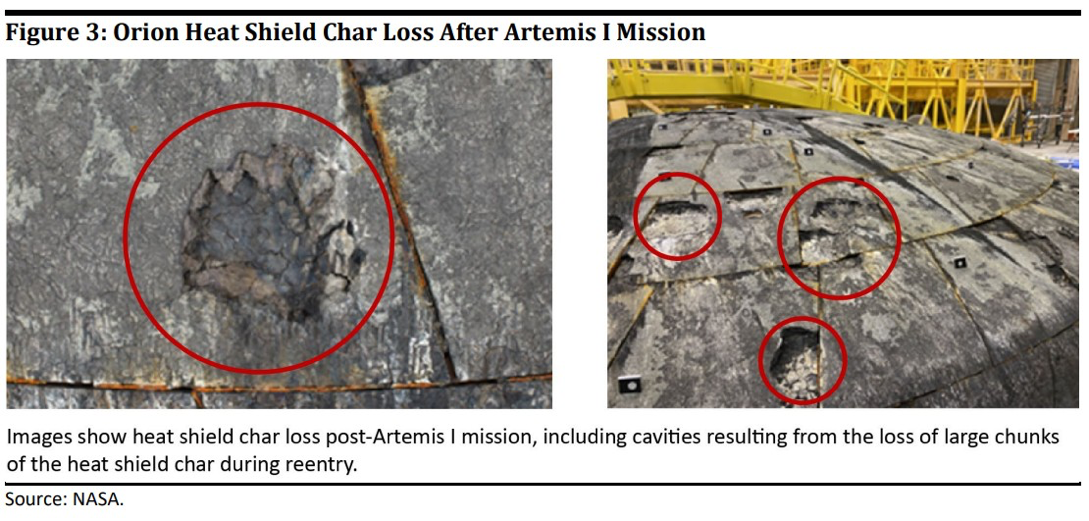
"We still have a lot of work to do to close out the heat shield investigation.”
After Starliner, NASA has another big human spaceflight decision to make
"We still have a lot of work to do to close out the heat shield investigation.”
Thread Starter
Ecce Homo! Loquitur...
Joined: Jul 2000
Aviation Qualifications: Spotter
Posts: 24,662
Likes: 7,348
From: Peripatetic
A sobering read.
https://caseyhandmer.wordpress.com/2...onal-disgrace/
SLS is still a national disgrace
https://caseyhandmer.wordpress.com/2...onal-disgrace/
SLS is still a national disgrace
Joined: Jul 2013
Aviation Qualifications: Non-Aircrew
Posts: 5,679
Likes: 3,341
From: Everett, WA
A sobering read.
https://caseyhandmer.wordpress.com/2...onal-disgrace/
SLS is still a national disgrace
https://caseyhandmer.wordpress.com/2...onal-disgrace/
SLS is still a national disgrace
NASA has morphed from a 'can do' organization into just another bloated government bureaucracy, while Space X has taken over the 'can do' title (at least when the other bloated government agencies don't stop them).
Joined: Feb 2015
Aviation Qualifications: PPL
Posts: 1,765
Likes: 359
From: Cincinnati, Ohio
@ORAC -an excellent article! Though I am an American and rather proud of our leadership in space exploration, your link is, as you warned, completely sobering. It's not just NASA suffering from the nonsense of DEI and suckling the "Big Gummint" teat. This fine and glorious nation is being driven to its knees by such idiocy. We have had a good run; it is time to reformulate our policies if we are ever to regain the respect and admiration of the world.
- Ed
- Ed
Thread Starter
Ecce Homo! Loquitur...
Joined: Jul 2000
Aviation Qualifications: Spotter
Posts: 24,662
Likes: 7,348
From: Peripatetic
Thread Starter
Ecce Homo! Loquitur...
Joined: Jul 2000
Aviation Qualifications: Spotter
Posts: 24,662
Likes: 7,348
From: Peripatetic
Bloomberg:
https://www.bloomberg.com/opinion/ar...colossal-waste
NASA’s $100 Billion Moon Mission Is Going Nowhere
The Artemis program — years behind schedule and billions over budget — should have taxpayers and presidents demanding answers.
There are government boondoggles, and then there’s NASA’s Artemis program.
More than a half century after Neil Armstrong’s giant leap for mankind, Artemis was intended to land astronauts back on the moon. It has so far spent nearly $100 billion without anyone getting off the ground, yet its complexity and outrageous waste are still spiraling upward. The next US president should rethink the program in its entirety.
As someone who greatly respects science and strongly supports space exploration, the more I have learned about Artemis, the more it has become apparent that it is a colossal waste of taxpayer money.
The problems start with the mission, which is more political than scientific. There is little humans can do on the moon that robots cannot. Technology has come a long way since 1969, to put it mildly. We do not need another person on the moon to collect rocks or take scientific measurements. And the costs of putting people on the moon — and of planning for their potential rescue, should complications arise — are truly astronomical.
To understand the level of wasteful spending, forget the $1 billion in spacesuits that have yet to be delivered. That’s pocket change compared to the rocket, called the Space Launch System. The National Aeronautics and Space Administration’s inspector general estimates the program has so far burned through $23.8 billion. Each launch will likely cost at least $4 billion, quadruple initial estimates. This exceeds private-sector costs many times over, yet it can launch only about once every two years and — unlike SpaceX’s rockets — can’t be reused.
Even if the Space Launch System is completed, there’s a hitch: It isn’t even powerful enough to actually get anyone to the moon, at least not in its current configuration. It will instead deposit its capsule, called Orion, into what’s called near-rectilinear halo orbit. Here, the capsule — which, despite $20 billion being poured into it, currently has a faulty heat shield — must rendezvous with a landing spacecraft, which will then take the astronauts to the lunar surface. And getting the landing spacecraft into orbit, before it can be propelled toward the moon to meet Orion, is itself a complex process.
Simple, Artemis is not. A lot could go wrong. And that’s before NASA adds its new space station into the mix. Known as the Gateway, it will cost more than $5 billion to build, require perhaps $1 billion in annual maintenance and has no clear rationale. The idea is that, in future missions, Orion might dock at the Gateway, two astronauts will exit and board the lander, and the remaining crew will sit in the station and observe their colleagues collecting rocks.
Unfortunately, that’s not all. To build Gateway, NASA is adding a second stage to the Space Launch System, called Block 1B, that is six years behind schedule, expected to cost $5.7 billion and will add about $1 billion to every launch. To accommodate Block 1B, the agency is erecting a new launch tower called ML-2, which is expected to cost $2.7 billion, more than seven times initial estimates, and doesn’t have a plausible completion date. (The company building ML-2 has billed the government for 850,000 overtime hours in the past two years.)
A celestial irony is that none of this is necessary. A reusable SpaceX Starship will very likely be able to carry cargo and robots directly to the moon — no SLS, Orion, Gateway, Block 1B or ML-2 required — at a small fraction of the cost. Its successful landing of the Starship booster was a breakthrough that demonstrated how far beyond NASA it is moving.
Meanwhile, NASA is canceling or postponing promising scientific programs — including the Veritas mission to Venus; the Viper lunar rover; and the NEO Surveyor telescope, intended to scan the solar system for hazardous asteroids — as Artemis consumes ever more of its budget.
Taxpayers and Congress should be asking: What on Earth are we doing? And the next president should be held accountable for answers.
Michael R. Bloomberg is the founder and majority owner of Bloomberg LP, the parent company of Bloomberg News, UN Special Envoy on Climate Ambition and Solutions, and chair of the Defense Innovation Board.
https://www.bloomberg.com/opinion/ar...colossal-waste
NASA’s $100 Billion Moon Mission Is Going Nowhere
The Artemis program — years behind schedule and billions over budget — should have taxpayers and presidents demanding answers.
There are government boondoggles, and then there’s NASA’s Artemis program.
More than a half century after Neil Armstrong’s giant leap for mankind, Artemis was intended to land astronauts back on the moon. It has so far spent nearly $100 billion without anyone getting off the ground, yet its complexity and outrageous waste are still spiraling upward. The next US president should rethink the program in its entirety.
As someone who greatly respects science and strongly supports space exploration, the more I have learned about Artemis, the more it has become apparent that it is a colossal waste of taxpayer money.
The problems start with the mission, which is more political than scientific. There is little humans can do on the moon that robots cannot. Technology has come a long way since 1969, to put it mildly. We do not need another person on the moon to collect rocks or take scientific measurements. And the costs of putting people on the moon — and of planning for their potential rescue, should complications arise — are truly astronomical.
To understand the level of wasteful spending, forget the $1 billion in spacesuits that have yet to be delivered. That’s pocket change compared to the rocket, called the Space Launch System. The National Aeronautics and Space Administration’s inspector general estimates the program has so far burned through $23.8 billion. Each launch will likely cost at least $4 billion, quadruple initial estimates. This exceeds private-sector costs many times over, yet it can launch only about once every two years and — unlike SpaceX’s rockets — can’t be reused.
Even if the Space Launch System is completed, there’s a hitch: It isn’t even powerful enough to actually get anyone to the moon, at least not in its current configuration. It will instead deposit its capsule, called Orion, into what’s called near-rectilinear halo orbit. Here, the capsule — which, despite $20 billion being poured into it, currently has a faulty heat shield — must rendezvous with a landing spacecraft, which will then take the astronauts to the lunar surface. And getting the landing spacecraft into orbit, before it can be propelled toward the moon to meet Orion, is itself a complex process.
Simple, Artemis is not. A lot could go wrong. And that’s before NASA adds its new space station into the mix. Known as the Gateway, it will cost more than $5 billion to build, require perhaps $1 billion in annual maintenance and has no clear rationale. The idea is that, in future missions, Orion might dock at the Gateway, two astronauts will exit and board the lander, and the remaining crew will sit in the station and observe their colleagues collecting rocks.
Unfortunately, that’s not all. To build Gateway, NASA is adding a second stage to the Space Launch System, called Block 1B, that is six years behind schedule, expected to cost $5.7 billion and will add about $1 billion to every launch. To accommodate Block 1B, the agency is erecting a new launch tower called ML-2, which is expected to cost $2.7 billion, more than seven times initial estimates, and doesn’t have a plausible completion date. (The company building ML-2 has billed the government for 850,000 overtime hours in the past two years.)
A celestial irony is that none of this is necessary. A reusable SpaceX Starship will very likely be able to carry cargo and robots directly to the moon — no SLS, Orion, Gateway, Block 1B or ML-2 required — at a small fraction of the cost. Its successful landing of the Starship booster was a breakthrough that demonstrated how far beyond NASA it is moving.
Meanwhile, NASA is canceling or postponing promising scientific programs — including the Veritas mission to Venus; the Viper lunar rover; and the NEO Surveyor telescope, intended to scan the solar system for hazardous asteroids — as Artemis consumes ever more of its budget.
Taxpayers and Congress should be asking: What on Earth are we doing? And the next president should be held accountable for answers.
Michael R. Bloomberg is the founder and majority owner of Bloomberg LP, the parent company of Bloomberg News, UN Special Envoy on Climate Ambition and Solutions, and chair of the Defense Innovation Board.
Joined: Feb 2015
Aviation Qualifications: PPL
Posts: 1,765
Likes: 359
From: Cincinnati, Ohio
A sad commentary on the once-mighty and respected NASA, as well as the general disinterest in space exploration by the US populace.
- Ed
- Ed
Last edited by cavuman1; 18th October 2024 at 14:20. Reason: add text

Joined: Feb 2002
Aviation Qualifications: AME
Posts: 4,182
Likes: 1,116
From: UK
The writer appears to have completely missed the point why Artemis is required.
It's not to collect moon rocks but to establish a base and learn how to live 'off world. It's a step to Mars and beyond.
Having said that, SLS is an abomination. The visionaries of the 1960s must be fuming.
It's not to collect moon rocks but to establish a base and learn how to live 'off world. It's a step to Mars and beyond.
Having said that, SLS is an abomination. The visionaries of the 1960s must be fuming.
Thread Starter
Ecce Homo! Loquitur...
Joined: Jul 2000
Aviation Qualifications: Spotter
Posts: 24,662
Likes: 7,348
From: Peripatetic
I think he understands that - but is making the point SpaceX is so far ahead that, by the time they reach Mars, they'll have to call ahead to book a room and apply for a visa......