


UK plan to launch rival to EU sat-nav system.

Ecce Homo! Loquitur...

Joined: Jul 2000
Aviation Qualifications: Spotter
Posts: 24,678
Likes: 7,356
From: Peripatetic
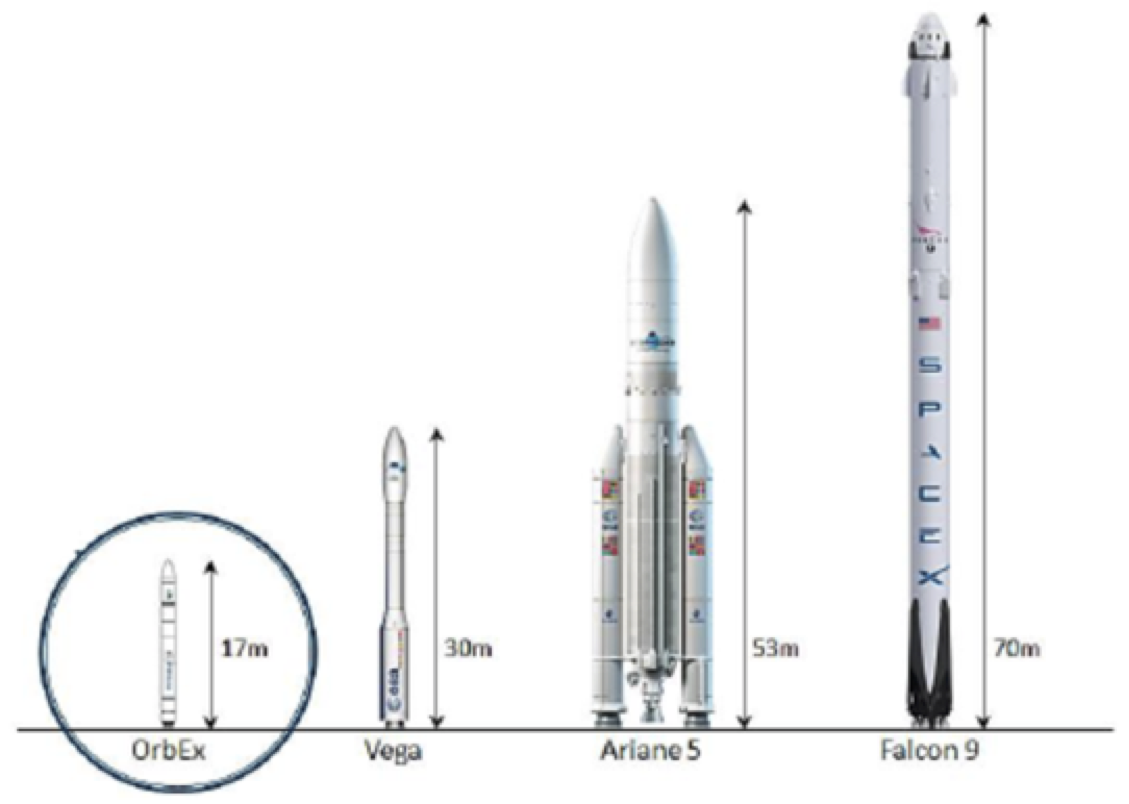
They aren’t talking giant rockets here, the size need to put a cubesat in polar orbit is quite small.
Dont confuse the OneWeb system with the LM Scottish spaceports, they’re not connected in any way.
https://www.shetnews.co.uk/2020/05/1...ind-plans-say/
https://en.wikipedia.org/wiki/Orbex
Dont confuse the OneWeb system with the LM Scottish spaceports, they’re not connected in any way.
https://www.shetnews.co.uk/2020/05/1...ind-plans-say/
https://en.wikipedia.org/wiki/Orbex

Joined: Jun 2017
Posts: 0
Likes: 0
From: Narnia


Joined: Feb 2007
Aviation Qualifications: PPL
Posts: 636
Likes: 792
From: England
All technology becomes outdated in time. If it didn't we would never advance.
Galileo is proving to be a very successful system that is central to many other EU projects. It has a great future.
Galileo is proving to be a very successful system that is central to many other EU projects. It has a great future.
Joined: Feb 2007
Aviation Qualifications: PPL
Posts: 636
Likes: 792
From: England
No they can't. They are not capable of being converted to a conventional GNSS system.
It is possible however that this system, if fully implemented, could be used to as an adjunct to an existing GNSS to provide additional accuracy. But it would need specialised receive equipment to do so, so incompatible with existing equipment.
It is possible however that this system, if fully implemented, could be used to as an adjunct to an existing GNSS to provide additional accuracy. But it would need specialised receive equipment to do so, so incompatible with existing equipment.
Ecce Homo! Loquitur...
Joined: Jul 2000
Aviation Qualifications: Spotter
Posts: 24,678
Likes: 7,356
From: Peripatetic
Would anyone know if those tiny oneweb satellites are capable of carrying atomic clocks needed for precision?
https://www.microsemi.com/product-di...mic-clock-csac
https://en.wikipedia.org/wiki/Chip-scale_atomic_clock
https://c5isr.ccdc.army.mil/news_and...to_the_rescue/
Joined: Jun 2017
Posts: 0
Likes: 0
From: Narnia
No they can't. They are not capable of being converted to a conventional GNSS system.
It is possible however that this system, if fully implemented, could be used to as an adjunct to an existing GNSS to provide additional accuracy. But it would need specialised receive equipment to do so, so incompatible with existing equipment.
It is possible however that this system, if fully implemented, could be used to as an adjunct to an existing GNSS to provide additional accuracy. But it would need specialised receive equipment to do so, so incompatible with existing equipment.
Ecce Homo! Loquitur...
Joined: Jul 2000
Aviation Qualifications: Spotter
Posts: 24,678
Likes: 7,356
From: Peripatetic
It was never intended to replace a standard GPS system, and the value in the system wasn’t the current satellites, but as stated the orbits, frequencies, licences and ground network. The issue with Galileo was in the intention of the EU to withhold access to the precision location mode and the associated encryption.
As you will see from my last link in post #247 above, the aim is replace/supplement existing GPS, where the existing satellites and signal are increasingly vulnerable to jamming and physical attack.
Cube, nano and even Femto swarm satellites in LEO are seen as the emerging technology. The price, at the cost of 3-4 F-35Bs, might be seen as somewhat of a bargain in a few years time.
Certainly an expert in the field, see post #234, who briefed the HoC committee, is not so dismissive.
As you will see from my last link in post #247 above, the aim is replace/supplement existing GPS, where the existing satellites and signal are increasingly vulnerable to jamming and physical attack.
Cube, nano and even Femto swarm satellites in LEO are seen as the emerging technology. The price, at the cost of 3-4 F-35Bs, might be seen as somewhat of a bargain in a few years time.
Certainly an expert in the field, see post #234, who briefed the HoC committee, is not so dismissive.
Joined: Feb 2007
Aviation Qualifications: PPL
Posts: 636
Likes: 792
From: England
It was never intended to replace a standard GPS system, and the value in the system wasn’t the current satellites, but as stated the orbits, frequencies, licences and ground network. The issue with Galileo was in the intention of the EU to withhold access to the precision location mode and the associated encryption.
Orbits - there are no orbital slots for LEO satellites. It's currently a free for all, sothething that will become a problem before long. Nothing to buy there.
Frequencies - there was nothing to stop us registering the same frequency assignments, once the system had closed due to bankruptcy We did not need to buy the system to get them. And in any case there are still frequencoes available for our own system if we needed them.
Licensing - Once the frequencies are registered internationally, the only licences needed would be domestic ones. Just paperwork.
Ground stations - That's a different issue. If this is for a UK defence system we'd have to be a lot more careful about the location and control of the ground stations.
And I ask again - who is going to use a system that needs special-purpose ground equipment? Have the military or emergency services asked for it? They are all going over to COTS to save money.
And we don't even know exactly what this system, when completed, might do. At the moment it's all "might do", "could do", "would be nice to do".
It will come to nothing, just a waste of money.
Edit: This may be of interest regarding LEO orbits: https://aerospace.org/sites/default/...talSlots_0.pdf
Ecce Homo! Loquitur...
Joined: Jul 2000
Aviation Qualifications: Spotter
Posts: 24,678
Likes: 7,356
From: Peripatetic
Frequencies - there was nothing to stop us registering the same frequency assignments, once the system had closed due to bankruptcy We did not need to buy the system to get them. And in any case there are still frequencoes available for our own system if we needed them.
https://www.itu.int/en/mediacentre/Pages/2019-PR23.aspx
https://www.itu.int/en/mediacentre/b...e-systems.aspx
https://arstechnica.com/tech-policy/...nd-satellites/
http://satellitemarkets.com/news-ana...constellations
* https://www.nasa.gov/directorates/sp...ared_crosslink
Joined: Feb 2007
Aviation Qualifications: PPL
Posts: 636
Likes: 792
From: England
"Orbits mean frequencies" 
The procedure for registering satellite frequencies is well established, and quite rightly if you don't use them you lose them. Of course. Nothing you have posted there changes what I said above.
These are not the only satellites and not the only frequencies. They are not the only game in town. There is no closing date for applications.
We have no idea at the moment whether we need satellites, and if so whether these frequencies or these orbits are suitable for what we might need.
First we need a user requirement, not some political adviser's daydream. If we actually do need satellites, we can build our own in the UK to do what we actually need, and get suitable frequency assignments for that purpose, which may very well be different from those OneWeb have obtained. As you have correctly said above, launches are easily sorted so we can get satellites launched to secure that spectrum.
I ask yet again - where is the user requirement?
The procedure for registering satellite frequencies is well established, and quite rightly if you don't use them you lose them. Of course. Nothing you have posted there changes what I said above.
These are not the only satellites and not the only frequencies. They are not the only game in town. There is no closing date for applications.
We have no idea at the moment whether we need satellites, and if so whether these frequencies or these orbits are suitable for what we might need.
First we need a user requirement, not some political adviser's daydream. If we actually do need satellites, we can build our own in the UK to do what we actually need, and get suitable frequency assignments for that purpose, which may very well be different from those OneWeb have obtained. As you have correctly said above, launches are easily sorted so we can get satellites launched to secure that spectrum.
I ask yet again - where is the user requirement?
Ecce Homo! Loquitur...
Joined: Jul 2000
Aviation Qualifications: Spotter
Posts: 24,678
Likes: 7,356
From: Peripatetic
https://www.adsadvance.co.uk/hughes-...onsortium.html
Hughes to join UK Government and Bharti in OneWeb consortium
Hughes to join UK Government and Bharti in OneWeb consortium
Joined: Jun 2009
Posts: 531
Likes: 115
From: East Sussex
Someone was ahead of their time.....
Rockets Galore 1957 - https://en.wikipedia.org/wiki/Rockets_Galore! and recently shown on Talking Pictures
Didn't end well for the MOD so perhaps they should watch the film, then look somewhere else
Rockets Galore 1957 - https://en.wikipedia.org/wiki/Rockets_Galore! and recently shown on Talking Pictures
Didn't end well for the MOD
so perhaps they should watch the film, then look somewhere else
Ecce Homo! Loquitur...
Joined: Jul 2000
Aviation Qualifications: Spotter
Posts: 24,678
Likes: 7,356
From: Peripatetic
https://www.thetimes.co.uk/edition/n...tter-5zpxq83w2
......Last year Britain became the first formal partner in the US-led Operation Olympic Defender, a multinational military coalition formed to deter hostile actors against causing trouble in space.
The Ministry of Defence is pursuing its ambition to send into low Earth orbit a constellation of responsive small satellites, which are cheaper than previous generation satellites and easier to launch.
Codenamed Artemis, the programme aims eventually to beam live, high-resolution video imagery directly into the cockpits of the RAF’s fighter jet fleet........
......Last year Britain became the first formal partner in the US-led Operation Olympic Defender, a multinational military coalition formed to deter hostile actors against causing trouble in space.
The Ministry of Defence is pursuing its ambition to send into low Earth orbit a constellation of responsive small satellites, which are cheaper than previous generation satellites and easier to launch.
Codenamed Artemis, the programme aims eventually to beam live, high-resolution video imagery directly into the cockpits of the RAF’s fighter jet fleet........
Joined: Oct 2002
Posts: 429
Likes: 5
From: West Wiltshire, UK
I predict that by the time it is capable of doing that we won't have any piloted fighters left, we'll be using UAVs . . .

Ecce Homo! Loquitur...
Joined: Jul 2000
Aviation Qualifications: Spotter
Posts: 24,678
Likes: 7,356
From: Peripatetic
Curiouser and curiouser.
Just as the UK announces it is pulling funds for UK companies to work on a LEO GPS design - the US announces it has started one. I wonder what is going on in the background.......
https://www.technologyreview.com/202...le-navigation/
SpaceX has already launched more than 700 Starlink satellites, with thousands more due to come online in the years ahead. Their prime mission is to provide high-speed internet virtually worldwide, extending it to many remote locations that have lacked reliable service to date.
Now, research funded by the US Army has concluded that the growing mega-constellation could have a secondary purpose: doubling as a low-cost, highly accurate, and almost unjammable alternative to GPS. The new method would use existing Starlink satellites in low Earth orbit (LEO) to provide near-global navigation services.
In a non-peer-reviewed paper, Todd Humphreys and Peter Iannucci of the Radionavigation Laboratory at the University of Texas at Austin claim to have devised a system that uses the same satellites, piggybacking on traditional GPS signals, to deliver location precision up to 10 times as good as GPS, in a system much less prone to interference.......
https://www.politico.eu/article/uk-s...place-galileo/
UK scraps Brexit alternative to EU’s Galileo satellite system
LONDON — The U.K. is set to scrap former Prime Minister Theresa May’s plan to replace access to the EU’s satellite navigation system Galileo after Brexit with a home-grown equivalent.
The UK Space Agency is expected to announce that contracts awarded to U.K. space companies to build the British Global Navigation Satellite System (GNSS) will not be extended beyond their expiration date at the end of this month........
The government will instead ask companies to put forward “innovative” solutions that give the U.K. additional resilience to that of Galileo and GPS, the U.S. satellite navigation system.
“The general principle is looking at alternative ways of providing resilient position, navigation and timing systems in a way that is different to GPS and Galileo. Because if GPS and Galileo fail, it may well be for the same reason, the same disruption. The idea is to come up with something different and by doing that you’ve got more chance of having one system up and running when perhaps one of the others has failed,” the executive said.......
Just as the UK announces it is pulling funds for UK companies to work on a LEO GPS design - the US announces it has started one. I wonder what is going on in the background.......
https://www.technologyreview.com/202...le-navigation/
SpaceX has already launched more than 700 Starlink satellites, with thousands more due to come online in the years ahead. Their prime mission is to provide high-speed internet virtually worldwide, extending it to many remote locations that have lacked reliable service to date.
Now, research funded by the US Army has concluded that the growing mega-constellation could have a secondary purpose: doubling as a low-cost, highly accurate, and almost unjammable alternative to GPS. The new method would use existing Starlink satellites in low Earth orbit (LEO) to provide near-global navigation services.
In a non-peer-reviewed paper, Todd Humphreys and Peter Iannucci of the Radionavigation Laboratory at the University of Texas at Austin claim to have devised a system that uses the same satellites, piggybacking on traditional GPS signals, to deliver location precision up to 10 times as good as GPS, in a system much less prone to interference.......
https://www.politico.eu/article/uk-s...place-galileo/
UK scraps Brexit alternative to EU’s Galileo satellite system
LONDON — The U.K. is set to scrap former Prime Minister Theresa May’s plan to replace access to the EU’s satellite navigation system Galileo after Brexit with a home-grown equivalent.
The UK Space Agency is expected to announce that contracts awarded to U.K. space companies to build the British Global Navigation Satellite System (GNSS) will not be extended beyond their expiration date at the end of this month........
The government will instead ask companies to put forward “innovative” solutions that give the U.K. additional resilience to that of Galileo and GPS, the U.S. satellite navigation system.
“The general principle is looking at alternative ways of providing resilient position, navigation and timing systems in a way that is different to GPS and Galileo. Because if GPS and Galileo fail, it may well be for the same reason, the same disruption. The idea is to come up with something different and by doing that you’ve got more chance of having one system up and running when perhaps one of the others has failed,” the executive said.......
Joined: Jun 2017
Posts: 0
Likes: 0
From: Narnia
Joined: Feb 2007
Aviation Qualifications: PPL
Posts: 636
Likes: 792
From: England
Inevitable. Just another bucket of cash chucked down the Boris/Cummings gutter
As I said two years ago
As I said two years ago
The whole idea of a new UK GNSS is preposterous.
It's yet another example of politicians dreaming something up without consulting anyone who actually understands the reality.
It's yet another example of politicians dreaming something up without consulting anyone who actually understands the reality.
Ecce Homo! Loquitur...
Joined: Jul 2000
Aviation Qualifications: Spotter
Posts: 24,678
Likes: 7,356
From: Peripatetic
POLITICO Europe: EUROPE’S NEXT BIG SPACE ENDEAVOUR
2021 is the year Europe needs to show it’s serious about building — and defending — its position behind the U.S. as the world’s second space power, the CEO of ArianeGroup, André-Hubert Roussel, told Playbook in an interview.
His company runs the development of the Ariane series of rockets, up there with TGV trains as a prized French engineering success.
He says priority No. 1 for the European Commission on space should be kicking on with developing a secure satellite communications network that will offer Europe a reliable network for digital services.
Such a program — which already has the backing of Internal Market Commissioner Thierry Breton and a €7 million study ongoing into how to make it work — would be Europe’s third big space services initiative after Copernicus, an Earth monitoring satellite system, and Galileo, a nascent GPS alternative.....
Next week, ministers, commissioners and industry folk will convene for the European Space Conference, the bloc’s annual talking shop for all things orbital, to discuss the plan.
“We need an ambition in Europe to have more programs and projects to launch,” Roussel said. Getting straight onto a communications network program would mean a steady stream of new launches......
2021 is the year Europe needs to show it’s serious about building — and defending — its position behind the U.S. as the world’s second space power, the CEO of ArianeGroup, André-Hubert Roussel, told Playbook in an interview.
His company runs the development of the Ariane series of rockets, up there with TGV trains as a prized French engineering success.
He says priority No. 1 for the European Commission on space should be kicking on with developing a secure satellite communications network that will offer Europe a reliable network for digital services.
Such a program — which already has the backing of Internal Market Commissioner Thierry Breton and a €7 million study ongoing into how to make it work — would be Europe’s third big space services initiative after Copernicus, an Earth monitoring satellite system, and Galileo, a nascent GPS alternative.....
Next week, ministers, commissioners and industry folk will convene for the European Space Conference, the bloc’s annual talking shop for all things orbital, to discuss the plan.
“We need an ambition in Europe to have more programs and projects to launch,” Roussel said. Getting straight onto a communications network program would mean a steady stream of new launches......