


Marabu 320 NEO engine fire damage

Thread Starter
Joined: Jul 2023
Posts: 18
Likes: 6
From: London
Marabu 320 NEO engine fire damage
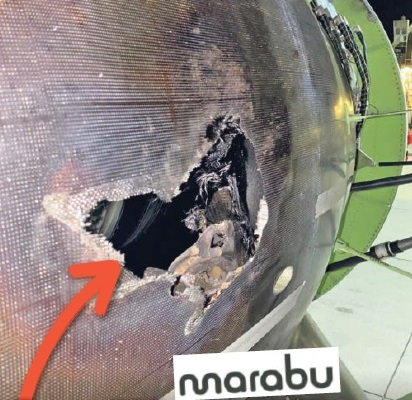
News article on the bild.de about a Marabu 320 with significant engine fire damage. Pictures and article behind a paywall but well worth the few euros to view 
English translation by the Googles:
These are images that the Condor sister airline Marabu would probably prefer to keep secret: During the flight from Malaga (Spain) to Munich last Tuesday, a spark plug came loose and emitted hot gas against the casing and cables.According to information from BILD, the engine fire warning light came on just five minutes after takeoff last Tuesday (July 17). The pilot considered making an emergency landing. However, the light then went off. The Airbus 320neo with the registration ES-MBA had already displayed several "spurious alerts" before, as stated by a Marabu pilot to BILD. These are false warnings, such as a screen flickering that lasts only a fraction of a second and then disappears.
This time, it was not a false alarm...
Nevertheless, the pilot continued the flight after the engine fire warning disappeared, according to an insider quoted by BILD. The flight from Spain to the Bavarian capital lasts 2.50 hours. Meanwhile, the loose spark plug was affecting the engine. An anonymous pilot told BILD, "It's like the boy who cried wolf. When false alarms are triggered too often, a real emergency won't be recognized."
According to BILD's information, neither the crew nor the passengers noticed anything about the defect. It was only when the engine was inspected on the ground that the shock occurred: heat damage had eaten into the casing and cables.
In response to a query from BILD, Marabu stated, "In one of the engines of the aircraft ES-MBA, a spark plug came loose on July 17, and hot gas leaked, leaving soot traces. The engine did not catch fire, but it was damaged. The engine is currently being repaired. This repair will be completed in August, partly due to longer delivery times for spare parts. Based on the current findings, there was no danger for either the passengers or the crew."
The anonymous pilot told BILD, "I see it differently; flight safety was disregarded here. This could have ended in a tragedy."
The airline spokeswoman contradicted and wrote, "The cockpit crew checked the aircraft according to the protocols provided for this case. This check revealed that all engine measurements were normal. Therefore, the flight to Munich was continued as planned."
Tone in management email gets harsher
Last Sunday, the management of Marabu addressed the fire internally via email. BILD has obtained the message. The tone is harsher: "Last week, during a flight from Malaga to Munich, we received an engine fire warning in our aircraft ES-MBA. The crew handled the situation as expected, and the aircraft landed in Munich without injuries or obvious damage to the aircraft.
Soot traces and melting points on the cables. The black marks are soot from burned aircraft fuel. "That doesn't happen just from hot air," said an insider to BILD.
In the past few days, inspections of engine number 2 were carried out. The hot air from the spark plug caused "damage to engine accessories." Additionally, various cables in the engine were severely damaged.
The management's goal is to get the aircraft back in service quickly. The insider told BILD, "It will take even longer until the aircraft can fly again."
English translation by the Googles:
These are images that the Condor sister airline Marabu would probably prefer to keep secret: During the flight from Malaga (Spain) to Munich last Tuesday, a spark plug came loose and emitted hot gas against the casing and cables.According to information from BILD, the engine fire warning light came on just five minutes after takeoff last Tuesday (July 17). The pilot considered making an emergency landing. However, the light then went off. The Airbus 320neo with the registration ES-MBA had already displayed several "spurious alerts" before, as stated by a Marabu pilot to BILD. These are false warnings, such as a screen flickering that lasts only a fraction of a second and then disappears.
This time, it was not a false alarm...
Nevertheless, the pilot continued the flight after the engine fire warning disappeared, according to an insider quoted by BILD. The flight from Spain to the Bavarian capital lasts 2.50 hours. Meanwhile, the loose spark plug was affecting the engine. An anonymous pilot told BILD, "It's like the boy who cried wolf. When false alarms are triggered too often, a real emergency won't be recognized."
According to BILD's information, neither the crew nor the passengers noticed anything about the defect. It was only when the engine was inspected on the ground that the shock occurred: heat damage had eaten into the casing and cables.
In response to a query from BILD, Marabu stated, "In one of the engines of the aircraft ES-MBA, a spark plug came loose on July 17, and hot gas leaked, leaving soot traces. The engine did not catch fire, but it was damaged. The engine is currently being repaired. This repair will be completed in August, partly due to longer delivery times for spare parts. Based on the current findings, there was no danger for either the passengers or the crew."
The anonymous pilot told BILD, "I see it differently; flight safety was disregarded here. This could have ended in a tragedy."
The airline spokeswoman contradicted and wrote, "The cockpit crew checked the aircraft according to the protocols provided for this case. This check revealed that all engine measurements were normal. Therefore, the flight to Munich was continued as planned."
Tone in management email gets harsher
Last Sunday, the management of Marabu addressed the fire internally via email. BILD has obtained the message. The tone is harsher: "Last week, during a flight from Malaga to Munich, we received an engine fire warning in our aircraft ES-MBA. The crew handled the situation as expected, and the aircraft landed in Munich without injuries or obvious damage to the aircraft.
Soot traces and melting points on the cables. The black marks are soot from burned aircraft fuel. "That doesn't happen just from hot air," said an insider to BILD.
In the past few days, inspections of engine number 2 were carried out. The hot air from the spark plug caused "damage to engine accessories." Additionally, various cables in the engine were severely damaged.
The management's goal is to get the aircraft back in service quickly. The insider told BILD, "It will take even longer until the aircraft can fly again."


Joined: Dec 2005
Posts: 110
Likes: 15
From: EDDM
The MBU crews are currently going thru a baptism of fire... the airline never really got off the ground and is operating with help from a ton of wetlease. Their own fleet is short of crew or grounded due to technical issues on their neos.
Joined: Jun 2022
Posts: 106
Likes: 0
From: Seattle
Do you think the average reader of a newspaper really cares which type engine it was? I think that it was on fire is the pertinent point being made here.
Plus the reg is given so as a professional; a quick Google will tell you the answer.
Plus the reg is given so as a professional; a quick Google will tell you the answer.
Joined: Dec 2005
Posts: 110
Likes: 15
From: EDDM
PW1127G, ex Indigo A32N: https://www.airfleets.net/ficheapp/plane-a320-6849.htm

Joined: Jan 2008
Posts: 17,720
Likes: 2,087
From: Reading, UK
YMMV.

Joined: Jul 2001
Posts: 11
Likes: 0
From: Germany
Appears to be some sort of "how deep can we crab into the !!!!"..
Marabu acts as wetlease of Condor, they instead had to engage them and others since they were asked to reduce their fleet during their bancruptcy scheme (like Chapter 11 in the US) receiving funds from the EU.
As repair is going on, Marabu is wetleasing another Airline "Nordica"....
Marabu acts as wetlease of Condor, they instead had to engage them and others since they were asked to reduce their fleet during their bancruptcy scheme (like Chapter 11 in the US) receiving funds from the EU.
As repair is going on, Marabu is wetleasing another Airline "Nordica"....


Joined: Jul 2013
Aviation Qualifications: Non-Aircrew
Posts: 5,678
Likes: 3,341
From: Everett, WA
Certainly not the first time an improperly secured igniter or borescope plug has come out and caused a problem. What I'm most curious about is why the overheat/fire warning went away - that's potentially a big problem.
Thread Starter
Joined: Jul 2023
Posts: 18
Likes: 6
From: London
Guys, guys, guys…
According to Google:
Spark plug is Zündkerze. Igniter is Zünder
Zünder is detonator. Zündkerze is Sparkplug.
And Zunder is Tinder!
Let’s not get lost in semantics here; the engine had a hole that let high temperature gas burn and melt parts of the engine for about two hours…
And you’re concerned the journalist breaking the story didn’t use the correct technical term? Have you ever heard the phrase missing the trees
for the forest?
I lose a little more faith in aviation every day.
According to Google:
Spark plug is Zündkerze. Igniter is Zünder
Zünder is detonator. Zündkerze is Sparkplug.
And Zunder is Tinder!
Let’s not get lost in semantics here; the engine had a hole that let high temperature gas burn and melt parts of the engine for about two hours…
And you’re concerned the journalist breaking the story didn’t use the correct technical term? Have you ever heard the phrase missing the trees
for the forest?
I lose a little more faith in aviation every day.
Joined: Jan 2008
Posts: 17,720
Likes: 2,087
From: Reading, UK


Joined: Oct 1999
Aviation Qualifications: ATPL
Posts: 636
Likes: 328
From: LHR
With an engine fire warning..... even one that came on for just a few seconds... I would have done the engine fire checklist or at a minimum had that engine throttled back to idle and turned back to base.
Consulting the company normally generates sub-optimum solutions! I once turned around on a US bound flight approaching Iceland having suffered a #4 hydraulic failure. With poor weather at destination the a/c would have requried a company expedition to an offline station to fix it. On return I was asked by operations 'Who authorised the diversion?' This is why airline managers hate pilots.
Consulting the company normally generates sub-optimum solutions! I once turned around on a US bound flight approaching Iceland having suffered a #4 hydraulic failure. With poor weather at destination the a/c would have requried a company expedition to an offline station to fix it. On return I was asked by operations 'Who authorised the diversion?' This is why airline managers hate pilots.
Joined: Jan 2008
Posts: 629
Likes: 187
From: Netherlands
It will take even longer until the aircraft can fly again
PW part shortage might even help them fixing the engine, as long as the parts with shortage are not damaged and there is enough manpower to swap components.
Joined: Jan 2008
Posts: 17,720
Likes: 2,087
From: Reading, UK
How can it take longer than (I am assuming) fixing the engine? If they swap the engine (assuming they can get a spare...), the aircraft could be flying within a day. Worst case it will take as long.
PW part shortage might even help them fixing the engine, as long as the parts with shortage are not damaged and there is enough manpower to swap components.

Joined: Sep 2001
Posts: 1,030
Likes: 262
From: Blighty
How can it take longer than (I am assuming) fixing the engine? If they swap the engine (assuming they can get a spare...), the aircraft could be flying within a day. Worst case it will take as long.
PW part shortage might even help them fixing the engine, as long as the parts with shortage are not damaged and there is enough manpower to swap components.
Is there a hangar available with cranes etc or is it a bootstrap job outside?
How quick can a team be assembled, airside passes verified, accommodation secured, transport?
What about post engine function checks and ground runs, power assured?
Be lucky to get it done in 3 days and that's without hitting any snags.
Joined: May 2011
Aviation Qualifications: LAME
Posts: 237
Likes: 7
From: Surrey UK
The tip of an ignitor plug would just sit inside the combustion zone, perhaps as little as 2mm, more and its tip would fast erode, too shallow a penetration = wet starts. Not knowing the P&W but the tertiary airflow around the combustion casing would be at HPC temperature, high enough to cause a fire sensor trip, but flames escaping the inner combustion zone I do doubt very much, as the airflow pattern is designed to keep the flame from touching the sides which in any case would have several rows of holes/scoops to allow the tertiary air to dilute the flame for introduction into the HPTV's.
Joined: Dec 2006
Posts: 314
Likes: 22
From: Whanganui, NZ
This incident was covered on The Aviation Herald "Incident: Marabu/Nordica A20N at Malaga and Munich on Jul 17th 2023, engine heat damage and puncture"
Here: Incident: Marabu/Nordica A20N at Malaga and Munich on Jul 17th 2023, engine heat damage and puncture
Here: Incident: Marabu/Nordica A20N at Malaga and Munich on Jul 17th 2023, engine heat damage and puncture