


Robinson cyclic

Thread Starter

Joined: Nov 2005
Posts: 75
Likes: 0
From: Mecklenburg Vorpommern
Robinson cyclic
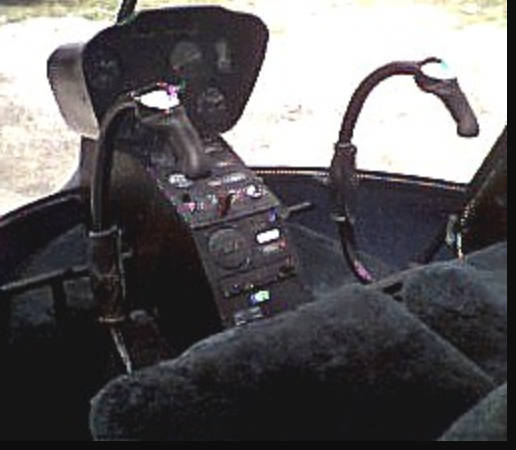
A little late in the day to be asking but - What other registered/licenced helicopter uses the shared Cyclic system ?
also who knows where Spunk might be ? - please to both Qs. Michael G
also who knows where Spunk might be ? - please to both Qs. Michael G


Joined: Feb 2006
Posts: 557
Likes: 27
From: At home
Although the Robinsons are not my favourite by far (for a number of other reasons) fact is that despite this design, they are one of the most sold helicopters in the world….
In my hours in them, I can’t remember any instance that I blame on the cyclic design. Actually it makes entry and exit a lot easier than any of the types I’ve flown.
Joined: Aug 2008
Posts: 243
Likes: 3
From: London
This seems to only be of concern to psychologically insecure pilots on web forums.
Last edited by RMK; 23rd May 2025 at 10:49.

Joined: Sep 2018
Aviation Qualifications: CPL
Posts: 888
Likes: 65
From: California

Joined: Dec 2020
Posts: 102
Likes: 87
From: USA
It's interesting. The cyclic setup never bothered me, but I did have one event that made me think a bit about whether it was appropriate. One of my best students ever was a digger driver who had absolutely no problem separating hands and feet, which as we all know is a core skill for drummers, organists and helicopter drivers as well. We were in the circuit in a 22 with about five hours total on the clock and he was doing stunningly well. A gust caught us and we rolled to the left. He completely caught me by surprise by pulling the cyclic towards his knees rather than to the right laterally, and as a result he exacerbated the left roll. I wondered at the time whether such actions might have explained some mast bumping experiences in Robinsons.


Joined: Oct 1999
Aviation Qualifications: ATPL
Posts: 7,371
Likes: 926
From: Den Haag
It's interesting. The cyclic setup never bothered me, but I did have one event that made me think a bit about whether it was appropriate. One of my best students ever was a digger driver who had absolutely no problem separating hands and feet, which as we all know is a core skill for drummers, organists and helicopter drivers as well. We were in the circuit in a 22 with about five hours total on the clock and he was doing stunningly well. A gust caught us and we rolled to the left. He completely caught me by surprise by pulling the cyclic towards his knees rather than to the right laterally, and as a result he exacerbated the left roll. I wondered at the time whether such actions might have explained some mast bumping experiences in Robinsons.

Joined: Sep 2002
Aviation Qualifications: CPL
Posts: 4,721
Likes: 636
From: Great South East, tired and retired
It never worried me, very quickly got used to holding it with my arm in the air and student following through with hand resting on leg.
Sometimes I would "sidestick" by using the central prong and let the handlebars flop around. My long legs appreciated not having to clamber around the floor-mounted cyclic of other choppers.
Sometimes I would "sidestick" by using the central prong and let the handlebars flop around. My long legs appreciated not having to clamber around the floor-mounted cyclic of other choppers.

Joined: Jun 2016
Aviation Qualifications: CPL
Posts: 1,318
Likes: 386
From: Brantisvogan
That T config was an abomination, the perfect blend of fugly and cheapness.
It always just felt a bit weird, maybe it was the central pivot that did that.
A cherry on a design that was never going to win any beauty contests.
Don't get me wrong, without it, the barrier to rotary flying would have remained too high for many, but it was happy days to graduate onto something a bit more conventional.
It always just felt a bit weird, maybe it was the central pivot that did that.
A cherry on a design that was never going to win any beauty contests.
Don't get me wrong, without it, the barrier to rotary flying would have remained too high for many, but it was happy days to graduate onto something a bit more conventional.


Joined: Apr 2017
Aviation Qualifications: ATPL
Posts: 32
Likes: 4
From: Earth
I always wonder if the pilots of the Beavers, Otter, Twin Otter consider those designs substandard to the ‘’real’’ flight controls of other types in the same way as pilots have such hate against the Robinsons cyclic design?
Although the Robinsons are not my favourite by far (for a number of other reasons) fact is that despite this design, they are one of the most sold helicopters in the world….
In my hours in them, I can’t remember any instance that I blame on the cyclic design. Actually it makes entry and exit a lot easier than any of the types I’ve flown.
Although the Robinsons are not my favourite by far (for a number of other reasons) fact is that despite this design, they are one of the most sold helicopters in the world….
In my hours in them, I can’t remember any instance that I blame on the cyclic design. Actually it makes entry and exit a lot easier than any of the types I’ve flown.
Joined: Feb 2006
Posts: 557
Likes: 27
From: At home
there are vastly more important considerations over; 'ease of egress
There was an STC (SR9BO) developed by a company called Altair (not longer in business) for modifying the R-22 to a conventional cyclic setup which looked like the MD900 design. Never made it to the R44 and did not become a sales hit in the R22 either.
As I said in my previous post, the Robinson products are far from my favourite, but I find this specific discussion straight out silly.
Guest
Joined: Jul 2017
Aviation Qualifications: Spotter
Posts: 840
Likes: 236
From: UK

Joined: Apr 2000
Aviation Qualifications: ATP+Mil
Posts: 10,959
Likes: 1,814
From: EGDC
I do wonder if not being able to follow through on the controls closely (either with your arm in the air or holding the centre upright) has been a factor when mast bumping has destroyed the aircraft during autos and PFLs when converting FW pilots to RW - an engine failure in a FW normally elicits a forward control movement in a FW, not what you want in a teetering head RW when the lever is dumped.
Joined: Nov 2000
Posts: 2,018
Likes: 73
From: Pewsey, UK
Originally Posted by [email protected]
I do wonder if not being able to follow through on the controls closely (either with your arm in the air or holding the centre upright) has been a factor when mast bumping has destroyed the aircraft during autos and PFLs when converting FW pilots to RW - an engine failure in a FW normally elicits a forward control movement in a FW, not what you want in a teetering head RW when the lever is dumped.
Joined: Feb 2006
Posts: 557
Likes: 27
From: At home
Originally Posted by [email protected]
I do wonder if not being able to follow through on the controls closely (either with your arm in the air or holding the centre upright) has been a factor when mast bumping has destroyed the aircraft during autos and PFLs when converting FW pilots to RW - an engine failure in a FW normally elicits a forward control movement in a FW, not what you want in a teetering head RW when the lever is dumped.
Having had the questionable pleasure of training an ex F104 pilot in the R22, I know how close you want to be on the controls and how low the RRPM actually can get without ending up as a black mark. Thankfully many years ago….
Joined: Sep 2018
Aviation Qualifications: CPL
Posts: 888
Likes: 65
From: California