


Underslung Koala fail

Thread Starter

Joined: Feb 2008
Posts: 202
Likes: 25
From: Danunder
Underslung Koala fail
This lift does not look stable from the word go. Interesting to know if the release was intentional.
https://asn.flightsafety.org/wikibase/419086
https://www.indiatoday.in/india/stor...235-2024-08-31
https://asn.flightsafety.org/wikibase/419086
https://www.indiatoday.in/india/stor...235-2024-08-31
Last edited by Senior Pilot; 31st August 2024 at 09:23. Reason: Hyperlinks


Joined: Apr 2000
Aviation Qualifications: ATP+Mil
Posts: 10,959
Likes: 1,814
From: EGDC
It was clearly becoming dangerously unstable - I understand why they dropped it.
However, careful loading of the underslung aircraft might have helped - but it was never going to fly fast underslung. A drogue attached to the tail may have helped.
All in all a pretty pi** poor demonstration of how to undersling a helicopter.
However, careful loading of the underslung aircraft might have helped - but it was never going to fly fast underslung. A drogue attached to the tail may have helped.
All in all a pretty pi** poor demonstration of how to undersling a helicopter.

Joined: Oct 2011
Posts: 24
Likes: 23
From: uk
Never done underslung - would a drogue chute not require a certain amount of forward speed to have any effect 40kts or so(?), and at low speed on a fuselage without an effective drogue would the downwash not cause an almost immediate spin considering the vertical stabiliser at the end of the tail boom being susceptible to any sideways airflow?
Last edited by Senior Pilot; 1st September 2024 at 01:32. Reason: Shoot/chute
Joined: Oct 1999
Posts: 1,444
Likes: 21
From: Beyond the black stump!
What a joke! That 119 might have suffered some damage the first time it crashed, but nothing like that second one. This is the most spectacular example of a helicopter lawn dart I have ever seen. Clueless. And yes, anything attached to the tail would have kept it flying straight - tree branches work extremely well.


Joined: May 2002
Aviation Qualifications: ATP+Mil
Posts: 18,633
Likes: 1,072
From: Downeast
High RPM,
Drogue chutes work well usually...helps if they have a swivel between the chute and aircraft otherwise the chute can spin and eventually collapse.
Within the first 100 feet of heigh gain and about just above ETL....it was apparent that was a grossly mis-rigged load that was not going to ride well at all.
Drogue chutes work well usually...helps if they have a swivel between the chute and aircraft otherwise the chute can spin and eventually collapse.
Within the first 100 feet of heigh gain and about just above ETL....it was apparent that was a grossly mis-rigged load that was not going to ride well at all.

Joined: Feb 2006
Posts: 557
Likes: 27
From: At home
High RPM,
Drogue chutes work well usually...helps if they have a swivel between the chute and aircraft otherwise the chute can spin and eventually collapse.
Within the first 100 feet of heigh gain and about just above ETL....it was apparent that was a grossly mis-rigged load that was not going to ride well at all.
Drogue chutes work well usually...helps if they have a swivel between the chute and aircraft otherwise the chute can spin and eventually collapse.
Within the first 100 feet of heigh gain and about just above ETL....it was apparent that was a grossly mis-rigged load that was not going to ride well at all.
This however looks as it is being strapped with multiple straps, and I only guess they were attached to the crosstubes, as I can’t think og other points to attach lifting straps. Then the balance of the load is above the liftingpoint and it will be completely unstable.
At the 9sec mark, you can see what looks like a strap failing.
Joined: Nov 2010
Posts: 880
Likes: 225
From: Australia
The normal way of lifting a... helicopter, is with one sling attached to the MR-hub...
This however looks as it is being strapped with multiple straps,... attached to the crosstubes... Then the balance of the load is above the liftingpoint and it will be completely unstable.
At the 9sec mark, you can see what looks like a strap failing.
This however looks as it is being strapped with multiple straps,... attached to the crosstubes... Then the balance of the load is above the liftingpoint and it will be completely unstable.
At the 9sec mark, you can see what looks like a strap failing.
Yes, I also see something flick up in first video. But load was already unstable before that and it didn't seem to lurch after that event. But if a sling failed, they were probably down to three slings still attached so an even less stable arrangement.
In second video the AW119 is doing 'crazy stuff' before it is released! No surprise they decided to release it!
What is the 'vapour trail' that is streaming from it as it plunges into the valley? Remaining fuel on board somehow emerging??
Joined: Nov 2010
Posts: 880
Likes: 225
From: Australia
Curious about sling loading of helicopters, I googled for images. This site shows a variety of sling loads carried by Chinook. Interesting that Blackhawk cases haven't been slung from their mast. There must be a reason for that:
https://www.chinook-helicopter.com/s...ad_Weight.html
Lynx sling load seems to show several "streamers" attached. They don't seem to be chutes. Perhaps they are instead to allow the behaviour of sling load to be monitored more carefully?? Or do they serve to damp out any oscillations?
https://www.chinook-helicopter.com/s...ad_Weight.html
Lynx sling load seems to show several "streamers" attached. They don't seem to be chutes. Perhaps they are instead to allow the behaviour of sling load to be monitored more carefully?? Or do they serve to damp out any oscillations?

Joined: Mar 1999
Aviation Qualifications: ATPL
Posts: 1,658
Likes: 153
From: Brisbane, Qld, Australia
An Australian Chinook transports an old Mirage fighter aircraft to Tyndal Air Force Base for restoration in the Northwest Territories, circa 2001.
Joined: Nov 2010
Posts: 880
Likes: 225
From: Australia
601: The caption text was fairly scrambled but I worked out this must have been A3-36 taken from Darwin to Tindal (Northern Territory) as a slung load. Around 280 km or 150 NM, see:
https:/www.darwinaviationmuseum.com.au/mirage-1110/
But at least the Mirage had a safer ride than the AW119. That said, it had previously also been a 'dart' as the linked description reveals.
Update: Oh, I was slow to get your joke! :-)
https:/www.darwinaviationmuseum.com.au/mirage-1110/
But at least the Mirage had a safer ride than the AW119. That said, it had previously also been a 'dart' as the linked description reveals.
Update: Oh, I was slow to get your joke! :-)

Joined: Aug 2006
Posts: 505
Likes: 1
From: Wiltshire, UK
Curious about sling loading of helicopters, I googled for images. This site shows a variety of sling loads carried by Chinook. Interesting that Blackhawk cases haven't been slung from their mast. There must be a reason for that:
https://www.chinook-helicopter.com/s...ad_Weight.html
Lynx sling load seems to show several "streamers" attached. They don't seem to be chutes. Perhaps they are instead to allow the behaviour of sling load to be monitored more carefully?? Or do they serve to damp out any oscillations?
https://www.chinook-helicopter.com/s...ad_Weight.html
Lynx sling load seems to show several "streamers" attached. They don't seem to be chutes. Perhaps they are instead to allow the behaviour of sling load to be monitored more carefully?? Or do they serve to damp out any oscillations?
Joined: Mar 2005
Aviation Qualifications: Military
Posts: 6,562
Likes: 952
From: Aus
must have been A3-36 taken from Darwin to Tindal
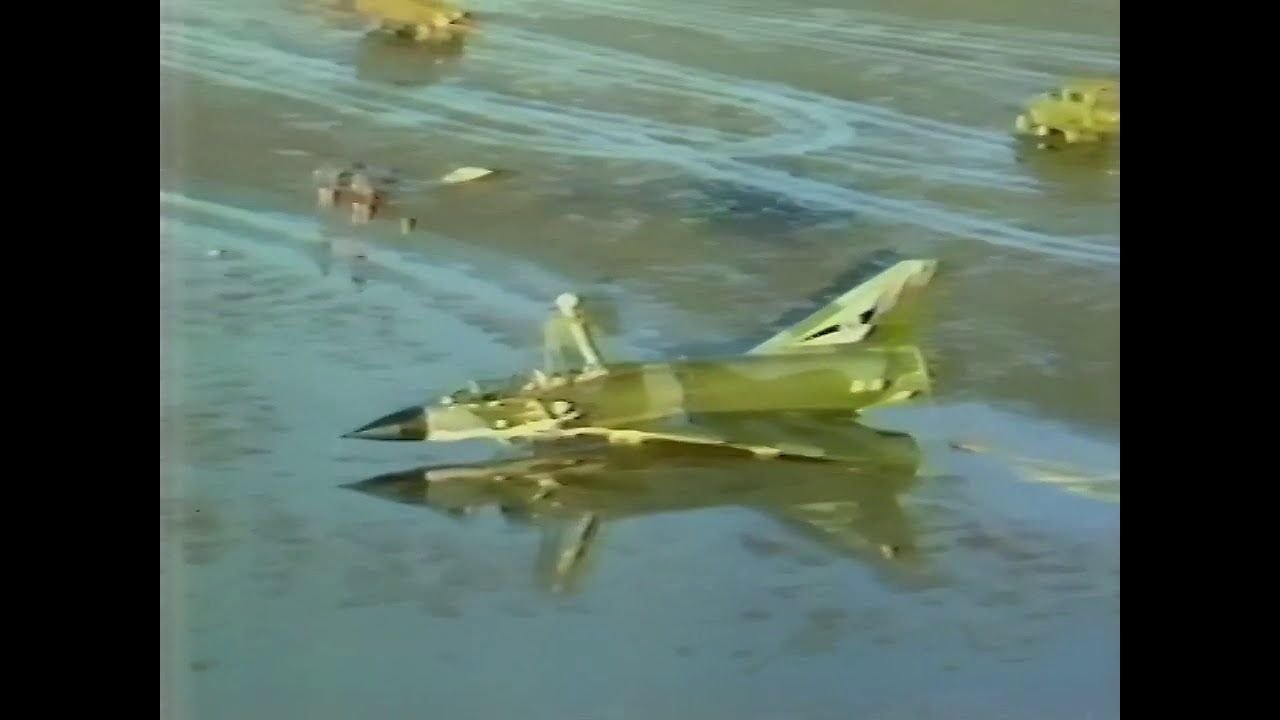
Chinook lift at Darwin for Tindal, flight took two hours
Joined: May 2002
Aviation Qualifications: ATP+Mil
Posts: 18,633
Likes: 1,072
From: Downeast
Megan,
A Model Chinooks have a "sharp" tail fin.....B Model and forward have the "Square" tail fin.
Unless my old eyes are lying to me the Chinook in the video appears to be not an A Model....for what it is worth in the 75 Squadron video.
The reason for the design change was by squaring the tail fin it provided a real improvement in yaw stability....something akin to adding over thirty feet of Fin to achieve the same improvement.
It was among the best improvements in handling that has been made. The A Model was very lively in yaw.....with two Rotor Heads arguing about which was going to lead in the dance.
I believe the RAAF started with C models and then progressed to D's and F's.
I would give three feet of my Trigger Finger to have flown the MH version of the Chinook with all of its capability with the F Model probably. being a real Horse to ride as. well.
From Wiki....
A Model Chinooks have a "sharp" tail fin.....B Model and forward have the "Square" tail fin.
Unless my old eyes are lying to me the Chinook in the video appears to be not an A Model....for what it is worth in the 75 Squadron video.
The reason for the design change was by squaring the tail fin it provided a real improvement in yaw stability....something akin to adding over thirty feet of Fin to achieve the same improvement.
It was among the best improvements in handling that has been made. The A Model was very lively in yaw.....with two Rotor Heads arguing about which was going to lead in the dance.
I believe the RAAF started with C models and then progressed to D's and F's.
I would give three feet of my Trigger Finger to have flown the MH version of the Chinook with all of its capability with the F Model probably. being a real Horse to ride as. well.
From Wiki....
The Australian Defence Force has operated Boeing CH-47 Chinook heavy-lift helicopters for most of the period since 1974. Thirty four of the type have entered Australian service, comprising twelve CH-47C variants, eight CH-47Ds and fourteen CH-47Fs. The helicopters have been operated by both the Royal Australian Air Force (RAAF) and Australian Army.
An initial order of eight Chinooks for the RAAF was placed in 1962, but soon cancelled in favour of more urgent priorities. The Australian military still required helicopters of this type, and twelve CH-47C Chinooks were ordered in 1970. The CH-47s entered service with the RAAF in December 1974. The eleven surviving Chinooks were retired in 1989 as a cost-saving measure, but it was found that the Australian Defence Force's other helicopters could not replace their capabilities. As a result, four of the CH-47Cs were upgraded to CH-47D standard, and returned to service in 1995 with the Australian Army. The Army acquired two more CH-47Ds in 2000 and another pair in 2012. The CH-47Ds were replaced with seven new CH-47F aircraft during 2015, and another three were delivered in 2016. A further four CH-47Fs were ordered in 2021, with two being delivered that year and two others arriving in 2022.
An initial order of eight Chinooks for the RAAF was placed in 1962, but soon cancelled in favour of more urgent priorities. The Australian military still required helicopters of this type, and twelve CH-47C Chinooks were ordered in 1970. The CH-47s entered service with the RAAF in December 1974. The eleven surviving Chinooks were retired in 1989 as a cost-saving measure, but it was found that the Australian Defence Force's other helicopters could not replace their capabilities. As a result, four of the CH-47Cs were upgraded to CH-47D standard, and returned to service in 1995 with the Australian Army. The Army acquired two more CH-47Ds in 2000 and another pair in 2012. The CH-47Ds were replaced with seven new CH-47F aircraft during 2015, and another three were delivered in 2016. A further four CH-47Fs were ordered in 2021, with two being delivered that year and two others arriving in 2022.
Joined: Oct 1999
Aviation Qualifications: ATPL
Posts: 7,371
Likes: 926
From: Den Haag
The reason for the design change was by squaring the tail fin it provided a real improvement in yaw stability....something akin to adding over thirty feet of Fin to achieve the same improvement.

Joined: Mar 2005
Aviation Qualifications: Military
Posts: 6,562
Likes: 952
From: Aus
Unless my old eyes are lying to me the Chinook in the video appears to be not an A Model
