


Propeller Blade Question?

Thread Starter

Joined: Dec 2005
Aviation Qualifications: ATPL
Posts: 1,059
Likes: 119
From: Southern Shores of Old Lusitania Kingdom
 Propeller Blade Question?
Hi dear Rotor colleagues.
Cant find it this was questioned here before. Today i took some phone-pictures of some Kamov blades and noticed those some "lil'extras" on the blades...googling it (images) i've noticed that also some other helis uses this same "artifact", but without success about the definition or purpose.
Could someone here kindly explain me whats the purpose of this please(or even if it has a specific name/function)?
Tks in advance...Cheers , JF
(Please acept my apologies if you consider this a stupid question but im being honest)

Cant find it this was questioned here before. Today i took some phone-pictures of some Kamov blades and noticed those some "lil'extras" on the blades...googling it (images) i've noticed that also some other helis uses this same "artifact", but without success about the definition or purpose.
Could someone here kindly explain me whats the purpose of this please(or even if it has a specific name/function)?
Tks in advance...Cheers , JF
(Please acept my apologies if you consider this a stupid question but im being honest)
Last edited by JanetFlight; 14th February 2015 at 04:17.


Joined: Apr 2006
Posts: 448
Likes: 4
From: In the mountains


Joined: Nov 2000
Posts: 4,330
Likes: 74
From: White Waltham, Prestwick & Calgary
Those are trim tabs. They are used to keep the blades in the same tip path plane by turning the blade into a reflexed aerofoil (where the mean camber crosses the chord line) to counteract twisting moments as the blade changes ange of attack. In other words they can introduce a nose down moment to oppose a nose up one and vice versa. The BERP blade does the same thing aerodynamically. The idea is to preserve the blade's integrity.
If that was a Kaman it would be part of the flying controls.
Phil
If that was a Kaman it would be part of the flying controls.
Phil
Joined: Nov 2003
Posts: 567
Likes: 4
From: Hereford UK
They are very simple blade balancing tabs adjusted (bent) by technicians after blade tracking runs, basically to get each blade to follow the path of previous one and reduce vibration to acceptable levels. Different helicopters use different methods, weights at the blade tips being another.
Hope that helps. I'm sure a technician will be along shortly to give you the mathematics of it. Somebody will explain the theory of the Chadwick Helmuth Machine which was replaced by another very expensive Rotortune box of wiggly amps telling them what to do - but after hundreds of tracking runs over many years that's the best you get from me.
Hope that helps. I'm sure a technician will be along shortly to give you the mathematics of it. Somebody will explain the theory of the Chadwick Helmuth Machine which was replaced by another very expensive Rotortune box of wiggly amps telling them what to do - but after hundreds of tracking runs over many years that's the best you get from me.
Last edited by MOSTAFA; 14th February 2015 at 04:57. Reason: Beat me to it Phil
Joined: Jan 2001
Posts: 3,008
Likes: 62
From: North Queensland, Australia
If you're undertaking serious helicopter study, then you should probably also be aware from the word go that they're rotor blades rather than propeller blades
A propeller on an aeroplane provides thrust but no significant lift, whereas on the helicopter the rotor provides both the lift and thrust, a very different kettle of fish.
A propeller on an aeroplane provides thrust but no significant lift, whereas on the helicopter the rotor provides both the lift and thrust, a very different kettle of fish.
Joined: Jun 2012
Posts: 25
Likes: 0
From: Denmark / Norway
If you're undertaking serious helicopter study, then you should probably also be aware from the word go that they're rotor blades rather than propeller blades
Thread Starter
Joined: Dec 2005
Aviation Qualifications: ATPL
Posts: 1,059
Likes: 119
From: Southern Shores of Old Lusitania Kingdom
Many thanks everybody for your kind answers and precious help
"Arm out the window", my apologies then with the wrong term...it wasnt on purpose
"Arm out the window", my apologies then with the wrong term...it wasnt on purpose
Joined: Jan 2001
Posts: 3,008
Likes: 62
From: North Queensland, Australia
FYR, I hope you realise from the smiley thumbs up icon next to my comment that it was a gentle and friendly dig!
Perhaps you shouldn't go directly to being something that's usually in close proximity to a dick!
PS JanetFlight, no problems at all - just letting you know what the right term is, no malicious intent.
Perhaps you shouldn't go directly to being something that's usually in close proximity to a dick!
PS JanetFlight, no problems at all - just letting you know what the right term is, no malicious intent.


Joined: Sep 2002
Aviation Qualifications: CPL
Posts: 4,721
Likes: 636
From: Great South East, tired and retired
Come on, Arm, they taught us that in 2nd year at the Academy, "Dining in Night Smart-ass Retorts".
Actually, it was Frank ummmm ahhhh Cain who gave the lecture, and I slept through it, so I can only give a good come-back by email, not face-to-face.
Actually, it was Frank ummmm ahhhh Cain who gave the lecture, and I slept through it, so I can only give a good come-back by email, not face-to-face.
Joined: Apr 2003
Posts: 3,012
Likes: 1
From: USA
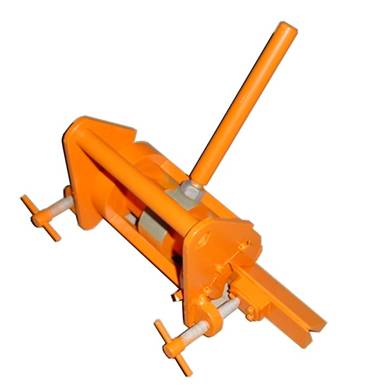
The tabs are bent in a maintenance operation, using a tool that fits to the blade and that allows precise measurement of the tab relative to the blade's chord axis. The tool usually used a dial indicator that can read .001" differences. Maintenance instructions describe how to bend them and when to do so, based on the vibration readings from the appropriate vibration measurement gear.
Interestingly, the blade flies counter to what intuition would have you believe. A down tab movement would seem to be like an elevator that would make the blade rise, but in fact, the blade is a noodle, and a down tab makes the blade twist downward, so it flies downward.
For an eye-opening video of blade motions that support the noodle theory, search on youtube for "rotor.avi tom seagrave" to see an S-56 rotor blade in flight.
Interestingly, the blade flies counter to what intuition would have you believe. A down tab movement would seem to be like an elevator that would make the blade rise, but in fact, the blade is a noodle, and a down tab makes the blade twist downward, so it flies downward.
For an eye-opening video of blade motions that support the noodle theory, search on youtube for "rotor.avi tom seagrave" to see an S-56 rotor blade in flight.

Joined: Apr 2003
Posts: 3,012
Likes: 1
From: USA
whoknows-
Yes! That is the tab bender, designed to smoothly bend the entire tab. Not shown is the toool that measures how much bend was put on the tab. This is a frame that conforms to the blade and can always get back to the chord line axis, so its dial indicator can repeatedly measure the deflection of the tab relative to the rest of the blade. Here is one example:

Yes! That is the tab bender, designed to smoothly bend the entire tab. Not shown is the toool that measures how much bend was put on the tab. This is a frame that conforms to the blade and can always get back to the chord line axis, so its dial indicator can repeatedly measure the deflection of the tab relative to the rest of the blade. Here is one example:
Joined: Aug 2007
Posts: 278
Likes: 0
From: USA
What's also not shown is the old flag method to check blade track after the tab bending procedures.
Here's a older PPrune thread with a pic: http://www.pprune.org/rotorheads/382...ce-photos.html
Here's a older PPrune thread with a pic: http://www.pprune.org/rotorheads/382...ce-photos.html
Joined: Jan 2001
Posts: 3,008
Likes: 62
From: North Queensland, Australia
Not to mention stick track for the tail rotor - a bit of dowel with an ink-coated rubber (eraser for those of us from the northern hemisphere) attached, which would be gingerly pushed in from the 'safe' side of the tail boom (resting on the stinger pool cue style) until it hit one or the other blade ...
 LOL. Whoever thought that adjustable pitch-links on a T/R was a good idea?
  - VFR
- VFR


