


The Rotary Nostalgia Thread

Joined: Jul 2010
Posts: 290
Likes: 0
From: In the shadows
Back in 1978 I took the tourist trip in a 206 from Fisherman's Wharf - Pier 43 if I remember correctly. I think the operator may have been Commodore Helicopters as at that time the Commodores had a hit "Three Times a Lady" and as we queued I seem to remember mentioning to my then girlfriend the coincidence of names. May well be wrong though, it's a long time ago!


Joined: Aug 2001
Posts: 1,308
Likes: 0
From: Cornwall
3-D
Yes - I am going to have a look in my RN Logbook when I get home next and see if that was an old 824, 706 or 737 machine or possibly one of those made in early 1970 that I ferried back to CU from Judwin..... 42 years ago 
G
G

Joined: Aug 1999
Aviation Qualifications: ATP+Mil
Posts: 4,411
Likes: 83
From: Gold Coast, Australia


Larger image for those who want


Thread Starter
Joined: Jun 2010
Posts: 2,422
Likes: 3
From: Milano, Italia
Bell 206 Chin Perspex
In the 1980's Bell/Agusta modified the design of the 206's chin perspex resulting in a new 'convexed' shaping. Intriguingly (well for me at least) was the fact that the port-side piece displayed more pronounced 'blistering' than the starboard (pilot's) side. Any illumination in response to this prime piece of trivia?
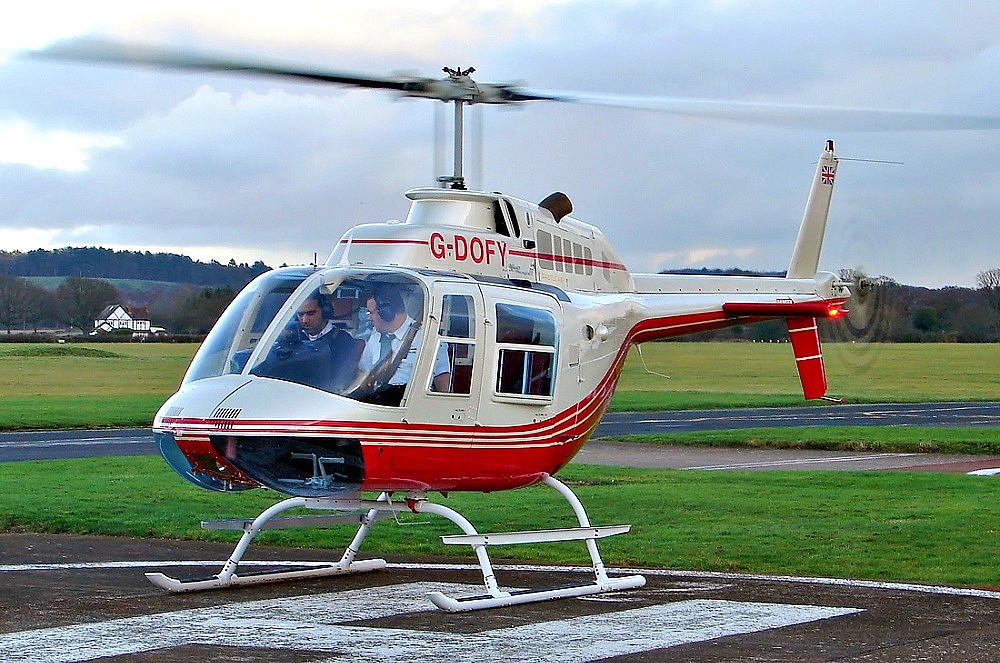
Castle Air's Bell 206B JetRanger III G-DOFY at Wolverhampton's Ha'penny Green helipad on 10th January 2012 displaying the 206's accentuated convex shaping to the port-side chin perspex (Photo: Robert Beaver)
In the 1980's Bell/Agusta modified the design of the 206's chin perspex resulting in a new 'convexed' shaping. Intriguingly (well for me at least) was the fact that the port-side piece displayed more pronounced 'blistering' than the starboard (pilot's) side. Any illumination in response to this prime piece of trivia?
Castle Air's Bell 206B JetRanger III G-DOFY at Wolverhampton's Ha'penny Green helipad on 10th January 2012 displaying the 206's accentuated convex shaping to the port-side chin perspex (Photo: Robert Beaver)
Joined: Aug 1999
Aviation Qualifications: ATP+Mil
Posts: 4,411
Likes: 83
From: Gold Coast, Australia
In the 1980's Bell/Agusta modified the design of the 206's chin perspex resulting in a new 'convexed' shaping. Intriguingly (well for me at least) was the fact that the port-side piece displayed more pronounced 'blistering' than the starboard (pilot's) side. Any illumination in response to this prime piece of trivia?

Joined: Aug 1999
Aviation Qualifications: ATP+Mil
Posts: 4,411
Likes: 83
From: Gold Coast, Australia
Joined: Sep 2008
Posts: 507
Likes: 0
From: Cornwall UK
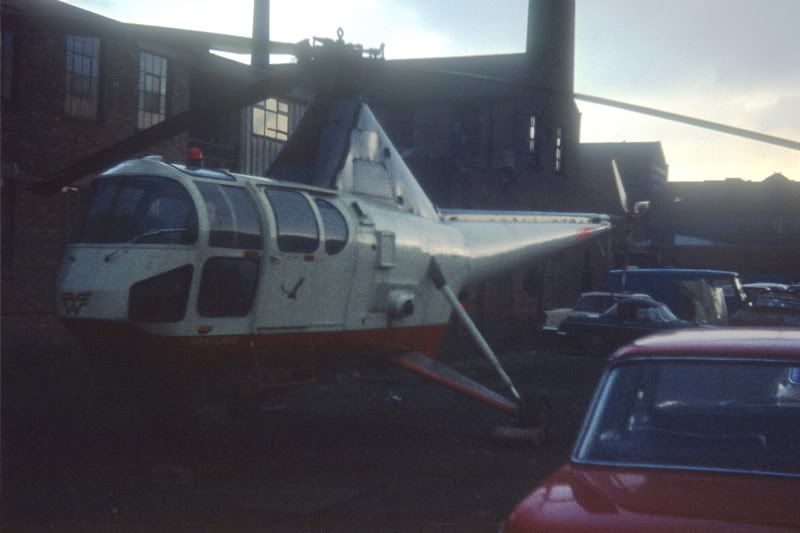
This, about a derelict (?) Westland Dragonfly has popped up. I thought it looked interesting
EDIT by A30yoyo....this is what I think I originally posted
Ancoats Dragonfly - Key Publishing Ltd Aviation Forums
and it was the Dragonfly in an Ancoats, Manchester yard with an unusual nose in post#9 which caught my eye
EDIT by A30yoyo....this is what I think I originally posted
Ancoats Dragonfly - Key Publishing Ltd Aviation Forums
and it was the Dragonfly in an Ancoats, Manchester yard with an unusual nose in post#9 which caught my eye
Last edited by A30yoyo; 3rd March 2012 at 13:45.
Thread Starter
Joined: Jun 2010
Posts: 2,422
Likes: 3
From: Milano, Italia
GJ710
The Westland Dragonfly was the first British-built helicopter to serve in the Fleet Air Arm and was manufactured under licence from Sikorsky. The first Westland Dragonfly entered service in 1950 and the last was decommissioned in 1967. The first all-helicopter squadron, 705 Squadron, flew Dragonflies for airborne search and rescue work.
In 1951, 705 Squadron's Dragonflies flew for the first time off smaller naval ships, now a routine practice. Dragonflies were used aboard aircraft carriers for ship-to-shore and 'plane guard' duties.
GJ710 (shown in Yoyo's post) first flew in November 1952 and joined 705 Squadron at Gosport in March 1953. Thereafter she was assigned to search and rescue duties serving at RNAS Yeovil and RNAS Lossiemouth prior to her decommissioning in 1965.
She was restored at the RNAY Fleetlands at Gosport to her 1953 appearance and is now on display at Chatham Historic Dockyard.
.
In 1951, 705 Squadron's Dragonflies flew for the first time off smaller naval ships, now a routine practice. Dragonflies were used aboard aircraft carriers for ship-to-shore and 'plane guard' duties.
GJ710 (shown in Yoyo's post) first flew in November 1952 and joined 705 Squadron at Gosport in March 1953. Thereafter she was assigned to search and rescue duties serving at RNAS Yeovil and RNAS Lossiemouth prior to her decommissioning in 1965.
She was restored at the RNAY Fleetlands at Gosport to her 1953 appearance and is now on display at Chatham Historic Dockyard.
.
Joined: Jul 2010
Posts: 290
Likes: 0
From: In the shadows
The large registration of the Dragonfly above is a bit confusing in modern day terms - the airframe registration is not GJ710 but WG751 and the latter is in very small typeface further aft towards the roundel. GJ refers to the station code of Gosport and 710 the side number allocated within 705 Squadron. The size and style GJ710 is however perfectly correct for the 1953 era.
Had my first helicopter flight in a RN Dragonfly....
Had my first helicopter flight in a RN Dragonfly....
Joined: Sep 2008
Posts: 507
Likes: 0
From: Cornwall UK
CharlieOneSix....I'm confused ,too, because I didn't post the silver Dragonfly pic!....anyhow it was the one in cream and red with the odd nose in post#9 I was intrigued by
Last edited by A30yoyo; 5th March 2012 at 09:41.

Joined: Mar 2007
Aviation Qualifications: ATPL
Posts: 659
Likes: 13
From: Under my coconut tree
My dad was airlifted from the wing of his ditched Seahawk off the side of HMS Eagle back in the mid fifties... I'm sure that dragonfly was a very welcome sight indeed
Thread Starter
Joined: Jun 2010
Posts: 2,422
Likes: 3
From: Milano, Italia
Peter Clarke, whose photo briefly appeared and then disappeared, on one of Yoyo's posts has very kindly contributed to the Nostalgia Thread two unpublished versions of GJ710 which he took at Chatham. Peter, our great thanks:

Westland Dragonfly HR3 WG751 wearing the station code and identifier GJ710 as seen at Chatham Historic Dockyard in September 2010 (Photo: Peter Clarke)

WG751 front right view (Photo: Peter Clarke)
I have another Dragonfly, WG664, taken while in service and visiting Chatham in 1957. The photo was taken by another 'Clarke' and I am just awaiting the photographer's permission to post.
And .. two snaps of two seperate Dragonflies from the 50's wearing the same silver scheme. Sadly .. no details.
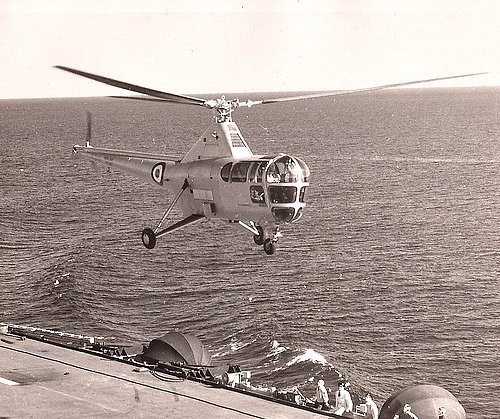
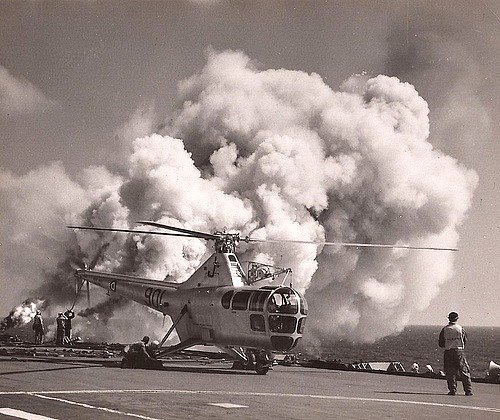
This craft sporting the numbers 901 and wearing the letter 'J'


