


Anyone flown (or fly) the Huey?


Joined: Nov 2002
Posts: 6
Likes: 0
From: Cairns
It a training issue so that when you revert from manual to auto at the end of the exercise (either airborne or on the ground) and you wind the throttle up again you are less likely to have an overspeed when you get to the full throttle stop.

Joined: Jan 2001
Posts: 3,008
Likes: 62
From: North Queensland, Australia
Not sure if that sounds right, as the likelihood of overspeed shouldn't be any greater than when winding up for a power terminated auto, should it?
It's been a while, but I remember it being about stopping the bleed band from opening and closing, wish I could remember why now though!
A vague idea about the bleed band being air pressure actuated but controlled by different fuel pressures in the FCU keeps rearing its head in my mind, so maybe the position of the N2 governor lever has some effect on it.
Anyhow, enough waffle, and happy Hueying to all.
It's been a while, but I remember it being about stopping the bleed band from opening and closing, wish I could remember why now though!
A vague idea about the bleed band being air pressure actuated but controlled by different fuel pressures in the FCU keeps rearing its head in my mind, so maybe the position of the N2 governor lever has some effect on it.
Anyhow, enough waffle, and happy Hueying to all.

Joined: Jul 2001
Posts: 1,084
Likes: 1
From: the cockpit
And the prize goes to AOTW.
From my memory (which is generally suspect!!):
There is a very in depth explanation of the reason you do this, all related to 3 D cams and what not. To simplify the explanation, the FCU governor has some "computer" functions, which are nearly all hydro mechanical. When in the governed mode, you will not feel the bleed band open and close, but when selecting Emergency Governor, you have deselected the "computer" functions yet the bleed band remains operating. Thus when you get to higher power settings during landing, the closing and opening of the bleed band is not damped out by the computing functions and is felt as engine/RRPM surges that more often than not cause pilot to over control during the landing phase of emergency governor, though not really unsafe for the average pilot. Another reason to perform a shallow and slow running landing.
By beeping the N2 governor to it's lowest limits, you are mechanically tricking the bleed band into inaction by moving the N2 governor actuator far enough that through the magic of smoke, mirrors, and 3D cams, the bleed band actuator is not stimulated by the higher power settings. Thus termination to the hover can be made without engine surge in Emergency Governor.
I will seek a better explanation in the next week or so if you are still intrested.
From my memory (which is generally suspect!!):
There is a very in depth explanation of the reason you do this, all related to 3 D cams and what not. To simplify the explanation, the FCU governor has some "computer" functions, which are nearly all hydro mechanical. When in the governed mode, you will not feel the bleed band open and close, but when selecting Emergency Governor, you have deselected the "computer" functions yet the bleed band remains operating. Thus when you get to higher power settings during landing, the closing and opening of the bleed band is not damped out by the computing functions and is felt as engine/RRPM surges that more often than not cause pilot to over control during the landing phase of emergency governor, though not really unsafe for the average pilot. Another reason to perform a shallow and slow running landing.
By beeping the N2 governor to it's lowest limits, you are mechanically tricking the bleed band into inaction by moving the N2 governor actuator far enough that through the magic of smoke, mirrors, and 3D cams, the bleed band actuator is not stimulated by the higher power settings. Thus termination to the hover can be made without engine surge in Emergency Governor.
I will seek a better explanation in the next week or so if you are still intrested.
Joined: Nov 2005
Posts: 58
Likes: 0
From: New South Wales
Helmet fire, thats one of the better explanations and I'm still interested in a better explanation if possible. From the schematics I have, once emergency fuel is selected, the main metering valve is bypassed as you know and the emergency metering valve controls the fuel metering directly from the throttle. The reason I'm having trouble with it is that the main metering valve via the internal rock shaft with T1 and N1 controls the bleed normally. When emergency fuel is selected, the main metering valve no longer has an input into the bleed band, and the movement of the governor arm by beeping down has no effect what so ever on the FCU. By selecting emergency fuel, the N2 governor is removed from everything on the FCU because it inputs directly into the main metering valve, hence the question, why do we need to beep down after emergency fuel is selected? I'd be interested in anything you may have. This all stems from an Army Huey pilot asking me why we do it and I couldn't give him a definate answer.
Joined: Jan 2001
Posts: 3,008
Likes: 62
From: North Queensland, Australia
Jessie, haven't got the schematic any more so I'm just talking off the top of my head, but:
Selecting emergency fuel bypasses the main metering valve and allows the throttle to directly control how much fuel gets to the engine for combustion, but does it also isolate the bleed band control system? That would be the key. We need to know what controls the bleed band.
Even though N1 speed is now being controlled by the throttle, possibly the fuel pressure in the FCU (whatever it's doing, the engine doesn't really care about the automatic side now) is still signalling the bleed band to operate, and the position of the N2 lever may have some effect on that.
I'd also be interested to hear any further info, for old time's sake!
Selecting emergency fuel bypasses the main metering valve and allows the throttle to directly control how much fuel gets to the engine for combustion, but does it also isolate the bleed band control system? That would be the key. We need to know what controls the bleed band.
Even though N1 speed is now being controlled by the throttle, possibly the fuel pressure in the FCU (whatever it's doing, the engine doesn't really care about the automatic side now) is still signalling the bleed band to operate, and the position of the N2 lever may have some effect on that.
I'd also be interested to hear any further info, for old time's sake!
Joined: Nov 2005
Posts: 58
Likes: 0
From: New South Wales
AOTW, looking at the schematic, T1 and N1 will still control the opening and closing, but I think the main metering valve helps open it because of rapid acceleration (causes an increased fuel pressure). So it will still open and close as per normal but not open during rapid acceleration. I think helmet fire is right, and what is actually happening is that when emergency fuel is selected, the reference point that the bleed band opens an closes changes and the mechanical linkage from the N2 govenor (via the rocker shaft) re-references it back- I think!! I know it pretty hard to visualise without the schematic I'm using (I'd like to be able to scan it but its a hugh poster and I haven't got a scanner that big, plus all the detail would be lost) but i'll get there eventually. Thanks to everyone so far for the help. As a huey tech intructor, I'm embarressed that I don't know!

Guest
Posts: n/a
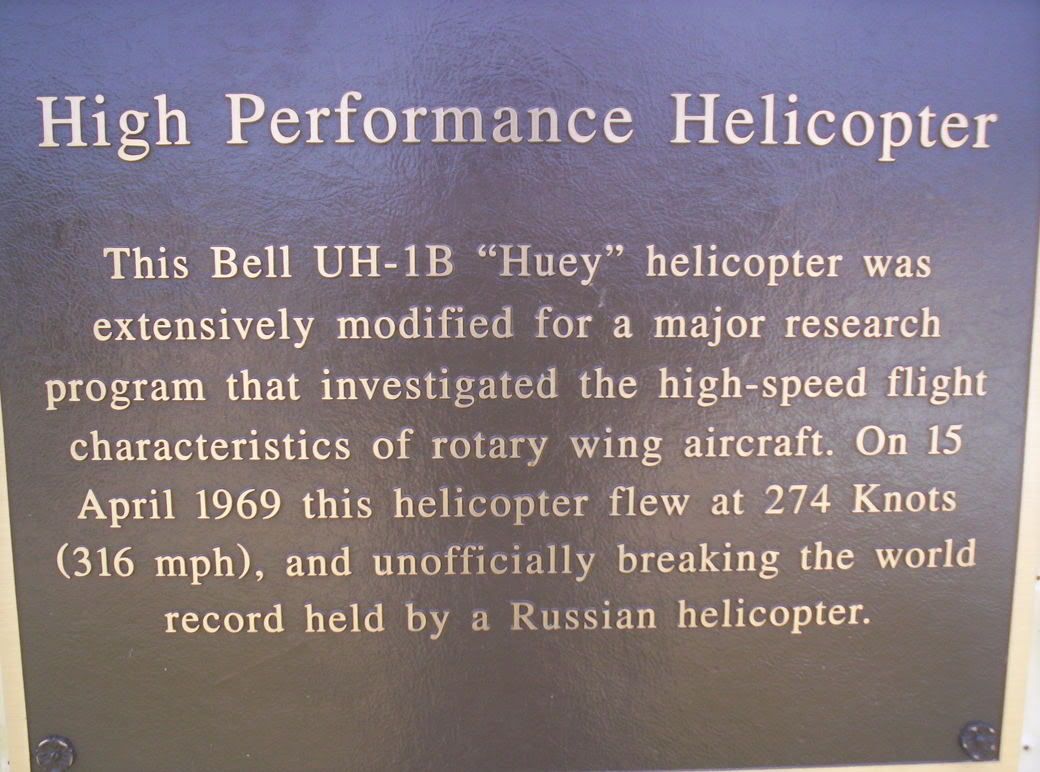
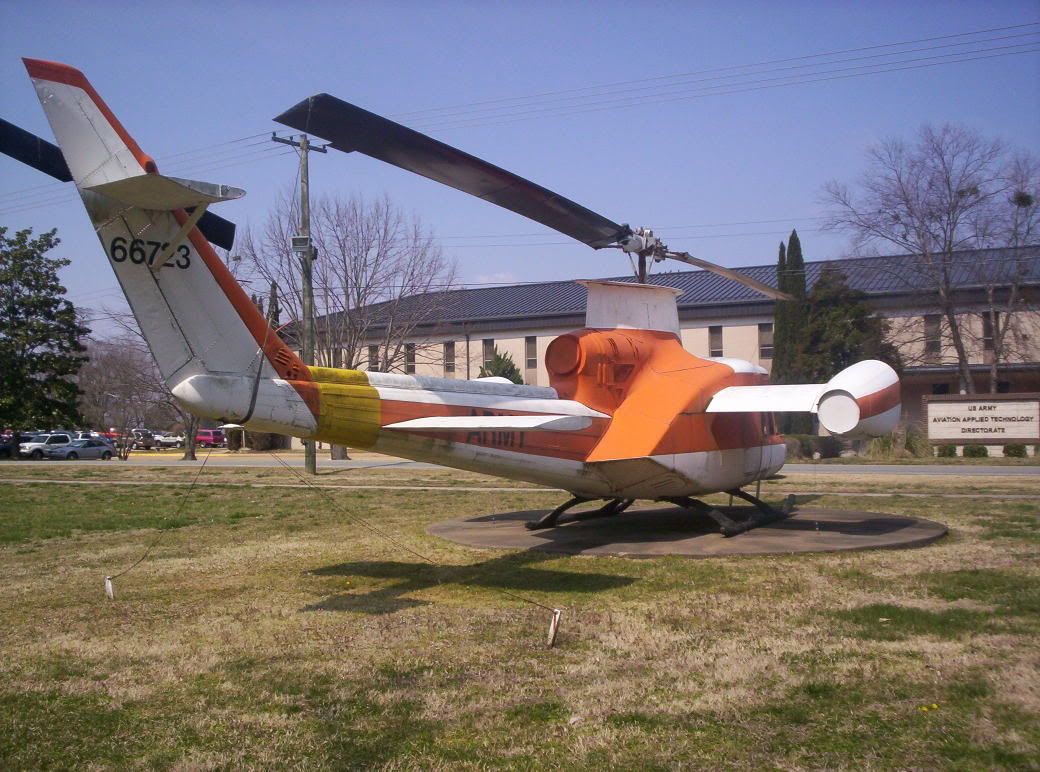
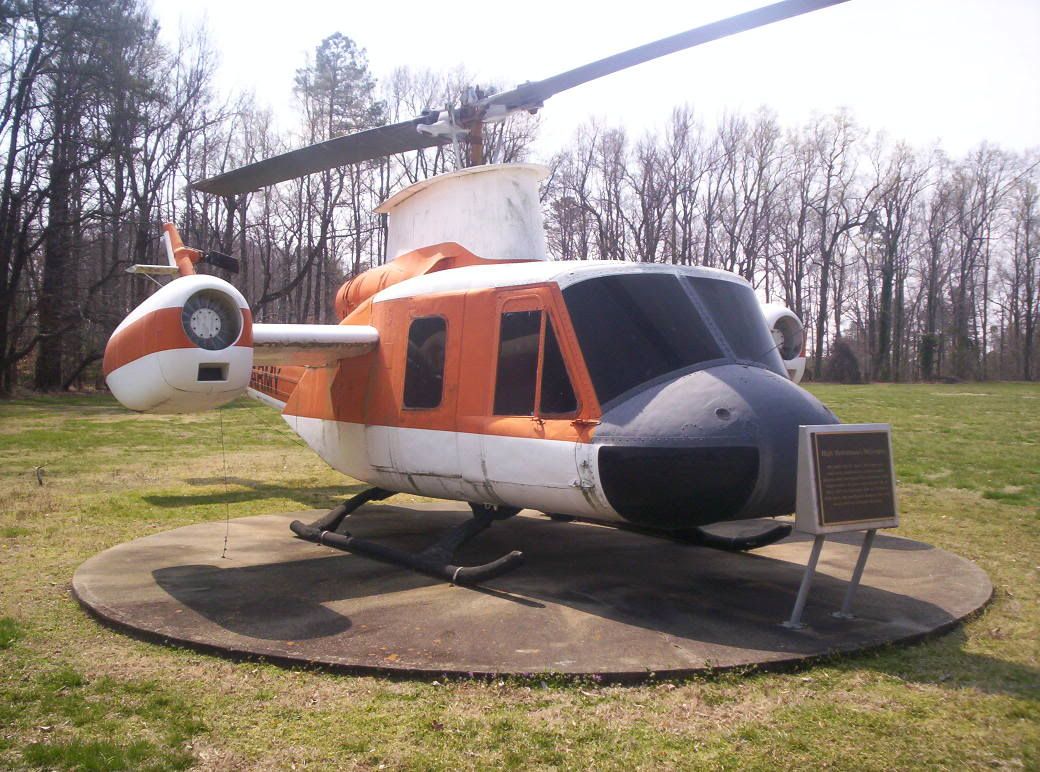
Well, it's a helicopter Jim, but not as we know it ! Maybe some of the aerodynamicists out there would care to speculate how much lift is coming from those winglets and body shape at 247kts ? This one seems to reverse the principle that the only thing flying on a heli is the rotor, with the rest just hanging on.
Joined: Jul 2005
Posts: 413
Likes: 0
From: leicester
Im sure you would get some severe drag form that main rotor mast shroud... In the cruise it would sit nose down and be like a bucket on top! - Looks like an engine exhaust off the titanic!
Ps not convinced by the "cool" darkened windows - Not leagal
Pps Landing near tose power lines is real bad airmanship!
MADY
Ps not convinced by the "cool" darkened windows - Not leagal
Pps Landing near tose power lines is real bad airmanship!
MADY

Joined: Feb 2006
Posts: 1,067
Likes: 40
From: On the big blue planet
Why a joke???
Remember BO 105 HGH ( with wings ), which reached 218 kts in 1975 , also Sikorsky made Highspeed trials with additional Jetties or Propellers.
Remember BO 105 HGH ( with wings ), which reached 218 kts in 1975 , also Sikorsky made Highspeed trials with additional Jetties or Propellers.
Last edited by skadi; 9th April 2006 at 11:04.


Joined: Jan 2006
Posts: 148
Likes: 0
From: europe
"One of the YUH-1Bs was used as an aerodynamic test bed as the "Model 533" and modified to a number of configurations as part of a US Army program.
The first series of modifications, flown in 1962, features aerodynamic fairings, a new tail surface to offload the tail rotor, and a tilting rotor mast inside a large fairing structure.
The Model 533 was then fitted with a swept wing, two Continental J69-T-29 turbojets with 770 kilograms (1,700 pounds) thrust each, and a modified rotor blade with swept tips. This compound rotorcraft achieved a speed record of 370 KPH (236 MPH or 200 knots) in level flight on 15 October 1964, and on 6 April 1965 topped that record with a speed of 402 KPH (250 MPH) in level flight.
The Model 533 was finally fitted with two wingtip-mounted Pratt & Whitney JT12A-3 turbojets with 1,500 kilogram (3,300 pounds) thrust each. In this configuration, it achieved speeds of over 480 KPH (300 MPH)."
Link
The first series of modifications, flown in 1962, features aerodynamic fairings, a new tail surface to offload the tail rotor, and a tilting rotor mast inside a large fairing structure.
The Model 533 was then fitted with a swept wing, two Continental J69-T-29 turbojets with 770 kilograms (1,700 pounds) thrust each, and a modified rotor blade with swept tips. This compound rotorcraft achieved a speed record of 370 KPH (236 MPH or 200 knots) in level flight on 15 October 1964, and on 6 April 1965 topped that record with a speed of 402 KPH (250 MPH) in level flight.
The Model 533 was finally fitted with two wingtip-mounted Pratt & Whitney JT12A-3 turbojets with 1,500 kilogram (3,300 pounds) thrust each. In this configuration, it achieved speeds of over 480 KPH (300 MPH)."
Link
Joined: Mar 2003
Posts: 813
Likes: 2
From: the hills of halton
The speed is impressive , but what was the range ? , I am sure with 3 engines sucking fuel it would not "fly" for much more than 20 minutes .I remember going to the Ulster avaition museum some years ago and seeing the Shorts SC1 VTOL concept plane , that had seperate engines for lift and thrust , the range was 150 Miles .
Joined: Nov 2003
Posts: 1,079
Likes: 5
From: Abu Dhabi
Originally Posted by skadi
Why a joke???
Remember BO 105 HGH ( with wings ), which reached 218 kts in 1975 , also Sikorsky made Highspeed trials with additional Jetties or Propellers.
Remember BO 105 HGH ( with wings ), which reached 218 kts in 1975 , also Sikorsky made Highspeed trials with additional Jetties or Propellers.

humm look at the hub


Joined: May 2002
Aviation Qualifications: ATP+Mil
Posts: 18,633
Likes: 1,072
From: Downeast
Just think of the pilots that flew the thing! My hat is off to them...that was "smoking" for a B Model Huey! Just think about the plastic windscreens for a start....