


What Would You Do ?

Thread Starter


Joined: Jan 2004
Posts: 5,658
Likes: 501
From: Canada
What Would You Do ?
With not much flying going on I have been giving some of my X students scenario’s to keep the grey matter exercised.
The latest is the following scenario which happened to me exactly as described
I was flying along at 3000 ft AGL in cruise in a C 172. Suddenly with no warning the engine started running very roughly with the engine RPM varying up and down by 500 RPM and a sufficient loss of power it was doubtful level flight could be maintained. T & P were indicated in the normal range.
What would you do?
The latest is the following scenario which happened to me exactly as described
I was flying along at 3000 ft AGL in cruise in a C 172. Suddenly with no warning the engine started running very roughly with the engine RPM varying up and down by 500 RPM and a sufficient loss of power it was doubtful level flight could be maintained. T & P were indicated in the normal range.
What would you do?


Joined: Apr 2008
Posts: 90
Likes: 3
From: Edinburgh
Try mixture control,carb heat on,wait effect,if none select other fuel tank,if no change try each mag if no change trim best glide,check for diversion in gliding range,if none look for best FL field,squawk distress,inform ATC, brief SLF,carry out FL procedure.
Amend DNR statement in diary
Amend DNR statement in diary
Last edited by atceng; 1st July 2020 at 23:31. Reason: addition
Joined: Apr 2010
Posts: 98
Likes: 1
From: Kansas
That sounds very similar to a stuck valve i had in a Cessna 172. Best RPM i could achieve was about 1600-1800RPM.I immediately turned toward forced landing airfield while bleeding energy to best glide speed. I then ran the steps that the previous poster mentions(Carb Heat, Mags, try different mixtures, try different throttle settings, Fuel tanks, primer, etc...) i realized based on the heavy vibrations that i either had a valve failure or i lost a prop tip. made a relatively uneventful partial power landing.
Joined: Mar 2003
Posts: 187
Likes: 31
From: Brisbane
That sounds very similar to a stuck valve i had in a Cessna 172. Best RPM i could achieve was about 1600-1800RPM.I immediately turned toward forced landing airfield while bleeding energy to best glide speed. I then ran the steps that the previous poster mentions(Carb Heat, Mags, try different mixtures, try different throttle settings, Fuel tanks, primer, etc...) i realized based on the heavy vibrations that i either had a valve failure or i lost a prop tip. made a relatively uneventful partial power landing.
Thread Starter
Joined: Jan 2004
Posts: 5,658
Likes: 501
From: Canada
Manwell
In case of the Tomahawk failed valve did you find the engine ran quite rough right after start up but smoothed out as the engine warmed up ?
i ask because an engineer diagnosed a failing valve in a flight school airplane I was flying. In that case the cylinder was repaired before the valve failed but in his opinion he thought valve failure was imminent. After that I always look out for this symptom particularly in the small Lycomings which are.known for exhaust valve guide problems
In case of the Tomahawk failed valve did you find the engine ran quite rough right after start up but smoothed out as the engine warmed up ?
i ask because an engineer diagnosed a failing valve in a flight school airplane I was flying. In that case the cylinder was repaired before the valve failed but in his opinion he thought valve failure was imminent. After that I always look out for this symptom particularly in the small Lycomings which are.known for exhaust valve guide problems
Joined: Mar 2003
Posts: 187
Likes: 31
From: Brisbane
Manwell
In case of the Tomahawk failed valve did you find the engine ran quite rough right after start up but smoothed out as the engine warmed up ?
i ask because an engineer diagnosed a failing valve in a flight school airplane I was flying. In that case the cylinder was repaired before the valve failed but in his opinion he thought valve failure was imminent. After that I always look out for this symptom particularly in the small Lycomings which are.known for exhaust valve guide problems
In case of the Tomahawk failed valve did you find the engine ran quite rough right after start up but smoothed out as the engine warmed up ?
i ask because an engineer diagnosed a failing valve in a flight school airplane I was flying. In that case the cylinder was repaired before the valve failed but in his opinion he thought valve failure was imminent. After that I always look out for this symptom particularly in the small Lycomings which are.known for exhaust valve guide problems
Joined: Jul 2010
Posts: 2,807
Likes: 10
From: Ansião (PT)
It is hard to describe just how bad the vibrations were, but my main concern would be the engine breaking loose from its mount, or the prop from the engine; which is a sure recipe for disaster. I would not be bent on getting the engine to run correctly, but rather run it at idle or even switch it off; or use the engine only inasmuch as needed to reach a suitable field. Then again, I fly a fairly light machine (450 kg ultralight) and have been taught to consider an outlanding as a non-event, only slightly more dangerous than any other landing. If I flew a PC-12 (just to name an example) things would be quite different.
Joined: Mar 2014
Posts: 1,270
Likes: 0
From: The World
With not much flying going on I have been giving some of my X students scenario’s to keep the grey matter exercised.
The latest is the following scenario which happened to me exactly as described
I was flying along at 3000 ft AGL in cruise in a C 172. Suddenly with no warning the engine started running very roughly with the engine RPM varying up and down by 500 RPM and a sufficient loss of power it was doubtful level flight could be maintained. T & P were indicated in the normal range.
What would you do?
The latest is the following scenario which happened to me exactly as described
I was flying along at 3000 ft AGL in cruise in a C 172. Suddenly with no warning the engine started running very roughly with the engine RPM varying up and down by 500 RPM and a sufficient loss of power it was doubtful level flight could be maintained. T & P were indicated in the normal range.
What would you do?
I just pulled the logs and audio to recall the timings.
0. engine starts to run rough (01:31 in flight)
1. transfer remaining excess speed into altitude and trim for 70-80 MPH max Glide (gained about 350ft)
2. orient for terrain, check for time available for actions (01:32h in flight, engine partially running)
3. try Carb heat hot, observe
4. try Mixture full rich, play throttle, observe
5. airfield behind in gliding distance identified, initiate turn to field (01:33h in flight)
5. check Magnets right, left, both, observe
6. check fuel valve on, do right, left, both, observe
7. engine still running rough, a bit smoother on optimized carb heat (01:35h in flight)
8. radio call to airfield with no luck, no answer
9. radio call flight information, squawk 7700, inform going down to airfield
10. nice chat with information on the weather, why neither I nor they get contact to the field and that they'll follow me down
11. landing with rough engine (01:43h in flight)
12. inform information by radio of landing fine and am going to investigate and come back later
13. parking, opening cowling, checking engine status
14. nice police couple arrives to check for me, also guys from the field arrive
15. called shop mechanic and discussed options on field fixes
16. tried to fix, but could not find real cause, engine now running almost fine
17. called shop mechanic and discuss findings
18. decided to leave the aircraft at the field, phone flight information and inform
19. tied down with beautiful help of the airfields guys
20. was driven by flying club member by car to the next railway station
21. couple of days later shop mechanic drove to field and flew aircraft to shop
Cause identified: bad cylinder at 120 SMOH.
Looks like this:
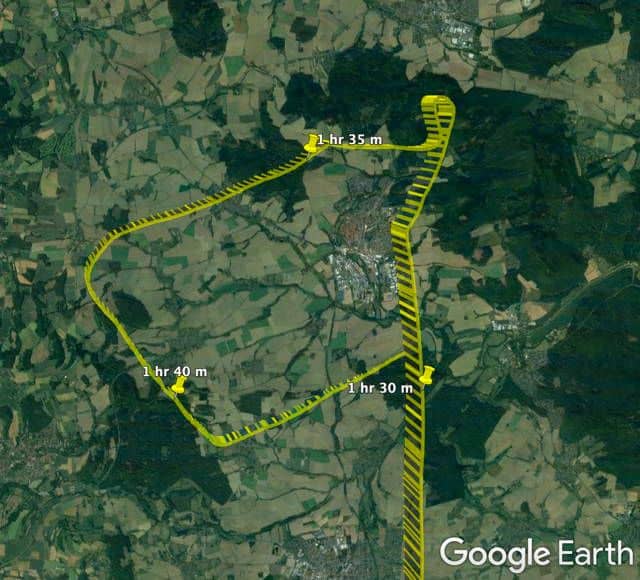
Last edited by ChickenHouse; 2nd July 2020 at 14:56.
Avoid imitations


Joined: Nov 2000
Aviation Qualifications: ATPL
Posts: 15,116
Likes: 1,091
From: Wandering the FIR and cyberspace often at highly unsociable times
As a 17 year old student I was flying a C150 with an instructor. The aircraft had just come from maintenance and it was one I’d not flown before. I told my instructor I could hear a very high pitched noise and could smell engine fumes. He said he couldn’t sense either but would get a second opinion from another instructor.
I stood and listened as he taxied out with another instructor for a circuit. I could definitely hear the noise, it was louder outside. They came back in shortly afterwards and said neither could hear anything unusual but when I told them I’d heard it louder they agreed to get an engineer involved as a precaution.
Turned out that a cylinder head had cracked in three places, between both valve seats and the spark plug. The triangular piece was fretting loose and the engineer reckoned it might suddenly fail if the aircraft was flown again.
That was 47 years ago but it taught me to be very suspicious about anything out of the ordinary.
I stood and listened as he taxied out with another instructor for a circuit. I could definitely hear the noise, it was louder outside. They came back in shortly afterwards and said neither could hear anything unusual but when I told them I’d heard it louder they agreed to get an engineer involved as a precaution.
Turned out that a cylinder head had cracked in three places, between both valve seats and the spark plug. The triangular piece was fretting loose and the engineer reckoned it might suddenly fail if the aircraft was flown again.
That was 47 years ago but it taught me to be very suspicious about anything out of the ordinary.

Joined: Mar 2014
Posts: 497
Likes: 0
From: Way north
Only thing I've tried was a malfunctioning alternator in the Piper 28.
Light came on shortly after departure, and the first thought was..... "hmm what's that light? Never seen that lit in flight before?".... second was "oh, alternator.... that's not dangerous, or require immidiate "we're gonna die if I don't do anything"-attention and can be done using the checklist"....
The checklist made me laugh (within, I had passengers onboard).... 2 items....
But we ended up flying home without alternator, and a reduced load on the electrical system. An inspection faound the "coal"-pieces to be worn beyond use.
Light came on shortly after departure, and the first thought was..... "hmm what's that light? Never seen that lit in flight before?".... second was "oh, alternator.... that's not dangerous, or require immidiate "we're gonna die if I don't do anything"-attention and can be done using the checklist"....
The checklist made me laugh (within, I had passengers onboard).... 2 items....
But we ended up flying home without alternator, and a reduced load on the electrical system. An inspection faound the "coal"-pieces to be worn beyond use.
Thread Starter
Joined: Jan 2004
Posts: 5,658
Likes: 501
From: Canada
OK, I will call it.
First thing I did was point the aircraft at a good field, and then methodically went through the checks. When I switched from both to left on the mags the engine suddenly went back to normal operation, so I flew back to my home airport which was about 15 miles away, arranging my flight path to keep within good gliding distance of suitable areas for a forced approach. I them flew a PFL pattern over the airport to an uneventful landing
Turned out a gear inside the right mag had failed advancing the spark 40 deg. The 2 mags were now fighting each other which totally discombobulated the engine switching off the bad mag corrected the situation
I have some other scenarios if there is interest from the readers of this forum, otherwise I will cut it off here
Cheers
BPF
First thing I did was point the aircraft at a good field, and then methodically went through the checks. When I switched from both to left on the mags the engine suddenly went back to normal operation, so I flew back to my home airport which was about 15 miles away, arranging my flight path to keep within good gliding distance of suitable areas for a forced approach. I them flew a PFL pattern over the airport to an uneventful landing
Turned out a gear inside the right mag had failed advancing the spark 40 deg. The 2 mags were now fighting each other which totally discombobulated the engine switching off the bad mag corrected the situation
I have some other scenarios if there is interest from the readers of this forum, otherwise I will cut it off here
Cheers
BPF
Joined: Nov 2015
Posts: 51
Likes: 1
From: UK
Please, may I differ?
I would not, first, try mixture control ...etc.
I would, instead, first FLY THE AIRCRAFT (as ChickenHouse's log shows)
Capital letters because the pilot (me) is now worried/ concerned/ scared/ frightened/ startled; not one of these improves pilot performance (certainly not mine).
This, now, low grade pilot needs the simplest possible advice at the forefront of his/her brain.
It is only after the flying is well sorted - trim is vital here - that I would turn to the rest of the stuff that ChickenHouse & atceng list.
In training, should a PFL be needed, I chant to myself "speed, speed, speed ...."
I would not, first, try mixture control ...etc.
I would, instead, first FLY THE AIRCRAFT (as ChickenHouse's log shows)
Capital letters because the pilot (me) is now worried/ concerned/ scared/ frightened/ startled; not one of these improves pilot performance (certainly not mine).
This, now, low grade pilot needs the simplest possible advice at the forefront of his/her brain.
It is only after the flying is well sorted - trim is vital here - that I would turn to the rest of the stuff that ChickenHouse & atceng list.
In training, should a PFL be needed, I chant to myself "speed, speed, speed ...."
Gnome de PPRuNe

Joined: Jan 2002
Aviation Qualifications: Spotter
Posts: 15,200
Likes: 1,202
From: Too close to Croydon for comfort
First thing I did was point the aircraft at a good field, and then methodically went through the checks. When I switched from both to left on the mags the engine suddenly went back to normal operation, so I flew back to my home airport which was about 15 miles away, arranging my flight path to keep within good gliding distance of suitable areas for a forced approach. I them flew a PFL pattern over the airport to an uneventful landing
Turned out a gear inside the right mag had failed advancing the spark 40 deg. The 2 mags were now fighting each other which totally discombobulated the engine switching off the bad mag corrected the situation
Turned out a gear inside the right mag had failed advancing the spark 40 deg. The 2 mags were now fighting each other which totally discombobulated the engine switching off the bad mag corrected the situation

Joined: Oct 2018
Posts: 1,074
Likes: 94
From: Uka Duka
Something similar happened to a mate while getting a Biennial with an instructor in the US - also a refresher after several years not flying. They flew south from Space Coast Airport to do practice manoeuvering and some circuits elsewhere (probably Merritt Island) in a C152; on the way back the engine started running roughly and the instructor diagnosed a faulty mag - one or other worked ok but I recall my mate telling me that the instructor kept his hand on the mags all the way back for some reason while pointing out suitable places to go if it all went quiet.
Only half a speed-brake
Joined: Apr 2003
Posts: 4,459
Likes: 136
From: Commuting not home


Joined: Aug 2015
Posts: 599
Likes: 61
From: ex 5Y. Now G
As a 17 year old student I was flying a C150 with an instructor. The aircraft had just come from maintenance and it was one I’d not flown before. I told my instructor I could hear a very high pitched noise and could smell engine fumes. He said he couldn’t sense either but would get a second opinion from another instructor.
I stood and listened as he taxied out with another instructor for a circuit. I could definitely hear the noise, it was louder outside. They came back in shortly afterwards and said neither could hear anything unusual but when I told them I’d heard it louder they agreed to get an engineer involved as a precaution.
Turned out that a cylinder head had cracked in three places, between both valve seats and the spark plug. The triangular piece was fretting loose and the engineer reckoned it might suddenly fail if the aircraft was flown again.
That was 47 years ago but it taught me to be very suspicious about anything out of the ordinary.
I stood and listened as he taxied out with another instructor for a circuit. I could definitely hear the noise, it was louder outside. They came back in shortly afterwards and said neither could hear anything unusual but when I told them I’d heard it louder they agreed to get an engineer involved as a precaution.
Turned out that a cylinder head had cracked in three places, between both valve seats and the spark plug. The triangular piece was fretting loose and the engineer reckoned it might suddenly fail if the aircraft was flown again.
That was 47 years ago but it taught me to be very suspicious about anything out of the ordinary.
I presume you were hearing gas escaping from the crack but the sound was too high frequency to be heard by older ears?
And if you encountered exactly the same fault today, you would not hear it, and blithely take off!
Moderator


Joined: Feb 2000
Aviation Qualifications: CPL
Posts: 14,480
Likes: 178
From: UK
With not much flying going on I have been giving some of my X students scenario’s to keep the grey matter exercised.
The latest is the following scenario which happened to me exactly as described
I was flying along at 3000 ft AGL in cruise in a C 172. Suddenly with no warning the engine started running very roughly with the engine RPM varying up and down by 500 RPM and a sufficient loss of power it was doubtful level flight could be maintained. T & P were indicated in the normal range.
What would you do?
The latest is the following scenario which happened to me exactly as described
I was flying along at 3000 ft AGL in cruise in a C 172. Suddenly with no warning the engine started running very roughly with the engine RPM varying up and down by 500 RPM and a sufficient loss of power it was doubtful level flight could be maintained. T & P were indicated in the normal range.
What would you do?
It was a failed bolt retaining tab on one of the (inverted) engine cylinder head bolts, causing a cylinder head to slowly drop away from the engine.
G